





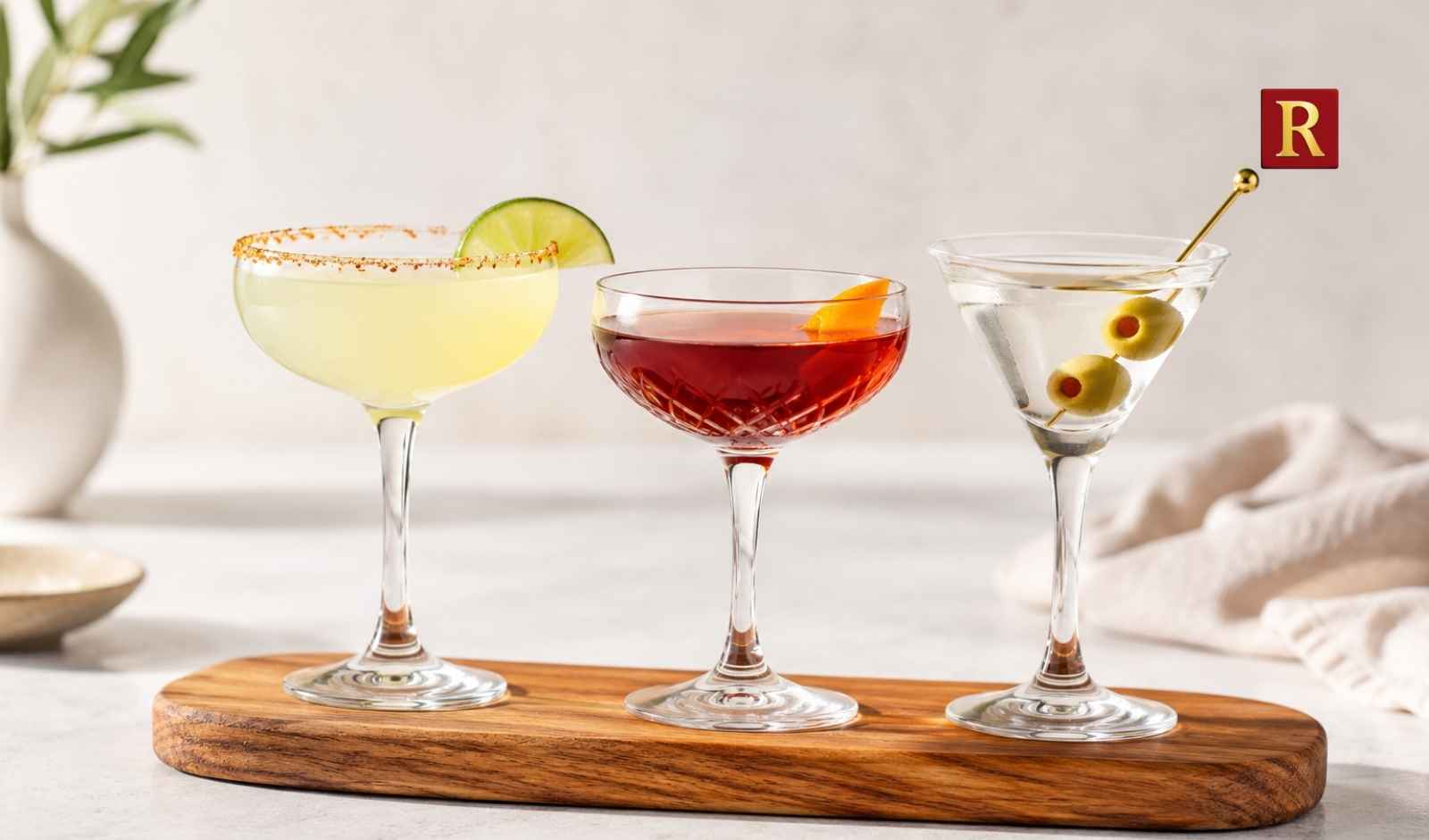
Small-format cocktails are deliberately smaller versions of cocktails, designed to deliver the drink’s core flavour and technique in fewer sips. They can include mini Martinis, small Margaritas, petite Negronis and tasting-size signature drinks.
The format is gaining attention in 2026 as bars look at new ways to offer variety, premium ingredients and more intentional drinking occasions. Bacardi’s 2026 Cocktail Trends Report places small serves within a broader shift towards “micro-indulgence,” earlier drinking occasions and more experiential cocktail culture. For restaurants and bars, however, the idea is more complex than simply pouring less into a smaller glass. Recipe balance, dilution, glassware, pricing and alcohol strength all matter.
What Exactly Is a Small-Format Cocktail?
There is no single global volume that officially defines a small-format cocktail. The important point is intentional portioning. A bar may serve a cocktail in a smaller glass as a stand-alone drink, or include several small cocktails as part of a tasting flight. The purpose is usually to give the guest a shorter drinking experience without removing the cocktail's character.
That makes a small-format cocktail different from simply ordering a smaller quantity of liquor. A mini Martini, for example, can still involve gin or vodka, vermouth, chilling, dilution, straining and garnish. It remains a crafted cocktail, not a shot. This distinction is becoming more relevant as mini cocktails move from novelty serves into organised bar menus. Industry coverage in 2026 has highlighted mini Martinis, tasting menus and other “fun-size” serves as part of the current beverage landscape.
Small-Format Does Not Mean Low-ABV
This is one of the most important points for consumers. A smaller cocktail is not automatically a lower-alcohol cocktail. ABV means alcohol by volume. It measures the concentration of ethanol in a beverage. FSSAI defines ABV as the percentage of ethanol in the total volume of an alcoholic beverage. Therefore, both the amount served and the alcohol concentration matter. A small, spirit-forward cocktail can still have a relatively high ABV. A smaller serve may simply contain less total liquid than a full-size drink. This is why bars should avoid presenting all small-format cocktails as “light” or “low-alcohol” unless the recipe actually has a lower ABV.
The distinction is simple:
- Small-format: smaller serving size
- Low-ABV: lower alcohol concentration
- Zero-proof: no alcohol
- Shot: usually a compact serve intended for quick consumption
Keeping these categories separate makes the trend easier to understand.
Why Are Mini Cocktails Getting Attention?
The appeal starts with choice. Ordering one full-sized cocktail often means committing to one flavour profile. A smaller serve changes that equation. A guest can try a Martini, move to a Negroni and then sample a seasonal cocktail without ordering three full-sized drinks. That creates a tasting-style experience. Bacardi's 2026 research describes this broader shift as “micro-indulgence”. Its report says younger legal-drinking-age consumers are moving towards earlier, lighter and more intentional drinking occasions. It also specifically links small serves with daytime drinking and “daycap” culture. Beverage Information Group has similarly identified “fun-size sips” as a 2026 trend, pointing to mini Martinis, smaller Margaritas and other compact serves designed around flavour and discovery.
The Cocktail Flight Makes the Idea More Interesting
The strongest use of small-format cocktails may be the cocktail flight. Instead of offering one miniature drink, a bar can serve three or four contrasting cocktails.
For example:
Classic Flight
- Mini Martini
- Mini Negroni
- Mini Manhattan
Citrus Flight
- Mini Margarita
- Mini Daiquiri
- Mini Gimlet
Indian Ingredient Flight
- Kokum and gin
- Tamarind and tequila
- Gondhoraj lime and vodka
The last format offers an especially interesting opportunity for Indian bars. India has a large vocabulary of regional ingredients. Smaller serves can make it easier for guests to experiment with unfamiliar combinations without committing to a full cocktail.
Making a Cocktail Smaller Is Not Simple
This is where professional mixology becomes important. A bartender cannot always take a full-size recipe and divide every ingredient by two.
The drink still needs the right balance of:
- Spirit
- Sweetness
- Acidity
- Bitterness
- Aroma
- Texture
- Dilution
- Temperature
Dilution is particularly important. Shaking or stirring a cocktail with ice introduces water as the ice melts. That water is part of the final drink. Temperature and dilution help shape how the cocktail tastes. When the drink is smaller, the bartender still needs to control those variables carefully. Glassware also changes the experience. Mini Martinis can use petite Martini or Nick & Nora-style glasses. Small citrus cocktails may work in compact coupes. The glass should suit the drink rather than simply make the portion look smaller.
Why Smaller Serves Can Stay More Enjoyable
There is also a practical advantage. A large cocktail can warm up or lose its ideal texture as it sits. A smaller serve can be finished more quickly. Current reporting on tiny cocktails has highlighted this as one reason the format works, particularly for drinks where temperature and freshness are important. For spirit-forward drinks such as Martinis, this can be particularly useful. The guest gets a short, cold and focused drinking experience instead of watching a large serve gradually change in the glass.
What Does This Mean for Indian Bars?
The opportunity for India is not simply to copy the mini Martini trend. It is to localise the format. Bacardi's 2026 report identifies local flavours as one of the major forces shaping cocktail culture. The report says 77% of surveyed consumers check ingredient-origin labels, signalling stronger interest in provenance and local sourcing. That creates room for small cocktails built around Indian ingredients.
A bar could explore:
- Kokum with gin
- Tamarind with tequila
- Gondhoraj lime with vodka
- Jamun with gin
- Curry leaf with rum
- Raw mango with whisky
- Kahwa with whisky
- Coconut with rum
These should not be treated as gimmicks. The ingredient needs to work within the cocktail's flavour structure. The smaller format simply gives the bartender more room to encourage experimentation.
A New Menu Opportunity for Restaurants
For F&B operators, small-format cocktails can become a menu architecture tool.
They can support:
- Tasting menus: Multiple cocktails in one experience.
- Food pairings: Smaller drinks alongside individual courses.
- Premium discovery: Guests can sample expensive or unfamiliar ingredients in smaller serves.
- Early-evening occasions: Compact cocktails can fit aperitivo and post-work menus.
- Seasonal menus: Bars can rotate small serves more frequently without asking guests to commit to a full drink.
There is also a cost advantage for the customer in some cases. A smaller drink can have a lower menu price than its full-size equivalent, making experimentation easier. But operators still need to account for premium ingredients, labour, garnish, glassware and preparation. So, a smaller cocktail is not automatically a higher-margin cocktail.
Small Cocktails Fit a Bigger Change in Drinking Culture
The interesting part of this trend is not the size of the glass. It is the change in how the drinking occasion is being designed. Bacardi's 2026 report says cocktail culture is moving towards earlier occasions, local flavours, human connection and experience-led drinking. It also reports that 84% of surveyed consumers feel technology has made social interactions less personal, while smaller cocktail formats such as Martini flights are being used to create shared experiences. Small-format cocktails fit naturally into this environment. They encourage guests to compare, discuss and explore. The drink becomes less about finishing one large serving and more about discovering what comes next.
What Comes Next for Small-Format Cocktails?
The format is unlikely to replace the full-sized cocktail. Instead, it is more likely to become another option on a well-designed beverage menu. Bars can use it for tasting flights, premium spirit exploration, food pairing and regional ingredient showcases. It can also work alongside low-ABV and zero-proof options, provided those categories are clearly identified. For Indian hospitality, the most interesting possibility is the combination of small-format presentation with local flavour. A petite cocktail featuring kokum, tamarind or Gondhoraj lime can tell a more specific story than simply offering another smaller version of a global classic. Small-format cocktails, then, are not really about making cocktails smaller. They are about making experimentation easier, portions more deliberate and the bar experience more varied. And that gives the format a useful place in the evolving cocktail menu.
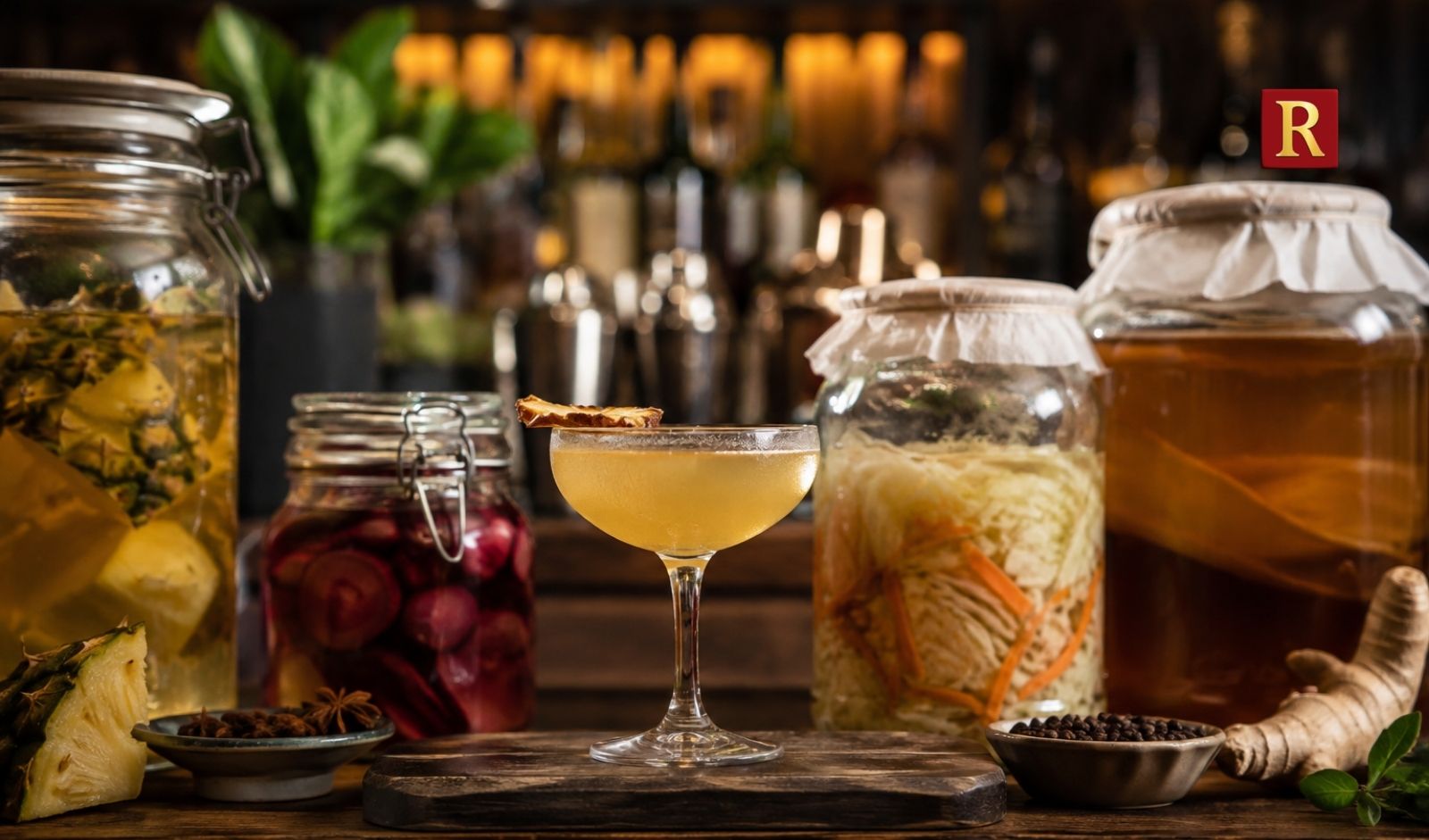
Fermentation is becoming a serious technique behind India’s cocktail bars. Bartenders are using kombucha, tepache, lacto-fermented fruits, koji and regional Indian ferments to create acidity, texture, aroma and depth. This is more than adding kombucha to a cocktail. Fermentation allows bartenders to change an ingredient before it reaches the glass. That makes it useful for both alcoholic and zero-proof drinks, while also opening new ways to work with seasonal produce and selected kitchen by-products.
India is well placed for this movement. Fermentation is already part of its food culture, from kanji and fermented batters to regional alcoholic drinks. Now, bartenders are bringing some of those ideas into modern mixology. In 2025, Indian cocktail-industry experts specifically identified fermentation and regional ferments such as kanji, handia and palm toddy as areas likely to shape the country's bar scene.
Why Fermentation Works So Well Behind the Bar
A conventional cocktail often depends on a familiar set of tools: citrus for acidity, sugar for sweetness, bitters for complexity and spirits for alcohol and aroma. Fermentation gives bartenders another layer to work with. During fermentation, microorganisms such as yeasts and bacteria transform sugars and other compounds into acids, gases, alcohols and aromatic compounds. The exact result depends on the ingredients, microorganisms and conditions used. For a bartender, that means an ingredient can be transformed rather than simply extracted. A fruit can become more acidic. Tea can become a complex fermented mixer. A grain can develop savoury depth. Even selected fruit remnants can become useful ingredients instead of immediate waste. That is the real kitchen-to-bar crossover.
Kombucha Is Only the Beginning
Kombucha is perhaps the easiest fermented drink for consumers to recognise. It is made by fermenting sweetened tea with a microbial culture commonly called a SCOBY, containing bacteria and yeasts. During fermentation, compounds including organic acids are produced, giving kombucha its characteristic tart and complex profile. For bars, that acidity and flavour complexity can be valuable.
Kombucha can be used in:
- Highballs
- Spritz-style drinks
- Long drinks
- Zero-proof cocktails
- Tea-based cocktails
- Fruit-led serves
It can also provide carbonation and a more layered alternative to a simple soda mixer. But there is an important distinction. Kombucha should not automatically be marketed as a health drink simply because it is fermented. Scientific reviews note that research into its claimed health benefits is still developing, and its composition can vary depending on the tea, microbial culture and fermentation conditions. For a bar, its strongest value is flavour.
Tepache Turns Pineapple Waste Into a Bar Ingredient
Tepache offers another interesting example. This traditional Mexican fermented beverage uses pineapple husks and rinds, often with sugar and spices. The result is sweet, tart and lightly fermented. For bartenders, it also presents a simple sustainability idea: use more of the ingredient. Pineapple skins and cores that might otherwise be discarded can become part of a fermented preparation. Tepache can then be served on its own or used with spirits in cocktails. This does not mean every piece of kitchen waste should be fermented. Food safety, ingredient quality and controlled processing remain essential. But where the process is appropriate, fermentation can turn an overlooked part of an ingredient into something with commercial and creative value.
Lacto-Fermentation Creates a New Sourness
One of the most technically interesting developments is lacto-fermentation. Lactic-acid-producing bacteria transform sugars and produce lactic acid, creating a different type of acidity from the sharp citrus character usually associated with lemon or lime. Bartenders have been exploring lacto-fermented fruits and vegetables specifically for new acid sources and unusual flavour profiles.
This opens up possibilities with ingredients such as:
- Cucumber
- Tomato
- Chilli
- Pineapple
- Berries
- Seasonal fruits
- Vegetables
The point is not to make a drink taste obviously "fermented." A well-made fermented ingredient can work more like seasoning. It can make the drink feel deeper without becoming the dominant flavour. That is why fermentation is particularly interesting for modern bars.
Koji Brings Umami Into Cocktails
Koji takes the kitchen-to-bar connection even further. Koji is a grain, commonly rice or barley, cultivated with Aspergillus oryzae. It is fundamental to products such as miso and soy sauce. In cocktails, its value lies in its ability to bring sweetness, savouriness, aroma and umami. Specialist bar coverage has documented bartenders using koji in syrups, caramels, fermented preparations and other cocktail components. One London bar even developed a controlled environment to cultivate its own koji, showing how advanced fermentation can become part of a bar's R&D programme. Koji does not necessarily need to be the headline flavour. In fact, its most useful role can be similar to bitters or seasoning: a small amount can add depth and length to the finish.
India Has an Unusual Advantage
India does not need to discover fermentation. It needs to reinterpret it. Fermented foods and beverages are already embedded in regional culinary traditions. Kanji, fermented batters, pickles and regional alcoholic ferments demonstrate how widely fermentation has been used across Indian food culture. Now, modern bars are beginning to connect that heritage with contemporary techniques. A 2025 report on India's cocktail scene highlighted kanji, handia and palm toddy as regional ferments that bartenders could explore further. It also noted the wider movement towards local ingredients, traditional techniques and ingredient-led cocktails. There are already examples of this thinking in India's bar scene. Delhi's Barbet & Pals, for instance, has used madua, or finger millet, to create lugdi, a fermented mountain brew, and incorporated it into a cocktail inspired by Kumaon. That is a more interesting direction than simply copying global fermentation trends. The future could be about Indian fermentation interpreted through modern bar techniques.
Fermentation Is Also Helping Zero-Proof Cocktails
The rise of sophisticated non-alcoholic drinks makes fermentation even more relevant. Alcohol provides body, warmth and aroma to a cocktail. Removing it can leave a drink tasting flat or overly sweet. Fermented ingredients can help fill some of that gap. Kombucha can provide acidity and carbonation. Fermented fruit can add complexity. Tea-based ferments can introduce aroma and structure. Indian cocktail-industry experts have already pointed to fermentation as one of the techniques being used to make zero-proof drinks more layered and sophisticated. This is particularly useful for bars trying to move beyond the traditional sweet mocktail.
The Technical Challenge Is Consistency
There is, however, a problem. Fermentation is a biological process. Cocktails need consistency. A bar may want the same drink to taste the same on Monday and Saturday. A fermentation can behave differently depending on temperature, ingredients, microbial activity and fermentation time. That makes process control essential.
Professional beverage programmes need to pay attention to:
- Temperature: It can influence microbial activity and fermentation speed.
- Time: Fermentation continues to change the ingredient.
- pH: It can help professionals monitor acidity and process conditions.
- Sanitation: Contamination can create serious food-safety problems.
- Storage: Some fermented products need controlled storage to slow further fermentation.
- Batch records: Recording ingredients and process conditions helps improve consistency.
This is why fermentation should not be treated as simply putting ingredients into a jar and waiting. It is a technique that requires knowledge and control.
From Chef's Prep List to the Bartender's Station
The larger change is cultural. Chefs have long worked with fermentation, pickling, preservation and extraction. Bars are increasingly adopting the same mindset. A modern beverage programme can now include:
- Fermentation → acidity and complexity
- Koji → umami and depth
- Pickling → sharpness and garnish
- Clarification → texture and appearance
- Infusion → aroma
- Seasonal preservation → longer ingredient use
Indian bars are already moving towards more local sourcing, ingredient utilisation and culinary techniques. Fermentation fits naturally into that shift.
The Next Indian Cocktail Could Begin With a Ferment
The most interesting part of this trend is not that bars are discovering kombucha or koji. It is that bartenders are starting to think like food developers. Instead of asking, "Which spirit should go into this drink?", they can ask, "What can I transform this ingredient into?" A seasonal fruit can become an acid. A grain can become a fermented base. A pineapple peel can become tepache. A traditional regional ferment can become the starting point for a modern cocktail. For India's restaurant and bar industry, that creates an opportunity to connect food heritage, fermentation science, sustainability and modern mixology in one glass. Fermentation may have started in the kitchen. But increasingly, its next expression is being built behind the bar.
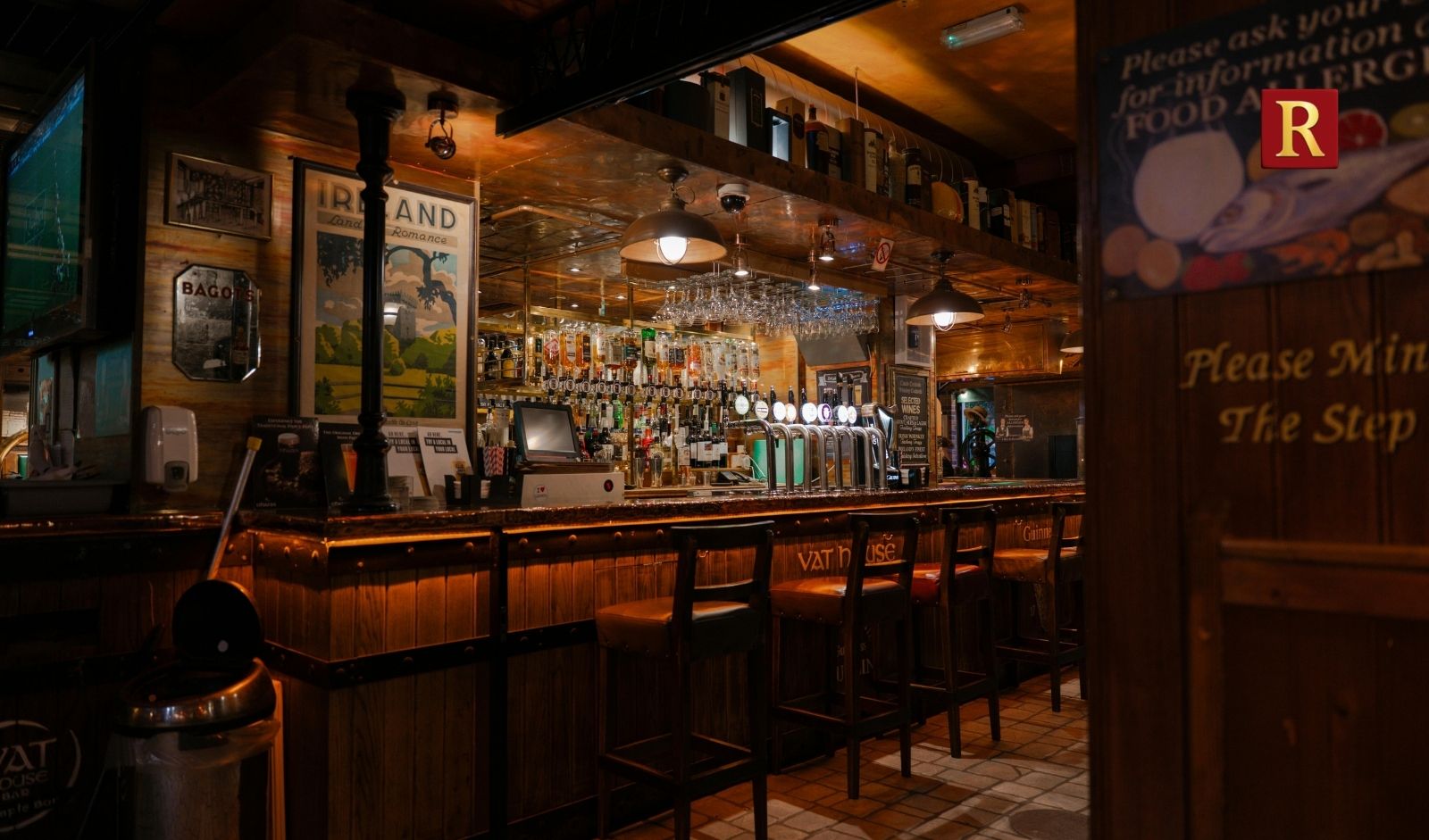
From rooftop cocktail bars to immersive speakeasies, hotels are turning their bars into attractions that draw both travelers and locals. These spaces are becoming important revenue drivers while helping hotels build stronger brands and memorable guest experiences. For years, hotel bars were designed mainly for guests staying at the property. They offered a convenient place for a quick drink after check-in or before dinner. Today, that role has changed dramatically. Hotels are investing in destination bar experiences that people actively seek out, even if they have no plans to book a room.
This shift reflects a larger change in hospitality. Modern travelers are looking for memorable experiences rather than just comfortable accommodation. At the same time, hotels are finding new ways to increase food and beverage revenue, strengthen their brand identity, and compete with standalone restaurants and cocktail bars. From skyline rooftops and hidden speakeasies to bars celebrating regional ingredients, destination bars are becoming one of the most valuable spaces inside a hotel.
Why Hotel Bars Are Becoming Destinations
The hospitality industry has become more competitive than ever. Luxury hotels are no longer competing only with other hotels. They are also competing with independent cocktail bars, rooftop lounges, members-only clubs, and fine-dining restaurants. Instead of treating bars as an additional facility, hotels now develop them as independent concepts with their own identity. Many destination bars feature dedicated entrances, unique interiors, signature cocktail menus, live entertainment, and their own marketing campaigns.
This strategy helps hotels attract three important customer groups:
- Hotel guests
- Local residents
- Business travelers
Unlike traditional hotel lounges that depend mainly on occupancy, destination bars can remain busy throughout the week by serving a wider audience.
Experience Has Become the New Luxury
Luxury is no longer defined only by marble lobbies or large suites. Today's guests value memorable experiences they can share with friends and on social media. A well-designed destination bar offers much more than drinks. It creates a complete experience through atmosphere, storytelling, music, food, and service.
Many hotels now include:
- Cocktail tasting menus
- Seasonal beverage programs
- Chef and bartender collaborations
- Live music performances
- Local art displays
- Interactive mixology sessions
These elements encourage guests to spend more time at the property instead of leaving to explore nightlife elsewhere. According to industry research, global experiential travel continues to grow as travelers increasingly prioritize unique local experiences over traditional luxury offerings. Hotels are responding by making food and beverage experiences a key part of their guest journey.
The Business Case Behind Destination Bars
Creating a destination bar is not only about improving guest satisfaction. It also makes strong financial sense. Food and beverage operations already contribute a significant share of hotel revenue, especially in luxury and upscale properties. Premium cocktails often generate higher profit margins than many food items because ingredient costs remain relatively low compared to selling prices. For example, a signature cocktail priced between Rs 800 and Rs 1,500 may have an ingredient cost of only 18% to 25%, depending on the concept. This allows hotels to achieve healthy contribution margins while enhancing the guest experience. When destination bars attract local customers alongside hotel guests, they improve seat occupancy throughout the day and reduce dependence on room bookings alone.
Design Is Now Part of the Experience
Today's destination bars are carefully designed to create lasting impressions. Instead of generic hotel lounges, guests now discover spaces inspired by local architecture, heritage, art, and nature. Lighting, music, seating layouts, and even glassware are selected to support the overall concept.
Popular hotel bar formats include:
- Rooftop bars overlooking city skylines
- Garden-inspired outdoor lounges
- Hidden speakeasies
- Whiskey libraries
- Wine cellars
- Contemporary cocktail labs
These visually appealing spaces also encourage guests to share photos online, giving hotels valuable organic visibility without relying solely on advertising.
Local Ingredients Tell Better Stories
One of the biggest trends shaping destination bars is the use of regional ingredients. Rather than serving standard international cocktails, hotels increasingly showcase local flavours that reflect the destination.
Examples include:
- Kokum in Goa
- Himalayan herbs in Uttarakhand
- Kashmiri saffron
- Coorg coffee
- Darjeeling tea
- Native citrus varieties
- Local honey
- Indian craft spirits
This approach gives visitors a stronger sense of place while supporting local farmers and producers. The result is a bar menu that cannot easily be copied elsewhere, making the experience more authentic and memorable.
Entertainment Keeps Guests Coming Back
Great drinks alone are no longer enough. Successful destination bars offer regular events that encourage repeat visits.
Many hotels now organise:
- Guest bartender takeovers
- Live jazz evenings
- DJ nights
- Wine tastings
- Whiskey appreciation sessions
- Cocktail masterclasses
- Seasonal festivals
These events help hotels remain relevant throughout the year instead of relying only on peak travel seasons. For local residents, these bars become social destinations rather than hotel facilities.
Technology Is Improving Bar Operations
Technology plays a crucial role in the success of modern destination hotel bars by improving both operations and the guest experience. Many hotels now use QR-based digital menus, contactless payment systems, online reservation platforms, AI-powered guest preference tracking, smart inventory management, and integrated point-of-sale (POS) systems to streamline daily operations. These tools help bar managers monitor which cocktails sell the most, forecast demand during weekends or special events, and maintain the right stock levels to reduce waste and control costs. They also provide valuable customer insights, allowing hotels to personalize recommendations and improve service. Additionally, data-driven menu engineering helps identify high-performing drinks, optimize pricing strategies, and promote premium offerings. By combining technology with efficient operations, hotels can deliver faster service, increase profitability, and create a smoother, more personalized experience for every guest.
Indian Hotels Are Embracing the Trend
India's hospitality industry is also seeing strong growth in destination bar concepts. Luxury hotels in cities such as Mumbai, Delhi, Bengaluru, Hyderabad, and Goa are investing heavily in rooftop venues, craft cocktail programs, and locally inspired beverage menus. The rise of premium domestic travel, international tourism, and growing interest in cocktail culture has encouraged hotels to view bars as important brand assets rather than secondary amenities. Hotels are also collaborating with award-winning mixologists, regional distilleries, and local chefs to create experiences that celebrate Indian ingredients while meeting global hospitality standards. This approach attracts both international visitors looking for authentic experiences and urban consumers seeking premium nightlife without leaving the hotel.
What Makes a Destination Hotel Bar Successful?
Not every hotel bar becomes a destination.
Successful concepts usually share several characteristics:
- A clear and memorable identity
- Signature cocktails that reflect the destination
- Well-trained bartenders
- Distinctive interior design
- Strong food pairings
- High-quality service
- Regular entertainment programming
- Consistent storytelling
- Local community engagement
- Effective digital marketing
Most importantly, every element should work together to create an experience that guests remember long after their visit.
The Future
As guest expectations continue to evolve, destination bars are likely to become even more experience-driven. Hotels are expanding alcohol-free cocktail menus, introducing wellness-inspired beverages, reducing waste through sustainable bar practices, and using technology to personalise recommendations based on guest preferences. The focus is shifting from simply serving drinks to creating spaces where people connect, celebrate, and experience the culture of a destination. For hotels, this transformation offers benefits far beyond food and beverage sales. A successful destination bar strengthens brand reputation, attracts new visitors, encourages repeat business, and creates memorable moments that influence future travel decisions. In an increasingly competitive hospitality market, that makes destination bars more than a trend. They have become a strategic investment that blends design, storytelling, operational excellence, and local culture into one compelling guest experience.
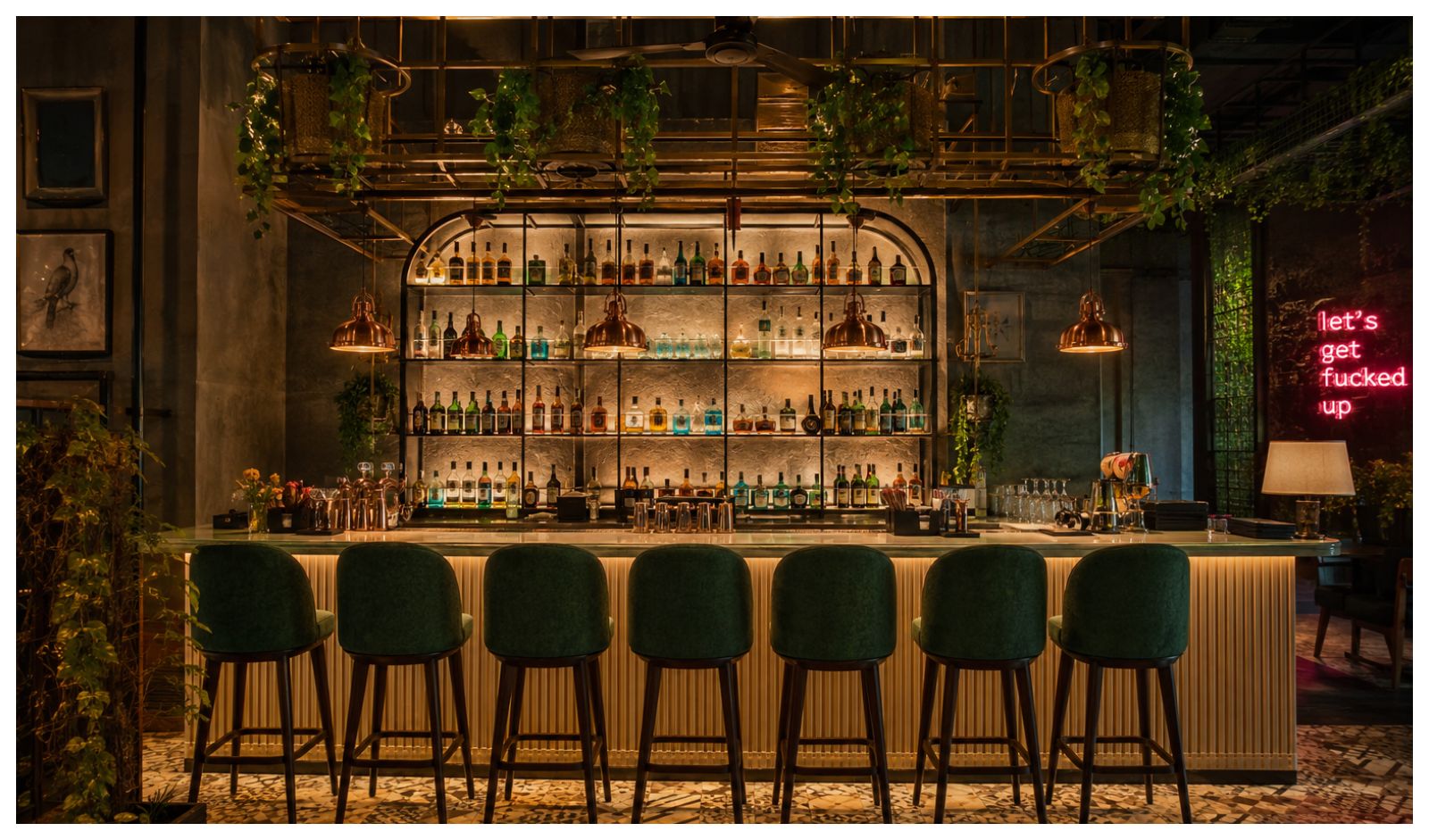
India's bar industry is moving beyond drinks to design-led experiences. Today, interiors are as important as the menu, shaping a bar's identity, attracting customers, supporting premium pricing, and encouraging repeat visits. Driven by premiumization, social media, and experience-first consumers, design has become a core business strategy rather than just an aesthetic choice.
According to NIQ, nearly seven in ten Indian consumers visit restaurants, cafés, or bars at least once every quarter, making these spaces a crucial touchpoint for premium brand discovery and customer engagement. The Indian PBCL (Pub, Bar, Cafe & Lounge) market was valued at $3.0 billion in 2025 and is expected to grow to $5.9 billion by 2034, registering a CAGR of 7.31%.
Bar Design is the New Brand Language
Indian bar design has moved beyond standard interiors to a brand identity. Today's bars are built around a clear theme or story with every element from the entrance and lighting to the bar counter, music, furniture, and staff uniforms shaping the guest experience.
“Indian bars are moving beyond conventional luxury aesthetics and embracing immersive, story driven spaces. A well-defined design story gives guests something to remember and talk about, creating an emotional connection, strengthening word of mouth and establishing a brand identity that is difficult to replicate,” shared Aman Dua, Founder, 403 Forbidden Bar.
India is shifting from decor towards intentional, narrative-driven spaces. Today's bars are investing in acoustics, craftsmanship, installations and thoughtful spatial design to create immersive experiences. “Mezcalita is part of this evolution, where design is a strategic expression of the brand, not just an aesthetic choice or ornamentation as narrative creates emotional meaning,” added Rizwan Amlani, Head of Brand, Mezcalita and La Taqueria by Mezcalita.
Highlighting this, Somshekhar Mirpuri, Co-Founder, Barnhouse said, "Our approach to beverage and bar design is rooted in the same principles that shape our kitchen: seasonality, hydroponic produce, fermentation, sustainability and minimal waste. The space reflects these values by bringing together ingredients, craftsmanship and storytelling. Every detail from materials and lighting to service rituals and guest interactions is thoughtfully designed to create a deeper connection with the experience."
The New Age Business Asset
Social media has transformed the economics of bar interiors, making design a powerful marketing tool. While customers once discovered bars through word-of-mouth, today they drive visibility by sharing photos and videos online.
Adding to this, Ranbir Nagpal, CEO, Yazu mentioned, “Social media has further transformed bar interiors into powerful marketing assets where visually striking spaces drive organic visibility and brand recall. The modern bar counter has also become the center stage of the experience, bringing together craftsmanship, creativity and hospitality.”
AD Singh, Founder & MD of The Olive Group of restaurants said, “The biggest evolution has been the role of the bar itself. It is no longer simply a service station hidden within the restaurant; it has become the social and visual heart of the space. Guests increasingly want to watch cocktails being crafted, interact with bartenders and feel part of the energy of the room. A well-designed bar creates theatre, sparks conversation and sets the pace for the entire dining experience, whether someone is there for a quick drink or a long evening with friends.”
Dua noted, “Social media has undoubtedly increased the importance of visual appeal. However, successful bars are not designed purely for photographs. The best spaces feel authentic, offer a strong sense of experience, and naturally encourage guests to share their visits.”
Experts also believed that 60% of customer engagement is influenced by visually appealing interiors backed by effective marketing, making design a key driver of brand growth.
Great Design Supports Premium Pricing
Customers no longer judge a cocktail only by its ingredients, they value the overall experience. A drink priced at ₹700 may seem expensive in a plain setting but feel worthwhile in a stylish, well-designed bar.
“At Mezcalita, the bar counter is the performance zone. It's where guests witness movement, craftsmanship and interaction in real time. That energy naturally becomes the heartbeat of the room and shapes the overall atmosphere,” commented Amlani.
As premiumization continues to grow in India's hospitality sector, ambience, storytelling and distinctive design have become key factors that justify higher pricing.
Singh stated that thoughtful design also has a tangible business impact. "The challenge for operators today is balancing aesthetics with functionality while resisting short-lived trends."
Not just this, modern bars are designed to serve different purposes throughout the day, helping operators maximize revenue. A space that functions as a café or meeting spot during the day can easily transform into a cocktail lounge or party destination at night. In this way, bars are generating extra revenue and are operating in different models while attracting diverse diners. As per experts, around 50% of bars in India are operating in this model and are gaining profits.
Nagpal noted, "Thoughtful bar design reinforces premium positioning, encourages longer guest stays, strengthens brand recall and supports repeat visits. We believe successful bar design comes from seamlessly combining aesthetics with practicality to create experiences guests remember.”
“Strong design is not an expense; it’s a long-term business investment. It strengthens brand identity, improves guest retention, supports premium pricing, and drives organic visibility through recommendations and social sharing,” pointed Dua.
And, as competition continues to grow, bar design is becoming a key differentiator. The most successful venues will go beyond serving great food and cocktails by creating immersive spaces that tell a compelling story and reflect a distinct brand identity from the moment guests walk in.
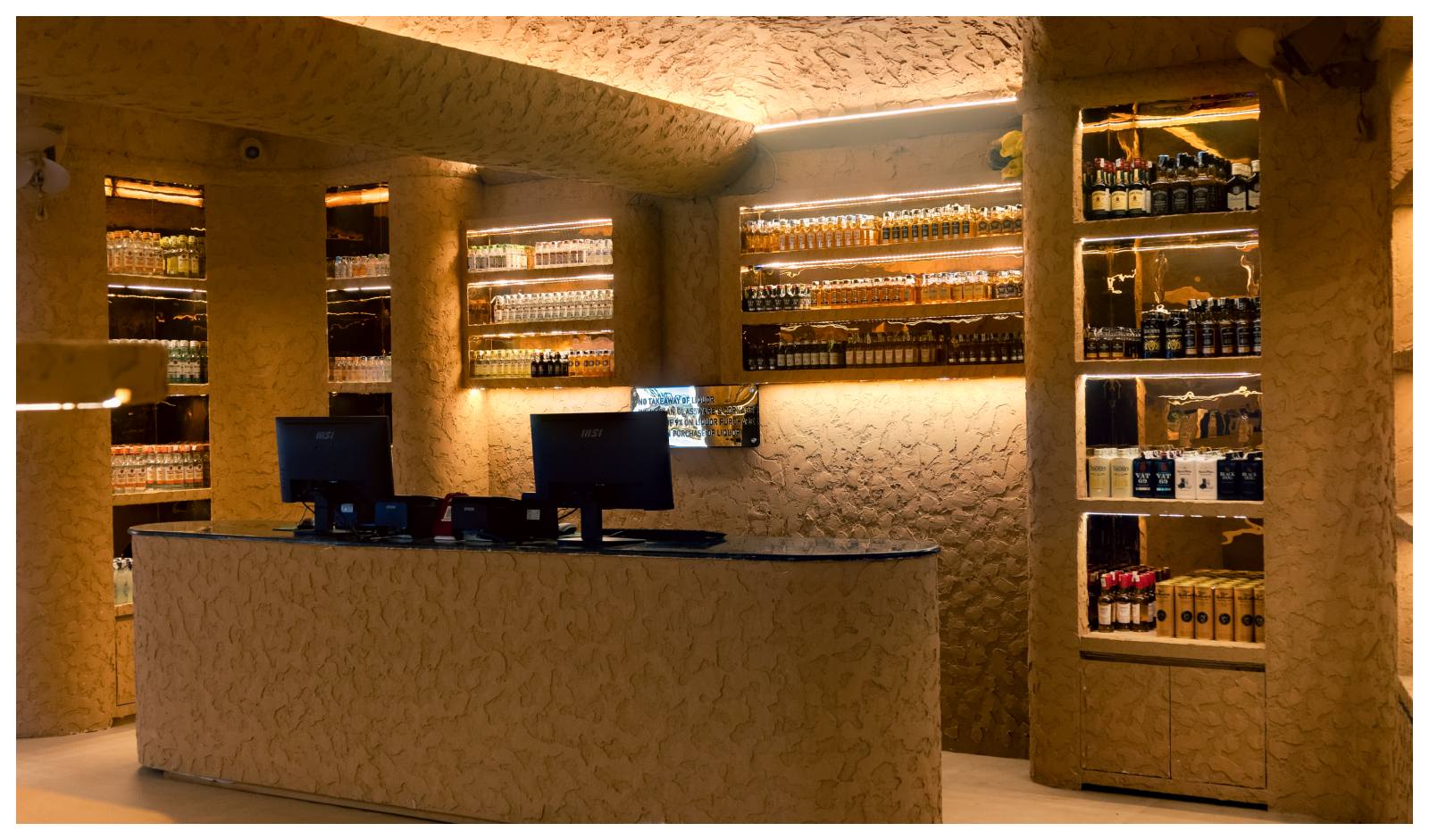
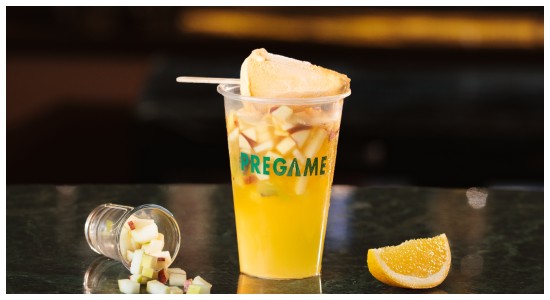
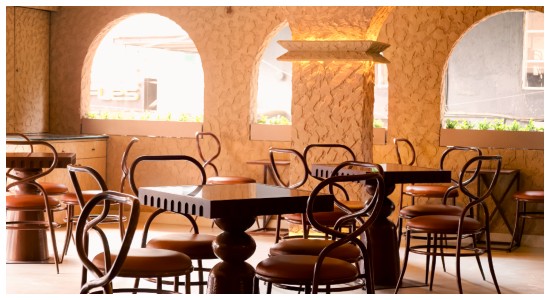
For many people in Bengaluru, nightlife starts at home with “pre-drinking,” thanks to the high liquor prices in pubs and nightclubs. Now, a newly opened standing bar in Koramangala called Pregame offers a proper space for it: a place to pick your favorite bottle from an in-house store and enjoy it in a lively lounge, all without burning a hole in your pocket.
This “Bring Your Own Bottle” (BYOB) concept, which has been popular in Delhi and Gurgaon for quite some time, brings together retail and recreation, offering an economical alternative for budget-conscious consumers.
Reflecting on why this model was needed in Bengaluru, Pregame founder Jagadish S said, “I started about eight years ago in the retail sector. There are liquor stores where you can buy bottles, and then there are pubs and restaurants where you sit and drink. I wanted to create something in between, a space where people can shop, taste, and experience the brands they love.”
At Pregame, patrons first walk into a sleek, well-stocked liquor store where they can browse both budget and luxury brands, all at retail prices. Once they’ve picked up their bottle, they head upstairs to a vibrant lounge area where they can drink, unwind, and socialize. There is an additional 9 per cent glassware and corkage fee, which covers service essentials like glasses and ice.
The result? A bar-like experience without bar-like prices.
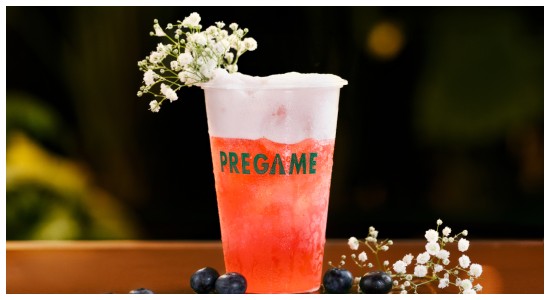
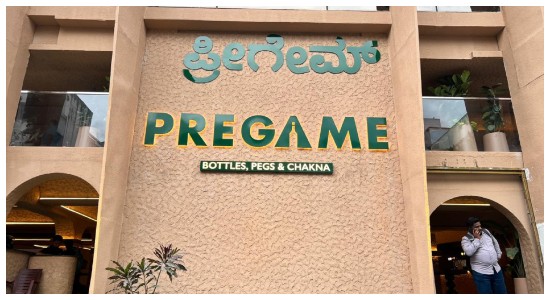
BYOB concept reimagined for Bengaluru
The “Bring Your Own Bottle” (BYOB) model isn’t new to India. It has long thrived in Delhi and Gurgaon, where it is known as the “ahata” culture, referring to small, licensed spaces attached to liquor shops where patrons can drink what they purchase. Over time, these have evolved into trendy, casual hangouts. But Karnataka’s strict excise rules make it difficult to replicate that model.
“In Delhi and Gurgaon, BYOBs are everywhere,” Jagadish explained, adding, “But in Karnataka, you can’t bring liquor from outside. So, we decided to build our own liquor store inside the premises, giving people the same BYOB experience conveniently.” This is what makes Pregame stand out, tapping into the growing trend of pre-gaming or pre-drinking.
“Students and young professionals often find pubs too expensive. Before going out, they pre-drink at home. We wanted to create a comfortable space for that, a community setting where people can gather before heading to their next destination,” he said.
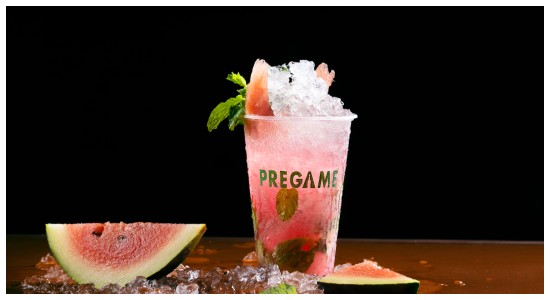
New chapter in Bengaluru’s nightlife
Bengaluru has a thriving pub and nightclub culture. However, tighter excise rules and multiple excise fee hikes have created strain on both business owners and consumers.
According to reports, the Karnataka government recently doubled certain license renewal fees, such as the CL-5 retail license, which rose from around Rs 11.5 lakh to Rs 23 lakh. Liquor prices have also gone up following excise duty revisions.
With bar bills routinely crossing Rs 3,000–8,000 for just a few premium drinks, budget-conscious customers are looking for smarter alternatives, and that’s where Pregame steps in.
“Here, someone can buy a full bottle of premium whiskey like Glenfiddich for Rs 6,000 and enjoy it in a nice setting. In a regular pub, that same amount might get them just a couple of drinks,” Jagadish shared.
“Even though it’s a more affordable setup for consumers, we manage margins through volume. We cater to a large number of people, and because we also deal in good, premium brands, customers are willing to spend. It is a 600-seater space, and the response so far has been fantastic,” he added.
Why the model works
At its core, Pregame combines the best of both worlds: retail affordability and restaurant ambiance. The model also aligns with how younger urban consumers now approach nightlife, seeking flexibility, value, and experience rather than committing to one expensive venue all night.
“Of course, there are challenges, especially because we want to match retail prices while also providing a good dining experience with ambiance. That’s why we took a larger space and decided to play with volumes. For customers, it’s easy, affordable, and social,” Jagadish said.
The atmosphere is intentionally casual, less about dancing or loud music and more about unwinding with friends before the night begins.
Jagadish believes this is just the beginning. “I was inspired by what I saw in Delhi and Gurgaon, but we had to adapt it for Bengaluru. And so far, people are loving it. We initially thought we’d scale gradually, but customer turnout has been much higher than expected,” he said.
For a city long known for its pub culture, Pregame signals a shift. As rising prices and regulations strain traditional bars, models like this could represent a new phase of urban socializing.
One thing that makes an Indian bar perfect is its interior and ambiance, with high stools and chairs near the bartender, giving it solace and comfort. It helps the customers to unwind after a tedious day. Whether the customer is there alone after a tiring day to unwind, or a group of people visiting for a birthday celebration, the interior of the place is what lures them in. The ambiance of a bar is as important as its cocktail menu. Indian customers are seeking more than just a drink now; they need an experience. Visiting a space that is comfortable but also stylish, and every element of the place, from lighting to seating, contributes to its cohesive and inviting atmosphere. And the main element of this space is bar chairs and stools. They are more than just a functional piece of furniture; they are essential design elements that determine comfort, establish the aesthetic, promote longer stays, and boost sales.
Therefore, having the best quality bar chairs and stools is necessary if you want to provide a comfortable experience to your customers and make them your regulars. So, in this article, we will be mentioning the best brands that provide high-quality bar chairs and stools in India. In order to meet the high traffic demands of the Indian hospitality industry, which includes everything from classy lounges to busy metropolitan pubs, we will look into products that are outstanding in terms of durability, design, comfort, and adaptability.
Why Bar Seating Matters
Choosing which barstools and chairs to buy involves much more consideration than just appearance. Durability and a comfortable layout are crucial because these pieces of furniture are exposed to a great deal of wear and tear in a professional context.
- Comfort & Dwell Time: Longer stays, more orders, and a more pleasurable experience are all influenced by comfortable sitting. Conversely, uncomfortable stools cause rapid turnover and may have a negative impact on customer satisfaction.
- Design & Ambiance: The entire theme and atmosphere of a bar or lounge are greatly influenced by the important visual components of bar chairs and stools. The seating sets the style, whether it's sleek and contemporary or rustic and industrial.
- Durability & Maintenance: Commercial furniture must be able to tolerate frequent movement, spillages, and heavy daily use. Strong construction, easily cleaned materials, and a long warranty are all important features of a brand.
- Space Optimization: A place's capacity and flow can be affected by the size and style of its barstools. Options that are stackable or rotatable might be especially helpful for making the most of available space.
Read more: Top Griller & Barbecue Equipment Brands in India for a Perfect Cookout
Key Factors to Consider When Choosing Bar Seating
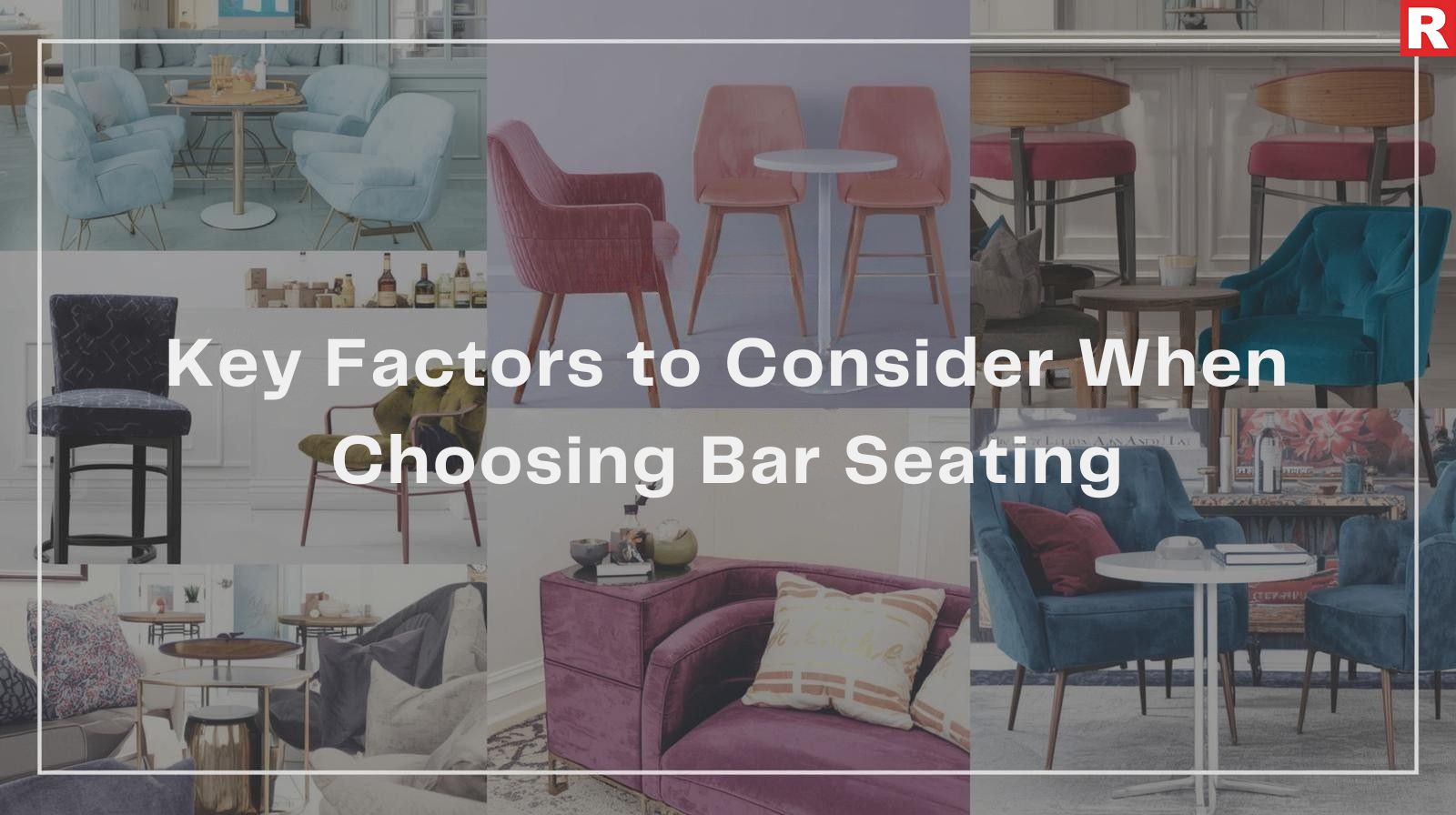
To make sure you get the ideal bar chair and stool for your business, take into account these important factors before making a large investment:
- Materials:
- Wood: Provides a timeless, cozy, and frequently rustic look. Although sturdy, high-quality solid wood can weigh a lot.
- Metal (steel, iron, and aluminum): Offers a sleek, contemporary, or industrial appearance. Incredibly strong and frequently lighter. It is suitable for a variety of finishes when powder-coated.
- Upholstery (Leather, Fabric, Vinyl): Comfort and luxury are added by furniture made of leather, fabric, or vinyl. While cloth offers more design options, but takes more cleaning time; leather and vinyl are easier to clean.
- Ergonomics: Pay attention to details such as footrests, backrests, and the right seat height. Make sure the chairs support comfortable long-term sitting and proper posture.
- Design & Theme: The seating ought to complement the interior design concept of your bar, whether it's traditional Indian, industrial, modern, or antique.
- Rotating vs. Fixed: While fixed seats can keep a more organized appearance and prevent excessive movement, rotating chairs give customers greater freedom to turn.
- Stackability: Stackable chairs are a sensible option for locations that need layout flexibility or outdoor sitting during specific seasons.
- Budget: Purchasing furniture of commercial quality calls for expenditure. Make sure you receive long-lasting items that provide value over time by striking a balance between price and quality.
- Reliability of Suppliers and After-Sales Service: In India, a company with a solid reputation for delivery, installation, and post-purchase assistance is essential.
Know more: Top Draft Beer Dispenser Brands in India for the Perfect Pour
Top Bar Chair and Stool Brands for Indian Bars & Lounges
Below are some of the top brands that are specialists in restaurant furniture and are also popular in the Indian market. Also, they are the prominent brands you should look forward to if you want to buy good-quality stools and bar chairs for your establishment.
Suren Space
Specialties: Famous for robust, handcrafted, and aesthetically rich designs that often blend industrial, rustic, and vintage aesthetics.
With its headquarters in Jodhpur, Rajasthan, Suren Space has quickly established itself as the industry leader in custom and commercial furnishings for the food and beverage sector. They are well-known for their strong, detailed, and visually stunning designs, which frequently combine vintage, rustic, and industrial elements. Suren Space provides an appealing selection of bar chairs and stools for Indian bars and lounges that are constructed from premium materials like antiqued metals and solid wood (Sheesham, Mango) that is obtained ethically. Their wide range of products includes heavy-set hardwood seats that go well with a classic pub, as well as minimalist metal bar stools ideal for a contemporary lounge. The ability to customize, which enables bars to commission one-of-a-kind items that precisely match their particular theme, is what really makes Suren Space stand out. Because of their long-lasting design, their products can survive the high volume of customers in a busy bar. Due to the furniture's durability and classic beauty, the mid-to-high price range delivers exceptional value over the duration while also reflecting the quality of the materials and craftsmanship.
Durian Furniture

Specialties: Famous for providing a balance of contemporary aesthetics, comfort, and durability at competitive price points.
The well-known Indian company Durian, with its headquarters located in Mumbai, has made a smooth transition from producing plywood to providing a wide range of office and home furnishings, including a substantial presence in commercial furniture. Durian is well-known for offering bars and lounges a combination of modern style, comfort, and longevity at affordable prices. Modern designs made from a combination of metal, wood, and premium leather are featured in their selection of bar chairs and stools. Products from Durian are made with a focus on both appearance and practicality, guaranteeing prolonged comfort and complementing the entire design. They provide a range of choices that may be used in a number of contexts, from sleek, minimalist bar stools for modern bars to cozier, upholstered seats for pub seating. Their items are widely available due to their wide network of showrooms throughout India and their strong online presence. They also have a solid warranty on their industrial furniture and a reputation for providing dependable after-sales care.
What's new: Best Commercial Mixer & Blender Brands For Restaurants
Godrej Interio
Specialties: Famous for their functional, durable, and ergonomically designed furniture solutions.
Godrej Interio, a well-known brand in India with its main office in Mumbai, carries on its tradition of trustworthiness and excellence into the commercial furniture market. They are well-known for providing furniture products that are practical, long-lasting, and properly built for a variety of commercial settings, such as workplaces, hotels, and a growing number of pubs and lounges. Comfort and durability are given top priority in Godrej Interio's selection of bar chairs and stools. Their designs are typically more modern and functional, emphasizing sturdy construction with premium metal and long-lasting fabric. They are therefore a dependable option for businesses looking for long-lasting, easily maintained seating. They are the go-to partner for big projects or multi-outlet bar chains because of their broad network of retailers throughout India and their large manufacturing capabilities, which guarantee steady supply and trustworthy customer service.
Urban Living (Urban Ladder Commercial)
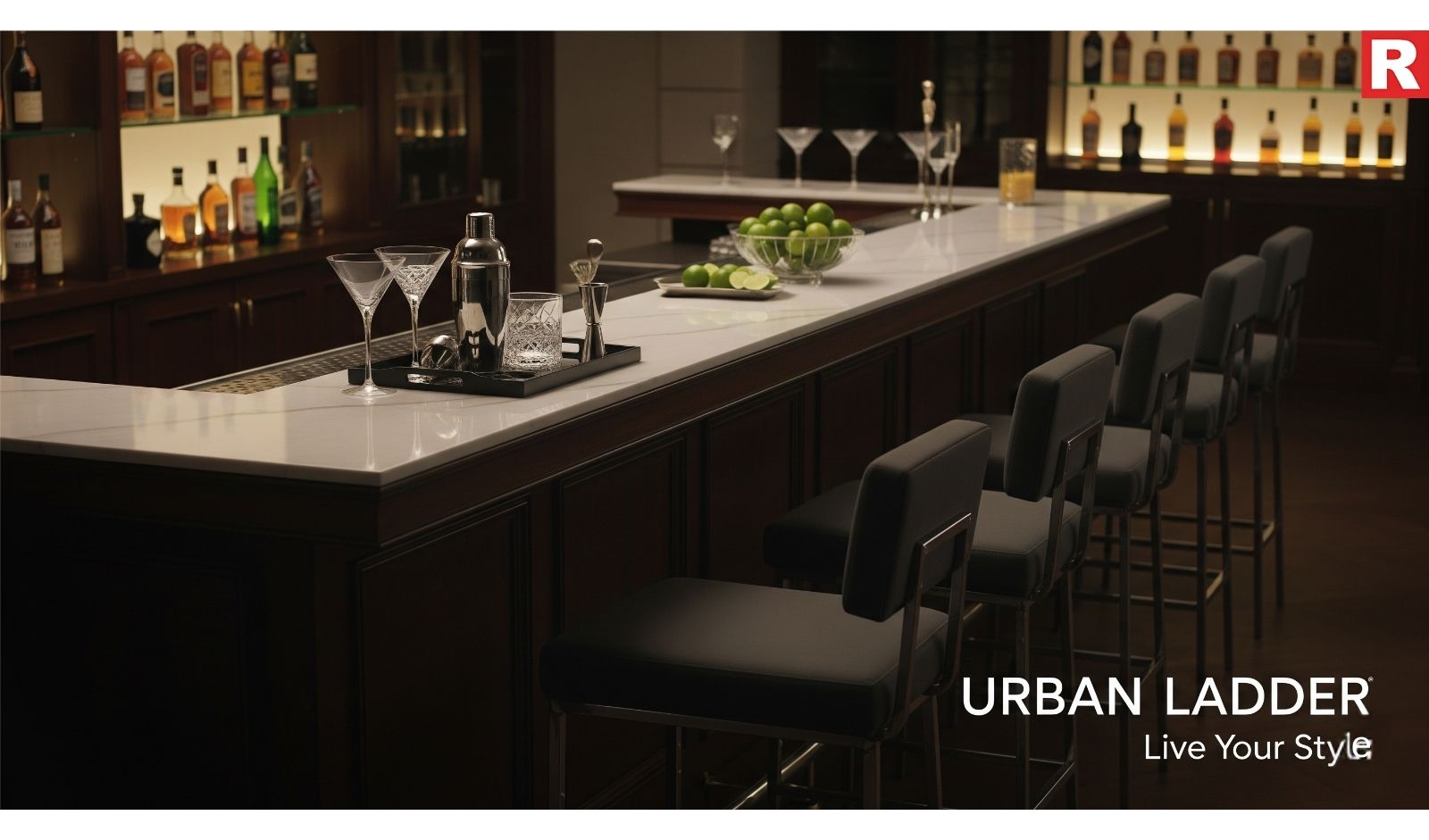
Specialties: Famous for their modern, design-centric furniture solutions that often reflect current interior trends.
The Bangalore-based corporate branch of the well-known online furniture retailer Urban Ladder, Urban Living, has made significant progress in the hospitality industry. Their contemporary, design-focused furniture solutions, which frequently mirror current interior trends, have earned them popularity. Urban Living provides a carefully chosen selection of chic bar chairs and stools for bars and lounges that are both aesthetically beautiful and appropriate for business use. Modern designs, a blend of materials like metal, solid wood, and creative textiles, as well as an emphasis on simple lines and cozy sitting, are characteristic features of their goods. For modern bars and lounges that wish to create a hip, Instagram-worthy atmosphere without sacrificing commercial durability, Urban Living is a great choice.
Check out: Top Tea Brand options to consider for Restaurateurs in India
GST on the Menu: Serving Uniformity Across F&B
Pepperfry Business
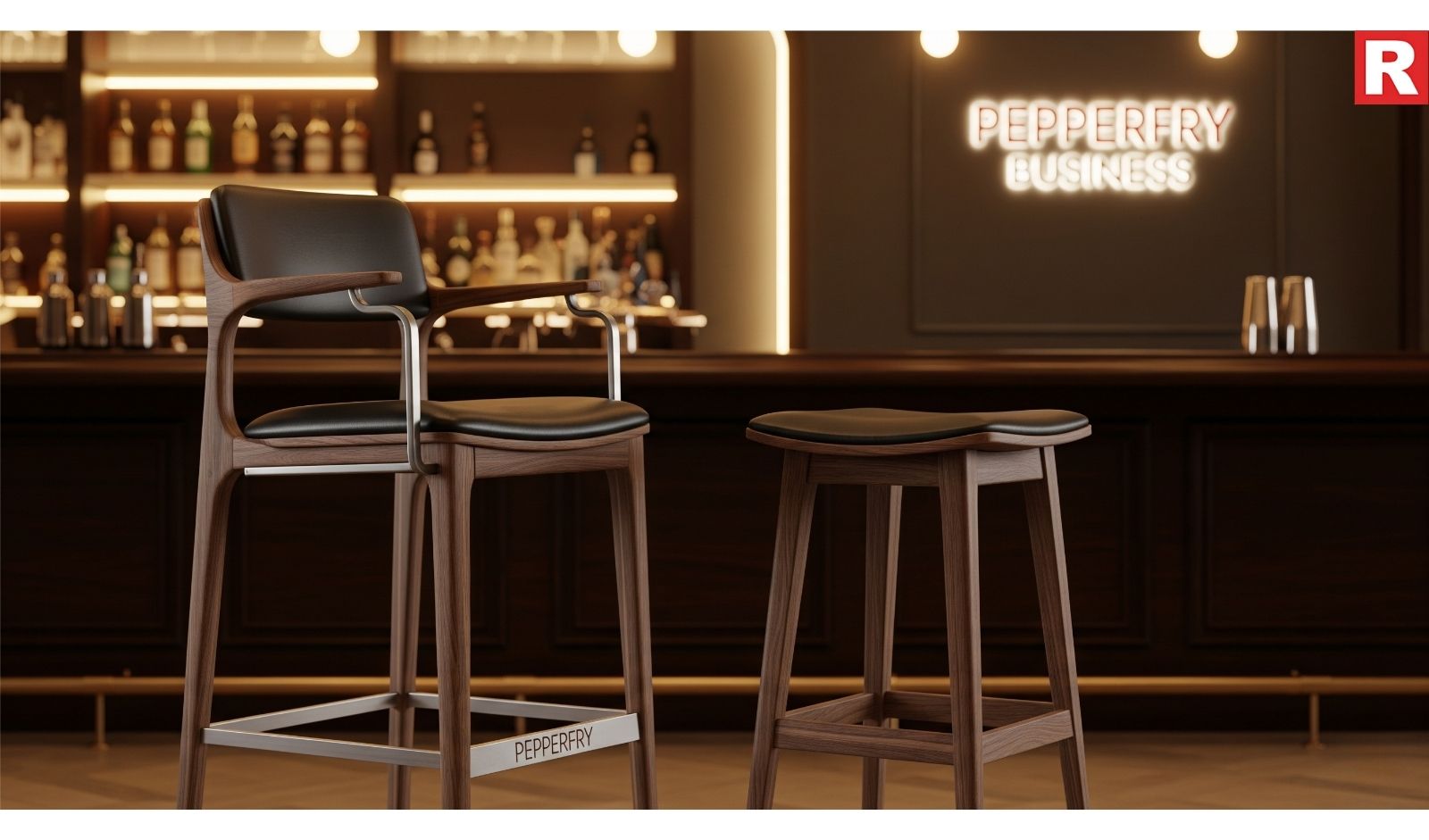
Specialties: Famous for its vast selection and the convenience it offers to businesses looking to furnish their spaces.
One of the biggest online marketplaces for furniture and home items in India, Pepperfry has its headquarters in Mumbai. Its "Pepperfry Business" division specializes in serving corporate clients. This platform is well-known for its wide variety and the ease with which it provides businesses wishing to furnish their businesses, such as lounges and pubs. Pepperfry Business serves as a one-stop shop, combining goods from different producers and designers to provide a wide selection of bar chairs and stools in a variety of styles, from contemporary metal and fabric-covered to traditional oak. The brand's strength is its ability to offer solutions at different pricing points, which makes it appropriate for both developed high-end lounges and startups on a tight budget. For restaurateurs who do not have direct access to a large number of suppliers, their online model makes the purchasing procedure effective by providing bulk ordering capabilities, design guidance, and ease of browsing.
Read this: Top Eco-friendly Packaging Brands for Restaurants
Beyond the Aesthetic
Selecting the ideal bar chairs and stools is a strategic approach that involves more than just aesthetic appeal. It requires a delicate balancing act between cost-effectiveness, durability, comfort, and design. With their unique selling propositions, the brands discussed in this article provide a variety of options for the modern hospitality industry. Restaurant owners in India may choose the ideal seating that not only improves the aesthetics of their space but also makes a big difference in customer satisfaction and revenue growth by carefully weighing important aspects like material, design, and after-sales support. A well-chosen bar chair or stool invites customers to stay, mingle, and enjoy the moment while serving as more than just a place to sit.

Mumbai’s favourite bar located at Khar West, Radio Bar, is celebrating its 10th anniversary.
Known for creating luxury with food and drink and uplifting the mood with its music, the brand is also high on expansion.
“Ten years ago, Radio Bar opened its doors with one simple goal—to be your happy place. A place where the music is loud, the memories are louder, and the vibes are always just right,” read an Instagram post by the brand.

Radio Bar will also organise live performances by some of Radio Bar’s favourite artists to mark the week of celebration - including Afreen (2nd May), Sairaah (7th May), Siddharth Kohli (9th May) & Bobby (11th May).
“We will also be launching a brand new food and drinks menu — including a specially curated and unique and exciting cocktail menu,” shared Syesha Kapoor, Associate Director, Aspect Hospitality that runs Radio Bar.
It is also planning to debut its entire team to a brand-new uniform to mark this new era, which subsequently will be implemented across all Radio Bar outlets pan India.

“At Radio Bar, the music doesn’t just play — it pours. Our all-new cocktail menu is a tribute to the tracks that made us move, featuring playful concoctions like Subah Hone Na De, Zara Sa Jhoom Lo Mein, Pehla Nasha, and Chaiya Chaiya. Each cocktail hits a different note — whether you’re in the mood to sway, spin, or just sit back and vibe. Just like our stage, our bar celebrates all things homegrown, bold, and unmistakably Mumbai,” she added.

Elevating experience, the brand will also have a full rebrand of the crockery and plateware customised with Radio Bar logos and graphic elements.
Currently operating at Khar (Mumbai) and Bellandur (Bengaluru), it is also planning to enter Hyderabad by this June and Mumbai (Airoli & Malad) by end of August.

On September 16, Remy Martin Talent Academy hosted a competition where 12 of India’s leading bartenders from across the cities battled out to showcase their bartending skills. The competition was followed by a cocktail evening, where Jamie Rhind, Bar Operations Manager of Asia’s 50 Best Bars 2018, Bamboo Bar at Mandarin Oriental, Bangkok, took over the guest bar shift. At the sidelines of this event, Restaurant India had a brief interview with him, where he spoke about the energy of the competition, the bartenders’ creative skills, and how travel has influenced his cocktail menu
It sure was one of the most intense competitions held in the space of bartending. And there was a reason, considering that the winner now will get a chance to represent the country at the international finale of the Remy Martin Bartender Academy to be held at Cognac, France. Excerpts from the interview:
How was the competition? Did you enjoy it?
It was amazing. I saw some really cool ways of presentation. You can pretty much guarantee that every bartender in the competition is going to make drinks, so the focus is on what else they do? If you look at the winner today, she was doing some sort of meditation music and that is what made it so different. So, whatever you bring to the table, what catches your attention is something that is different and unique. It’s a competition where judges judge 12 people for 12 minutes each. So it’s interesting to see how the competitors do something to stand out. It’s your passion for making cocktails and what you do with it and I think it shines through in a contest like this one. A lot of them had this today. There’s one this I can take back from India and that is their passion for bartending, which is amazing. They love what they do. So it is really nice to see that.
Do you think Indian bartenders are not experimental?
For me, it is all about travelling through which I get to experience new things. Whether you learn from your performance on the stage or get inspired by other people, travel is going to make you creative. I was impressed by the winner. I liked her presentation. She was passionate about her performance and this is what’s important. I loved the Tom and Jerry classic as well by one of the guys. So there were really nice cocktails.
How does travel influence your bartending skills? Where do you get your inspiration from?
First of all, you have to know your clientele. When I first arrived in Bangkok, I did a menu based on my ideas that I had in London. It was very cool but the local market did not like it. They are very proud of their flavours and ingredients and they don’t like to change. They like to see things on the menu which they already know. So my second menu was based on local ingredients. Incorporating local ingredients into your menu is cool when you are travelling. It depends upon where you are in the world. In London, they want to try the craziest things. They have a lot of money to spend, they want to try and if they don’t like it they don’t care. But in Thailand people want to see what they know.

If a restaurant or bar opens its doors and no one is there to eat or drink, does it make a profit? Of course not. Customers are the lifeblood of the hospitality industry. However, even the busiest and most popular locations all experience the ebb and flow of business. There are certain times of year during which the stream of people can slow to a trickle, or perhaps even stop altogether. In markets that depend on seasonal visitors, such as skiing communities and along the coasts, the offseason can be a very lonely time for food trucks, family restaurants and others.
Just because your business may have to survive a quiet period doesn’t mean it should suffer. There are plenty of strategies you can employ to boost traffic to your location or become leaner. For example, you could create cross-promotional opportunities with other local entrepreneurs to attract new customers. You might streamline your operations when you expect activity to be at a low point and save money.
The accompanying guide contains numerous pointers you can use to help you become better prepared for winter or whatever form the slow months take. These periods of inactivity may be inevitable, but they don’t have to mean the end of your dreams.


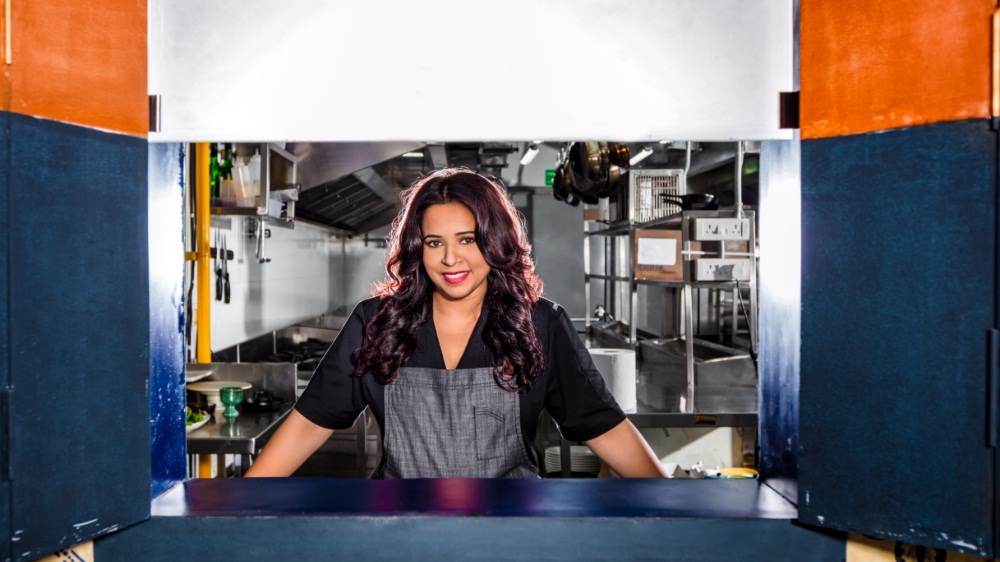
Chef, foodie and businesswoman Pallavi Jayswal is a force to be reckoned with. A culinary wizard, she has achieved multiple feathers in her relatively short career. During these years she has worked with multiple restaurants and brands. Her love for food and entrepreneurship led her to start Uno Más, a Spanish Tapas Bar. She is also the co-founder of Nessun Dorma Food Ventures.
Her first official culinary job was at the mecca of Indian fine dine, Indigo Restaurant at Colaba. She was entrusted to handle an entire section of the kitchen. She reminisces her time there by the fast-paced dinner services and long working hours. She has a Diplôme de Cuisine from Le Cordon Bleu, London and a Level 2 in Wines and Spirits, awarded by the Wine and Spirit Education Trust.
In an interview with Restaurant India, Pallavi Jayswal, Chef and Co-founder, Uno Más - Tapas Bar Kitchen, talks about her journey as a chefpreneur.
“It is an Exciting Time to be in the Food Business”
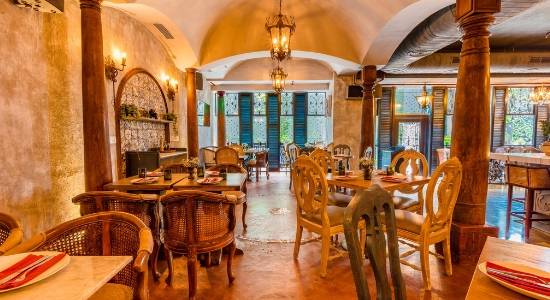
Interiors of Uno Más - Tapas Bar Kitchen
As compared to the past, consumer culinary trends have progressed by leaps and we are seeing a much evolved Indian clientele that visits our restaurant these days. These guests are well travelled, well-read, curious and extremely aware of food, flavour and overall experience. This is the greatest challenge and compliment as a chef. Having the chance to put out something of your own making, and seeing it, satisfy this refined palate.
The Pros and Cons of Being a Chefpreneur
There are only Pros to being a chefpreneur. It actually simplifies the thought process. There’s never a struggle between innovating in the kitchen and having a guest-friendly offering, tailor-made by your own flavour preferences. Ultimately, it’s the guests’ satisfaction and team's development that’s the broad focus in all decisions. The opportunity to have a voice in the culinary scene, and seek like-minded individuals whose growth I have an opportunity to assist in. The greatest satisfaction is the opportunity to wear both the white cap as well as the corporate suit.
Secret Recipe For Success
Consistency! Delivering new and innovative flavours in an ever-welcoming ambience with an honest warmth in the service of our guests day after day.
Main Challenges While Starting Uno Más
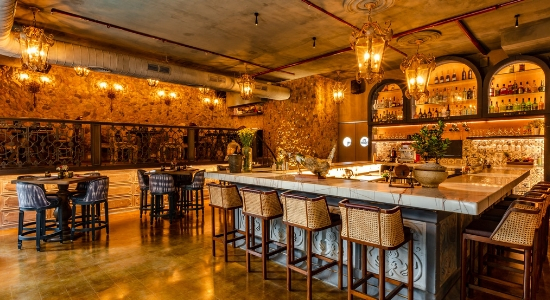
Interiors of Uno Más - Tapas Bar Kitchen
One of the key challenges was choosing our team and being chosen by them. We were extremely particular of whom we wanted to work with and that took substantial time and effort. We persisted but did not compromise even though our selection rate was pretty abysmal. We gave ourselves more time than most to choose and train the best!
Must Read: 15 Inspiring Indian Women in F&B
Key Marketing Strategies with Uno Más
Our priority has always been to provide the overall experience. Food, drink, ambience and guest experience. To say one supersedes the other would be a step in the wrong direction. When you visit Uno Más, our hope is to have you savour every element of the journey that has brought about our offering. Whether it is sipping Sangria at the cantinas of Seville or admiring the bóvedas over the verandahs in Mallorca; the Patatas Bravas on a balcony overlooking the bustle of Madrid or the mystique in the Flamenco in Granada. Our strategy has always been the experience from Hola! to Bienvenidos Amigos to Muchas Gracias.
Also Read: Effective Restaurant Marketing Strategies By Chef Anaida Parvaneh
Catering to Indian Tastebuds
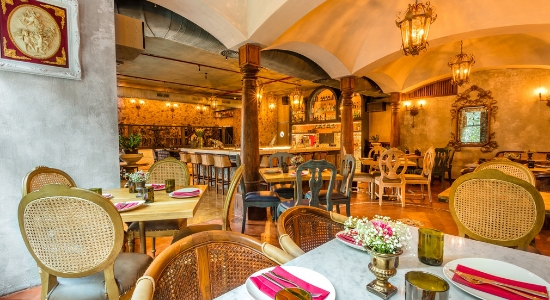
Interiors of Uno Más - Tapas Bar Kitchen
It is a demanding task to present international cuisine with a mild and more subtle flavour profile because as Indians we are used to eating a whole lot of spice. At Uno Más, we’ve paid heed to that and tried to present Spanish cuisine with an Indian heart with the use of subtle, memorable spices without compromising on the Spanish flavours. This has been very well received by our guests. Making vegetables more interesting for Indian guests is always a challenge because most vegetarians, sadly, do not like to experiment with new vegetables.
In Pics: 7 Women Changing Food Service Scene In India
Approach Towards Supply Chain Management at Uno Más
We are very particular about the produce that we bring in to our restaurant which means the best of Spain and Europe (Olives, Olive oil, Cured meats, cheese etc.) to the best of sustainable local produce. We have partnered with trusted importers, artisanal confectioners, responsible growers and process driven suppliers to bring a high-quality offering to the table.
Food and Drinks People Order More at the Restaurant
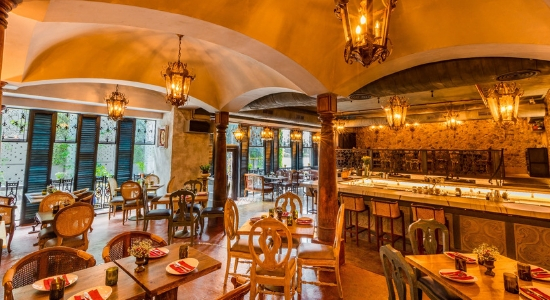
Interiors of Uno Más - Tapas Bar Kitchen
We are so pleased to have seemingly been able to imbibe the heart of India with the soul of Spain. While our signature tapas like the Gambas Al Ajillo (Garlic prawns cooked in prawn head oil) and the Patatas Bravas (Crispy baby potatoes in smoked salsa brava with garlic aioli) are definitely amongst the most coveted finger foods on offer, the Sunday Roast (Black spiced whole roast chicken) seems the likely choice for brunch with friends and family over the weekend. The Shroom, and The Frenchie, certainly seem to leave our guests calling for Uno Más where the tipple is the name of the game. For desserts, it's Churros for the win by far.
These, mainly because the Paella de Marisco or Sangria Tinto might just sound overly generic for a Spanish restaurant in BKC, right?
Presence, Growth and Expansion Plans
At Nessun Dorma, we are all about the unpretentious, wholesome dining experience that has the ability to transport you to our travels around the globe. The response to our first venture has been overwhelming and this is definitely the inspiration for more to come. Uno Más we say!
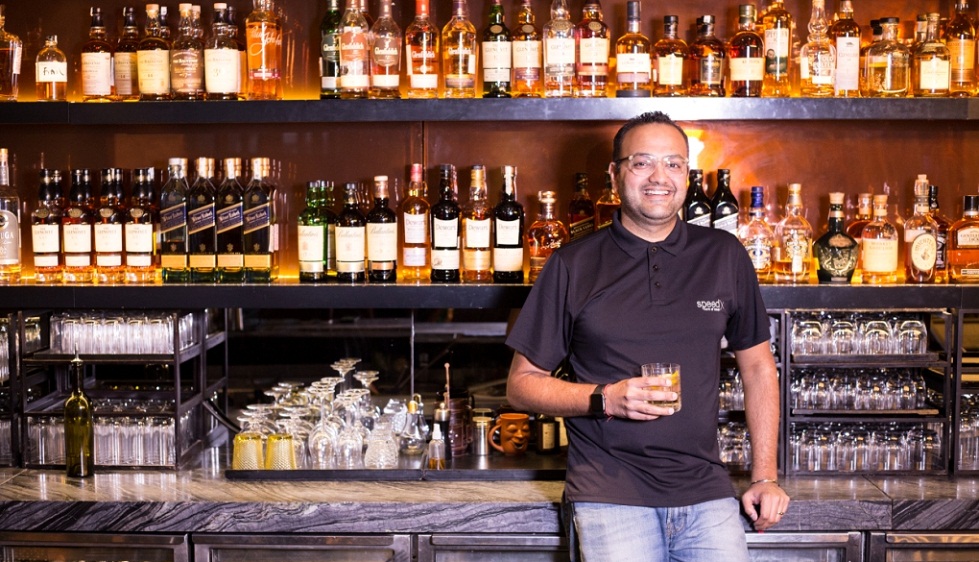
SpeedX has been disruptive with its custom-made bars, product design, quality and unmatchable after-sales service. Anirudh Singhal founded SpeedX, the bar design brand, in 2014 with an intent to create inspiration and innovation in bars. While the global landscape of the food and beverage (F&B) industry was undergoing a massive change, the minds behind SpeedX understood and weighed the gap in the market. Foreseeing the exponential growth of the industry, the bar design brand, since then, has been experimental in bringing great innovation and quality to the beverage sector.
In an exclusive interview with Restaurant India, Founder of SpeedX, Anirudh Singhal talks about the design approach of the bars that ensure faster service and prompts an increase in the sales.
How would you define the first bar designed by SpeedX?
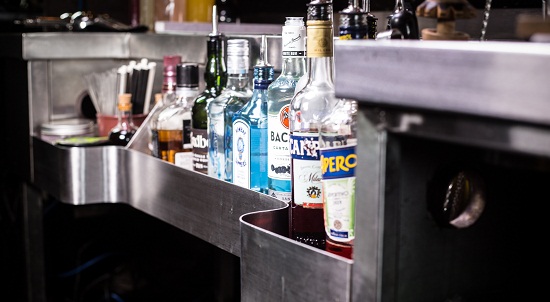
The first bar that Speedx designed and built was Khar Social, Mumbai, in 2015; it was a collaborative effort between us and the team at Social. The bar counter was an island (of sorts) with three sides, serving guests — the layout was planned in a way it allowed the bartenders to serve on all three sides while working on the central island counter.
Must Read: People Prefer To Drink Scotch At Home
This central island was a mother cocktail station propelling drinks to all sides of the bar counter. So, when the bar was in full swing it appeared as if the bartenders were collectively preparing drinks on a central piece of equipment, and then turning around and serving the tipples. It all looked theatrical. And this happened three-four years ago! Only a few bars look like the way Khar Social does. It was quite a cutting edge.
What innovations did you bring with Speedx?
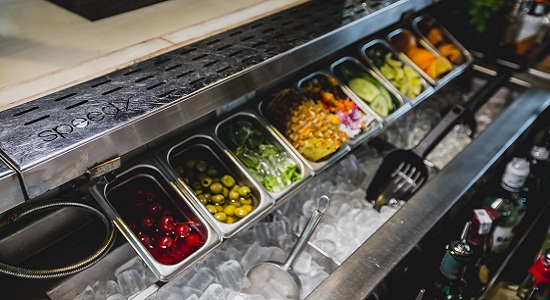
Earlier, our focus was to create bars that could aid in showcasing bartenders’ craft. But now, our prime concern is to make a bartender’s life easy. Hence, we introduced the concept of drip trays in bars as opposed to the rubber mats. Drip trays are a common practice in western countries; not much popular in India. These trays, on guest counters, allow bartenders to prepare their drink with the glasses placed on them. This way a bartender showcases his skills and creates visual excitement to other patrons in the bar.
Second, we noticed, the bartenders would stand far away from the guests at the bars which minimised the interaction. We designed equipment which wasn’t deep, thereby, getting the bartender up close and personal with the guests.
Also Read: Bar Equipment Design Trends For 2019: Slushies, Tipples On Tap
In certain cocktail station designs, we even have curved speed rails to bring the bartenders closer to the guests.
Third, to ensure a quick turnaround whilst preparing a cocktail, we introduced the concept of rinsers in bars. The concept is popular in many fast-moving bars abroad. These rinsers work on the principle of hydraulics. As soon as you finish mixing a drink in a glass, you can turn it upside down over a rinser. A gush of water comes out to rinse and makes the glass ready for the next drink. The same can be done for cocktail shakers and other mixing tumblers. This propels bartenders to get into the next drink faster without wasting much time on rinsing activities.
These are some of the innovations which keep us ahead of the curve when it comes to the Indian bartending equipment market.
Your approach to designing bars?
We ensure the principles of ergonomics are adhered to, and everything a bartender needs is at an arm’s distance. Also, the Speedx equipment is anthropomorphic, in other words, very intuitive to use and one generally doesn’t need training or a manual to use them.
How the bar designs have evolved in the past four years?
Overall, bar designs have taken a leap of faith in the last four years with architects, interior designers, promoters and restaurateurs doing a fantastic job of creating venues, especially in design, which are sometimes better from the ones we see at international bar space.
Earlier, the restaurant entrepreneurs would end up hiring kitchen designers to plan their bars. That was suicidal! Imagine a person who has never worked in a bar and gets to decide where the sink or ice-bin would be placed. This practice set a base for complete disaster. Just because the bar is wrongly set up, the guests complain of slow service.
This is changing now. With more F&B concepts being beverage-centric, a lot of focus is put on overall plans, especially on how the bar should be, how much space should one allocate and the location. Now, there are restaurateurs who brief us the concept of their restaurant, this helps us in the design.
Challenges in designing a bar?
The biggest challenge we face when we set off to design a bar is the paucity of allocated space. At times, the bar space gets the step-motherly treatment from the restaurant owners. In such a scenario, we try to optimize the space available by creating designs that augment cocktail/beverage dispensing in the minimum space.
Another challenge is to integrate beers on tap and the rest of the equipment inside a bar. A lot of bar owners want different variants of craft/draught beer (which is a great thing), but the equipment and accessories that come along with these bars end up making the layout quite haphazard. Thus, it becomes an obstacle in planning a proper bar layout. But we have come up with custom-made solutions where restaurants can set-up their own draught beers; alternatively, we liaise with all beer brands to ensure streamlined installations.
Also Read: Will Gin Be The Next Big Trend in 2019?
Another common problem is the height of the bar counter. A lot of venues have to raise the floor inside the bars to accommodate plumbing requirements. This makes the guest counter look quite high. We try to customize the height of our equipment in order to leave enough working space for the bartenders.
Your dream project?
We take every new Speedx bar project as it’s the most important. Designing and building my own bar would surely qualify as a dream project. But that will have to wait for now!
Things to Know About SpeedX
Restaurant Bars Designed by SpeedX
Some of the renowned restaurant bars designed by SpeedX are - House A at Hyatt Regency (New Delhi), Olive restaurant (Bandra in Mumbai), Social (Delhi and Mumbai), Café Delhi Heights (Delhi and Mumbai), Fatty Bao (multiple locations), Punjab Grill (multiple locations), Cin Cin (BKC, Mumbai), Mamagoto and Sly Granny’s (multiple locations), Bo Tai, Qutub (New Delhi) and many more established players.
Products Offered
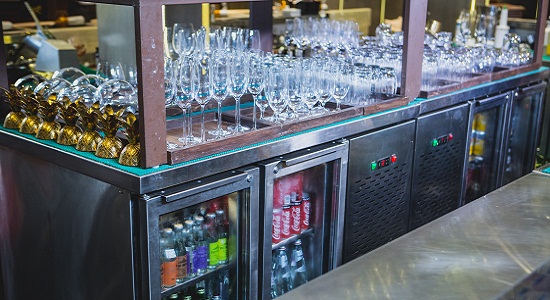
SpeedX offers the best-in-class chillers, refrigerators, simple bottle coolers, mug chillers and even drawer refrigerators.
Complaint Resolution Policy
SpeedX has a 24-hour resolve policy.
Future Plans
The bar design brand is now taking projects to create bespoke bars for luxury homes, villas and entertainment centres.

Mumbai' is a city, Bombay is an emotion! And almost about synonymous to Bombay is Bollywood. No wonder the city of dreams welcomes everyone with open arms and serve delectable food. To anyone who has ever been to the city of dreams, or yearns to land up there, Bombay Bar promises to recreate the jazz Era for you. Age old recipes and evolving dining behaviours are the highlights of the Bombay Bar at Connaught place. The style on which the Bombay Bar runs is Bollywood.
As the name suggests, the bar is true to it and serves Bombay ka food and drinks! To start with, Bombay Bar serves, Mumbai Chowpati ka Chakna, Ghatkopar's khao gali, Kohlapur chicken lababdar, Juhu Beach ka tawa pulao , Noorani cheese stuffed mushrooms and Almond crusted Broccoli, Serial griller Pizza and Pasta and food from Khaogalis of Churchgate to Khargar and Zaveri bazaar has to offer the famous street food of Bombay, Parsi, Gujrati, Kohlapuri and Irani dishes.
With a seating capacity of over 100 guests at a time, the place also has 2 Private Dining Room, Serving Cocktails, Beer Buckets acclimatizing the ambiance from the 70's to the 2020's. Bombay Bar encompasses the best of Bollywood, as it runs in the veins of the city. With a beautiful lounge to recline and rejoice while simply bollywood plays in the background, backed by some or the other celebrity from Bombay.
“For a nation which is fuelled by Bollywood, we are glad that we have an opportunity to recreate the magical feel of it for our customers. The beauty of Bombay Bar is its connection with the origin place, Bombay. We have brought together both in a collaboration for the people to not only transcend into the parallel universe but also to allow them to enjoy to their core,” shares Dinesh Arora founder and Managing Director.
With over 10 signature cocktails to serve chilled with acclaimed dishes from the Bombay city, the bar is an adaptation of the city's theme. This is a bar which serves modern cocktail with Bombay touch wherein we have to offer, Quick Service Cocktails. Some of the cocktails to tingle your throat and soothe your liver like Life in a metro, Dream City, Bollywood Martini, Bomb-EYE, Red Carpet, Baadhshah Journey, Banana Mustard Cocktail, 7 island’s, Miss Briganza, Bombay- Bar Cutting, Queen’s necklace and what’s in a name from our exotic signature collection. Our High energy drinks include, Bhaag Bombay Bhaag, Bata Maajhi satakli, PK ek number, Baby’s night out and Give me water to energize you through the night and rejoice life Baadhshah size! Each one has a story behind that will make you nostalgic
What was the whole idea bringing The Stables to India?
The Stables is a British Gastropub catering to, but not limited to the, equestrian lovers of the world. The Stables is a popular and well established Dubai brand that’s garnered its set of loyal clients. The concept of Gastropub is blooming in India. The consumer trend has gradually transformed from party culture to sit down culture. People are keen on conversations which are well facilitated in a Gastropub. In addition, we also have live gigs as a part of the Stables experience. People in India, especially Mumbai are comparatively more receptive to live gigs. Mumbai has many tourists, travelers belonging to different nationalities which have made the Mumbai crowd more diverse hence making the consumer graph more global in nature. As a brand our larger vision includes catering to a global and well-travelled client, irrespective of their nationality. The market survey spells out the need for a Gastropub with a cross culture experience. This was the whole vision behind bringing The Stables to India.
We see that there is a growing culture of gastro bars and pubs in the country. How do you see the ongoing opportunity?
As I mentioned before, the whole consumer trend has metamorphosed itself from loud music / party culture into a more sit down culture wherein people value interesting conversations, prefer cracking business deals, having small talks, meeting new people and exchange of ideas over simply drinking and dancing. Essentially, as a brand we are navigating the whole process. We have also introduced an interesting backyard concept - The Sables backyard which induces nostalgia and is an additional comfort jacket for our “global” consumer who wants to feel at home, revive memories. There are many interesting concepts in pipeline for The Stables backyard. The gastropub culture in our country is definitely flourishing but what will make each one stand out from the other is the brand personality, characteristics, features and distinctive tonality which every restaurant/gastropub will embody. Therefore, answering your question, the opportunity is dynamic but authenticity of concept will define the brand longevity.
How do you see the market in terms of customer experience and target audiences?
Today’s customer is not just well travelled and well aware but they are also experience oriented. They expect value proposition in terms of service standard, quality of food drinks, ambience, and music. At the same time today’s customer also has a very short attention span. The right way to please today’s customer in the most methodical yet hospitable manner is to draw a fine balance between value proposition and innovation in brand experience. The market being very dynamic in its nature, it’s important for the brand to be diverse & innovative to keep up with the consumer.
Mumbai has always been known to set up the tone of nightlife scenario in India. How are you trying to add that feather in its cap?
The Indian market, especially the Mumbai market is very dynamic. In the current situation there is a strong potential for an experiential venue which not only serves food, cocktail, music but also presents a unique customer experience. Today’s consumer, being global in nature, look out for a lot more than food and cocktail. They look out for places to socialise, communicate, meet new people, exchange ideas, and expand their friend circle. The Stables as a brand simply facilitates these requirements. We are looking at being the mediators who can build a bridge between the mechanical world and the homely experience (which every individual today yearns for). Therefore, we are not just looking at being another addition to the existing nightlife but also being a value addition to the present nightlife experience. We are looking at achieving this goal by providing quality experience and value proposition to the consumer in addition with well-curated IPs and fun activations.
Tell us something about your global presence. What is the expansion plan?
At present we are located in Dubai and Mumbai. We are looking at dual expansion – both, globally and within the Indian market itself. However, we would like to take one step at a time and hence we shall look at revealing the expansion plan as and when it is at the final stage.
What are the design elements that you kept in mind before opening this place?
The Stables is a British Gastropub with an equestrian theme. Hence, our core agenda with respect to design and décor remain focused on drawing a fine balance between the Brit and the equestrian element inorder to create an effortless blend of sophistication with an easy going country vibe. You will witness the usage of wood and bronze (English in nature) along with elements which are representative of the equestrian element. The overall ambience is warm, homely and focused on individual comfort of our patrons. We’ve kept it simplistic in design with an authentic ‘country vibe’ appeal.
How about the menu designing?
The menu design is largely Global with multiple variations in European cuisine while focusing on British. Elements like butter chicken, chicken tikka masala which are extremely popular amongst global client, especially Europeans were mandatory as they are very much in demand amongst global well-travelled client. Considering we are catering to a global client we felt a strong need for it to be on our menu. Other than that we have the British quintessential like Mac & Cheese, Fish & Chips and Shepherd’s Pie.
We have seen that over the years customers have become much more experienced and knowledgeable when it comes to eating out. How are you trying to enhance that experience?
As I mentioned before, todays customer is not only well travelled and well aware but also experience oriented. They expect value proposition in terms of service standard, quality of food, drinks, ambience, and music. It’s important for the brand to be diverse & innovative in order to keep up with the consumer. In order to cater to the varied expectations of the modern consumer we have embraced the psyche of the customers and have been innovative in the menu designing, while offering a diverse range of cocktails and food.
What is your plan expanding in India?
Being a Dubai based brand we definitely are aiming at a wider global reach and presence which is a part of our long term vision. However, the short term goal remains expanding within the city and looking at a national presence. We are taking one step at a time and aiming at precision in terms of customer experience.

What are the qualities of beer that you serve at Mahou?
Mahou San Miguel, a 100 per cent family-owned Spanish company and a leader in Spanish beer industry, has 125 years of brewing experience, beginning with the birth of Mahou in 1890. The key differentiator of our products is the unique yeast, a closely guarded secret that gives the beer its unique personality. While we have worked on a formula to satisfy the Indian palate, which usually demands beer which is less bitter, we continue to use this secret ingredient in our products. Currently, we have the following products exclusively being brewed in our own brewery in Bhiwadi, Rajasthan.
Mahou 5 Star
Mahou 5 Star has been created to satisfy the most discerning palates! With a bright golden yellow appearance, Mahou is marked by notes of toasted barley. Its great balance of taste makes it an authentic 5 star experience for our consumers. Mahou is known for its way of serving – the famous “caña” from Madrid and the thick cream that envelops the glass when poured with a perfect serve.
Dare Devil
Dare Devil is our wonderful Indian brand brewed with “Dare to Win” attitude. It is a superior fresh tasting strong beer, specially crafted for the Indian palate. With its premium packaging and an easy pull off cap, it’s produced to the highest standards of European brewing.
Mahou Clásica
Mahou Clásica is a premium lager that comes with a tinge of fruity flavours and bright golden colour. It maintains the original Spanish recipe, taste and quality given to its production since 1890. It has a crystalline aspect and a faint, elegant malt aroma. It is a scrumptious, refreshing drink with a well-integrated bitter finish and very light balsamic hints, brewed for those who believe in the classic taste of a smooth, easy to drink beer.
India is not an alcohol ready market. What is your view on the same?
The consumption of beer in India has now started becoming more socially acceptable and we see that people’s perspective about beer is changing in a positive direction, becoming part of social engagement with friends and family. Beer market in India today is equivalent to 27 million hectolitres. Per capita consumption is approximately 2 litres (1.9 in 2014 and it will reach 2.2 in 2016 according to Euromonitor). It has grown at a rate of 13% over the last 5 years and it is expected to reach more than 37 million hectolitres in 2019, enjoying high single digit growth in the coming years.
You have 7 breweries in Spain. What is your plan of exporting to other countries?
Mahou San Miguel products are present in over 60 countries worldwide. The company produces more than 75 per cent of exported Spanish beer. As mentioned, Mahou San Miguel has eight brewing centers, seven in Spain and one in India and two water springs all equipped with the latest technology that ensures excellent quality of all our products. We are the largest producer of beer in Spain and our market share is about 37%. Right now, our international business is about 13% of our sales, the objective is to make t 20% sale in the next 5 years and India forms an important part of that plan.
How do you compete with global brands in the segment?
Taking a leap beyond the Spanish industry, Mahou has brought its 125 years of brewing experience to India with the flagship beer, Mahou 5 Star to be the first ever Spanish beer to be brewed in India. While Mahou is synonymous with the Spanish culture of enjoying good food and beer, we want to create that culture for our Indian consumers. We have recently started Mahou Cañas & Tapas Nights that were aimed to bring the Spanish flavor to the Indian consumers through Flamenco, Spanish guitar and music and so on. We believe the Spanish culture is making inroads in India, the'Cañas & tapas' (Snacks and Beer) of Spain, will soon become a regular resort of Indian party enthusiasts.
Who is your target customer?
Our potential consumer profile is the brand conscious people of urban cities, who are open to experiment with new international brands and high quality products. They do not just drink beer, but they savor and enjoy it. They want to enjoy superior quality experience and are ready to spend a few extra bucks for that. With a growing population of young adults who are increasingly more adoptive of premium brands in their focus towards a quality lifestyle, we feel we have a good brand portfolio to accommodate these premium consumers.
How are you placing in the Indian market as we see lots of players emerging?
Currently we are in the launch phase and are learning at each step of doing business. We share accumulated experiences across our teams, both within India and globally. We are in India for a long term, and we want to do it right. Indian consumers are increasingly adapting to new high quality brands. There is a growing acceptance of international beer brands which isn’t restricted to only tier one markets. The Indian market has the highest growth rate worldwide with a CAGR of 13% over the last 5 years and by the next 5 years, it will grow up to 45.14 crore cases. India is the first market for us outside Spain, where we have started producing beer locally through our fully owned subsidiary.
Who do you see as your competitor in the market? How is your strategy different from them?
We see as our competitors any other beer brand playing in the premium segment. Our beers are appreciated not only for their quality and taste, but also for the Spanish lifestyle, values and the serving rituals with which they are associated. As a Spanish company with 125 years of brewing history, we believe that no one can deliver authentic fun loving Spanish experiences to the Indian consumers like us.
Eddies Bistro made its debut in December 2013, located amidst the bustling suburb of Bandra. The restaurant is an all-day casual dining restaurant and is the ideal destination for a fun date, family gatherings, catching up with friends and having a good time, with its comforting menu and relaxed ambiance.
As you are the chef and the owner of the restaurants. So, how do you design your menu?
The food menu can best be described as modern Mumbai cuisine, comfort food for the soul. I believe that there is always a need for classics, which I have adapted in my menu in an innovative manner. I love trying my hands at different things which has led to the creation of a fairly recent infused bar menu comprising a range of vodkas and gin infused with unique flavours made in house.
Are you facing any challenges in operation?
While working in different kitchens after passing out from culinary school, we were all called chefs. But I understood the real meaning of being a chef after handling everything from start to finish at my own venture. Right from handling the construction, maintaining staff, menu, purchase, sale, salary, quality and licensing issues. It’s a whole different game with tremendous responsibilities but at the end of the day, I enjoy it.
Tell us about your business/revenue model?
We are a growing business and alter our strategies every few months, after achieving targets from the previous plans. Our simple ideology is that consistency in great food and service can achieve desired results.
Who do you see as your major competitor in these segments?
There’s quite a bit of competition especially with newer concept restaurants coming up every other day. Eddies is a gastro pub and bistro and there are various gastro pubs which has recently come up as well but we still have our loyal clientele and we also have a lot of new customers who walk in captivated by the fun interiors and our delicious food menu.
According to you, what are the new trends in F&B industry?
I feel slow cooking will be the next big trend. Slow cooked food has a different flavour altogether and a burst of textures as well. I also feel that tapas bars will be a major trend next year with various upcoming restaurants using the concept of a tapas bar. Organic and vegan food is also catching up with more people focusing on eating healthy and switching to vegan food.
How do you train your employees? How do you connect to your customers?
I have a friendly yet affirmative approach towards training. I consider all my employees as partners in running a successful operation. I would term it as a personal relationship with each employee, which would motivate them to build similar relationships with guests. I use the same strategy for internal as well as external customers.
What is your target revenue for this fiscal?
As every business wants to grow and create a difference in the community, we at Eddies also have an escalating vision to increase our revenue. We aim at achieving a growth of 15 per cent in total sales.
What is your expansion plan?
I work as a consulting chef with various other brands too, curating their menus and I also work on staff training. I would definitely like to open franchises of Eddies but it would be a different concept.
Are you planning to raise funds as food brands are hot topic among investors these days?
We are self sufficient at the moment. We would like to expand in terms of different concepts. However replicating another Eddies would just dilute the brand. Providing great food with a familiar and personalized touch is our USP.
Terrace Bar & Bistro is the perfect place to offer you the solace from mind-numbing regular routine. Set at the prime location of Gurgaon, one of the best destinations to have drinks and enjoy the dine-out on any occasion. It has an extensive collection of alcoholic beverages from around the world along with intoxicating cocktail list; the in-house bartender expertly juggles and offers a drink that infuses absolute refreshment with every gulp.
How and when did you decide to open a restaurant of yours? How was the investment managed?
The idea of opening the restaurant comes in 2010 as of the fact that Pan Indian Cuisine is missing in town and we wanted to create the niche segment which can serve to all kinds of segments which will eventually become the effluent place to dine in. Finally, after all the research, we had opened it in March 2012 and the investments were managed by promoters of the company themselves.
What all is served in your menu?
We serve the authentic Pan Indian Cuisine where 60 per cent of the dishes being dominated by Delhi, Punjab and Lucknow region and rest 40 percent being served from all across the different regions of India.
What are the design elements you kept in mind while designing the restaurants?
We had certain blue print in mind while designing the restaurant as we want to create an alfresco experience. So, the elements which we had used were very warm, earthy and subtle colours were used while designing the theme.
Terrace Bar & Bistro has an event calendar for every month. How do you maintain it?
Yes, we do have our event calendar for every month which is maintained by our in-house marketing staff as well as we have different respective agencies that help us in making it.
Which section of market you love to focus?
For us every customer is important who is coming to our place to experience, we love to serve everyone in all aspects.
How much competition do you see from nearby market?
Yes, Gurgaon is a competitive market especially for the restaurant business but if you talk about our product i.e. Terrace Bar Bistro we are an exception as there is no place who is offering you this huge area of 10,000 Sq. ft. which can easily accommodate more than 300 people followed by exceptional class service.
You have an extensive collection of alcoholic beverages from around the world. Can you name some of them? How do you evaluate the prices of the same?
We have an extensive bar presence keeping in mind we North Indians love to drink, we have almost every brand available with us at prices which we kept as per market standard but yet pocket friendly.
What are the elements you take care to improve customer’s experience?
In F&B business, customer feedback is very important as it the most vital factor to improve the customer’s experience which we managed internally.
What is your expansion plan?
As far as expansion is concerned, we are focusing on high potential market in Delhi/NCR region and other parts of India which will eventually be commenced on planning stage somewhere in 2016.

The Flaming Kick is a contemporary dining bistro during the day and diner/lounge at evening, combining the vibrancy of a bar and the gentle buzz of fine dining bistro/diner. With its chic signature stark red, black and gold interiors and spectacular atmospherics, TFK embodies utopian locale for the city’s society to frequent on any occasion.
What was the idea behind opening this restaurant? How was the investment managed?
Having worked and moved with top businessmen and companies throughout my career, going for lunches, drinks and dinners for meetings and with clients, always felt that Noida lacked a chic, classy, scrumptious cuisine offering place for the corporate sector. And, with time we realised that Noida failed to deliver a quality bar/lounge/bistro on the whole. And also looking at the growing size of Noida’s population and their incomes, we decided to come up with a place that could cater to families, youngsters and corporate sector with quality food and drinks.
What are the different types of cuisines served at your restaurant?
The team led by Sabyasachi Gorai, called as Chef Saby offers a wide range of cuisines starting from Continental, Oriental, Italian, Mediterranean to Indian.
Who are your target customers?
This is one of its kind places in Noida. Through the brunches, special lunches and other sumptuous day offers we plan to tap in to the corporate market. Considering Noida is full of college goers and young working professionals, we focus to tap them by offering never before liquor deals and hosting regular events in the evenings, simultaneously doing chic interiors for groups of families and friends. In all everybody who love to taste is welcome.
Do you see any threat from any of the brand?
No, because the concept we are offering is a wholesome, makes it a place for lunch in the day, a bar at the evening, a lounge at the night. It is also a place for hosting events, there is no other such place in the town, offering such a combination hence we don’t feel threatened but rather trend setters in a way encouraging others to start newer things like they have in Hauz Khas Village in Delhi and Cyber Hub in Gurgaon.
We have seen start-ups are the new love of investors these days. What is the scene looks like at your end?
Nothing at our end as of now, but you never know what the future holds.
How do you see social media as a marketing medium?
It’s a must have in this digital era. Masses are massively influenced by what they see and read on social media. Everybody today goes online to check what’s new and where they want to go and what they want to experiment with therefore for us too not only social media but the entire digital marketing suit is important, from maintaining a effervescent presence on social media to being on food review platforms to being reviewed by bloggers, everything is vital for us.
What is your expansion plan?
With the most skilled workforce lead by Chef Saby and the best equipment, we feel equipped to expand and thus we are open to give out our franchises.

Fast-forward a decade ago, Antonio & Janet got a place of their own, in a quiet spot off south of the Chapora River. Given its diminutive size, they converted it into a restaurant and guest house, embellished by scattered plants and trees, giving a feeling of discovery into a secret garden in a tropical rainforest, and along with their background in private cheffing, the place easily fits as a fine dine family atmosphere restaurant.
The restaurant is a quaint little place and is open throughout the day for service of breakfast, lunch and dinner. It serves traditional Goan food as well as continental cuisine. There is a breakfast bar, vegetarian menu, and provision for bar and music. Serving fresh seafood and vegetables grown in their own garden, Blue Bird offers a family atmosphere and a relaxing, open air ambience.
You offer a mix of Goan, Continental, Seafood and desserts. How challenging is it to serve different cuisines under one umbrella?
It’s not at all challenging for us as we see customer satisfaction first. In fact, it’s good as a customer comes to us either to celebrate or they are hungry, somebody likes Goan, somebody likes Continental and others go for fusion, that’s why our focus is to serve a mix of all cuisines.
There are lots of restaurants in Vagator. Why should a prospective diner choose yours?
We have a wide range of dishes both for vegetarians and non-vegetarians. We are specialised in Goan food. And everyone who comes to Goa loves to try Goan food and for that we are one of the best options as we don’t believe in doing business, we believe that the person should get the best taste of Goa and moreover, we work for customers’ satisfaction.
Tell us about Blue Bird’s journey. How and why did you open Blue Bird restaurant?
I started my restaurant with a small set up in 1982. And then it was renewed to a proper restaurant in 1986. Since I operate at a tourist spot, I have a guest house also. The idea came up to give tourists something different at Goa so I planned to cook food for them and serve people with my different ideas and techniques.
What is your secret to keeping customers coming in?
People are coming from far away and I don’t believe in making only business, my motive is to make them happy and serve them in a way that they must take something memorable from Goa. So, with my different cooking styles and techniques, I keep my customers coming in.
What is your signature dish?
The prawns which we prepare by the combination of crushed pepper and brandy is our signature dish. A person can have it as a starter or as the main course depending upon their preference.
Who do you see as your competitor in the market?
We don’t take it that way, we just believe in serving our customers the best way we can, and this is our overall concern. We try to represent Goa through our taste and service.
What are some of the challenges of being a restaurant owner?
There are a lot of challenges to being a restaurant owner like finding the correct raw products which are fresh, authentic and easily available. Also, the availability of right manpower is also a challenge for us.
Are you present in cities other than Vagator? What is your expansion plan?
We are one of the leading casual dining restaurants of Vagator. No, we are not planning to expand as I am happy with what I have and I believe in giving the best from where I am.
Which is the best season for business as Goa is among the top tourist destinations?
The best season for the business is in the month of December and January as that is the time when people mostly come to celebrate Christmas and New Year and the weather also remains cool and pleasant in Goa.
With global advent to India, dining out scene in the country has changed vigorously by not only experimenting with the food but adding a bigger theme to the restaurant. And, as youth is the major crowd pullers today, pubs, bars and nightlife are the new trend in the industry. They are the main target group as they visit regularly to these places in large numbers. It has shown a remarkable growth rate in India especially in the metro cities- Delhi, Mumbai and Bengaluru, Pune. A closer look to top places in five Indian cities.
The Vault Cafe
One of the best pubs in Connaught Place, Delhi; the ambience and setting are very British Colonial, giving a Royal Vibe. It has the quirky elements in terms of F&B preparation and presentation. The interiors have been specially crafted in a particular style incorporating old heritage clocks and treasure boxes The USP of Vault lies in its name, there are separate Vault chambers constructed for a private and royal experience. It consists of five different Vaults, which can accommodate 8-22 people as the number of covers and is ideal for small gathering or private parties. This place is known for food and music.
Waters – Pub & Grill
It is situated in south Mumbai into the central suburbs; reflects the spirit of progressive suburbs. The defining character of the place is that it places a lot of emphasis on being chilled out. This seemingly simple idea encompassed a lot of social norms which need to be appreciated if one has to understand what constitutes chill behaviour. Waters Pub and Grill is a place for more than great food.
Toit Brewpub
This is a brew pub in Bangalore, brewing culture that promises some bodacious brews, fabulous foods and a supreme brew-pub experience. Toit is the place to tantalize your taste buds as well as to chill out the quality time with friends and family. It has spectacular views from the rooftop as you indulge in mouth watering snacks, sumptuous cuisines and exotic spirits.
The 1st Brewhouse
The 1st Brewhouse serves five styles of revitalizing flavours as soon you walk in, you will be taken by the aroma of freshly brewed fine quality Beer. It serves the customers with special beer freshly brewed and handcrafted under personal supervision of a German brew master. It has a range of more than 2000 varieties such as Ales and Lagers in the draught format, served in a relaxed ambience, to the tunes of lounge music. It also has wonderful atmospheric wooden interiors.
Tell us about the brands you operate?
I started Out of the Box, when I, together with my partner realized a serious void in the category of customised cuisine and made an effort by filling the gap by our multi-cuisine restaurant and bar. The brand has raised the ante in north Indian segment by making an indelible mark. OTB promotes and displays its gastronomy from outlets based in the rustic yet posh Hauz Khas village of Delhi and a flagship store in Khan market. Now, we have expanded our business all over Delhi by running several restaurants like THE VAULT CAFE, SKOOTER at Hotel Samrat, RAAS, FORKYOU.
How important is location in placing your brand? What do you keep in mind while choosing locations for your brands?
I believe that location does make a difference between a successful restaurant and a good idea that never really got off the ground. Restaurant’s location plays a leading role in getting the traffic and overall business a restaurant receives.
It is all about finding the right ingredients – the right combination of a desirable location, key demographics, and available parking – when cooking up a recipe for a successful restaurant.
Who are your target customers for each of your brands?
We welcome all age groups but our priorities are youngsters because with rapid urbanisation, increasing double income families and rising income levels, dining out culture is fast catching up with urban India. Over 85 per cent people in the age group of 18-35 years visit for fine dining at least once in a month. Being part of a B2C, customer-centric business house, we understand the dynamics of catering to a retail marketplace. Tapping the dine-out market therefore was a natural choice given the rapid growth in the segment
What is the unique marketing strategy that you apply at each of your restaurants?
Hospitality industry wants you to evolve new concepts, new ideas... which are out of league. I try to capture what can be the selling concept for the years ahead; accordingly we come up with current trending ideas.
Are you doing anything special this IPL season at your outlets?
Yes, we might do something; we have a plan of action on which we are currently brain storming with our employees, so let’s keep it a surprise.
What is your investment plan? Are you planning to take any external accruals?
Every businessman is having an investment plan, without that, nothing works. As of now, I’m not thinking of any external accruals but in future I might.
India has seen lots of global chains entering the casual dine segment. Do you witness any competition from them?
Yes, of course. We all know in India food brings cultures together and with the emerging global food chains, it tends to get difficult to compete, to bring up new marketing strategies, to enhance the business and to satisfy the customers.
What is your expansion plan?
I am a very aggressive businessman. I have plans to open three new outlets in the next three months in Delhi.
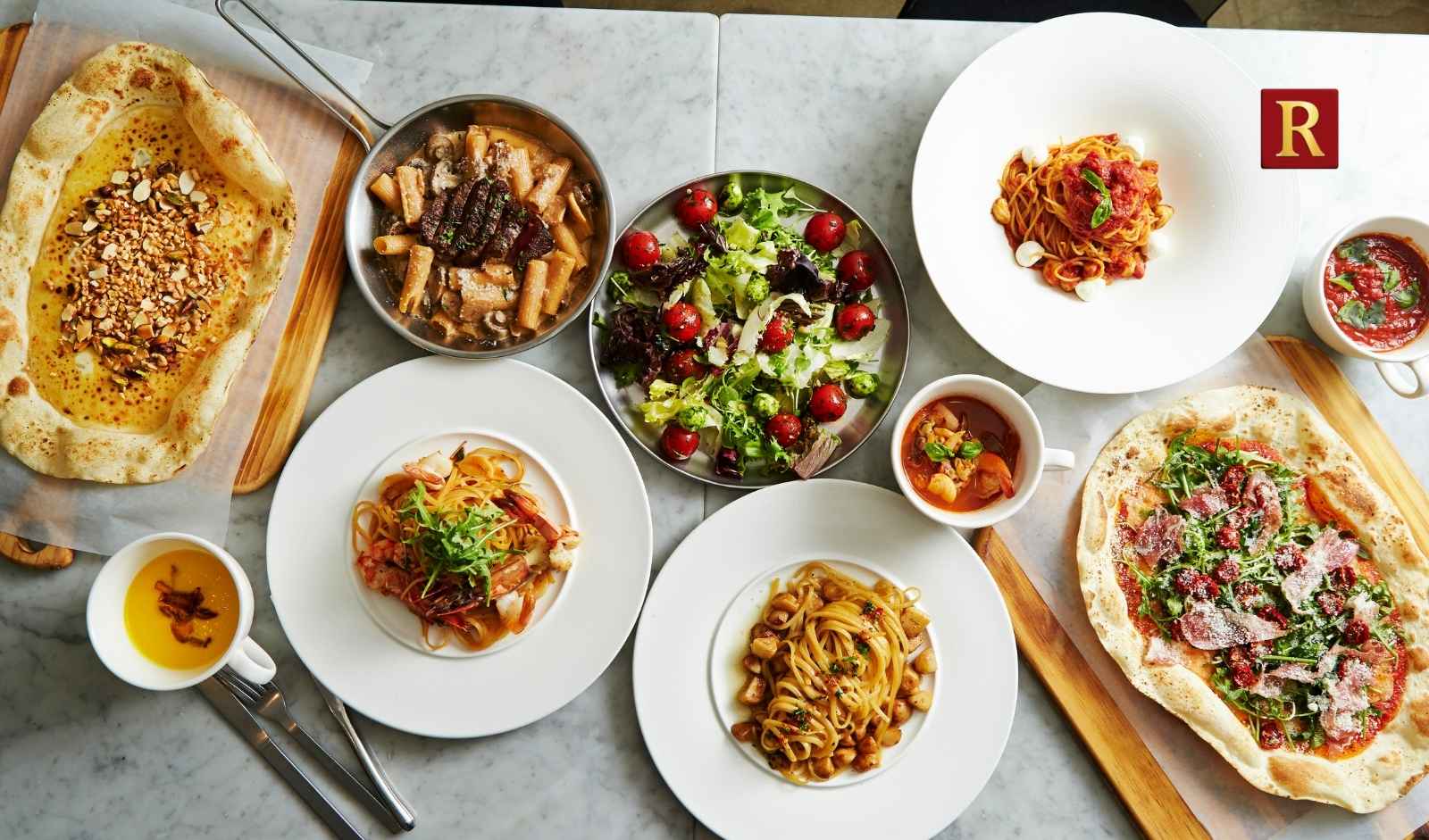 Indian restaurantsThe strongest restaurant design does not simply make people notice the space. It makes them comfortable enough to choose it again.
-
Cafe and BarsThey are about making experimentation easier, portions more deliberate and the bar experience more varied. And that gives the format a useful place…
 FMCGThe category is still evolving. But one thing is becoming clear: the future of convenience food may not be about making consumers eat faster. It is…
 Burger chainsSouth India is growing much faster than its established base as the report records an increase from 243 stores in 2023 to 438 in 2026 that’s an 80.2…
Copyright © 2009 - 2026 Restaurant India.