





In a telephonic interview with Restaurant India, Aditya Somani, private equity investment professional and advisor to Freshmenu, which is the first company to conceptualise and execute the ‘dark kitchen’ strategy at scale in the world, spoke about the success points of running such an operation in India, the challenges behind it, and how this model requires a lot of investment to make it scalable for franchising
What do you think are the pros and cons of running a dark kitchen model?
The success points of the dark kitchens are that their return on investment is attractive and they have the capability to try and test much more than physical restaurants. For instance, when a person walks into a South Indian restaurant, he or she expects idli and dosa and you really can’t offer Mexican. But in a digital restaurant, customers always have a choice to choose the dishes. This is the advantage that dark kitchens have.
Another unsaid and less understood aspect is the ability to manipulate demand. When it comes to physical restaurants, 100 people may walk in on Thursday and 250 people on Sunday, which means you cannot really control the footfalls. However, in digital platforms, you can manipulate demand. Physical restaurants can’t do this and will keep inventory for the next day. It works another way around also. For example, if something is selling well you can raise the price and maximise the profits. People usually only talk about economics but I am talking about how to create a much more rigorous business.
Therefore, in a dark kitchen, the ability to get feedback and act on it is a thousand times more than a physical restaurant. In a dark kitchen, every dish can be individually rated along with different time durations and locations. The kind of data and analysis that a dark kitchen sits on, a restaurant can’t even imagine. This kind of customer responsiveness and obsession are impossible in a physical restaurant. With physical restaurants, there are human biases, but here there are numbers, there are kitchen and dish ratings, and you can cut them in any manner you want. And now that every dark kitchen sits on huge volumes, nobody can hide under mistakes and excuses. These are numbers that represent reasonably large volumes. So they have statistical validity. The challenge I feel is that when you are running a dark kitchen model your chances of getting thrashings and complaints are higher on social media for every little mistake because giving feedback is much easier on this platform.
How are the operations of dark kitchens managed?
The fundamental operations are similar except that the bookings can be in much more volume. So, in a physical restaurant, typically, they have a widespread menu. You have some 20 types of paneer gravy, whereas here in dark kitchens, there are five types of chicken and so the order volume for a single dish can be much higher. The delivery operations are standardised. The only other thing where the operation is different is the technology backing in a dark kitchen, which magnifies the ability to handle order volume and that has its pros and cons. The good thing is you can track everything sitting in the kitchen. So, you track everything insanely to squeeze and get the product at the right time to the customer.
Is franchising in dark kitchens a scalable method?
What we have learnt is that the quality of food is paramount. We Indians can stand and eat anywhere, irrespective of our status, provided the food is good. When you go to the franchise model, the first question is if the franchise is expected to do full cooking or let’s say I set up a franchise model where I have 20 kitchens and 60-70% of the thing is done through a central kitchen model. If full cooking is not expected then I think a franchise model can be possible because if you are giving your menu and recipes to a franchisee, you can standardise the ingredients, supply chain, recipes and menu but even after you do it humans will be humans and there will be some variations.
So, only when a franchise is supposed to do a little bit of work, you can still think of franchise operations. Running a dark kitchen in a franchise model is, in my opinion, difficult. Also, it will require much more investment; you will have to train employees. The consistency level in cooking can only come when you are investing a lot in training. Nobody has done that kind of investment in India except for five-star restaurants. The franchise operations in likes of biryani are doing okay today because most such products are engaging in central kitchen cooking and much less work is being done in the delivery kitchen or franchisee kitchen. Many of them claim to be fresh, but the fact is that they are not at all fresh, the way you , me and our parents define fresh.
Is it better run by small entrepreneurs or better as corporate operations?
I think corporate is better suited because what stands out is marketing and branding efforts that can come only at a scale. People don’t come to you because you are at a great location or because your ambiance is nice. You have to consistently focus on the quality of the product and that will depend on the training, supply chain, and cost control, which is much more difficult in a small entrepreneurial setup. Also, you don’t have the resources to build the brand. There is also less scope of innovation there. However, in dark kitchens, people expect a lot of variety and this can only happen when you have a centralised kitchen operation and have consistency in operations. The reason behind people expecting a lot from dark kitchens is because they are spoilt by their experience in e-commerce. They want a lot of choices at 50% price of that of a physical restaurant.
Do we have enough talent for dark kitchens in India?
I don’t think we have any dearth of cooking talent. Since 90-95% of the industry is unorganised, there is no concept of training and certain professional behaviour in traditional F&B industry. Thus, while a person may cook well he may not know how to handle a team or how to behave in a team environment. The cultural challenges are the bigger challenges than a talent thing.
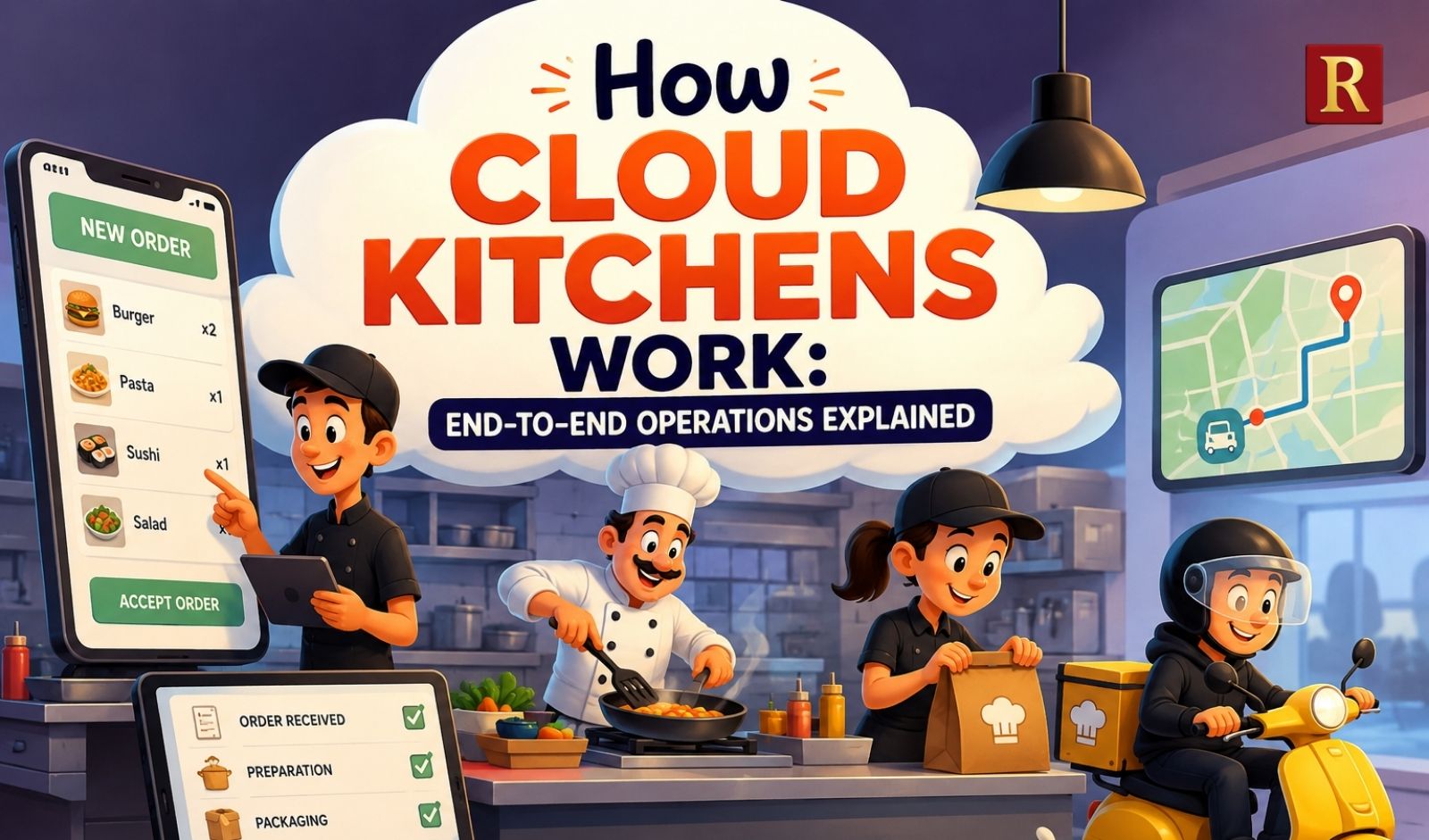
The way people order food has changed dramatically over the last few years. A growing number of consumers now prefer ordering meals through mobile apps instead of visiting restaurants. This shift has given rise to one of the fastest-growing business models in the food industry: cloud kitchens.
Unlike traditional restaurants, cloud kitchens operate without dining areas, waitstaff, or expensive storefronts. They focus entirely on preparing food for delivery. While customers only see the final meal arriving at their doorstep, a complex system of technology, logistics, and kitchen management works behind the scenes to make every order successful. Understanding how cloud kitchens operate reveals why they have become such a powerful force in modern food service.
What Is a Cloud Kitchen?
A cloud kitchen is a delivery-only food business that prepares meals exclusively for online orders. Customers place orders through food delivery apps, websites, or mobile applications, and the food is prepared in a centralized kitchen facility. Cloud kitchens are also known as ghost kitchens, dark kitchens, or virtual kitchens. Since they do not serve dine-in customers, operators can save significantly on rent, interiors, and front-of-house staff. This model allows businesses to focus on food quality, speed, and operational efficiency rather than customer-facing experiences.
Why Cloud Kitchens Are Growing Rapidly
The growth of food delivery platforms has changed consumer expectations. People now want convenience, faster delivery, and access to a wide range of cuisines without leaving their homes.
Several factors have contributed to the rise of cloud kitchens:
- Increased smartphone usage
- Expansion of food delivery platforms
- Busy urban lifestyles
- Demand for convenience
- Lower business setup costs
- Growing acceptance of online ordering
For entrepreneurs, cloud kitchens offer a faster and more affordable way to enter the food business compared to opening a traditional restaurant.
Step 1: Customer Places an Order
Every cloud kitchen operation begins when a customer places an order.
This can happen through:
- Food delivery apps
- Restaurant websites
- Mobile applications
- Social media channels
- WhatsApp ordering systems
- ONDC-enabled platforms
Once an order is confirmed, the information is instantly transmitted to the kitchen's management system. Modern cloud kitchens rely heavily on software integrations that ensure orders are received without delays or manual intervention. This automation reduces mistakes and improves customer satisfaction.
Step 2: Order Aggregation and Centralized Management
One of the biggest challenges for food businesses is managing orders coming from multiple sources. Imagine receiving orders simultaneously from different delivery apps, a website, and a mobile app. Handling each platform separately can create confusion and operational errors. To solve this, cloud kitchens use order aggregation systems. These systems collect orders from multiple channels and display them on a single dashboard. Staff members can view, accept, and process all incoming orders from one place.
This centralization helps operators:
- Reduce missed orders
- Improve efficiency
- Minimize manual work
- Track performance in real time
For large cloud kitchen brands, order aggregation acts as the command center of daily operations.
Step 3: Intelligent Kitchen Routing
Once an order enters the system, it is automatically routed to the appropriate kitchen station. For example, a cloud kitchen may operate multiple virtual brands from a single facility. One brand may specialize in burgers, another in biryani, and another in desserts. The software identifies the items ordered and directs them to the correct preparation team. The ability to run multiple brands under one roof is one of the biggest advantages of the cloud kitchen model.
This process helps:
- Speed up food preparation
- Avoid kitchen congestion
- Improve workflow management
- Maintain delivery timelines
Step 4: Kitchen Display Systems Keep Operations Moving
Traditional restaurants often rely on printed tickets. Cloud kitchens use digital kitchen display systems instead. These screens show incoming orders, preparation status, cooking times, and delivery deadlines. Kitchen display systems help chefs prioritize tasks and coordinate production efficiently.
The benefits include:
- Faster communication
- Reduced paper usage
- Better order accuracy
- Real-time production tracking
During peak meal hours, these systems play a critical role in maintaining smooth operations.
Step 5: Inventory Management Behind the Scenes
Inventory management is one of the most important aspects of cloud kitchen success. Every order directly affects ingredient availability. For example, when a customer orders paneer tikka, naan, and dal makhani, the system automatically deducts the required ingredients from inventory records.
Modern inventory software helps operators:
- Monitor stock levels
- Track ingredient usage
- Reduce food wastage
- Forecast future demand
- Generate purchase orders
Without proper inventory control, cloud kitchens can face stock shortages, increased costs, and inconsistent customer experiences.
Step 6: Food Preparation and Quality Control
Food preparation is where operational excellence becomes visible to customers. Since customers never visit the kitchen, food quality becomes the primary factor influencing reviews and repeat purchases. Successful cloud kitchens follow strict standard operating procedures.
These include:
- Standardized recipes
- Portion control guidelines
- Cooking consistency measures
- Hygiene protocols
- Food safety standards
Consistency is especially important because customers expect the same taste and quality every time they order. A single negative experience can affect ratings and future sales.
Step 7: Packaging Matters More Than Ever
Packaging is often overlooked, but it plays a major role in customer satisfaction. A perfectly cooked meal can still disappoint customers if it arrives cold, damaged, or leaking. Cloud kitchens invest heavily in packaging solutions designed to protect food during transportation.
Key packaging priorities include:
- Temperature retention
- Leak prevention
- Tamper-proof sealing
- Sustainability
- Brand visibility
Good packaging improves customer trust and enhances the overall dining experience.
Step 8: Delivery Dispatch and Rider Coordination
Once the food is prepared and packed, the delivery process begins. The kitchen management system notifies delivery partners that an order is ready for pickup. Modern cloud kitchens use technology to coordinate dispatch operations efficiently.
These systems provide:
- Rider assignment
- Pickup scheduling
- GPS tracking
- Route optimization
- Estimated delivery times
Efficient dispatch management helps ensure that food reaches customers quickly while maintaining quality. Delivery speed has become one of the most important competitive advantages in the industry.
Step 9: Customer Feedback and Continuous Improvement
The journey does not end when the order is delivered. Customer feedback provides valuable insights that help cloud kitchens improve their operations.
Reviews and ratings allow businesses to understand:
- Food quality issues
- Delivery performance
- Packaging effectiveness
- Popular menu items
- Customer preferences
Successful operators closely monitor feedback and use data to make informed business decisions. This continuous improvement cycle helps drive customer retention and long-term growth.
The Technology Stack Powering Modern Cloud Kitchens
Technology forms the backbone of cloud kitchen operations. A typical cloud kitchen relies on multiple systems working together.
These include:
- Point-of-sale software
- Order aggregation platforms
- Kitchen display systems
- Inventory management software
- Customer relationship management tools
- Delivery management solutions
- Analytics dashboards
Increasingly, operators are also using artificial intelligence to forecast demand, optimize menus, and improve operational efficiency. In many ways, cloud kitchens function as technology-driven food businesses rather than traditional restaurants.
How One Kitchen Can Run Multiple Brands
One of the most innovative aspects of cloud kitchens is the multi-brand model. A single facility can prepare food for several virtual restaurant brands simultaneously.
For example, one kitchen may operate:
- A pizza brand
- A biryani brand
- A healthy bowl brand
- A dessert brand
Because equipment, staff, and infrastructure are shared, operators can maximize efficiency while serving different customer segments. This flexibility allows businesses to test new concepts quickly and scale successful brands faster.
The Future!
Cloud kitchens are rapidly evolving as technology becomes a bigger part of food service operations. Innovations such as AI-powered demand forecasting are helping operators predict customer demand more accurately, reducing food waste and improving inventory planning. Smart kitchen automation and robotics-assisted cooking are also beginning to streamline food preparation, allowing kitchens to increase efficiency while maintaining consistency. At the same time, many brands are investing in direct-to-consumer ordering channels to reduce dependence on third-party delivery platforms and build stronger customer relationships. Hyperlocal delivery networks are further improving delivery speed, helping businesses meet growing consumer expectations for convenience. Advanced data analytics is also playing a key role, enabling operators to make better decisions about menus, pricing, and operations. Cloud kitchens have already transformed the food delivery industry by combining culinary expertise with technology and logistics. Every order passes through a carefully managed process involving order aggregation, food preparation, inventory tracking, packaging, dispatch, and customer feedback. Unlike traditional restaurants that focus heavily on ambience and in-person service, cloud kitchens are built around efficiency, scalability, and data-driven decision-making. As online food ordering continues to grow, understanding these operations will be essential for restaurant owners, entrepreneurs, and investors looking to succeed in the future of dining.
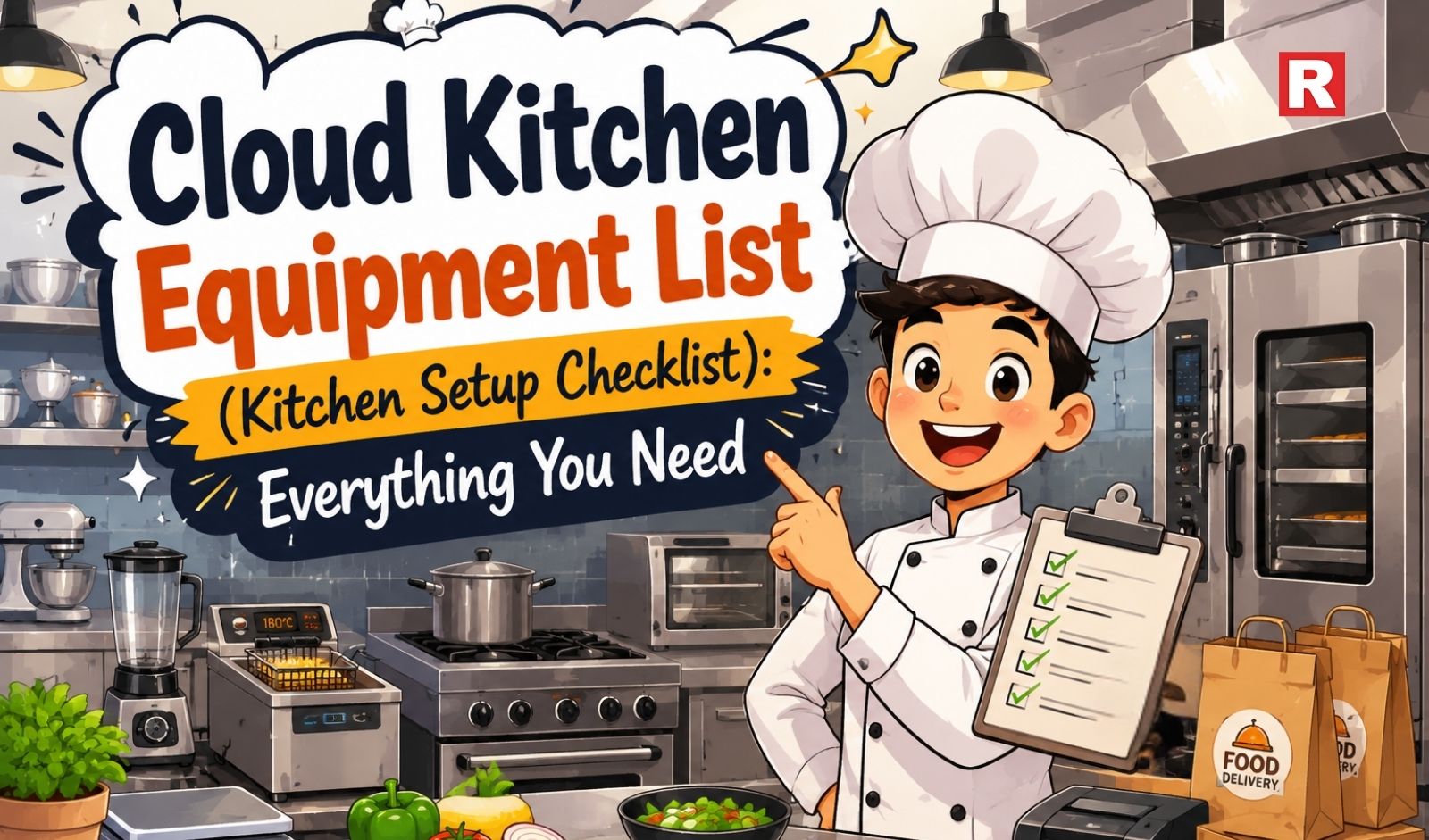
The rise of food delivery has transformed the restaurant industry in India. Today, customers want restaurant-quality meals delivered quickly to their doorstep. This shift has created a massive opportunity for cloud kitchens, also known as ghost kitchens or virtual kitchens. Unlike traditional restaurants, cloud kitchens operate without a dine-in space. Their success depends heavily on operational efficiency, food safety, and consistency. Behind every smooth delivery operation is a well-equipped kitchen designed to handle high order volumes while maintaining quality.
If you are planning to launch a cloud kitchen, choosing the right equipment should be one of your top priorities. The right setup can improve productivity, reduce food waste, maintain hygiene standards, and support long-term growth. This cloud kitchen equipment list serves as a practical kitchen setup checklist to help you build an efficient delivery-first business.
Why Equipment Selection Matters in a Cloud Kitchen
Many first-time operators focus mainly on recipes and branding. However, the equipment you choose directly impacts your business performance.
Proper equipment helps you:
- Prepare food faster.
- Maintain consistency across orders.
- Reduce labour dependency.
- Improve food safety practices.
- Lower maintenance expenses.
- Enhance customer satisfaction.
Since online reviews often depend on delivery speed and food quality, even small operational improvements can make a significant difference.
1. Essential Cooking Equipment for a Cloud Kitchen
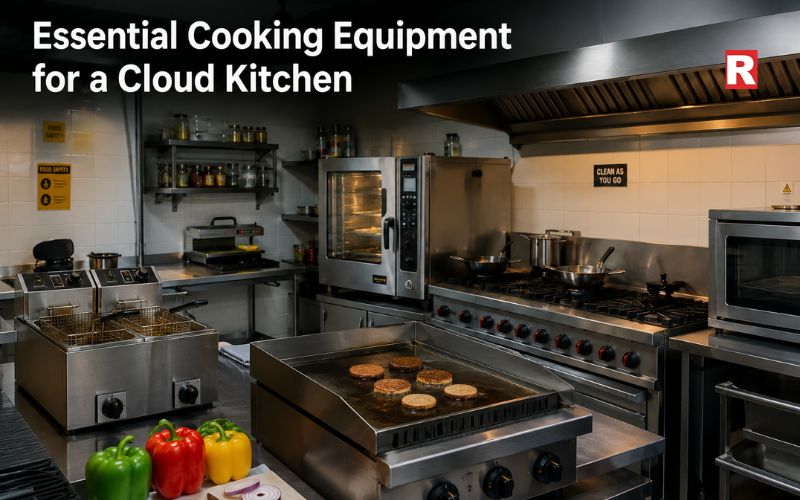
The cooking section is the heart of any cloud kitchen. The equipment you invest in should match your menu, production requirements, and expected order volume. Choosing the right appliances can improve speed, consistency, and overall kitchen efficiency.
Commercial Gas Range or Induction Range: A commercial cooking range is indispensable for preparing gravies, curries, stir-fries, sauces, and other dishes that require continuous cooking. While gas ranges remain a popular choice due to their versatility, induction ranges are gaining traction for their precise temperature control, energy efficiency, and reduced heat generation. Before purchasing, evaluate factors such as the number of burners needed, heat efficiency, ease of cleaning, fuel availability, and long-term operating costs.
Commercial Ovens: Ovens are essential for cloud kitchens specialising in baked goods, pizzas, roasted dishes, and desserts. Common options include convection ovens, combi ovens, and conveyor ovens. Among these, combi ovens stand out because they combine steam and dry heat cooking, enabling chefs to prepare multiple dishes efficiently while preserving texture and flavour.
Deep Fryers: Since fried foods are among the most popular delivery items, commercial deep fryers are a valuable addition to many cloud kitchens. They help maintain consistency, speed up preparation, and deliver evenly cooked products. Deep fryers are commonly used for French fries, fried chicken, appetisers, and snack items. Models with accurate temperature control are recommended as they help improve food quality and extend the lifespan of cooking oil.
Griddles and Flat Top Grills: Ideal for preparing burgers, sandwiches, wraps, pancakes, and breakfast items, griddles provide even heat distribution and allow efficient batch cooking. Their large cooking surface supports faster preparation during peak hours.
Specialty Equipment: Depending on your cuisine, you may require additional appliances such as tandoors, pizza ovens, steamers, shawarma machines, waffle makers, or salamander grills. However, invest only in equipment that aligns with your menu strategy and contributes directly to revenue generation.
2. Essential Food Preparation Equipment for a Cloud Kitchen
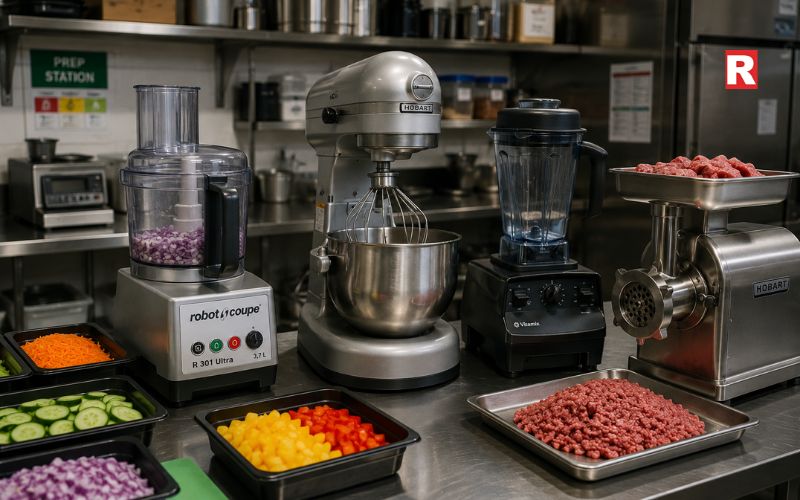
Efficient food preparation plays a major role in determining how quickly orders are processed and dispatched. In a cloud kitchen, where speed and consistency directly impact customer satisfaction, investing in the right prep equipment can significantly improve productivity while reducing manual labour.
Food Processors: Food processors are among the most versatile tools in a commercial kitchen. They simplify repetitive tasks such as chopping vegetables, slicing ingredients, dicing produce, and grating cheese. By automating these processes, food processors save valuable preparation time and ensure uniformity in portion sizes and presentation. This consistency is especially important for brands operating across multiple outlets or handling high order volumes.
Commercial Mixers: Cloud kitchens that prepare fresh dough, batters, sauces, or fillings on a regular basis can benefit greatly from commercial mixers. These machines reduce physical effort while delivering consistent results in every batch. Whether you operate a bakery, pizza brand, or dessert-focused kitchen, selecting a mixer with the appropriate bowl capacity and speed settings can streamline operations during busy service periods and minimise production delays.
Blenders: Commercial blenders are essential for kitchens that offer smoothies, soups, purees, milkshakes, dips, or signature sauces. Unlike domestic models, commercial-grade blenders are designed to withstand frequent and prolonged use. Their powerful motors ensure smoother textures and faster processing times, making them an indispensable addition to modern cloud kitchens seeking operational efficiency.
Meat Grinders: For businesses specialising in burgers, kebabs, meatballs, or other meat-based offerings, commercial meat grinders help maintain freshness and quality control. Grinding meat in-house allows operators to customise fat content, improve flavour profiles, and ensure ingredient transparency. It also reduces dependence on pre-processed products, giving brands greater control over consistency and food safety standards.
Investing in the right food preparation equipment not only enhances kitchen efficiency but also supports better product quality, faster service, and improved customer experiences.
3. Refrigeration Equipment
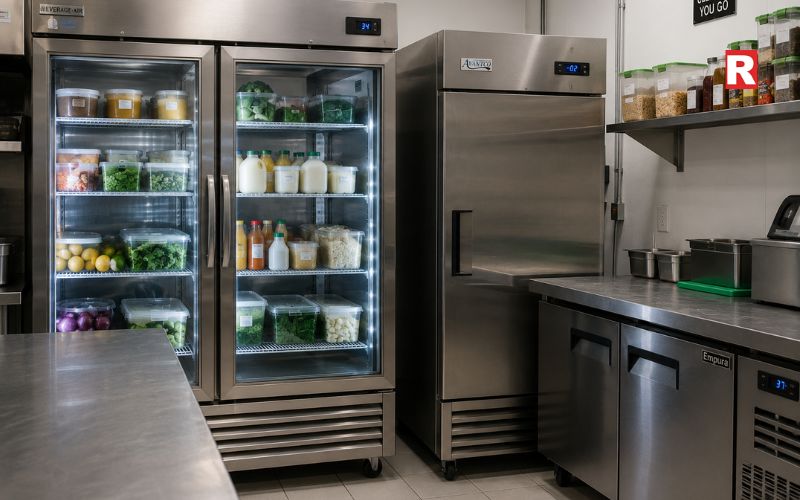
Proper refrigeration is crucial for maintaining food quality, extending shelf life, and ensuring compliance with food safety standards. A well-planned refrigeration system also improves kitchen workflow and minimises ingredient wastage.
Reach-In Refrigerators: These are among the most commonly used refrigeration units in cloud kitchens. They provide organised storage for vegetables, dairy products, sauces, condiments, and pre-prepared ingredients. Their easy accessibility allows kitchen staff to retrieve items quickly, improving efficiency during service hours. Well-organised reach-in refrigerators also help with stock rotation and reduce food spoilage.
Commercial Freezers: Freezers are essential for preserving frozen proteins, ice cream, ready-to-cook products, and emergency backup inventory. They enable cloud kitchens to manage stock levels more effectively and prevent disruptions during peak demand periods. Choosing a freezer with reliable temperature control is critical, as inconsistent temperatures can compromise food safety and product quality.
Under-Counter Refrigerators: These compact refrigeration units are designed to fit beneath workstations, offering convenient access to frequently used ingredients without occupying additional floor space. They are particularly beneficial for smaller cloud kitchens where maximising available space is a priority. By keeping essential items within reach, under-counter refrigerators support faster food preparation and smoother kitchen operations.
4. Storage Solutions for Better Organisation
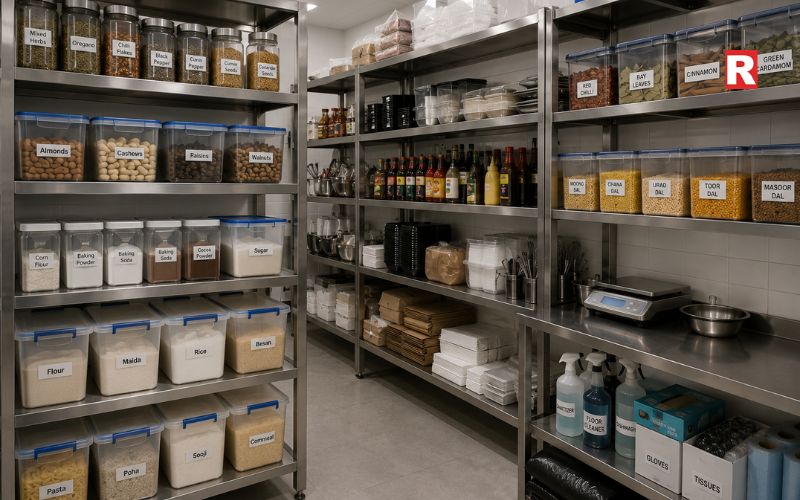
An organised storage system helps cloud kitchens operate more efficiently by improving accessibility, reducing clutter, and supporting food safety practices. Proper storage also minimises ingredient wastage and speeds up daily operations.
Stainless Steel Shelving: Stainless steel shelving units are widely used in commercial kitchens to organise dry ingredients, cleaning supplies, packaging materials, and kitchen tools. Their durability, corrosion resistance, and ease of cleaning make them a hygienic and long-lasting storage solution for busy food preparation environments.
Food Storage Containers: Investing in food-grade storage containers helps maintain ingredient freshness and prevent contamination. Opt for containers that are airtight, stackable, and clearly labelled to simplify inventory management. Proper labelling also supports stock rotation practices and reduces the chances of using expired ingredients.
Ingredient Bins: Bulk ingredient bins provide convenient storage for frequently used staples such as rice, flour, sugar, and pulses. Their easy accessibility allows kitchen staff to retrieve ingredients quickly, improving preparation efficiency and ensuring a smoother workflow during peak operating hours.
5. Ventilation and Exhaust Systems
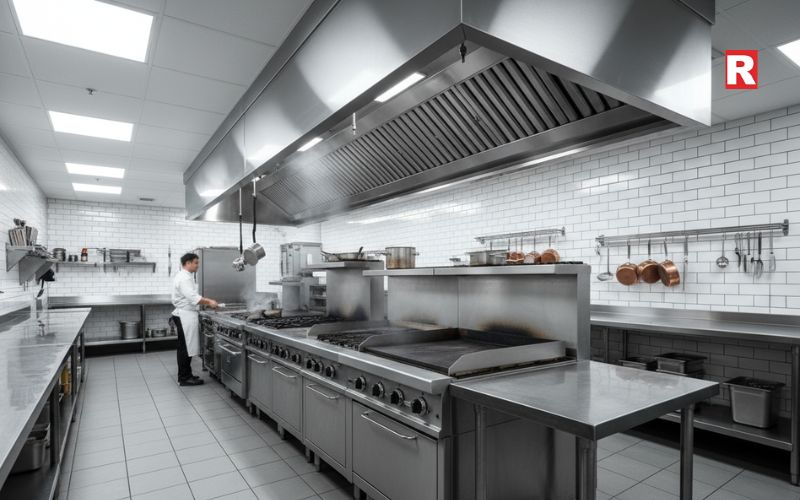
Ventilation is often overlooked during planning, yet it plays an essential role in kitchen safety and employee comfort. Type 1 hoods are typically used above grease-producing equipment such as fryers and grills. Type 2 hoods are suitable for steam-producing appliances. Investing in an efficient ventilation system contributes to a safer and more productive work environment.
A proper exhaust system helps:
- Remove smoke and grease.
- Maintain air quality.
- Control kitchen temperatures.
- Reduce fire hazards.
6. Packaging Station Essentials
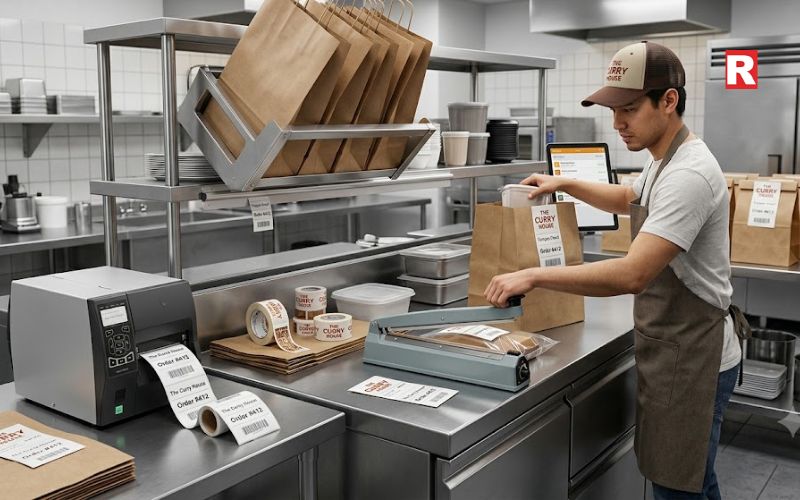
Packaging plays a crucial role in cloud kitchen operations, as food quality must remain intact during transit. A well-organised packaging station ensures faster order dispatch and a better customer experience.
Heat Sealers: Secure packaging and help prevent spills or leaks during delivery.
Label Printers: Used for printing order details, expiry information, and branding labels to minimise delivery errors.
Packaging Counters: Provide a dedicated workspace for assembling and checking orders efficiently.
Delivery Bag Dispensers: Keep delivery bags organised and easily accessible during rush hours.
Packaging Supplies: Essential items include leak-resistant containers, tamper-proof seals, paper bags, and branded stickers that protect food quality while strengthening brand recognition and customer trust.
7. Cleaning and Hygiene Equipment
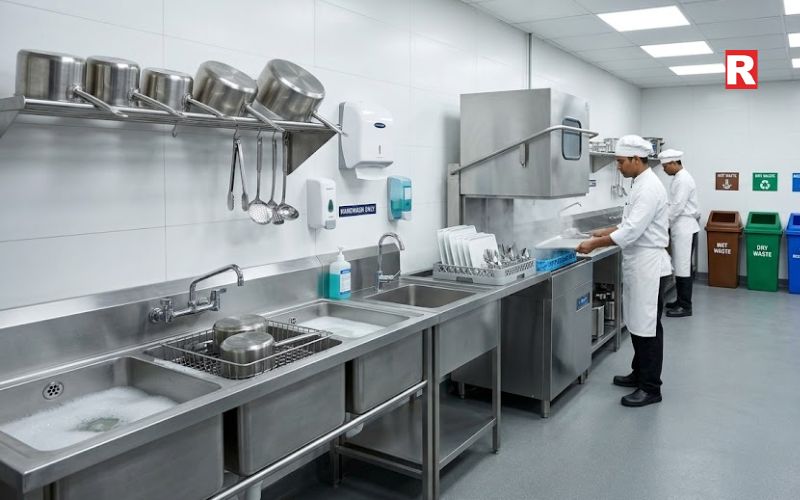
Maintaining high hygiene standards is critical for any food business.
Your cleaning checklist should include:
Three-Compartment Sink: Designed for washing, rinsing, and sanitising utensils and cookware, helping maintain proper cleaning procedures.
Handwashing Stations: Easily accessible handwashing areas encourage employees to practise good hygiene throughout the day.
Commercial Dishwashers: These machines improve cleaning efficiency while ensuring utensils and equipment are sanitised to commercial standards.
Sanitiser Dispensers: Placed strategically around the kitchen, they promote regular hand sanitisation among staff members.
Waste Segregation Bins: Separate bins for wet waste, dry waste, and recyclables support cleanliness, effective waste management, and environmentally responsible kitchen operations.
8. Technology That Supports Cloud Kitchen Growth
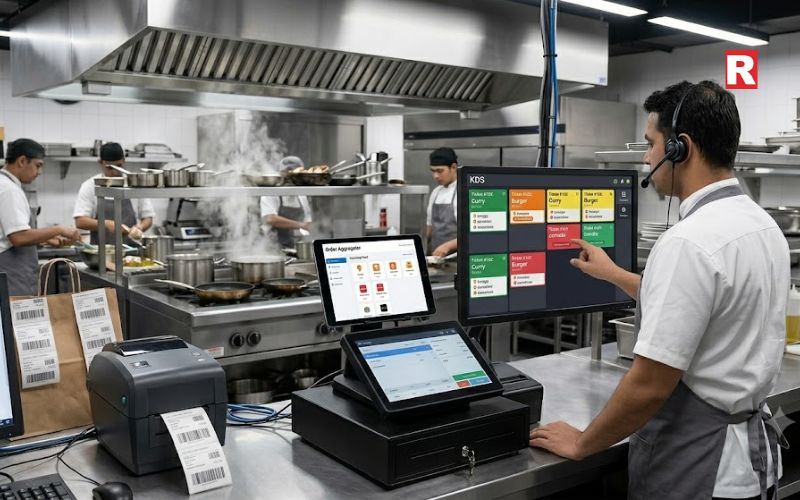
Modern cloud kitchens rely heavily on technology to streamline operations.
Point-of-Sale (POS) Systems: POS platforms help track sales performance, monitor inventory usage, and analyse order trends, enabling operators to make informed business decisions.
Kitchen Display Systems (KDS): These digital screens streamline communication between order management systems and kitchen staff, reducing errors and improving order preparation speed.
Order Aggregator Platforms: By consolidating orders from multiple delivery apps into a single dashboard, these systems simplify operations and minimise the risk of missed orders.
Labelling Systems: Barcode and label printers enhance organisation by ensuring accurate order identification, proper inventory tracking, and efficient order fulfilment.
9. Safety Equipment Every Kitchen Needs
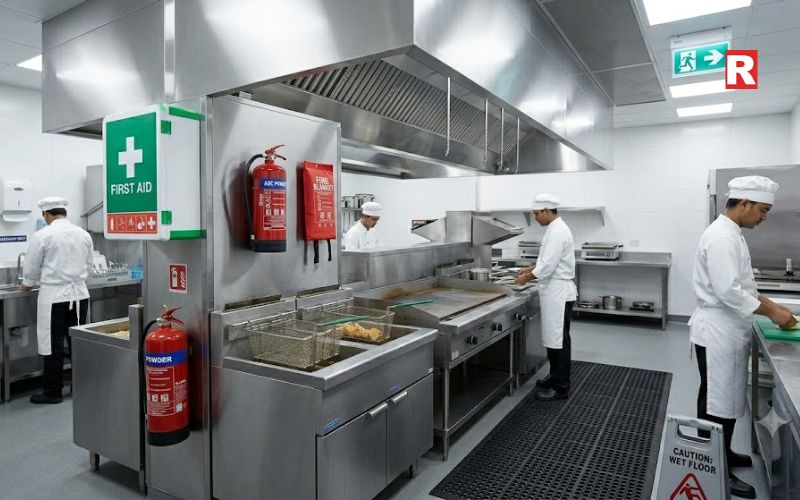
A safe kitchen environment protects employees, minimises operational risks, and safeguards business assets. Every cloud kitchen should be equipped with fire extinguishers and fire suppression systems to handle potential fire emergencies effectively. First aid kits should be readily available to address minor injuries and provide immediate medical assistance when required. Installing anti-slip floor mats in high-traffic areas helps reduce the risk of slips and falls. Additionally, clearly visible emergency exit signage ensures safe evacuation during emergencies. Along with these safety measures, regular staff training is essential to promote preparedness and maintain workplace safety standards.
Factors to Consider Before Buying Equipment
Before making purchasing decisions, evaluate the following:
Production Capacity: Estimate daily order volumes and choose equipment that can handle future growth.
Energy Efficiency: Energy-efficient appliances can lower operating costs over time.
Ease of Maintenance: Equipment that is easy to clean and service minimises downtime.
Food-Grade Construction: Stainless steel equipment is durable and hygienic.
Vendor Support: Reliable after-sales service is just as important as the initial purchase.
Common Mistakes to Avoid
Many new cloud kitchen operators make costly mistakes during setup.
Avoid these common pitfalls:
- Purchasing household appliances instead of commercial equipment.
- Ignoring kitchen workflow design.
- Underestimating refrigeration requirements.
- Overinvesting in unnecessary specialty equipment.
- Failing to create a dedicated packaging zone.
Careful planning during the setup phase can prevent operational challenges later.
Road Ahead!
Launching a cloud kitchen involves much more than creating a great menu. Behind every successful delivery brand is a thoughtfully designed kitchen supported by reliable equipment, efficient workflows, and strong food safety practices. From cooking appliances and refrigeration systems to packaging stations and digital tools, each component contributes to the customer experience. Investing in the right equipment from the beginning can improve productivity, strengthen consistency, and create a foundation for sustainable growth. As India's food delivery market continues to evolve, cloud kitchens that prioritise efficiency and operational excellence will be better positioned to meet rising customer expectations and scale successfully.
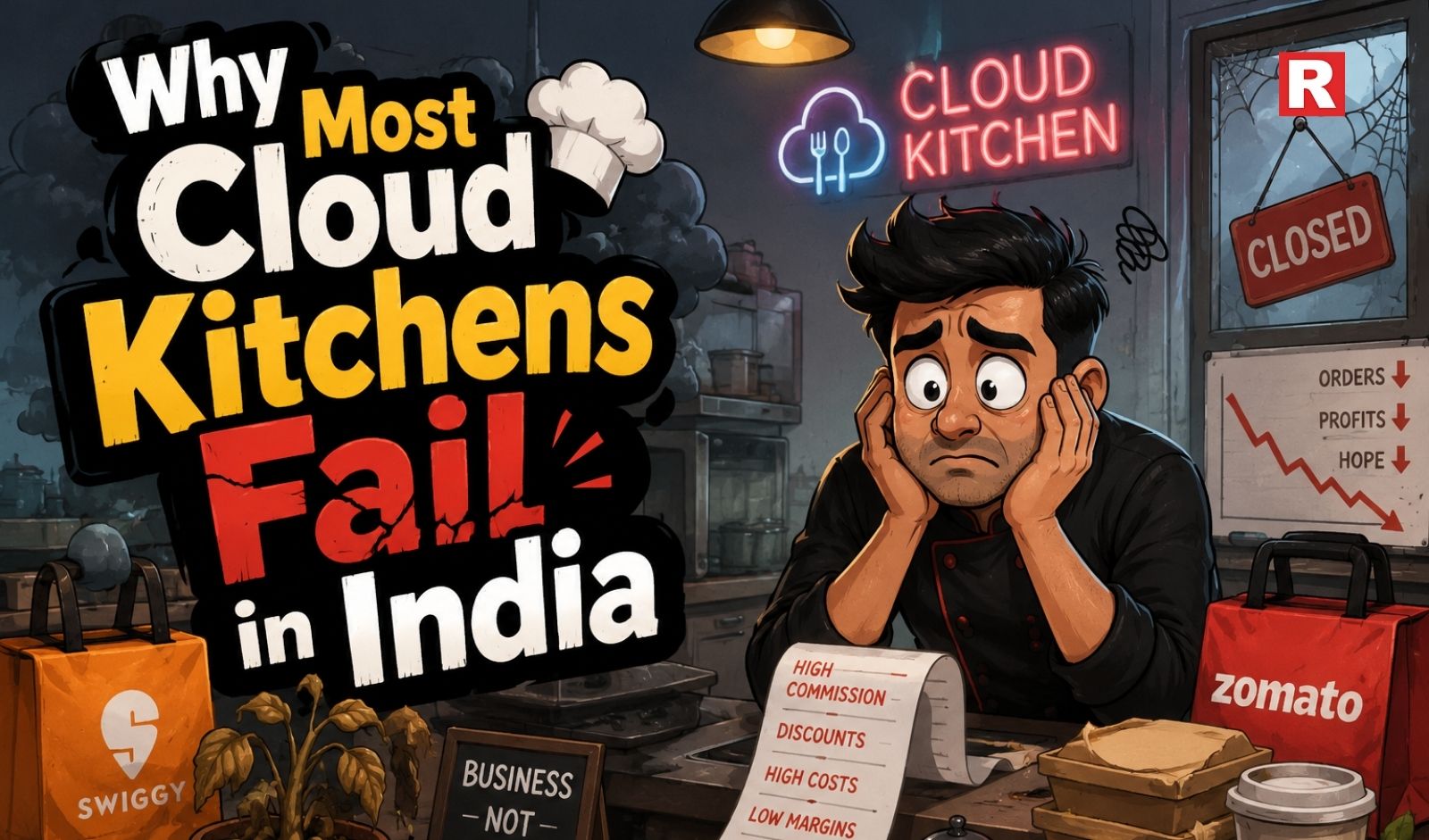
Cloud kitchens changed the food business in India. They promised lower costs, faster expansion, and easier operations compared to traditional restaurants. With no dining space to manage and increasing demand from food delivery platforms, many entrepreneurs believed cloud kitchens were the future of food service.
The model looked simple. Rent a kitchen, create a menu, list the brand on delivery apps, and start receiving orders.
However, the reality has been very different.
While India's online food delivery market continues to grow, many cloud kitchens struggle to survive. Some shut down within months of launch, while others continue operating without making meaningful profits. Behind the attractive business model lies a complex system of costs, competition, customer acquisition, and operational challenges that many founders underestimate. Understanding why cloud kitchens fail can help entrepreneurs avoid expensive mistakes and build a stronger business.
The Rapid Growth of Cloud Kitchens in India
The rise of food delivery platforms transformed the way Indians consume food. Consumers now expect restaurant-quality meals delivered quickly to their homes and workplaces. The COVID-19 pandemic accelerated this trend. Restaurants that relied on dine-in customers were forced to adapt, and many turned to delivery-only models. At the same time, new entrepreneurs entered the market, attracted by the relatively low investment required to start a cloud kitchen.
Cities such as Bengaluru, Mumbai, Delhi NCR, Hyderabad, and Pune witnessed a surge in cloud kitchen launches. Investors also poured money into food-tech businesses, further increasing excitement around the sector. Yet, growth in demand does not automatically translate into profitability.
Poor Unit Economics Remains the Biggest Problem
One of the most common reasons cloud kitchens fail is poor unit economics. Many founders focus heavily on order volume. They celebrate growing sales numbers but fail to understand whether each order is generating profit.
Consider a dish sold for Rs 300.
The ingredient cost may be around Rs 90. Packaging can cost Rs 20. Delivery platform commissions often range between 20 and 30 percent. Add discounts, taxes, salaries, rent, utilities, and marketing expenses, and the profit margin becomes extremely small. In some cases, businesses lose money on every order while believing they are growing. A successful cloud kitchen must understand its contribution margin, food cost percentage, and break-even point from day one. Without these numbers, growth can quickly become a financial burden rather than an advantage.
Dependence on Food Delivery Platforms Creates Risk
Many cloud kitchens receive almost all their orders through platforms such as Swiggy and Zomato. While these platforms provide access to millions of customers, they also create dependency.
Many cloud kitchens receive the majority of their orders through food delivery platforms such as Swiggy and Zomato.
These platforms provide access to a large customer base, making it easier for new brands to gain visibility.
However, heavy reliance on delivery aggregators creates a significant business dependency.
Restaurants often have limited access to customer data, making it difficult to build long-term relationships with diners.
Cloud kitchens cannot fully control platform algorithms, rankings, or visibility on these apps.
A sudden decline in search rankings or app visibility can lead to a sharp drop in daily orders.
Changes in commission structures, delivery charges, or platform policies can directly affect profit margins.
Overdependence on third-party platforms leaves businesses vulnerable to decisions beyond their control.
Successful cloud kitchen brands focus on reducing this dependency over time.
They build direct ordering channels through their own websites and mobile apps.
Many invest in loyalty programs to encourage repeat purchases and improve customer retention.
Social media communities help brands engage directly with customers and strengthen brand recall.
WhatsApp ordering systems are increasingly being used to generate direct orders and reduce commission costs.
A balanced mix of aggregator orders and direct sales creates a more sustainable and profitable business model.
Excessive Discounts Destroy Margins
Discounts attract customers. However, relying on discounts as a growth strategy can be dangerous. Many cloud kitchens offer large discounts to gain visibility and increase order volumes. While this may boost short-term sales, it often damages profitability. Customers who order only during promotions rarely become loyal customers. They simply move to whichever restaurant offers the biggest discount. Over time, businesses become trapped in a cycle where they must continue offering discounts just to maintain sales levels. Instead of competing solely on price, successful brands focus on quality, consistency, convenience, and customer experience.
Weak Branding Leads to Low Customer Retention
A common misconception is that good food alone guarantees success. Food quality is important, but it is only one part of the equation.
Many cloud kitchen owners believe that serving great food alone is enough to build a successful business, but that is rarely the case in today's competitive market.
Food quality remains essential, but customers on delivery apps are exposed to hundreds of brands offering similar cuisines and price points.
If a brand fails to stand out, customers may order once and never remember it again.
Strong branding through attractive packaging, a compelling brand story, clear menu presentation, and an active social media presence helps create recognition and trust.
A memorable brand encourages repeat purchases, increasing customer loyalty and reducing reliance on paid promotions.
Without a distinct identity, cloud kitchens often struggle to retain customers and end up spending heavily on acquiring new ones to sustain sales.
Poor Menu Planning Hurts Profitability
Not every dish works well in a cloud kitchen environment. Some foods lose quality during transportation. Others require expensive ingredients or complex preparation processes.
Successful cloud kitchens carefully engineer their menus.
They focus on dishes that travel well, maintain consistency, and generate healthy margins. Rice bowls, pizzas, wraps, biryanis, and desserts often perform well because they retain quality during delivery. Many struggling kitchens make the mistake of offering large menus with too many ingredients. This increases inventory costs, creates wastage, and complicates kitchen operations. A smaller and optimized menu is often more profitable than a large one.
Customer Acquisition Costs Continue to Rise
Customer acquisition has become one of the biggest challenges for cloud kitchens in India. With thousands of brands competing on food delivery platforms, gaining visibility often requires significant spending on sponsored listings, advertisements, and discounts. Industry estimates suggest that cloud kitchens can spend anywhere between Rs 150 and Rs 500 to acquire a new customer, depending on the city and cuisine category. At the same time, acquiring a new customer can cost up to five times more than retaining an existing one. This puts immense pressure on profit margins, especially for businesses already dealing with platform commissions of 20–30 percent.
Key challenges include:
High competition from thousands of restaurant and cloud kitchen brands.
Customer acquisition costs ranging from Rs 150–Rs 500 per new customer.
Heavy spending on app advertisements, sponsored placements, and discounts.
Lower profitability when businesses focus only on attracting new customers.
Repeat customers typically spend more and require less marketing investment.
Lack of loyalty programs and personalized offers reduces customer retention.
Inconsistent food quality or delivery experiences can discourage repeat orders.
Successful cloud kitchens prioritize customer retention, as even a 5% increase in repeat customers can significantly improve long-term profitability and reduce marketing expenses.
Expanding Too Fast Creates Operational Challenges
Some entrepreneurs launch multiple brands from a single kitchen within a short period. While the strategy appears attractive, it often creates operational complexity. Managing multiple menus, inventories, recipes, suppliers, and marketing campaigns requires strong systems and experienced management. Without proper controls, food quality suffers, wastage increases, and customer satisfaction declines. Many successful cloud kitchen operators begin with one strong concept. Once operations become stable and profitable, they gradually expand into additional categories. Patience often leads to better long-term results.
Operational Inefficiencies Reduce Profits
Even small operational mistakes can significantly affect margins. Food wastage, delayed deliveries, inventory leakages, inaccurate demand forecasting, and inconsistent recipes all reduce profitability.
Technology plays a critical role in solving these challenges. Inventory management software, kitchen display systems, automated procurement tools, and integrated POS systems help improve efficiency and reduce errors. Cloud kitchens that invest in operational excellence are often better positioned to scale successfully.
The Path to Success
The business environment has become more challenging in recent years. Raw material prices have increased. Packaging costs continue to rise. Utility bills, salaries, and commercial gas expenses also place pressure on margins. For businesses already operating on thin profits, even small increases in costs can create financial difficulties. This makes cost control and supplier management more important than ever before. Despite these challenges, cloud kitchens still offer significant opportunities. The businesses that succeed focus on fundamentals rather than shortcuts. They understand their numbers. They build strong brands. They optimize menus. They invest in customer retention. Most importantly, they treat profitability as a priority from the beginning. The cloud kitchen industry is no longer just about delivering food. It is about creating a sustainable business model that balances customer experience, operational efficiency, and financial discipline. As India's food delivery ecosystem continues to expand, the winners will not necessarily be the brands with the most orders. They will be the brands that understand how to turn those orders into long-term profits.
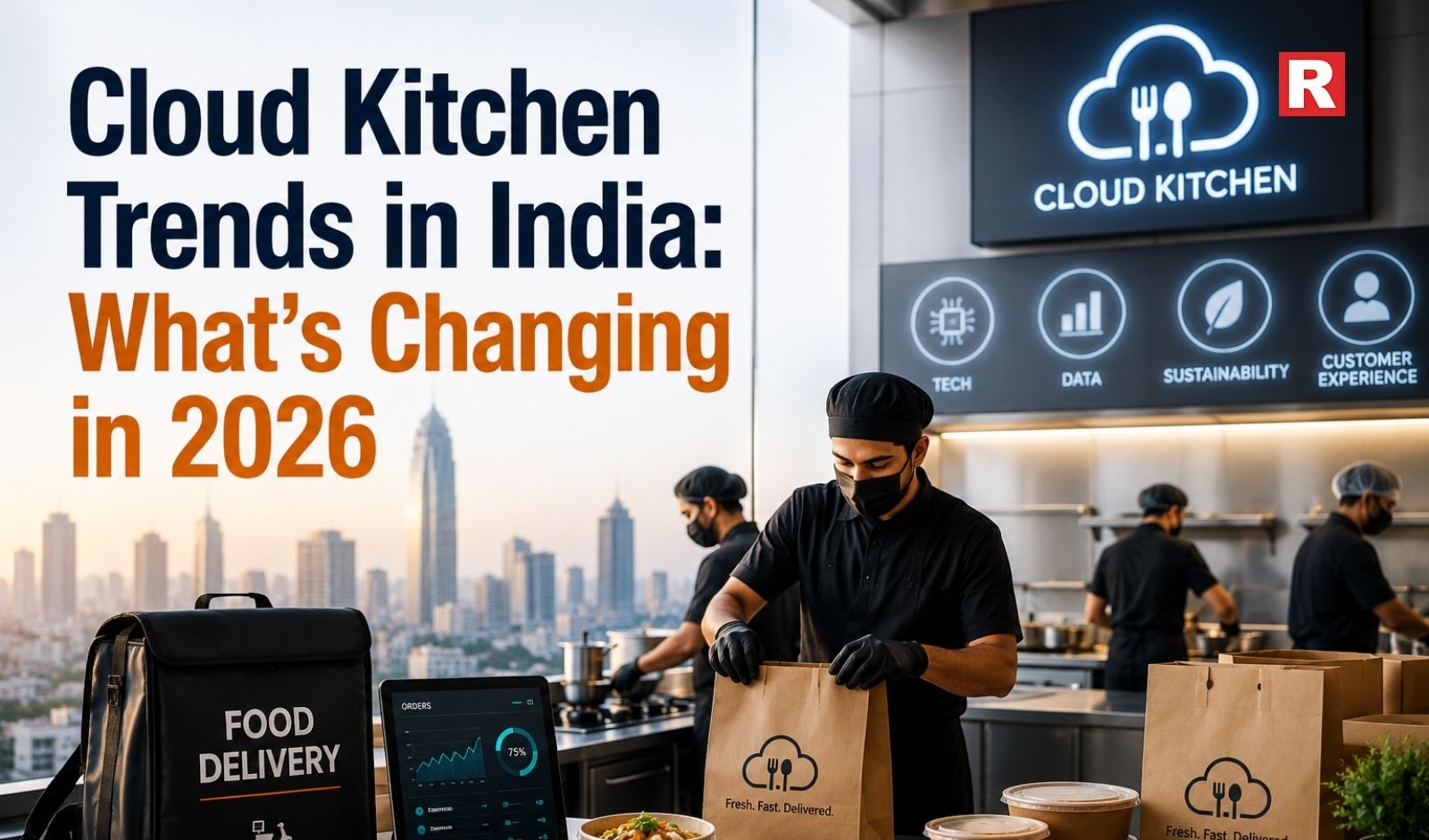
India’s food industry is changing faster than ever. People are ordering meals with just a few taps. Late-night cravings, office lunches, healthy bowls, and quick snacks are now reaching homes within minutes. This shift has pushed cloud kitchens into the spotlight.
A few years ago, cloud kitchens were seen as a low-cost alternative to restaurants. In 2026, they are becoming the backbone of India’s digital food economy. From AI-powered operations to hyperlocal delivery models, the industry is evolving rapidly. The biggest change is simple. Cloud kitchens are no longer just cooking businesses. They are becoming technology-driven food brands.
How India’s Cloud Kitchen Industry Reached This Stage
The rise of food delivery apps completely changed customer behavior in India. Platforms like Swiggy and Zomato made ordering food easy, affordable, and convenient. Urban lifestyles also played a major role. Working professionals now prefer convenience over traditional dining. Many consumers order food multiple times a week because it saves time and effort.
Cloud kitchens benefited from this trend because they require lower investment compared to dine-in restaurants. There is no need for expensive interiors, large staff, or premium locations. Operators can focus mainly on food preparation and delivery. This model became even stronger after the pandemic. Delivery-first brands gained customer trust, and many entrepreneurs started experimenting with virtual restaurant concepts. Today, India’s cloud kitchen industry is entering a new phase driven by technology, data, and operational efficiency.
AI-Powered Kitchens Are Becoming Mainstream
Artificial intelligence is becoming one of the biggest trends in cloud kitchens. In 2026, many kitchen operators are using AI tools to predict customer demand, reduce food waste, and improve delivery speed. Smart systems can now analyze ordering patterns based on weekends, festivals, weather, and even cricket matches.
For example, a cloud kitchen can increase raw material stock before a major IPL game because demand for snacks and fast food usually rises during match hours. AI is also helping brands create personalized customer experiences. Food delivery apps now recommend dishes based on previous orders, dietary habits, and spending behavior. Many kitchens are also using automated kitchen display systems. These systems reduce manual errors and improve coordination between cooking and packing teams. Another major advantage is inventory management. AI tools help operators avoid overstocking and reduce ingredient wastage. This is extremely important because rising food costs are affecting profitability across the industry.
Multi-Brand Cloud Kitchens Are Dominating
One of the smartest business strategies in 2026 is the multi-brand cloud kitchen model. Instead of running one restaurant from one kitchen, operators are launching several virtual brands from the same location. A single kitchen may serve biryani, pizza, healthy bowls, Chinese food, and desserts under different brand names. This approach helps businesses maximize kitchen usage while reducing operational costs.
For example, the same kitchen staff and equipment can prepare multiple cuisines during different time slots. Lunch demand may focus on thalis and bowls, while evening orders may shift toward burgers and snacks. This model also helps brands test new concepts quickly. If a cuisine becomes popular in a specific area, operators can launch a virtual brand without investing in a full restaurant setup. Data analytics plays a major role here. Cloud kitchens are studying customer behavior deeply before creating new menus or brands. In many ways, data is becoming as important as the chef.
ONDC Is Changing the Delivery Ecosystem
The rise of Open Network for Digital Commerce is creating new opportunities for cloud kitchens. Many restaurant owners are frustrated with high commission charges from food delivery platforms. ONDC is helping businesses reduce dependence on large aggregators by offering a more open digital network. This shift is important because profitability has become a major concern in the food delivery business.
In 2026, many cloud kitchens are focusing on direct customer relationships through:
- WhatsApp ordering
- loyalty programs
- subscription meals
- mobile apps
- direct website ordering
Brands now want stronger control over customer data, repeat orders, and marketing strategies. The focus is slowly moving from platform dependency to customer ownership.
Quick Commerce Is Reshaping Food Delivery
Speed has become one of the biggest customer expectations. Consumers no longer want to wait 60 minutes for a meal. The growth of quick commerce has pushed cloud kitchens to deliver food within 10 to 30 minutes in many urban areas. This trend is encouraging the rise of hyperlocal kitchens and small kitchen pods located close to residential neighborhoods.
Many operators are using heat-map analytics to identify high-demand areas before setting up kitchens. This improves delivery speed and reduces logistics costs. Faster delivery also improves food quality because meals reach customers fresh and hot. Late-night delivery is another growing category. Young consumers, students, and working professionals are increasingly ordering food after midnight, especially in metro cities. As customer expectations rise, delivery efficiency is becoming just as important as food quality.
Tier-2 and Tier-3 Cities Are Driving Growth
Cloud kitchen expansion is no longer limited to metro cities like Mumbai, Delhi, and Bengaluru. Cities such as Indore, Jaipur, Lucknow, and Surat are becoming major growth markets. There are several reasons behind this shift. Rental costs are lower in smaller cities. Competition is also less intense compared to major metros. At the same time, smartphone usage and digital payment adoption are increasing rapidly. Consumers in smaller cities are becoming more experimental with food choices. International cuisines, healthy meals, and gourmet snacks are seeing strong demand. Many cloud kitchen brands now see Tier-2 cities as the next big opportunity for scaling operations profitably.
Health-Focused Menus Are Growing Rapidly
Health-conscious eating is becoming a major trend in India’s cloud kitchen market.
Consumers are actively looking for:
- high-protein meals
- calorie-counted dishes
- millet-based foods
- vegan options
- preservative-free meals
Fitness-focused kitchens are becoming especially popular among Gen Z consumers and working professionals. Many brands are also highlighting nutritional transparency. Customers now want to know calorie counts, ingredients, and protein content before ordering. Healthy eating is no longer limited to salads. Indian consumers now expect healthy versions of comfort foods as well. This trend is creating new opportunities for specialized cloud kitchen brands.
Sustainability Is Becoming a Business Priority
Sustainability is becoming more important across the restaurant industry.
- Cloud kitchens are trying to reduce packaging waste and improve energy efficiency. Many operators are shifting toward recyclable packaging and sustainable sourcing practices.
- Food waste management is also receiving more attention because rising ingredient prices are affecting margins.
- Some kitchens are adopting smart monitoring systems to track electricity usage, cooking efficiency, and inventory wastage.
- Customers are also becoming more aware of environmental impact. Sustainable packaging and responsible sourcing can now influence purchasing decisions.
In 2026, sustainability is no longer just a branding strategy. It is becoming a business necessity.
The Bottom Line
The next phase of India’s cloud kitchen industry will be driven by technology, speed, and customer personalization. AI-based menu planning, automated prep systems, voice ordering, and smart kitchens are expected to become more common over the next few years. At the same time, competition will continue to increase. Only brands that balance operational efficiency, strong food quality, and customer trust will survive in the long run. Cloud kitchens have already transformed the way India eats. In 2026, they are evolving into highly efficient food-tech businesses built for the digital generation.
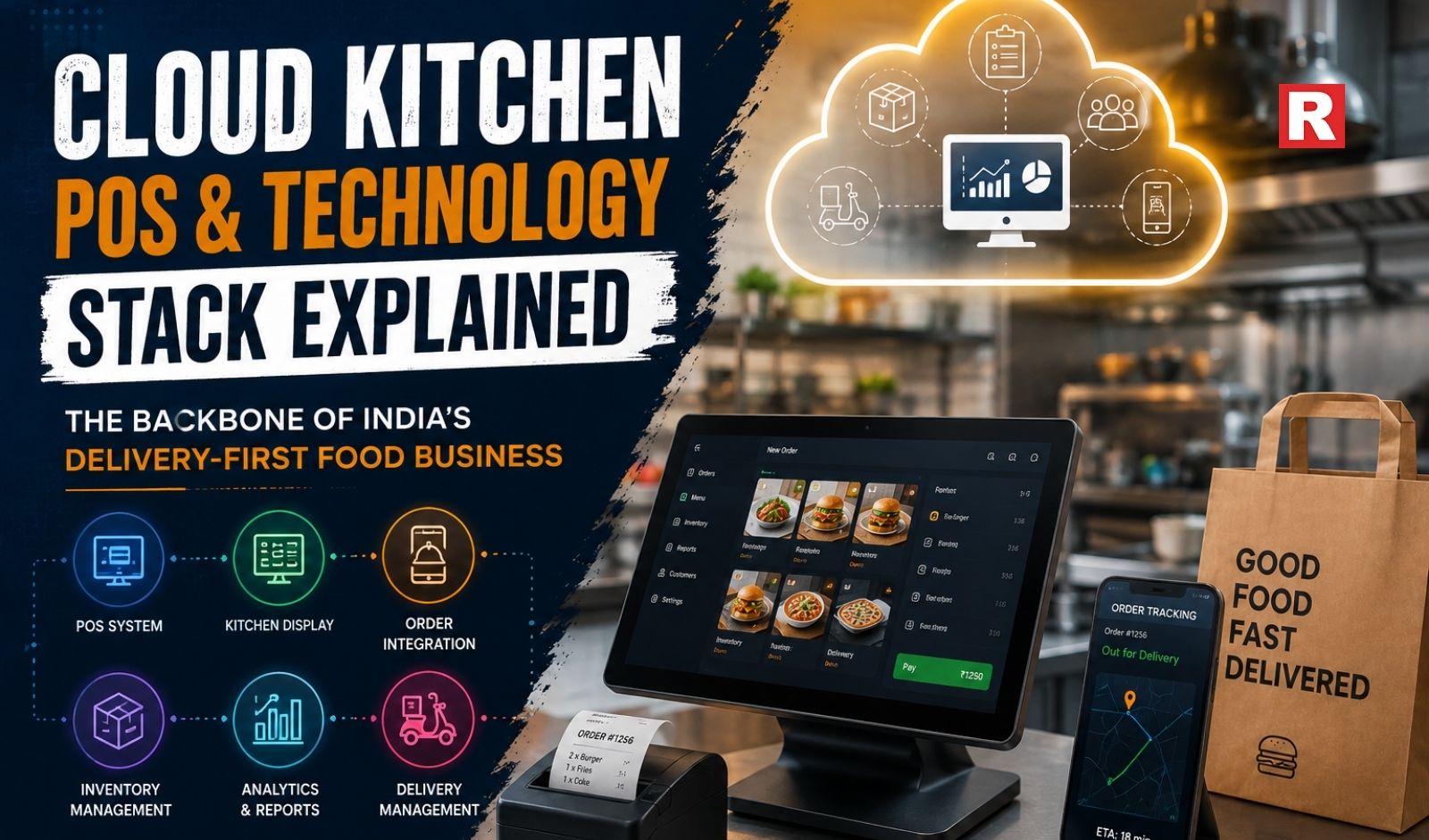
The cloud kitchen business in India has moved far beyond being just a startup trend. It is now one of the fastest-growing parts of the food service industry. From late-night biryani brands and healthy bowl concepts to dessert-only kitchens and celebrity-backed food ventures, delivery-first brands are expanding rapidly across metros as well as Tier-2 cities. According to industry reports, India’s cloud kitchen market is expected to grow strongly over the next decade as online food ordering becomes a part of daily life.
But behind every successful cloud kitchen is something customers never notice directly—technology.
A modern cloud kitchen is not just a cooking space. It is a data-driven operation powered by POS systems, inventory software, kitchen display systems, delivery integrations, analytics dashboards, and automation tools. These technologies help kitchens manage hundreds of online orders without the chaos of traditional restaurant operations.
What Is a Cloud Kitchen POS System?
A POS system, or Point of Sale system, works as the central operating system of a cloud kitchen. Unlike traditional restaurant POS software that mainly handles dine-in billing, table reservations, and waiter coordination, cloud kitchen POS systems are specially built for fast-moving delivery operations. These systems manage online orders from platforms like Swiggy, Zomato, ONDC, and direct websites through one centralized dashboard. They also handle billing, menu updates, kitchen routing, inventory tracking, delivery coordination, sales reports, and multi-brand management in real time. For instance, a single kitchen may operate burger, pizza, and Chinese food brands simultaneously, while the POS automatically sends each order to the correct kitchen station. This improves speed, reduces manual errors, and helps kitchens handle peak-hour order volumes efficiently.
Why Cloud Kitchens Need a Different Technology Stack
Cloud kitchens operate very differently from traditional restaurants. There is no dining area, no customer interaction at the counter, and no physical footfall. Everything depends on speed, coordination, and delivery accuracy. A normal restaurant can survive occasional delays because customers are already inside the outlet. But in cloud kitchens, a delayed order directly affects customer ratings and repeat business. This is why cloud kitchens require a highly connected technology ecosystem.
A modern cloud kitchen usually handles orders from:
- Swiggy
- Zomato
- ONDC
- Brand websites
- Mobile apps
- WhatsApp ordering systems
Without integration software, staff would manually enter every order into the kitchen system. That increases mistakes and slows operations. Technology solves this problem by automatically syncing every incoming order into one platform. Industry experts also believe technology-driven operations are helping cloud kitchens scale faster across India’s growing delivery market.
POS System: The Central Control Unit
The POS system is the most important layer in the cloud kitchen technology stack. Every order passes through it. The system receives online orders, processes payments, updates inventory, sends tickets to kitchen screens, and tracks delivery timelines in real time. Modern cloud-based POS systems also allow owners to monitor operations remotely through smartphones and laptops.
Restaurant operators can check:
- Daily sales
- Peak order timings
- Best-selling dishes
- Refund rates
- Kitchen performance
- Customer trends
This remote visibility has become a major advantage for multi-location cloud kitchen operators. Cloud-based systems also offer automatic software updates, secure backups, and centralized data access. Many operators now prefer cloud-based POS software because traditional offline systems struggle to handle large-scale delivery operations efficiently.
Kitchen Display Systems Are Replacing Paper Tickets
One of the biggest operational upgrades in cloud kitchens is the Kitchen Display System, also known as KDS. Instead of printing paper order slips, orders appear directly on digital kitchen screens.
These systems help kitchen staff:
- View live orders
- Track preparation times
- Prioritize urgent deliveries
- Reduce human errors
- Coordinate different cooking stations
This becomes very useful when one kitchen manages multiple cuisines. For example, a biryani order may go to one station while a burger order goes to another automatically. The system keeps every department synchronized. During rush hours, this technology helps cloud kitchens maintain faster preparation speeds and better delivery timelines.
Aggregator Integration Is Critical
Food delivery aggregators play a huge role in India’s cloud kitchen industry. Most cloud kitchens depend heavily on platforms like Swiggy and Zomato for customer acquisition. However, managing multiple delivery platforms manually can become extremely difficult. Aggregator integration software connects all delivery platforms directly to the POS system.
This allows:
- Automatic order syncing
- Unified order management
- Centralized billing
- Real-time menu updates
- Faster order acceptance
Instead of checking multiple tablets separately, operators manage everything from one screen. However, many cloud kitchen founders are now trying to reduce dependence on aggregator platforms because commissions can heavily affect profitability. Discussions across startup communities frequently highlight concerns about high platform fees and shrinking margins. As a result, many brands are investing in direct ordering systems.
Inventory Management Has Become a Profit Tool
Inventory software is no longer optional for cloud kitchens. Food wastage directly impacts profits, especially when margins are already tight.
Modern inventory systems track:
- Raw materials
- Ingredient usage
- Recipe costs
- Vendor purchases
- Stock levels
- Daily consumption patterns
Some advanced platforms even use AI-based forecasting to predict demand spikes during weekends, cricket matches, festivals, or rainy weather conditions. This helps kitchens avoid overstocking and reduce wastage. Industry reports show AI-driven inventory forecasting is becoming one of the fastest-growing areas in cloud kitchen technology.
CRM Tools Help Build Repeat Customers
Cloud kitchens are now realizing that customer retention matters more than customer acquisition. Getting new customers through food delivery apps is expensive because of discounts, ads, and commissions. Long-term profitability depends on repeat orders. Many successful cloud kitchens now focus on building direct customer relationships instead of depending completely on aggregators. Startup discussions increasingly show operators encouraging subscription models, direct delivery, and repeat ordering systems.
CRM tools help brands stay connected with customers through:
- WhatsApp campaigns
- Loyalty programs
- Push notifications
- Personalized offers
- Feedback collection
- Coupon systems
The Biggest Competitive Advantage
Cloud kitchens today function almost like technology companies. Every order generates valuable business data.
Analytics dashboards help operators understand:
- Which dishes sell most
- Which locations perform best
- Peak ordering hours
- Average delivery time
- Repeat customer rate
- Packaging costs
- Advertisement ROI
- Cuisine-wise profitability
This data helps brands make smarter decisions. If one cuisine performs poorly in a location, operators can quickly replace it with a more profitable concept without changing the kitchen infrastructure. This flexibility is one of the biggest reasons why cloud kitchens are expanding rapidly across India. Bengaluru, in particular, has emerged as one of the country’s largest cloud kitchen hubs due to its strong food delivery culture and tech-driven consumer base.
Comparison Table
Technology Layer | Main Function | Key Features | Why It Matters for Cloud Kitchens |
|---|---|---|---|
POS System | Centralized operations management | Order aggregation, billing, menu control, sales tracking, multi-brand handling | Acts as the operational brain and manages all incoming orders efficiently |
Kitchen Display System (KDS) | Digital kitchen workflow management | Live order queue, prep timers, station-based routing, priority alerts | Reduces kitchen confusion and improves order preparation speed |
Aggregator Integration Software | Connects food delivery platforms | Swiggy/Zomato syncing, real-time order updates, centralized dashboard | Eliminates manual order entry and reduces operational errors |
Inventory Management Software | Tracks stock and ingredient usage | Recipe mapping, stock alerts, wastage tracking, vendor management | Controls food costs and prevents inventory shortages |
CRM & Loyalty Tools | Customer engagement and retention | Loyalty programs, WhatsApp marketing, personalized offers, feedback collection | Increases repeat orders and improves customer retention |
Analytics & BI Dashboard | Business performance analysis | Sales analytics, peak-hour tracking, ROI reports, customer insights | Helps operators make data-driven growth decisions |
Delivery Management System | Dispatch and delivery coordination | Rider tracking, delivery timelines, route optimization | Improves delivery efficiency and customer satisfaction |
Direct Ordering Infrastructure | Builds independent ordering channels | Brand websites, mobile apps, QR ordering, ONDC integration | Reduces dependency on aggregator platforms and improves margins |
AI Forecasting Tools | Predicts demand and inventory needs | Demand forecasting, sales prediction, smart stock planning | Helps optimize inventory and reduce wastage during peak demand |
Cloud-Based Infrastructure | Remote operations and data storage | Real-time access, automatic backups, multi-location monitoring | Enables scalability and operational control across multiple kitchens |
The Future of Cloud Kitchen Technology
AI Demand Forecasting: Cloud kitchens are increasingly using artificial intelligence to predict customer demand based on weather, festivals, weekends, cricket matches, and local events. This helps operators prepare inventory in advance and avoid food wastage or stock shortages.
Smart Kitchen Automation: Automated kitchen systems are helping reduce manual work by streamlining cooking workflows, order management, and food preparation timing. This improves kitchen efficiency and speeds up delivery operations during peak hours.
Delivery Route Optimization: Advanced delivery software now uses real-time traffic and location data to identify the fastest delivery routes. This reduces delivery time, improves customer satisfaction, and lowers fuel and operational costs.
Voice-Enabled Kitchen Systems: Voice-assisted technology is slowly entering commercial kitchens, allowing staff to update orders, manage cooking timers, and access operational information hands-free while working in fast-paced environments.
Predictive Inventory Management: AI-powered inventory systems can track ingredient consumption patterns and predict future stock requirements automatically. This helps cloud kitchens control food costs and maintain better inventory planning.
Hyperlocal Delivery Tracking: Real-time delivery tracking tools help customers monitor orders accurately while allowing kitchen operators to coordinate deliveries more efficiently within smaller geographic areas.
Robotics-Assisted Food Preparation: Some advanced cloud kitchens are experimenting with robotic cooking systems for repetitive tasks like frying, assembling, and packaging food. This reduces dependency on manpower and improves consistency.
Multi-Brand Operations from a Single Kitchen: Technology enables operators to run multiple food brands from one kitchen infrastructure. A single location can handle different cuisines while reducing rental, staffing, and operational expenses compared to traditional restaurants.
Rising Operational Challenges: Despite technological growth, cloud kitchens still face challenges such as increasing raw material costs, high delivery commissions, infrastructure issues, and supply chain disruptions that can impact daily operations.
Strong Investor Interest in Food-Tech: Investor confidence in cloud kitchens remains high as India’s food delivery market continues to grow. Many food-tech startups and cloud kitchen brands are attracting investments to expand operations, strengthen technology infrastructure, and enter new cities.
The Road Ahead
Cloud kitchens may appear simple from the outside, but behind every fast delivery is a highly connected technology ecosystem working in real time. POS systems, kitchen display software, inventory tools, CRM platforms, analytics dashboards, and aggregator integrations now form the foundation of modern food delivery businesses. In India’s rapidly growing cloud kitchen market, technology is no longer just a support function. It has become the core driver of operational speed, customer satisfaction, scalability, and profitability. For food entrepreneurs entering the delivery-first market, investing in the right technology stack may ultimately decide whether the business grows successfully or struggles to survive.
India’s food business is changing fast. Customers no longer want to wait in lines or travel for every meal. They want restaurant-style food delivered quickly to their homes. This shift has made cloud kitchens one of the fastest-growing business models in the country. Unlike traditional restaurants, cloud kitchens do not need expensive interiors, premium dining spaces, or large front-end teams. They operate through delivery apps like Swiggy and Zomato and focus completely on food production and fast delivery. Because of lower operating costs and higher scalability, many entrepreneurs now see cloud kitchens as a smarter investment than opening a dine-in restaurant. India’s cloud kitchen market is expected to grow strongly over the next few years as online food ordering becomes a daily habit for millions.
What makes this business even more interesting is technology. Today’s leading cloud kitchen brands use AI-based demand forecasting, POS integrations, centralized procurement systems, inventory automation, and data-driven menu engineering to improve efficiency and reduce wastage. Here are some of the best cloud kitchen franchise and partnership brands shaping India’s delivery-first food industry.
Explore Best Cloud Kitchen Franchise Brands in India
1. Rebel Foods
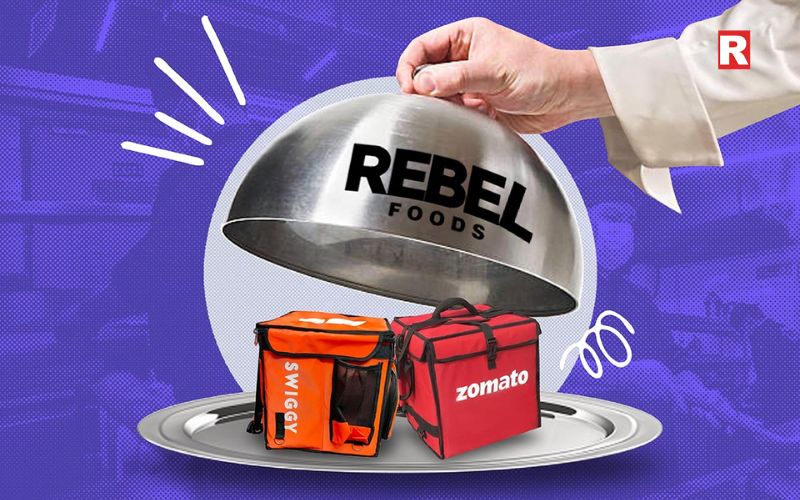
When people talk about cloud kitchens in India, Rebel Foods is usually the first name that comes up. The company changed the way India looked at delivery-only restaurants. Founded in Mumbai, Rebel Foods operates several successful brands including Faasos, Behrouz Biryani, and Oven Story. The biggest strength of Rebel Foods is its multi-brand kitchen model. One kitchen can operate multiple food brands at the same time. This improves efficiency and increases revenue potential from a single location. Industry reports suggest the company operates hundreds of cloud kitchens globally and continues to expand aggressively into Tier 2 and Tier 3 cities. The company heavily uses data analytics and AI to track customer behavior, demand patterns, and delivery performance. This technology-first approach helps optimize menus and reduce food waste. For entrepreneurs, Rebel Foods represents scale, strong brand recognition, and operational sophistication. However, entering such a system usually requires higher investment and strict operational compliance.
2. Curefoods
Health-focused food delivery is becoming a major trend in India, and Curefoods has positioned itself strongly in this segment. The company owns brands like EatFit, CakeZone, and Nomad Pizza. Curefoods focuses on healthy meals, calorie-conscious menus, protein-rich options, and modern eating habits. This positioning works especially well with urban professionals and younger consumers who want convenience without compromising on nutrition. The company has expanded rapidly across Indian cities and has also attracted strong investor interest. Recent developments, including the acquisition of Krispy Kreme’s India rights, show the company’s aggressive expansion plans. What makes Curefoods attractive is its combination of technology, health positioning, and diversified brand portfolio. Entrepreneurs entering the wellness food category may find this model highly relevant for modern Indian consumers.
3. Biryani By Kilo
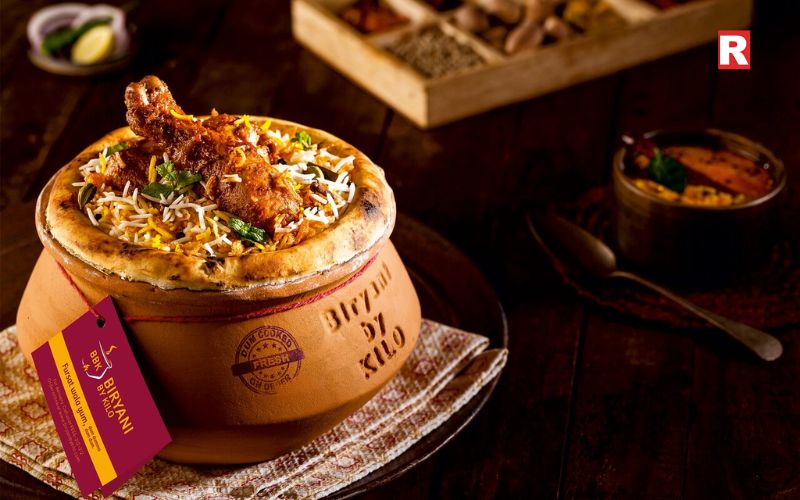
Biryani remains one of India’s most ordered food categories online. Biryani By Kilo built its brand around premium handi-cooked biryani delivered fresh to customers. The company focuses heavily on product consistency, premium packaging, and authentic flavors. Unlike mass-market biryani chains, Biryani By Kilo positions itself as a premium experience. This premiumization strategy has worked well because customers are increasingly willing to spend more on quality food delivery experiences. The brand also benefits from strong repeat ordering, especially during weekends and festive occasions. For franchise partners, the brand offers operational support, centralized systems, and established delivery demand in several Indian cities.
4. BOX8
BOX8 became popular by simplifying Indian meals for delivery. Instead of traditional restaurant-style menus, the company focused on convenient meal boxes, wraps, and combo offerings designed specifically for delivery consumers. Its packaging innovation and affordable pricing helped the brand build strong appeal among young professionals and college students. BOX8 also operates with a strong technology backbone. Delivery optimization, customer analytics, and menu engineering play a major role in its operations. This helps improve efficiency and customer retention. The company’s model works especially well in densely populated urban markets where quick, affordable meals are in constant demand.
5. FreshMenu
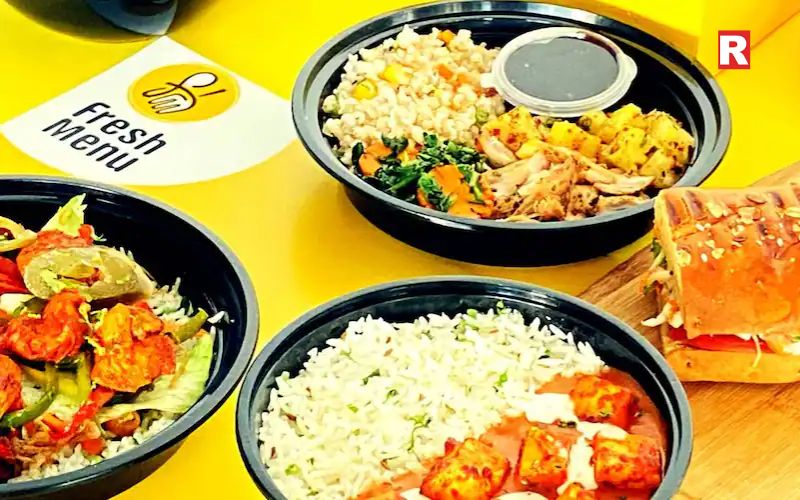
FreshMenu targets customers looking for chef-style meals and gourmet food delivery experiences. The brand became popular among urban millennials who wanted restaurant-quality meals at home. Unlike traditional QSR-focused cloud kitchens, FreshMenu emphasizes curated menus, premium ingredients, and rotating meal options. This gives the brand a more lifestyle-driven positioning. Its success highlights an important shift in India’s cloud kitchen industry. Customers are no longer ordering only fast food. They are increasingly seeking specialized cuisines, gourmet meals, and premium dining experiences at home.
6. Kouzina
Kouzina has emerged as one of the most talked-about cloud kitchen operators in India’s franchise ecosystem. The company runs multiple virtual brands from shared kitchen infrastructure and focuses strongly on scalability. Its model is particularly attractive for entrepreneurs in smaller cities because of lower setup costs and asset-light operations. Kouzina also benefits from rising demand in Tier 2 and Tier 3 markets where organized food delivery is still developing. Many entrepreneurs now prefer entering these cities instead of competing heavily in saturated metro markets. Discussions across online business communities also show growing interest in Kouzina’s model among first-time food entrepreneurs.
Why Cloud Kitchens Are Growing
Cloud kitchens are growing rapidly in India mainly because they are far more cost-efficient than traditional restaurants. A dine-in restaurant usually requires premium real estate, expensive interiors, service staff, and higher utility costs. Cloud kitchens remove these expenses by operating as delivery-only businesses. This allows brands to start with lower investment while focusing entirely on food production and delivery efficiency. The model also supports faster expansion because one kitchen can manage multiple virtual brands at the same time, improving resource utilization and profitability. Technology has further strengthened this sector through smarter operations and customer insights.
- Lower operational costs: No dine-in setup, lower rent, and smaller staff requirements
- Multi-brand efficiency: One kitchen can run pizza, biryani, desserts, and healthy meal brands together
- Faster scalability: Easier expansion into Tier 2 and Tier 3 cities
- Tech-driven operations: AI helps forecast demand, reduce food wastage, and optimize inventory
- Data analytics: Brands track customer preferences and location-wise food demand to improve menus and delivery performance
The Challenges Most People Ignore
Despite the growth, cloud kitchens are not easy businesses.
One major challenge is dependency on delivery aggregators. Swiggy and Zomato commissions can significantly affect margins. Many business owners online openly discuss how discount wars, advertising costs, and platform commissions reduce profitability.
Packaging costs are also increasing. Since cloud kitchens depend entirely on delivery, packaging quality becomes critical for customer experience.
Competition is another big issue. Thousands of brands compete daily on food delivery apps. Visibility often depends on advertising spend, discounts, and ratings.
Several entrepreneurs also mention that success depends heavily on operational discipline, content marketing, and repeat customers rather than only relying on aggregator traffic.
The Bottom Line
Cloud kitchens are no longer a temporary food trend. They are becoming a major part of India’s restaurant industry. The rise of delivery-first dining, digital ordering habits, and convenience-driven consumers has completely changed how food businesses operate. Brands like Rebel Foods, Curefoods, BOX8, and Kouzina are proving that restaurants can scale rapidly without large dining spaces. For entrepreneurs, the opportunity is real, especially in emerging cities where food delivery demand is rising quickly. But success depends on more than just opening a kitchen. Strong operations, smart technology, menu quality, efficient delivery management, and sustainable margins matter the most. India’s next big restaurant success story may not begin with a dining room. It may begin with a delivery kitchen hidden inside a small commercial space, serving thousands of customers every single day.
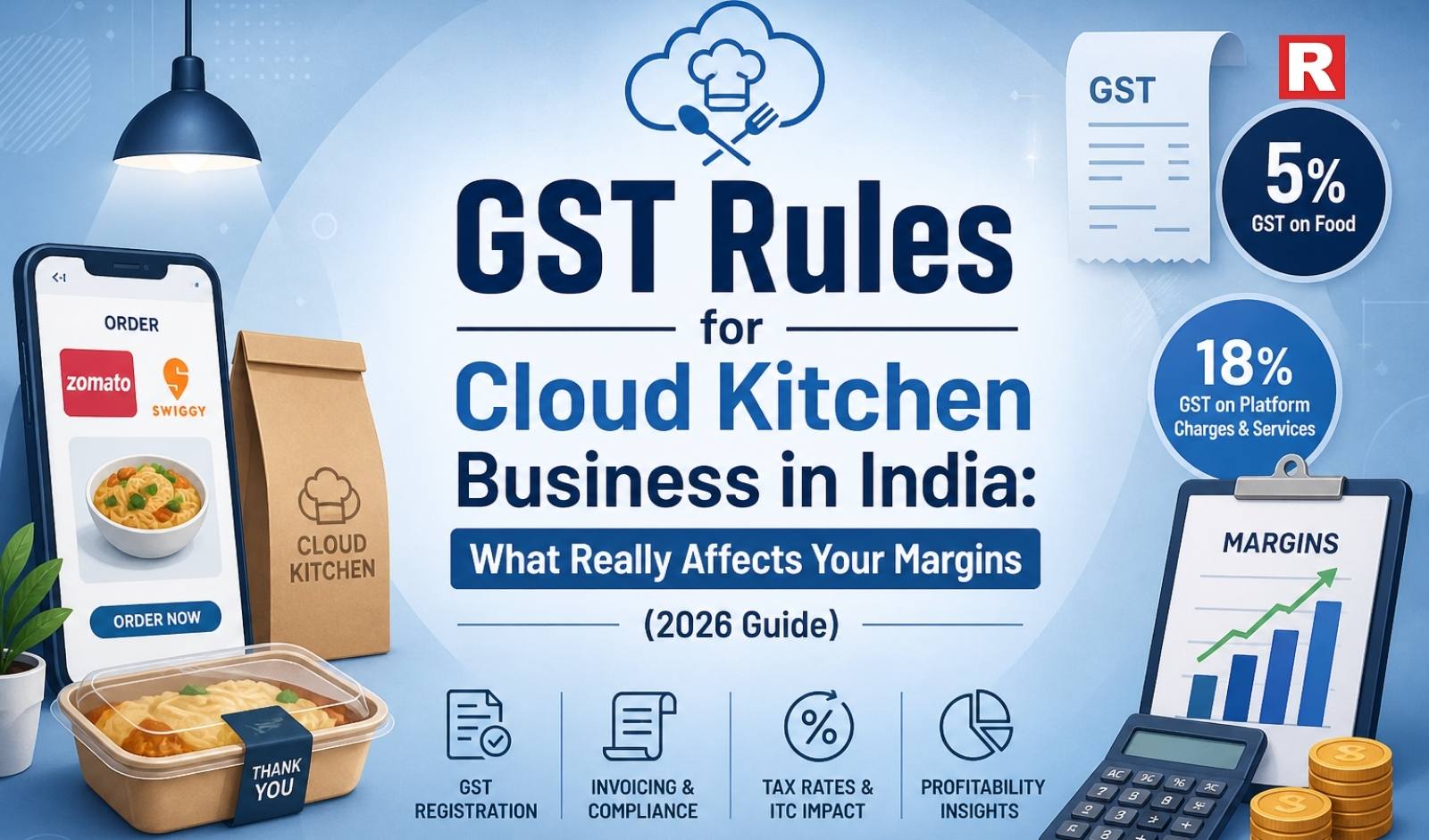
Running a cloud kitchen in India often begins with a simple assumption—lower costs, faster setup, and easy scalability. But once operations start, GST quickly becomes one of the most important factors shaping profitability. It is not just a tax you pass on to customers. It directly impacts how much you earn from every order. Most founders realise this only after they see their margins shrinking despite steady sales.
Why GST Feels Complicated in a Simple Business
At first glance, the GST structure for food looks straightforward. Restaurant services are taxed at 5 percent. That sounds manageable. But the challenge begins when you factor in how a cloud kitchen actually operates.
A typical order today comes through platforms like Swiggy or Zomato. Along with food costs, you are also paying commissions, logistics fees, and advertising spends. These services attract 18 percent GST. At the same time, you cannot claim input tax credit on most of your expenses because your output tax is only 5 percent. This gap between 5 percent and 18 percent creates a hidden pressure on margins. It is not visible in pricing, but it shows up in your profits.
How GST Classifies a Cloud Kitchen
Under Indian GST law, a cloud kitchen is treated the same as a restaurant. It falls under “restaurant services,” even if there is no dine-in space. Whether you operate from a commercial kitchen, a takeaway outlet, or even a home setup, the classification remains the same as long as you are supplying cooked food for consumption. This classification decides two critical things—your tax rate and whether you can claim input tax credit.
When You Need to Register for GST
For many small businesses in India, GST registration becomes mandatory only after crossing Rs 20 lakh in annual turnover. But cloud kitchens operate differently, especially if they depend on delivery platforms. If you are selling through Swiggy or Zomato, GST registration becomes compulsory from day one. This applies even if your business is still small and has not reached the usual threshold. The reason is simple. Selling through e-commerce platforms triggers mandatory registration under GST rules. Many first-time founders overlook this and face compliance issues later. GST compliance for cloud kitchens is not complicated, but it requires accuracy.
You need to:
- File GSTR-1 and GSTR-3B regularly
- Report aggregator sales separately
- Match your data with platform reports
- Maintain proper invoices and records
Even though aggregators pay GST, you still need to report those sales correctly.
Understanding the 5 Percent GST Rate
The core of the GST structure for cloud kitchens lies in the 5 percent tax on food. This applies to most orders, whether they are takeaway or delivery. However, this rate comes with a trade-off. You are not allowed to claim input tax credit. That means any GST you pay on raw materials, packaging, rent, or kitchen equipment becomes part of your cost instead of being adjusted. For example, if you are paying GST on packaging or kitchen supplies, you cannot offset it against the tax you collect from customers. Over time, this increases your effective cost of running the business.
What Happens When You Sell Through Swiggy and Zomato
The role of aggregators introduces another layer of complexity. Under Section 9(5) of the GST law, platforms like Swiggy and Zomato are responsible for collecting and depositing GST on your behalf for food delivery orders. In practical terms, this means the customer pays GST, the platform collects it, and the government receives it from the platform. You do not directly pay this tax for those orders.
However, this does not remove your responsibility entirely. You still need to report these sales in your GST filings. These transactions are recorded differently, and accuracy becomes important because the government already has data from the platforms. At the same time, all the services you receive from these platforms—commissions, delivery support, and advertising—are taxed at 18 percent. This cost sits entirely with you.
The Input Tax Credit Problem
Input tax credit is where the real financial impact of GST is felt. In many industries, businesses can claim back the GST they pay on expenses. This helps reduce overall tax liability. In cloud kitchens operating at a 5 percent GST rate, this benefit is not available. Every rupee of GST paid on inputs becomes a direct cost.
If your monthly expenses include packaging, raw materials, rent, and marketing services, the tax paid on these adds up quickly. Over time, this can reduce your margins by a noticeable percentage. Some businesses explore higher GST categories where input tax credit is allowed, but for most cloud kitchens, the standard 5 percent structure remains the default due to pricing sensitivity.
Composition Scheme and Its Limitations
For smaller cloud kitchens, the composition scheme may appear attractive because it simplifies compliance and reduces the complexity of filings. It offers a lower tax burden with minimal paperwork.
However, it comes with clear limitations. Businesses under this scheme cannot claim input tax credit and cannot freely operate across states. There are also restrictions when dealing with online aggregators. Because of these constraints, the composition scheme works best for small, local operations that do not plan to scale aggressively or rely heavily on delivery platforms.
Different Sales Channels, Different GST Impact
Not all sales in a cloud kitchen are treated the same under GST. The way you receive orders changes how tax is applied. If a customer orders directly from your website or calls your kitchen, you are responsible for collecting and paying GST. If the order comes through an aggregator, the platform handles the tax under Section 9(5). If you expand into selling packaged or branded food products, those items may fall under different GST rates, sometimes as high as 18 percent, depending on classification. This makes it important to clearly track each type of revenue. Mixing them up can lead to incorrect filings.
Section 9(5): The Rule That Changes Everything
Section 9(5) is the most important concept for cloud kitchens. It shifts the responsibility of paying GST from the restaurant to the aggregator.
In simple terms:
- Customer pays GST
- Platform collects and deposits it
- You report the sale but do not pay tax on it
This applies only to orders placed through platforms. Direct orders (website, WhatsApp, walk-in takeaway) are still your responsibility.
Another important detail:
- These sales are treated as exempt from your side
- But they still count toward your turnover
Why GST Directly Impacts Your Profitability
Cloud kitchens already operate on thin margins. Typically:
Net margins range between 15–25%
Now add:
- No ITC on major costs
- 18% GST on platform services
- High dependency on aggregators
The result:
- Reduced pricing flexibility
- Lower profit per order
This is why many successful cloud kitchens:
- Focus on direct ordering channels
- Optimise menu pricing with GST in mind
Compliance Is Simple but Not Optional
Even though aggregators handle part of the tax process, compliance is still your responsibility. You need to file regular GST returns, report all sales accurately, and reconcile your numbers with platform data.
Most issues arise not because the rules are difficult, but because the data is not aligned. Platforms maintain detailed transaction records, and any mismatch can trigger notices. Maintaining proper invoices and structured accounting from the beginning avoids these problems.
Where Most Cloud Kitchens Go Wrong
A common mistake is assuming GST is just a backend function handled by an accountant. In reality, it is a business decision that affects pricing and growth strategy. Some founders ignore the impact of 18 percent GST on platform services. Others fail to separate direct orders from aggregator sales. Many underestimate how the lack of input tax credit increases their operating cost. These are not compliance errors alone. They directly reduce profitability.
The Bottom Line
Cloud kitchens in India already operate on tight margins. Once you factor in platform commissions, delivery costs, and GST-related inefficiencies, the pressure becomes even higher. This is why many successful operators are now building a balance between aggregator-driven sales and direct ordering channels. Direct orders give better control over margins, even though they require more effort in marketing and customer acquisition. Pricing decisions are also increasingly being made with GST in mind, rather than treating it as a separate layer.
GST for cloud kitchens is straightforward in structure but complex in its impact. The 5 percent tax rate may look attractive, but the inability to claim input tax credit and the high cost of platform services change the equation. Understanding how these elements interact is what separates a sustainable business from one that struggles with margins. For anyone building or scaling a cloud kitchen in India, GST is not just about compliance. It is a key part of the business model itself.
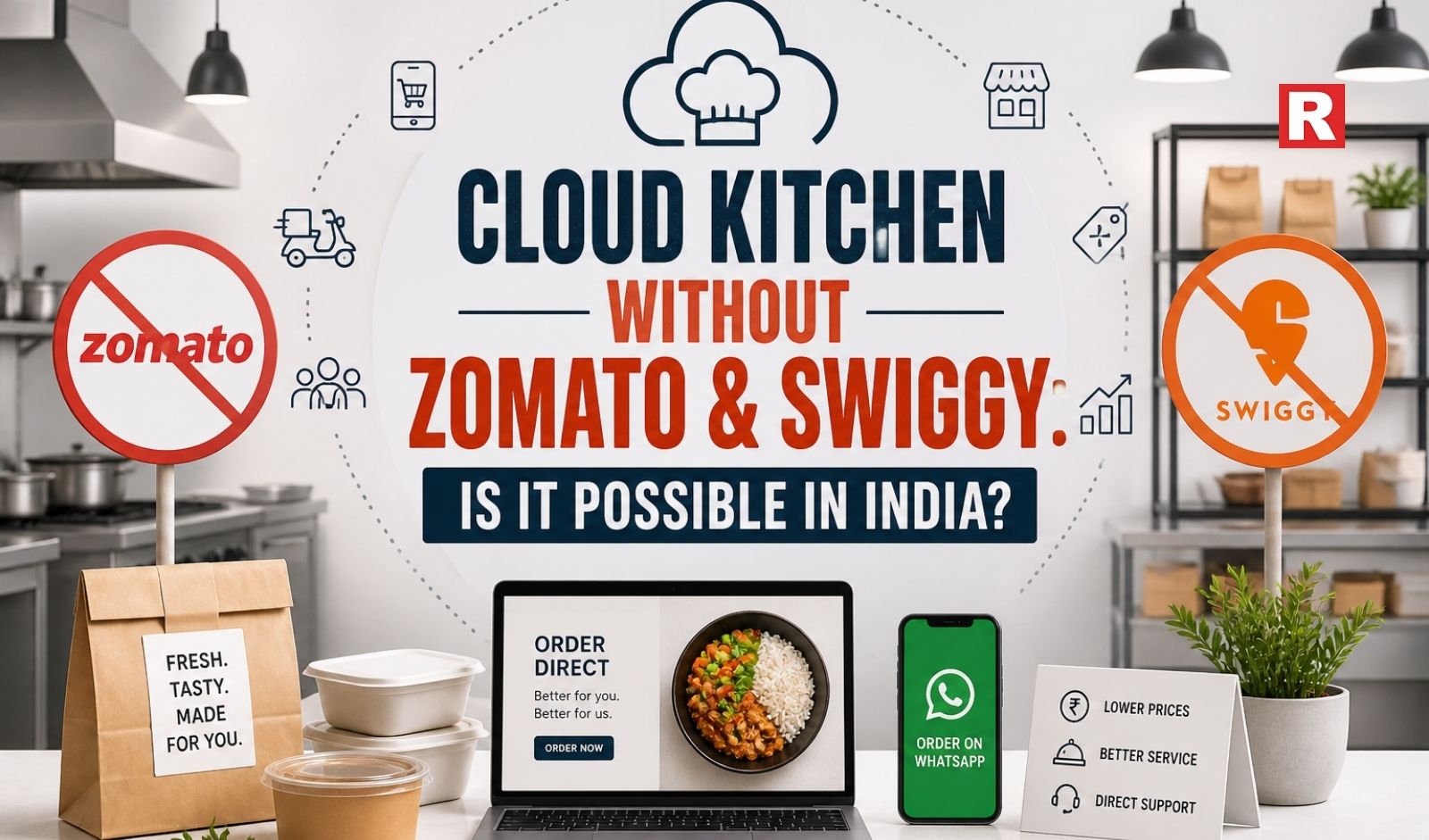
The Indian cloud kitchen boom has been largely driven by platforms like Zomato and Swiggy, which solved some of the biggest early challenges for food entrepreneurs. They offered instant customer discovery, built-in logistics, digital payments, and a layer of trust that new brands often struggle to establish on their own. For many first-time operators, this meant they could focus only on food quality and operations while the platforms handled everything else. However, this convenience comes at a cost. High commissions, rising advertising spends, and limited access to customer data have made many cloud kitchen owners question their long-term sustainability on these apps. As the market matures in 2026, more brands are exploring direct-to-consumer models to improve margins and build stronger customer relationships.
So, can a cloud kitchen survive without these platforms? Yes, it can—but it requires a very different approach, stronger brand-building, and investment in marketing and logistics. The opportunity exists, but it demands patience, strategy, and a clear understanding of unit economics.
The Aggregator Trap: Why Everyone Starts Here
Most cloud kitchens begin with aggregators because they solve three major problems instantly:
- Customer discovery
- Delivery logistics
- Payment infrastructure
Without these, starting from scratch is difficult. But this convenience comes at a cost. Commissions typically range between 18% to 30% per order, depending on city and visibility programs . Add GST, ads, and discounts, and the effective cost can go much higher. For a business with already tight margins, this becomes a structural dependency.
The Big Question: Can You Survive Without Them?
Yes, but not in the early stage. Running a cloud kitchen without aggregators means shifting from:
Borrowed demand (Zomato/Swiggy) to Owned demand (your own customers)
This is not just a channel change. It is a mindset shift. You are no longer a listing on an app. You are building a brand.
The Real Cost of Zomato & Swiggy
On paper, orders look strong. But profitability often tells a different story.
A typical cost structure includes:
- Commission: 18–30%
- Delivery & platform cuts: 5–8%
- Ads for visibility: ₹400–₹500 per day minimum
- Packaging & discounts
This is why many cloud kitchens report strong revenue but weak profits. In fact, profitability depends heavily on controlling these costs. Even a small increase in commissions or fees can impact margins significantly .
How Brands Are Growing Without Aggregators
A new generation of food brands in India is quietly moving away from platform dependency. They are not rejecting aggregators entirely. They are reducing reliance. Here is how they are doing it.
1. Instagram-First Food Brands
Food discovery in India has moved beyond search-based platforms to visual-first platforms like Instagram, where reels and short videos influence buying decisions instantly. Today, a well-shot food video can generate immediate demand, especially in metro cities where users actively explore new food trends through content. Many home chefs and niche cloud kitchens are launching directly on Instagram without relying on aggregators. They collaborate with micro-creators, run targeted ads, and use storytelling to build a brand identity. Orders are often taken through direct messages or redirected to WhatsApp. Over time, this model helps reduce customer acquisition cost because repeat customers return through the same channel. It also builds strong brand recall, as users associate the food with a visual experience rather than just a listing on an app.
Key actions include:
- Launching directly on Instagram
- Collaborating with food creators and influencers
- Taking orders through DMs or linked channels
2. WhatsApp as an Ordering Engine
WhatsApp has quietly become one of the most powerful tools for direct food ordering in India. Its familiarity and ease of use make it ideal for repeat customers. Unlike aggregators, WhatsApp allows cloud kitchens to build a direct relationship with their audience. Customers can browse menus, place orders, and receive updates all in one chat thread. Features like broadcast lists and automated responses enable brands to share daily menus, offers, and new launches efficiently. This direct interaction increases trust and improves retention, as customers feel more connected to the brand. Over time, many kitchens report higher repeat order rates because there is no platform interference or competing listings.
Why it works:
- Direct and personalised communication
- Faster and simpler repeat ordering
- Broadcast lists for promotions and updates
3. Own Website or App
As cloud kitchens scale, many invest in their own ordering ecosystem to gain full control over operations and customer data. Platforms like Shopify and WooCommerce make it easier to build functional websites without heavy technical expertise. Payment gateways such as Razorpay handle secure transactions, while backend tools manage orders and inventory. This setup eliminates aggregator commissions, leaving only a small transaction fee. More importantly, it allows brands to own customer data, track behaviour, and run targeted marketing campaigns. While the initial setup requires investment in design, tech, and marketing, it creates a sustainable direct-to-consumer (D2C) model in the long run.
Basic stack includes:
Website built on Shopify or WooCommerce
Payment gateways like Razorpay
Order and inventory management systems
4. Hyperlocal Delivery Model
Delivery is one of the biggest challenges when operating without aggregators. To solve this, many cloud kitchens adopt a hyperlocal model, focusing on a limited delivery radius to maintain efficiency and quality. Some hire their own delivery staff, which gives better control over service and customer experience. Others rely on third-party logistics providers like Dunzo and Porter to manage deliveries without long-term commitments. By limiting the service area, kitchens can reduce delivery time, lower costs, and ensure food reaches customers in optimal condition. This approach also helps in building a loyal local customer base.
Common solutions include:
Hiring in-house delivery staff
Using services like Dunzo or Porter
Limiting delivery radius for efficiency
5. Community-Led Growth
One of the most cost-effective growth strategies for independent cloud kitchens is leveraging local communities. Instead of spending heavily on ads, many brands tap into existing networks such as residential societies, corporate offices, gyms, and co-working spaces. These environments offer access to a concentrated group of potential repeat customers. Word-of-mouth plays a major role here, as satisfied customers recommend the brand within their community. Some kitchens also partner with offices for bulk orders or weekly meal plans, creating consistent demand. This approach reduces marketing costs while improving customer loyalty and retention.
Key channels include:
Resident welfare groups and housing societies
Corporate offices and bulk meal partnerships
Gyms and co-working spaces
Tech Stack Needed to Replace Aggregators
Running independently requires strong technical capability.
Here is the minimum stack:
- Ordering System: A website or app to take orders and manage menus
- CRM (Customer Relationship Management): To track repeat customers and preferences
- Payment Gateway: Secure and fast checkout
- Delivery Integration: APIs or manual logistics coordination
- Marketing Stack: Meta Ads, Google Ads, influencer marketing
This is where many founders struggle. Aggregators simplify this. Going independent means building it yourself.
Unit Economics: Does It Actually Make More Money?
At first glance, removing a 25% commission looks like a clear win. But reality is different.
With Aggregators
Lower marketing cost
High commission
Faster order volume
Without Aggregators
Zero commission
Higher marketing spend
Slower initial growth
The key metric is not revenue. It is:
Customer Acquisition Cost (CAC)
Lifetime Value (LTV)
If customers repeat orders, direct channels become more profitable over time.
Challenges You Can’t Ignore
Running without aggregators is not easy.
Major challenges include:
1. No Built-in Discovery: You must generate your own traffic
2. Logistics Complexity: Delivery operations become your responsibility
3. Higher Upfront Costs: Marketing and tech investments increase
4. Trust Building Takes Time: Customers trust platforms more than new brands
Many founders underestimate these challenges and struggle in the first few months.
The Smart Middle Path
The most practical approach today is not extreme.
It is hybrid.
Use Zomato and Swiggy for discovery
Convert customers to direct channels
Offer discounts on direct orders
This strategy combines:
Visibility of aggregators
Profitability of D2C
Many successful cloud kitchens follow this model quietly.
Future of Cloud Kitchens
The cloud kitchen industry in India is evolving rapidly as consumer behaviour and business models shift. A major trend is the rise of direct-to-consumer (D2C) food brands that prioritise owning customer relationships rather than relying entirely on aggregators like Zomato and Swiggy. Founders are increasingly focusing on building their own customer databases through channels like websites, WhatsApp, and social media, which improves retention and long-term profitability. At the same time, new low-commission and logistics-first platforms are entering the market, offering more flexible alternatives with lower fees, making the ecosystem more competitive. There is also a clear shift towards hyperlocal and niche brands that cater to specific cuisines, dietary needs, or communities, rather than mass-market menus. Despite these changes, aggregators will continue to play a key role in discovery and scale, especially for new businesses. However, they are no longer the only growth path. Running a cloud kitchen without them is possible, but it requires strong branding, consistent quality, and investment in marketing and operations. For new entrants, aggregators offer speed and visibility, but long-term success depends on building a loyal customer base that returns directly.
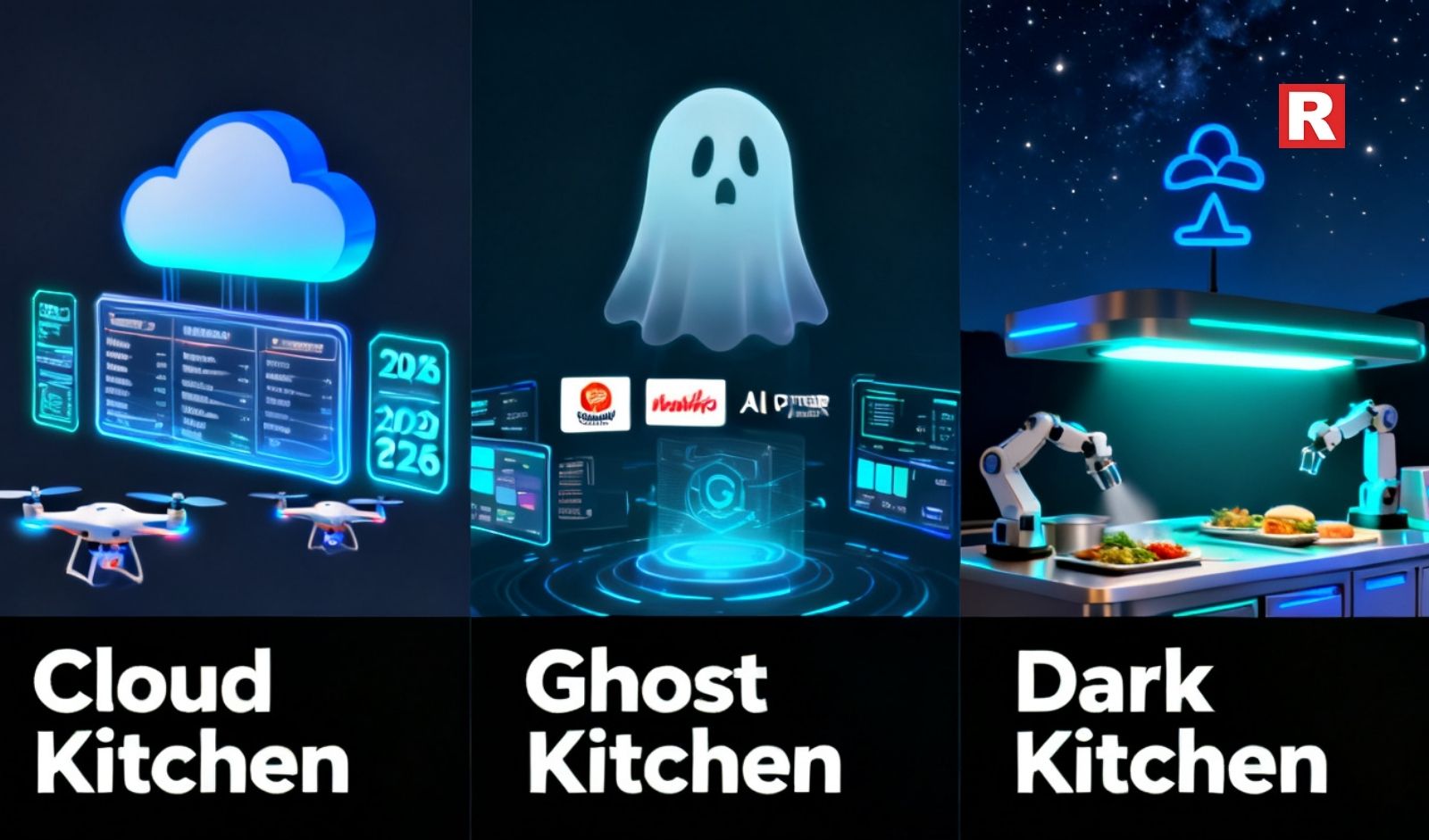
The way India eats has quietly undergone a major shift in recent years. A growing share of food orders now comes through platforms like Zomato and Swiggy, changing how consumers discover and experience food. Today, what appears as a restaurant on your phone screen may not exist as a physical dine-in space at all. Instead, it could be operating entirely from a delivery-only setup hidden from public view. This transformation is being driven by evolving urban lifestyles, rising real estate costs, and the increasing demand for convenience. Behind this shift, three key models are shaping the industry—cloud kitchens, ghost kitchens, and dark kitchens.
While these terms are often used interchangeably, they represent distinct approaches to running a food business. Each model differs in terms of scale, branding, investment, and operational strategy. Their overlap creates confusion, especially for new entrepreneurs entering the space. However, understanding these differences is no longer optional. It has become essential for anyone looking to start, optimize, or expand a food business in India’s fast-growing delivery-first ecosystem.
The Rise of Invisible Restaurants
Food delivery is no longer an add-on. It is the core business for many brands. The biggest change is simple: restaurants no longer need customers to walk in.
Delivery-only kitchens remove the cost of rent, interiors, and front-of-house staff. This allows operators to focus only on cooking and logistics. That is why these models are growing fast, especially in urban India. But here is where confusion begins. Many people use all three terms interchangeably. In reality, each model reflects a different business intent.
Quick Snapshot: The Basic Difference
- Cloud Kitchen: Scalable, multi-brand, tech-driven operation
- Ghost Kitchen: Brand-focused, virtual restaurant strategy
- Dark Kitchen: Infrastructure-first, delivery-only backend unit
All three are delivery-only. But how they operate and scale is where the difference lies.
What is a Cloud Kitchen? The Scalable Engine
A cloud kitchen is a delivery-only restaurant that operates without a dine-in space. Orders come through apps or websites, and food is prepared purely for delivery. What makes it different is scale. Cloud kitchens often run multiple brands from a single location. One kitchen can serve biryani, pizza, and desserts under different brand names. This reduces cost and increases revenue per square foot.
How It Works in India
- One kitchen, multiple cuisines
- Heavy use of aggregator platforms
- Data-driven menu decisions
- Faster expansion across cities
Cloud kitchens are built for growth. They are not just kitchens. They are systems.
What is a Ghost Kitchen? The Brand Game
A ghost kitchen focuses on creating and running virtual brands. These brands exist only online. Customers never see a storefront. At its core, a ghost kitchen is still a delivery-only setup. It prepares food for online orders with no dine-in facility. But the key difference is positioning.
What Makes It Different
- Strong focus on branding and marketing
- Multiple virtual brands targeting different audiences
- Can operate from shared or rented kitchen spaces
For example, one kitchen can run a “healthy bowl” brand, a “late-night burger” brand, and a “dessert-only” brand—all targeting different customer segments. Ghost kitchens are less about infrastructure and more about winning attention in crowded marketplaces.
What is a Dark Kitchen? The Efficiency Model
A dark kitchen is the simplest form of delivery-only operation. It has no dine-in, no branding focus, and often limited visibility. It is built purely for cooking and fulfilling orders. These kitchens are usually located in low-cost areas and rely heavily on aggregator platforms for orders.
What Defines a Dark Kitchen
- Minimal setup
- One or two brands
- Low investment
- Focus on cost efficiency
Dark kitchens are ideal for testing ideas or running small-scale operations. They are not designed for aggressive scaling.
Cloud vs Ghost vs Dark: The Core Differences That Matter
The real difference lies in intent.
Factor | Cloud Kitchen | Ghost Kitchen | Dark Kitchen |
|---|---|---|---|
| Business Goal | Built to scale across locations and cuisines | Focused on creating and growing virtual brands | Focused on efficient operations and low cost |
| Customer Visibility | Builds strong, recognizable brand presence | Operates multiple niche brands for different audiences | Mostly invisible to customers |
| Investment Level | Medium to high investment (tech + expansion) | Moderate investment (branding + marketing) | Low investment (basic kitchen setup) |
| Technology Use | Advanced tech stack (POS, AI, analytics, OMS) | Marketing-driven tech (ads, SEO, platform ranking) | Minimal tech (basic order and delivery tools) |
Why This Model is Booming in India
India is a perfect market for delivery-first kitchens.
Key Drivers
- Rapid growth of food delivery platforms
- Urban lifestyles with less time to cook
- High rental costs for dine-in spaces
- Demand for quick and affordable meals
Delivery-first kitchens solve all these problems. They reduce costs and increase reach. Even globally, delivery-only kitchens are becoming mainstream. Studies show a significant share of food businesses now operate without storefronts.
The Technology Behind Delivery-First Kitchens
Technology is not optional here. It is the backbone.
Core Systems
- Order Management Systems (OMS): Combine orders from multiple apps
- Kitchen Display Systems (KDS): Replace manual tickets
- Inventory Tools: Track stock in real time
- AI Forecasting: Predict demand and reduce waste
Advanced cloud kitchens even use AI to decide:
- What dishes to keep
- What price to set
- Which location to expand into
This is where traditional restaurants often fall behind.
Which Model Should You Choose?
The answer depends on your goal.
- If you want to start small and test the market, a dark kitchen works best
- If you want to build strong digital brands, go for a ghost kitchen
- If you want to scale across cities and cuisines, a cloud kitchen is the right choice
Also consider:
- Your budget
- Your team’s tech capability
- Your long-term vision
Final Takeaway
The future of delivery-first kitchens is set to grow stronger as consumer reliance on online food ordering continues to rise. What lies ahead is a shift driven less by food itself and more by data and technology. AI-driven menus and dynamic pricing will help brands adapt quickly to demand patterns, while hyperlocal kitchen clusters will reduce delivery time and improve efficiency. Private-label brands built exclusively for apps will dominate digital marketplaces, and micro-kitchens will enable faster, more precise fulfillment. Within this evolving ecosystem, cloud kitchens, ghost kitchens, and dark kitchens will continue to coexist but serve different strategic roles. A dark kitchen works as the starting point for low-cost operations, a ghost kitchen acts as the branding layer focused on digital visibility, and a cloud kitchen becomes the scale engine designed for expansion. Choosing the right model is not about following trends, but about having clear business goals and execution clarity.
Starting a restaurant in India no longer needs crores. The food business has changed fast. Today, small formats and delivery-first models are driving growth. Platforms like Zomato and Swiggy have made it easier to reach customers without a premium location. For first-time entrepreneurs, this is the right time to enter the market. With Rs 10 lakhs, a well-planned food business can start, grow, and even scale into a brand.
Why a Low-Budget Restaurant Makes Sense Today
A smaller investment reduces risk. It also allows faster decision-making. If one idea does not work, you can pivot quickly. Urban India is seeing strong demand for quick meals, affordable snacks, and home-style food. Working professionals, students, and young families prefer convenience over luxury dining. This shift supports compact food businesses.
Delivery has also reduced dependency on expensive high-street locations. A good product can succeed even from a small kitchen in a residential area.
Cost Breakdown: Where Your Rs 10 Lakhs Goes
A clear cost plan is important. Overspending in the early stage can break the business.
- Kitchen Setup (Rs 2–4 lakhs): Basic equipment includes burners, refrigerators, prep tables, and storage units. Avoid overbuying. Start with essential tools only.
- Rent and Deposit (Rs 1–3 lakhs): A small space or shared kitchen works best. Many entrepreneurs now choose cloud kitchen setups to save rent.
- Licenses and Registrations (Rs 20,000–Rs 50,000): You need FSSAI registration, GST, and local approvals. These are mandatory and should not be ignored.
- Raw Materials (Rs 50,000–Rs 1 lakh): Start with a limited menu. This reduces inventory costs and wastage.
- Marketing (Rs 50,000–Rs 1 lakh): Digital marketing is more effective than traditional ads. Invest in good photos, listings, and offers on delivery apps.
10 Low-Budget Restaurant Ideas That Work
1. Cloud Kitchen
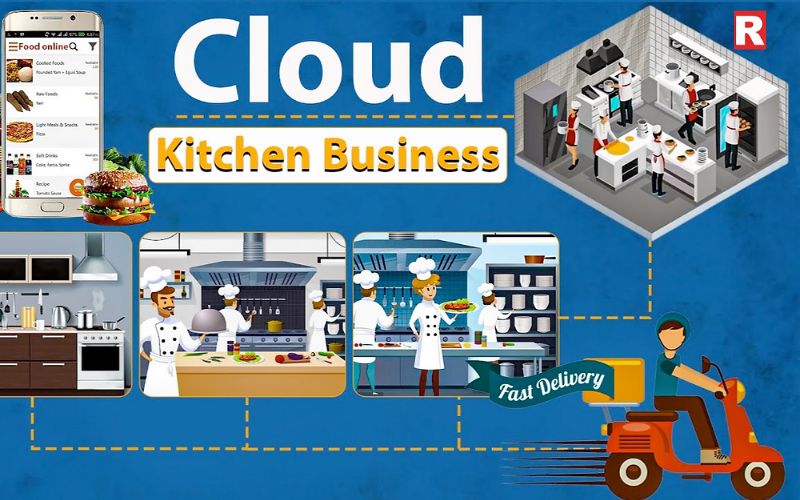
A cloud kitchen is a delivery-first food business. There is no dine-in area. The focus is on online orders through platforms like Zomato and Swiggy. This model has grown fast in India due to lower setup costs and rising demand for home delivery. According to RedSeer Consulting, the Indian cloud kitchen market was valued at around $969 million in 2023 and is expected to cross $2 billion by 2028, driven by urban consumption and digital ordering habits. The biggest advantage is cost control. A cloud kitchen can be set up within Rs 3–8 lakhs, depending on scale and location. Rental costs are lower because these kitchens operate from non-prime areas. A small 200–400 sq. ft. space is often enough. Since there is no front-of-house staff, manpower costs can be reduced by 30–40 percent compared to a traditional restaurant.
This model works best for high-demand cuisines such as biryani, Chinese, and North Indian meals. Entrepreneurs can also run 2–3 virtual brands from one kitchen, increasing revenue without major additional investment. For example, one kitchen can serve a biryani brand, a roll brand, and a combo meal brand.
Key Points to Consider:
- Initial Investment: Rs 3–8 lakhs
- Space Requirement: 200–400 sq. ft.
- Average Order Value (AOV): Rs 250–Rs 500 in metro cities
- Commission Charges: 18–30 percent per order on platforms
- Break-even Period: 6–12 months with consistent orders
- Daily Orders Target: 30–60 orders to sustain operations
Cloud kitchens are ideal for first-time entrepreneurs. They offer flexibility, lower risk, and faster scalability in India’s growing food delivery market.
Read more: How AI & Chatbots Are Redefining Restaurant Reservations in India
Portion Control Menus: The Smart Shift in Health-Conscious Dining in India
2. Street Food Café
Street food is deeply rooted in India’s eating culture. From chaat to momos, it attracts daily demand across age groups. However, consumers today are more conscious about hygiene and quality. This shift has led to the rise of small street food cafés that combine local flavours with clean kitchens and better presentation. According to National Restaurant Association of India (NRAI), India’s food services market is valued at over Rs 5.5 lakh crore, and the unorganised segment, including street food, still contributes nearly 50–55 percent. This shows strong demand that can be upgraded into organised café formats. A street food café can be started within Rs 5–9 lakhs, depending on location and interiors. A compact space of 150–300 sq. ft. is enough to operate efficiently. The focus should be on fast-moving items like momos, pav bhaji, chaat, and rolls. These dishes have low raw material costs and high margins. Pricing usually ranges between Rs 80–Rs 200 per item, making it affordable for students and young professionals.
Presentation plays a key role. Clean seating, good lighting, and visible hygiene standards help build trust. Social media-friendly plating can also attract more footfall. Since the menu is limited, preparation time stays low, allowing quick service and high customer turnover.
Key Points to Consider:
- Initial Investment: Rs 5–9 lakhs
- Space Requirement: 150–300 sq. ft.
- Average Spend per Customer: Rs 100–Rs 250
- Gross Margins: 50–60 percent on most items
- Break-even Period: 8–14 months
- Target Audience: Students, office-goers, young consumers
A well-run street food café can turn a traditional concept into a scalable and profitable business by focusing on hygiene, speed, and consistency.
3. Tiffin or Meal Subscription Service
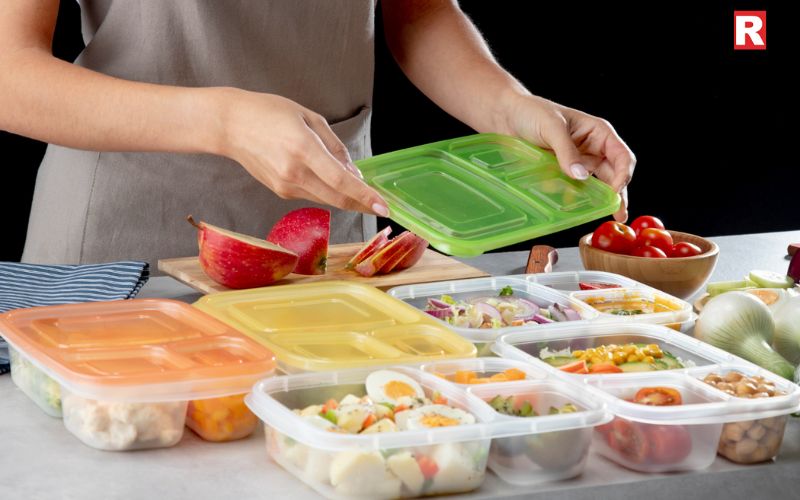
A tiffin or meal subscription service is built on daily demand for home-style food. It mainly targets office workers, students, and working families who do not cook regularly. This model offers fixed meals delivered on a weekly or monthly plan, creating steady and predictable income. In India, the demand for such services is rising with urbanisation and nuclear families. According to National Restaurant Association of India (NRAI), organised food services are growing at over 8–10 percent annually, with daily meal formats gaining strong traction in metro and Tier 2 cities.
The setup cost is relatively low. A small kitchen can start within Rs 2–6 lakhs, depending on scale. Space requirements are minimal, usually 150–250 sq. ft.. Since the menu is fixed, bulk cooking helps reduce ingredient costs and improves margins. Meals are usually priced between Rs 80–Rs 150 per tiffin, while monthly subscriptions range from Rs 2,000 to Rs 4,000 per customer, depending on meal frequency and menu type. Consistency is the biggest factor in success. Customers expect the same taste, portion size, and timely delivery every day. Unlike restaurants, variety is less important than reliability. Many operators also customise meals based on dietary needs, such as low-oil or high-protein options.
Key Points to Consider:
- Initial Investment: Rs 2–6 lakhs
- Space Requirement: 150–250 sq. ft.
- Average Price per Meal: Rs 80–Rs 150
- Monthly Subscription Value: Rs 2,000–Rs 4,000 per customer
- Gross Margins: 40–60 percent with bulk cooking
- Break-even Period: 4–8 months with 50–100 regular customers
This model suits entrepreneurs who want stable cash flow and a simple operation, with strong focus on quality and consistency.
4. Juice and Smoothie Bar
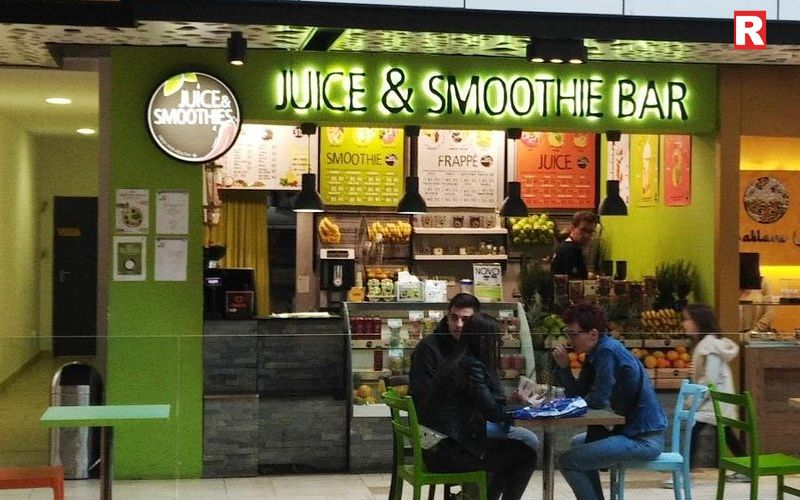
A juice and smoothie bar is one of the simplest food business models to start. It focuses on fresh, ready-to-serve beverages like fruit juices, smoothies, protein shakes, and detox drinks. With rising health awareness in India, demand for such options is increasing, especially in urban areas. According to International Market Analysis Research and Consulting Group, the India juice market reached around Rs 3,000+ crore in 2023 and is expected to grow steadily at a CAGR of 5–7 percent in the coming years. This growth is driven by fitness trends and preference for natural drinks over carbonated beverages.
The setup cost is relatively low because there is no heavy cooking involved. A basic juice bar can be started within Rs 3–7 lakhs. Equipment includes juicers, blenders, refrigeration units, and a small serving counter. A compact space of 100–200 sq. ft. is enough, making it suitable for high-footfall areas like gyms, office complexes, and college zones. Margins in this business are strong. A glass of juice or smoothie priced between Rs 100–Rs 250 often has a raw material cost of just 30–40 percent, resulting in margins of 60–70 percent. Seasonal fruits can further reduce costs and improve profitability. Customisation, such as adding protein powders or superfoods, can increase average order value.
Key Points to Consider:
- Initial Investment: Rs 3–7 lakhs
- Space Requirement: 100–200 sq. ft.
- Average Price per Drink: Rs 100–Rs 250
- Gross Margins: 60–70 percent
- Break-even Period: 6–10 months
- Best Locations: Gyms, offices, colleges
A juice and smoothie bar works well for entrepreneurs looking for a low-complexity, high-margin business aligned with India’s growing health-conscious audience.
5. Quick Service Restaurant (QSR)
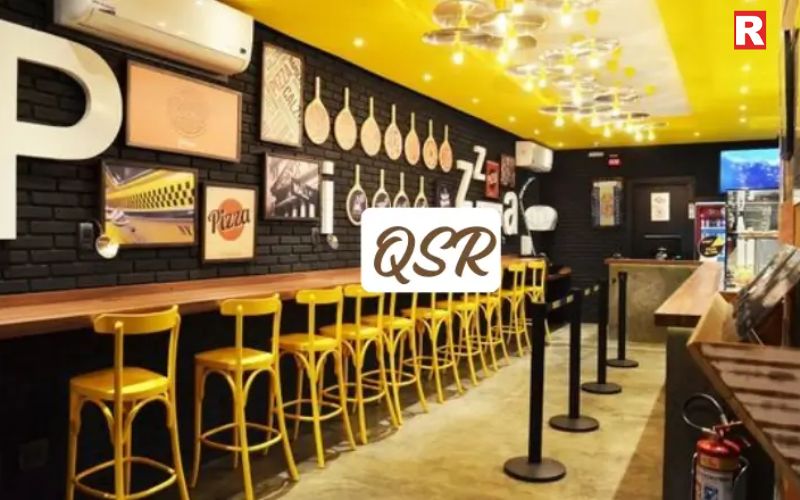
A Quick Service Restaurant (QSR) is designed for speed, affordability, and high volume. It focuses on fast-moving items like burgers, fries, wraps, and sandwiches that can be prepared and served quickly. This format is popular among young consumers, office-goers, and students who prefer quick meals at reasonable prices. In India, the QSR segment is one of the fastest-growing categories. According to India Brand Equity Foundation, the Indian QSR market is expected to grow at a CAGR of around 18–20 percent, driven by urbanisation, rising disposable income, and increasing demand for convenience food.
A small QSR can be started within Rs 6–10 lakhs, depending on location and setup. The space requirement is usually 200–400 sq. ft., with a compact kitchen and limited seating or takeaway focus. The key to success lies in operational efficiency. A limited menu helps reduce preparation time and ensures consistent taste. Most QSRs aim to serve an order within 3–5 minutes, which improves customer satisfaction and increases daily order volume. Pricing is competitive. The average order value typically ranges between Rs 150–Rs 300, making it accessible for daily consumption. Food cost is usually around 35–45 percent, leaving room for healthy margins when volume is high. Strong branding, packaging, and combo deals can increase repeat orders and customer loyalty.
Key Points to Consider:
- Initial Investment: Rs 6–10 lakhs
- Space Requirement: 200–400 sq. ft.
- Average Order Value: Rs 150–Rs 300
- Food Cost Percentage: 35–45 percent
- Service Time Target: 3–5 minutes per order
- Break-even Period: 8–12 months
A QSR works well for entrepreneurs who can manage speed, consistency, and cost control in a competitive but high-demand segment.
Know more: The Ultimate Guide to Getting Your Cloud Kitchen on Zomato
6. Tea and Snacks Café
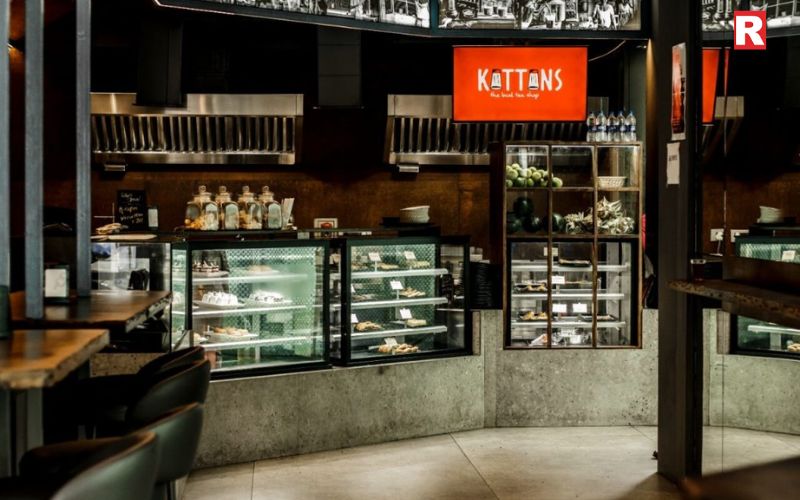
Tea is a daily habit across India. A tea and snacks café builds on this strong cultural demand. It offers different types of chai along with light snacks like sandwiches, pakoras, and biscuits. This format works well in both metro and smaller cities because it caters to a wide audience. According to India Brand Equity Foundation, India is the second-largest producer and consumer of tea globally, with annual consumption crossing 1.2 billion kilograms. This consistent demand makes tea-based businesses stable and scalable.
The setup cost for a tea café is relatively low. A small outlet can be started within Rs 3–7 lakhs, depending on interiors and location. The space requirement is usually 150–300 sq. ft., making it suitable for high-footfall areas like markets, office hubs, and near colleges. Tea has a low raw material cost. A cup priced at Rs 20–Rs 80 often has a cost of less than Rs 10–Rs 15, resulting in margins of 60–70 percent. Evening hours drive the highest sales, especially between 4 PM to 8 PM. Offering add-ons like snacks and combos increases the average bill value. Many cafés also introduce regional tea options such as masala chai, kulhad chai, or Kashmiri kahwa to stand out in a crowded market.
Key Points to Consider:
- Initial Investment: Rs 3–7 lakhs
- Space Requirement: 150–300 sq. ft.
- Average Price per Cup: Rs 20–Rs 80
- Gross Margins: 60–70 percent on tea
- Peak Hours: 4 PM to 8 PM
- Break-even Period: 6–10 months
A tea and snacks café is a reliable low-investment option. It works best with high footfall, quick service, and consistent taste.
7. Regional Cuisine Kitchen
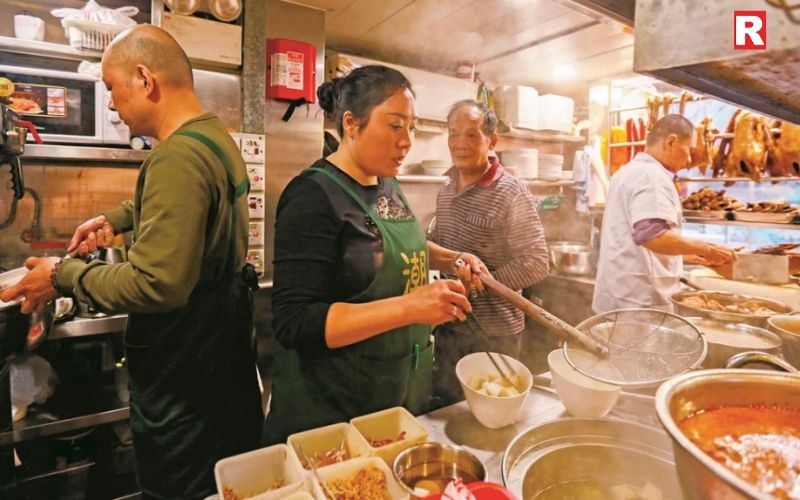
A regional cuisine kitchen focuses on one specific Indian cuisine and delivers authentic flavours. This model works well because customers often look for familiar, home-style meals from their region. Instead of competing with multi-cuisine restaurants, a niche approach helps build a strong identity. According to National Restaurant Association of India (NRAI), regional and casual dining formats contribute a significant share to India’s Rs 5.5 lakh crore food services market, with growing demand for authentic and localised menus in urban areas.
The setup cost for a regional kitchen is moderate. It can be started within Rs 4–8 lakhs, depending on the cuisine and equipment needed. A space of 200–350 sq. ft. is usually enough for a takeaway or small dine-in format. The menu should stay focused. For example, a South Indian kitchen can offer idli, dosa, and meals, while a Rajasthani setup can serve thalis and snacks. Limited menus reduce inventory costs and improve consistency. Pricing depends on the cuisine but remains affordable. Average order value ranges from Rs 150–Rs 300. Food cost is generally around 35–50 percent, depending on ingredients. Since recipes are standardised, maintaining taste consistency becomes easier. Customers value authenticity, which helps in building repeat orders.
Key Points to Consider:
- Initial Investment: Rs 4–8 lakhs
- Space Requirement: 200–350 sq. ft.
- Average Order Value: Rs 150–Rs 300
- Food Cost Percentage: 35–50 percent
- Gross Margins: 50–60 percent
- Break-even Period: 8–12 months
A regional cuisine kitchen works best when it delivers authentic taste, simple presentation, and consistent quality, making it a strong option for low-budget restaurant startups in India.
8. Dessert and Bakery Outlet
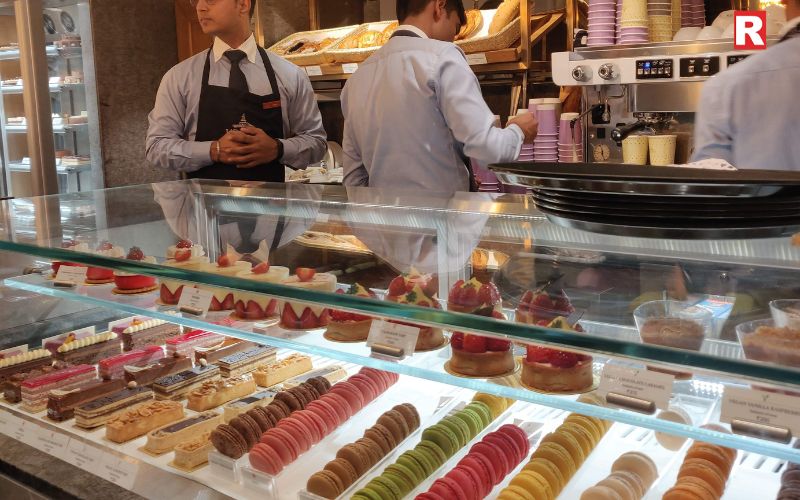
A dessert and bakery outlet is a high-demand, high-margin food business in India. Cakes, pastries, brownies, and jar desserts are popular across age groups and are frequently ordered for celebrations and daily indulgence. The rise of online ordering has further boosted this segment, especially through platforms like Zomato and Swiggy. According to India Brand Equity Foundation, India’s bakery market is valued at over $11 billion and is growing steadily at around 8–10 percent annually, driven by urban demand and changing food habits.
The setup cost for a small bakery outlet ranges between Rs 5–10 lakhs, depending on equipment and scale. Essential equipment includes ovens, mixers, refrigeration, and display units. A compact space of 150–300 sq. ft. is sufficient for a takeaway-focused or delivery-first model. Desserts offer strong margins. For example, a cake slice priced at Rs 100–Rs 250 often has a production cost of 30–40 percent, resulting in margins of 60–70 percent.
Visually appealing products perform well on social media platforms, which helps in organic marketing. Customisation, such as theme cakes or personalised desserts, can increase average order value and customer engagement.
Key Points to Consider:
- Initial Investment: Rs 5–10 lakhs
- Space Requirement: 150–300 sq. ft.
- Average Price per Item: Rs 100–Rs 300
- Gross Margins: 60–70 percent
- Best Sales Channel: Online delivery and pre-orders
- Break-even Period: 8–14 months
Check more: How to Choose the Best Location for Your Cloud Kitchen in India
9. Food Truck
A food truck is a mobile restaurant that allows you to sell food at different locations based on demand. This flexibility is its biggest advantage. You can operate near office hubs during weekdays and shift to events, markets, or college areas on weekends. In India, food trucks have gained popularity in metro cities due to lower setup costs compared to full-scale restaurants. According to National Restaurant Association of India (NRAI), alternative formats like kiosks and food trucks are growing as part of the Rs 5.5 lakh crore food services market, driven by demand for quick and affordable meals.
The initial investment for a food truck usually ranges between Rs 6–10 lakhs. This includes purchasing or modifying a vehicle, installing kitchen equipment, and branding. A standard food truck requires 80–150 sq. ft. of working space inside the vehicle. It is ideal for fast food items like burgers, wraps, fries, and fusion dishes that can be prepared quickly. Pricing remains competitive, with an average order value of Rs 150–Rs 300. Food costs are typically 35–45 percent, allowing for healthy margins if daily sales volume is strong. Location plays a critical role. High-footfall areas and event tie-ups can significantly increase daily revenue. Many operators target 50–100 orders per day to maintain profitability.
Key Points to Consider:
- Initial Investment: Rs 6–10 lakhs
- Space Requirement: 80–150 sq. ft. (inside truck)
- Average Order Value: Rs 150–Rs 300
- Food Cost Percentage: 35–45 percent
- Daily Orders Target: 50–100
- Break-even Period: 10–14 months
10. Breakfast-Only Outlet
A breakfast-only outlet focuses on one of the most under-served meal occasions in India. Large restaurants often prioritise lunch and dinner, leaving a clear gap in the morning market. This model targets office-goers, students, and commuters who need quick, affordable meals before starting their day. According to National Restaurant Association of India (NRAI), India’s food services industry is valued at over Rs 5.5 lakh crore, with increasing demand for convenience-led formats such as quick breakfasts and takeaway meals in urban areas.
The setup cost for a breakfast outlet is relatively low. It can be started within Rs 3–6 lakhs, as the menu requires basic equipment and limited ingredients. A compact space of 100–250 sq. ft. is sufficient, especially for takeaway-focused operations. The menu usually includes poha, paratha, idli, upma, and sandwiches. These items are quick to prepare and have low raw material costs. Pricing remains affordable, with an average order value of Rs 50–Rs 150, making it suitable for daily consumption. Food cost is typically 30–40 percent, which allows good margins when volume is high. Since operations are limited to morning hours, staffing and utility costs are lower compared to full-day restaurants.
Key Points to Consider:
- Initial Investment: Rs 3–6 lakhs
- Space Requirement: 100–250 sq. ft.
- Average Order Value: Rs 50–Rs 150
- Food Cost Percentage: 30–40 percent
- Operating Hours: 6 AM to 11 AM
- Break-even Period: 6–9 months
A breakfast-only outlet works well in high-density areas with morning footfall. It offers a focused, low-cost model with strong potential for consistent daily sales.
What Makes These Ideas Work
Successful low-budget restaurants follow a few common principles.
- They keep the menu small. This improves quality and reduces waste.
- They focus on repeat customers, not just new ones.
- They use digital platforms for visibility and orders.
- They invest in packaging and branding.
A strong identity matters. Even a small food business can look premium with the right branding.
Profitability and ROI
A well-managed food business can break even within 6 to 12 months.
- High-margin items include beverages, combos, and add-ons. For example, a simple meal combo often gives better profit than individual items.
- Delivery platforms charge commissions, but they also bring volume. Balancing dine-in and delivery can improve margins.
- Tracking daily costs is important. Many small businesses fail because they do not monitor expenses closely.
Also check: 10 Low-Budget Cafe Interior Design Tips to Follow
Restaurant Business in India: Complete Guide to Start, Run & Grow (2026)
Subscription Dining Models: Can Monthly Meal Memberships Work?
Practical Tips for Growth
- Start with a test phase. Launch a limited menu and gather feedback.
- Use customer reviews to improve quickly.
- Offer combos and deals to increase order value.
- Build a simple but strong brand identity.
Understanding local demand is key. What works in Mumbai may not work in a smaller city. Adapt the menu to local taste.
Future Trends
Cloud kitchens and virtual brands will continue to grow. Many entrepreneurs are launching multiple brands from one kitchen. Health-focused menus are becoming popular. Customers are more aware of what they eat. Technology is also playing a bigger role. Data from platforms helps understand customer preferences. This can guide menu and pricing decisions.
Starting a restaurant under Rs 10 lakhs is possible with the right approach. The focus should be on smart planning, not big spending. A small kitchen, a clear concept, and consistent quality can build a strong business. The opportunity is real. What matters is execution. For many entrepreneurs in India, this is not just a business idea. It is a practical path to building a brand from scratch.
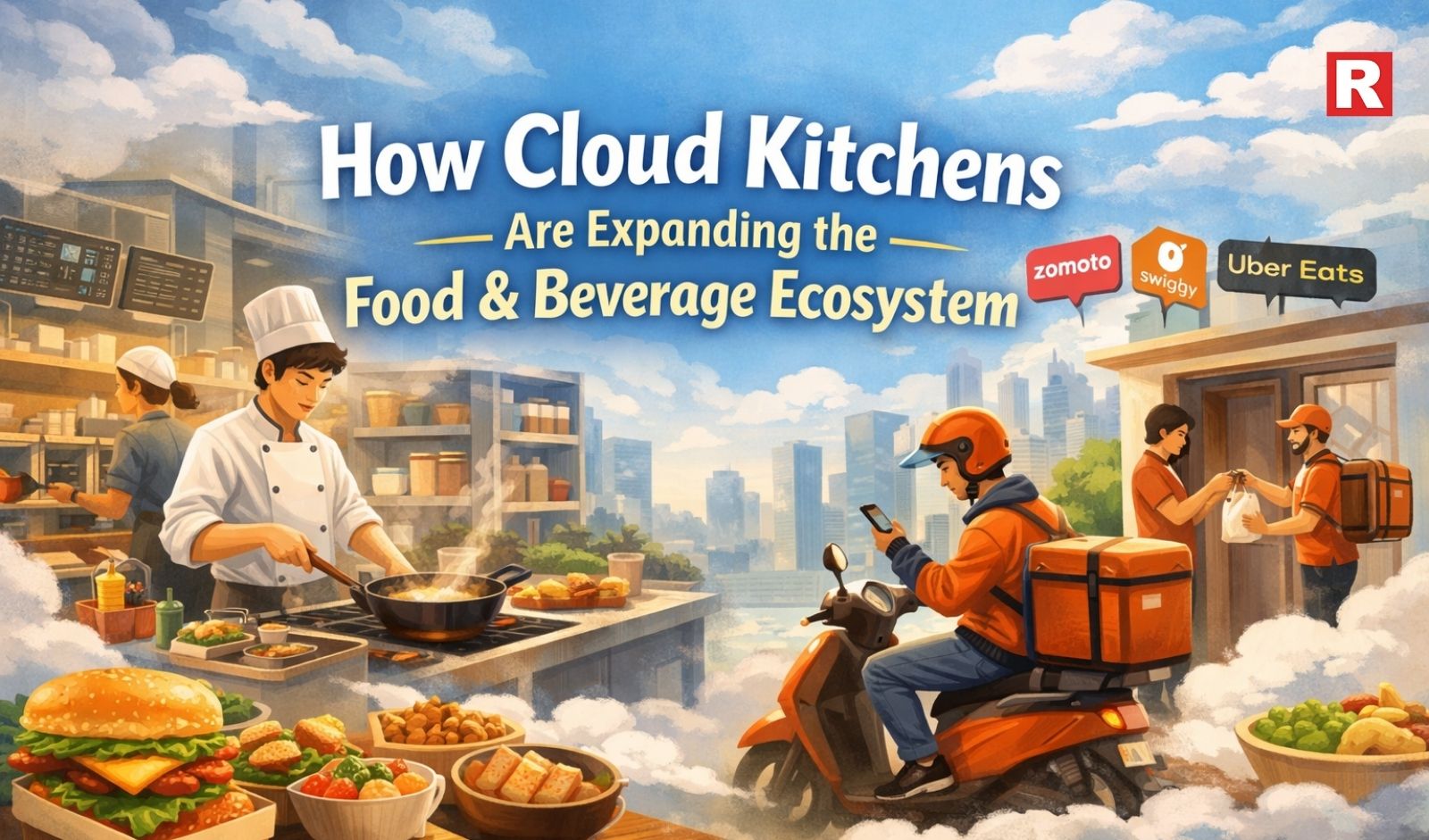
The food industry has changed dramatically in the last decade. Urban lifestyles, smartphone adoption, and the rapid growth of food delivery platforms have reshaped how people order and consume meals. Today, many customers prefer ordering food online rather than visiting a restaurant. This shift has led to the rise of cloud kitchens, one of the most disruptive innovations in the food and beverage sector.
Cloud kitchens operate without traditional dining spaces. These kitchens focus only on preparing food for delivery. Orders are placed online through delivery apps, and meals are prepared in optimized kitchen spaces designed for speed and efficiency. Because of their flexible structure, cloud kitchens are expanding the food and beverage ecosystem and creating new opportunities for entrepreneurs, restaurants, and food technology companies.
What Are Cloud Kitchens?
Cloud kitchens are delivery-only food preparation facilities. They do not have dine-in areas or storefronts for customers. Instead, these kitchens operate through online ordering platforms and mobile apps. These kitchens are also known as virtual kitchens, ghost kitchens, or dark kitchens. The concept focuses on minimizing overhead costs while maximizing delivery efficiency. Because they do not need expensive retail locations or large service staff, cloud kitchens can operate at a significantly lower cost than traditional restaurants.
Why Cloud Kitchens Are Growing Rapidly
The rapid expansion of cloud kitchens is closely linked to the rise of online food delivery services. Consumers today value speed, convenience, and variety. Ordering food through mobile apps has become a routine part of urban life. Platforms like Zomato, Swiggy, and Uber Eats have played a major role in accelerating this trend. These platforms connect customers with hundreds of restaurants and virtual food brands within minutes.
Several factors are driving the growth of cloud kitchens:
- Increasing demand for online food delivery
- Rising urban populations with busy lifestyles
- Lower startup costs compared to traditional restaurants
- Faster brand launches and menu experimentation
- Access to data-driven customer insights
For many food entrepreneurs, the cloud kitchen model offers a faster and less risky way to enter the food business.
Read more: How to Start a Cloud Kitchen in India: A Step-by-Step Guide
Cloud Kitchen vs. Traditional Restaurants: Which is More Profitable?
How Cloud Kitchens Work: A Detailed Overview
1. Lower Entry Barriers for Food Entrepreneurs
Starting a traditional restaurant often requires a significant financial investment. Business owners must pay for high rental costs in prime locations, interior design, kitchen equipment, furniture, service staff, and daily operational expenses. These requirements make it difficult for many aspiring chefs and entrepreneurs to enter the food industry. Cloud kitchens provide a more accessible alternative. Because these kitchens operate only for delivery, they eliminate the need for large dining spaces and front-of-house operations. This allows entrepreneurs to focus primarily on food preparation, branding, and online visibility. As a result, the overall cost of launching a food brand becomes much lower and more manageable. Cloud kitchens also allow businesses to begin operations quickly without long construction timelines. Entrepreneurs can experiment with menus and adjust offerings based on customer preferences and demand trends. Many chefs and home cooks are now using this model to launch delivery-first brands that specialize in niche categories such as healthy meals, regional cuisines, or gourmet comfort food.
2. The Rise of Virtual Restaurant Brands
Cloud kitchens have also encouraged the growth of virtual restaurant brands, which operate entirely through online delivery platforms without maintaining physical storefronts. These brands exist digitally and rely on delivery apps to reach customers. One of the most important advantages of this model is that a single kitchen facility can operate multiple food brands at the same time. This allows businesses to target different consumer preferences without investing in additional infrastructure. For example, one kitchen may simultaneously run a fast-food burger brand, a healthy salad concept, a dessert-focused brand, and a regional cuisine offering. This strategy helps maximize kitchen utilization while increasing revenue potential. If demand for one cuisine drops during certain hours, orders from other brands can help balance operations. This flexible structure has become popular among modern food entrepreneurs. Companies like Rebel Foods have successfully scaled this model by launching several virtual brands from centralized kitchen networks across multiple markets.
3. Strengthening the Food Delivery Ecosystem
Cloud kitchens work closely with food delivery platforms. These platforms provide visibility, logistics support, and access to a large customer base. Digital ordering systems also generate valuable data that cloud kitchens can use to optimize their operations.
Important benefits include:
- Real-time customer feedback
- Order trend analysis
- Data-driven menu optimization
- Targeted marketing campaigns
For example, if customer data shows that late-night snack orders are increasing in a particular area, cloud kitchens can adjust their menus to meet that demand. This close connection between technology, logistics, and food preparation is strengthening the entire food delivery ecosystem.
4. Driving Innovation in Food Technology
Technology plays a critical role in cloud kitchen operations. These kitchens are designed to maximize efficiency and minimize delays in food preparation and delivery.
Modern cloud kitchens often use advanced digital tools such as:
- Kitchen display systems for order management
- Automated inventory tracking
- AI-based demand forecasting
- Digital point-of-sale integration
- Delivery route optimization software
These technologies help kitchen operators manage large volumes of orders while maintaining consistency and quality. In addition, many cloud kitchens design menus specifically for delivery. Foods that travel well and maintain their texture during transport are prioritized.
Know more: How to Start a Cloud Kitchen on Swiggy for Your Restaurant (2025 Guide)
5. Boosting Local Food Entrepreneurship
Another important impact of cloud kitchens is the rise of small and niche food brands. Entrepreneurs no longer need expensive locations to reach customers. Instead, they can focus on building unique food concepts and targeting specific customer segments. Customers benefit from greater variety and access to cuisines that may not be widely available in traditional restaurants. This model has also encouraged innovation in packaging, branding, and online marketing.
Cloud kitchens have enabled the growth of:
- Regional cuisine brands
- Health-focused meal services
- Vegan and plant-based food brands
- Dessert and specialty snack brands
6. Different Business Models of Cloud Kitchens
The cloud kitchen industry operates through several different business structures.
- Independent Cloud Kitchens: These kitchens operate a single food brand and focus on a specific cuisine or concept.
- Multi-Brand Cloud Kitchens: One operator manages multiple virtual restaurant brands from the same facility. This helps maximize kitchen capacity and revenue.
- Platform-Owned Kitchens: In some cases, food delivery platforms provide kitchen infrastructure for partner brands. This allows small food businesses to start operations without building their own kitchens.
Each model offers different advantages depending on the scale and strategy of the business.
7. Challenges in the Cloud Kitchen Industry
Despite their rapid growth, cloud kitchens also face several challenges.
Key challenges include:
- High commission fees from delivery platforms
- Intense competition between virtual brands
- Maintaining food quality during delivery
- Rising packaging and logistics costs
- Limited opportunities for in-person brand experience
Because customers interact only through delivery apps, building brand loyalty can also be more difficult than in traditional restaurants. Successful cloud kitchens often focus on strong branding, consistent quality, and effective digital marketing.
Also check: How to Choose the Best Location for Your Cloud Kitchen in India
10 Low-Budget Cafe Interior Design Tips to Follow
Menu Engineering: How Restaurants Decide Pricing (And Why It Matters More Than You Think)
The Future of Cloud Kitchens in the Food Industry
Cloud kitchens are expected to play an even bigger role in the future of the food industry. As technology improves and delivery networks expand, more food businesses will adopt delivery-first models.
Several emerging trends are shaping the future of this sector:
- Expansion of cloud kitchens into smaller cities
- AI-driven menu and pricing strategies
- Sustainable and eco-friendly food packaging
- Automation in kitchen operations
- Greater collaboration between food brands and delivery platforms
Many restaurant chains are also experimenting with hybrid models that combine dine-in restaurants with cloud kitchen operations. This allows them to expand their delivery reach without opening multiple physical locations. Cloud kitchens are transforming how food businesses operate and grow. By removing the need for expensive retail spaces and focusing on delivery efficiency, these kitchens are opening new opportunities for entrepreneurs and established brands alike. The integration of technology, data analytics, and delivery infrastructure has created a powerful ecosystem that supports rapid innovation in the food and beverage industry. For chefs, startups, and investors, cloud kitchens represent one of the most dynamic developments in modern hospitality. As consumer demand for convenience continues to grow, cloud kitchens will remain a key driver in shaping the future of the food and beverage ecosystem.
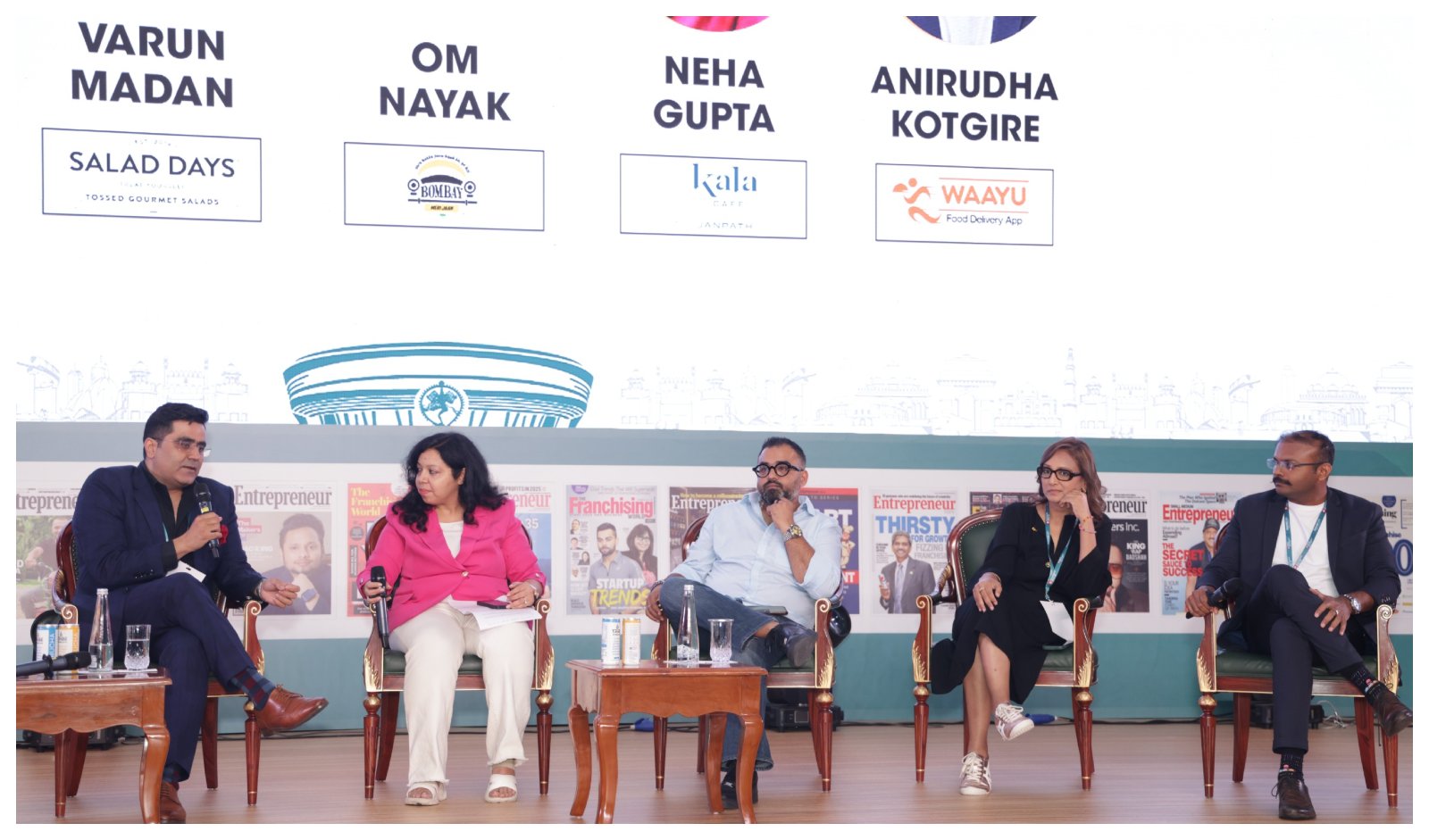
Food delivery market is growing at a steady rate, projected to reach $300 billion dollars by 2033. With Key players like Zomato and Swiggy dominating the market, the challenges remain while expanding the brand in underdeveloped areas. Although, many top brands are focusing on tier-2 expansion but there’s a lot to be explored.
Scaling Freshness at Speed
When Varun Madan, Founder, Salad Days started his brand over a decade ago, the healthy food category was almost non-existent in India and even now, it’s a growing segment.
“We knew this was a long-term game. Today, the company operates 29 cloud kitchens across Delhi NCR, Bengaluru and Mumbai, with a customer base that increasingly sees salads and fresh bowls as everyday meals rather than niche indulgences,” he shared by adding that the difference lies in sourcing. Salad Days operate its own farms, supplying key ingredients like lettuce harvested just hours before delivery.
“Combined with strict cold chain SOPs and AI-led forecasting models, the brand has built a supply chain that marries freshness with scale. We like to say we’re half farmers, half entrepreneurs,” he proudly mentioned.
The Challenge of Reinvention
For Chef Om Nayak, Co-Founder, Pasta Bowl Company & Bombay Meri Jaan said that the pandemic accelerated a pivot. His decade-old Pasta Bowl Company, designed for dine-in experiences, had to be re-engineered for delivery. “Pasta doesn’t travel well. Extensive R&D led to innovations such as induction cooking for consistency, separate sauce packaging, and parchment-lined containers that preserve texture. Today, the kitchens average sub-nine-minute preparation times, setting benchmarks in efficiency,” admitted Nayak.
Nayak’s Bombay Meri Jaan’s positioning is competing with roadside vendors while ensuring hygiene and sustainability. “A vada pav in Bombay costs Rs. 20. We deliver it fresh, hygienic, and 99% plastic-free. By next month, it will be 100%.”
The premium dining needs consistency and efficiency, while mass-market brands demand affordability and trust. However, it requires heavy investment in learning, standardization, and sustainability.
Redefining Fine Dining for the Home
Architect-turned-restaurateur Neha Gupta, Founder of AA Hospitality who owns several restaurants and cloud-kitchen brands saw the shift to cloud kitchens and deliveries which forced her to rethink plating, packaging, and perception.
Explaining her viewpoints, she shared, “Not everything that looks good on a plate works in a box. Instead of replicating restaurant menus, we curate dishes that travel well. Premium packaging, DIY meal kits andQR codes link helps in recreatingthe restaurant-like experiences at home. It’s about attention to detail.”
Challenging the Aggregator Model
While chefs are reimaging food, Anirudha Kotgire, MD & Co-Founder of Waayu, is disrupting delivery economics. His venture, Waayu is India’s first zero-commission food delivery app, already partnered with 6,000+ restaurants across Pune, Mumbai, and Bengaluru. Unlike aggregators charging 30–35% commissions, Waayu’s democratic model let the restaurants list at takeaway prices, keep customer data, and retain 100% of revenues.
“For logistics, Waayu uses an AI-enabled hybrid delivery system—restaurants can deploy their own fleet or tap into Waayu’s partner network. Importantly, riders keep the full delivery fee.We’re not chasing five-minute deliveries. The goal is reliability from food arriving in the right shape, at the right time. By aligning incentives for restaurants, riders, and customers, we’re creating a sustainable ecosystem,” shared Kotgire.
Technology is no longer an add-on, but a core enabler of food delivery. Restaurateurs like Gupta sees delivery as an extension of brand identity, not just a logistical necessity. Through cloud kitchens, premium packaging, or zero-commission platforms, the industry is being reshaped by entrepreneurs who see delivery not as a compromise but as an opportunity to scale with integrity.

The growth of cloud kitchens in India is being fuelled by the increasing demand for affordable, convenient, and quality food delivered to homes. Additionally, cloud kitchens benefit from lower operational costs since they do not require expensive retail locations or large front-of-house investments.
India's cloud kitchen market is on a remarkable trajectory - projected to hit approximately USD 2.84 billion by 2030, growing at a CAGR of 16.66%. This surge reflects how urbanization, evolving lifestyles, and the demand for convenient food delivery are rewriting the rules of dining.
Prominent companies have established prosperous multi-brand cloud kitchen empires, including Biryani by Kilo, Eat Sure, BOX8, Rebel Foods (Faasos, Behrouz Biryani), and Fresh Menu. In an effort to reach hyperlocal markets, a lot of restaurants are also introducing delivery-only sub-brands, marking 40-50% profits in the space.
The Ongoing Trends
Key trends shaping the cloud kitchen industry includes the adoption of multi-brand models within a single kitchen infrastructure to enhance operational efficiency. There is a notable rise in regional and comfort food delivery brands catering to diverse local tastes. Cloud kitchens are increasingly offering value-oriented options such as combo meals, meal boxes, and affordable single-serve meals.
“Businesses are also engaging in hyper local targeting to meet neighborhood-specific demand. To build stronger brand connections, they are leveraging influencer collaborations and social media engagement. Additionally, some cloud kitchen brands are beginning to explore physical formats like kiosks and food court outlets to provide an omni-channel experience,” added Aayush Madhusudan Agrawal, Founder & Director, Lenexis Foodworks.
Without décor or ambience to soften perception, hygiene becomes your frontline. Mohammed Bhol, Co-Founder and CEO at House of Biryan said, “I’ve found that daily protocols, rigorous training, and real-time audits aren’t just safety nets - they’re confidence builders. When people can’t see your kitchen, they need to feel your standards.”
He mentioned that he has learned the hard way, if it doesn’t arrive right, it doesn’t matter how good it tasted in the kitchen. “We’ve tested every layer: insulation, ventilation, seal integrity. Packaging isn’t a side gig, it's part of the recipe,” added Bhol.
Technology as the Backbone
Cloud kitchens function without a dine-in model, making technology vital at every operational level. From online ordering systems and kitchen display systems (KDS) to inventory and supply chain management, data analytics, smart POS integration, and automated marketing tools—each element plays a crucial role in ensuring seamless and efficient business operations.
Since cloud kitchens operate without a physical storefront, food aggregators serve as their primary digital marketplace. Platforms like Swiggy, Zomato, Zepto Café, Blinkit and Uber Eats offer immediate access to a wide customer base, making them essential for brand reach. They enhance brand discovery and visibility, while also handling delivery logistics—crucial for smooth operations.
Aggregators also provide performance dashboards with valuable insights into customer behavior, order patterns, and conversion rates, helping brands fine-tune their strategies. Additionally, aggregator-led promotional campaigns and paid placements can significantly boost order volumes and visibility.
The Challenges
Cloud kitchens face several challenges, including high customer acquisition costs driven by intense competition and platform commissions. This can be addressed by building direct digital connections with consumers through channels such as WhatsApp, loyalty programs, and emailers.
Another challenge is the dependence on delivery platforms for visibility which can be mitigated by investing in off-platform brand-building campaigns, digital content creation, and influencer partnerships. Agrawal added, “Maintaining consistent quality, hygiene, and delivery standards across various locations is also crucial and this requires strict adherence to standard operating procedures (SOPs) and regular kitchen audits. Lastly, in a cluttered market, it is essential to craft a sharp brand positioning and compelling product proposition to stand out.”
"Finding the right location was one of our key challenges," Aksha Kambhoj, Executive Chairperson of Aspect Hospitality explained by adding that they sought areas with high foot traffic to maximize visibility.
It’s a Profitable Biz
A well-run cloud kitchen isn’t just powered by good food - it runs on strong systems. Industry data shows that a lean, efficient model can hit EBITDA margins of 20–25%, with high-performing outlets pulling in ₹1.5–2 crore annually per location - depending on how well you read the market and build recall.
“High-performing brands have demonstrated the potential to scale even further, reaching ₹70–100 crore in ARR within three to four years, as seen in the case of Big Bowl,” added Agrawal.
While, the future will be focused on AI-powered kitchen operations, and tighter connectivity with fast commerce systems. Cloud kitchens are expected to become a major player in India's F&B industry with major focus on tier-2 and tier-3 cities.

The Indian food industry is changing fast. People now prefer ordering food online instead of dining out. Cloud kitchens have emerged as a game-changer in this space. These kitchens operate without a dine-in facility and focus only on food delivery. They help restaurant brands save money on rent, staff, and other costs.
In India, major players like Rebel Foods, EatClub, Biryani by Kilo, and Curefoods are leading this revolution. With rising demand and technology-driven operations, cloud kitchens are reshaping the restaurant industry.
Know more: How to Start Your Own Restaurant Business
What is a Cloud Kitchen?
A cloud kitchen is a commercial kitchen that prepares food only for delivery. Unlike traditional restaurants, they do not have a dining area or waiters. They rely on online food delivery apps like Swiggy and Zomato to reach customers. Cloud kitchens offer low-cost business models and help food brands scale up quickly.
There are different types of cloud kitchens:
| Type | Description | Example Brands |
| Single-brand kitchen | Operates one brand per kitchen | Faasos, Behrouz Biryani |
| Multi-brand kitchen | Hosts multiple brands under one parent company | EatClub, Curefoods |
| Franchise cloud kitchen | Operates under a franchise model | Biryani Blues, Wow! Momo |
| Aggregator kitchens | Third-party spaces leased to restaurant brands | Swiggy Access, Zomato Infrastructure Services |
Read more: Maximize Your Restaurant Profit Margin with these Proven Strategies
The Indian Cloud Kitchen Market: Growth & Potential
The Indian cloud kitchen market is experiencing rapid growth, driven by the increasing demand for online food delivery and changing consumer preferences. In 2023, the market was valued at USD 969.5 million, and it is estimated to reach USD 1.13 billion in 2024. Analysts suggest that the market could even surpass USD 2 billion by 2024. Looking ahead, the industry is projected to grow at a CAGR of 13.2% between 2024 and 2032, reaching approximately USD 2.948 billion by 2032. Some reports indicate an even higher CAGR of 16.66% through 2030. The rise of cloud kitchens is fueled by cost-effective business models, reduced operational expenses, and the growing preference for food delivery over dine-in options. With strong investor interest and technological advancements, the Indian cloud kitchen market is set for significant expansion, making it one of the fastest-growing segments in the food service industry.
Also Check: Restaurant vs. Café: What Truly Sets Them Apart?
Is Frozen Food a Health Hero or Hidden Villain? The Shocking Truth Revealed!
Why Cloud Kitchens are Disrupting the Indian Restaurant Industry
1. Lower Costs, Higher Profits
Traditional restaurants spend lakhs of rupees on rent, interiors, and staff. Cloud kitchens cut these costs and focus only on cooking and delivery. Cloud kitchens operate at lower costs while earning similar or higher profits than dine-in restaurants.
2. Fast Expansion & Scalability
Cloud kitchens help brands expand quickly. A restaurant that needs ₹50 lakh to set up a new outlet can start multiple cloud kitchens with the same money. For example, Rebel Foods started with a single brand, Faasos, and now operates 50+ brands across multiple cloud kitchens.
3. Tech-Driven Efficiency
Cloud kitchens use AI and data analytics to:
- Predict demand based on customer preferences
- Optimize kitchen operations
- Manage delivery logistics effectively
This data-driven approach helps them reduce wastage and improve food quality.
Also check: Is Frozen Food a Health Hero or Hidden Villain? The Shocking Truth Revealed!
Top Players in India’s Cloud Kitchen Revolution
Several startups and food brands are leading the cloud kitchen revolution in India. These brands are using technology, branding, and operational efficiency to dominate the cloud kitchen space.
| Brand | Parent Company | No. of Kitchens | Funding Raised |
| Rebel Foods | Faasos, Behrouz Biryani, Oven Story | 450+ | $700M |
| EatClub | Box8, MOJO Pizza, Itminaan Biryani | 2000+ | $80M |
| Curefoods | EatFit, Yumlane, Nomad Pizza | 1500+ | ₹350 crore |
| Swiggy Access | Multiple restaurant brands | 100+ | Part of Swiggy |
Challenges Cloud Kitchens Face in India
Despite the growth, cloud kitchens face several challenges:
- High dependency on food aggregators – Swiggy and Zomato charge 25-30% commission, making it harder for cloud kitchens to profit.
- Brand visibility – Without a physical store, it’s tough to build customer trust.
- Quality control – Maintaining consistent food quality across multiple kitchens is challenging.
- Customer retention – Since people can’t walk in and experience the brand, customer loyalty is lower.
Many cloud kitchen brands are now focusing on direct orders via their websites and apps to reduce reliance on aggregators.
What’s Next? The Future of Cloud Kitchens in India
- AI & Robotics in Food Preparation: Some brands are testing robotic kitchens to automate food preparation. This ensures speed, hygiene, and consistency.
- Direct-to-Customer (D2C) Models: Many cloud kitchen brands are building their own ordering platforms to avoid paying high commissions to food aggregators.
- Focus on Sustainability: Cloud kitchens are adopting eco-friendly packaging and reducing food wastage to attract environmentally conscious customers.
Is Cloud the Future of Food?
Cloud kitchens are changing the Indian restaurant industry. They offer lower costs, better profits, and faster scalability than traditional restaurants. Despite challenges, they are expected to dominate the food delivery market in the coming years. For entrepreneurs, this is the best time to invest in a cloud kitchen model. With the right branding, technology, and strategy, cloud kitchens can redefine the future of food in India.

Have you ever imagined if there are any new age cloud kitchen brand which revolutionizes the food industry? Now, turn your imagination into a reality with ‘Speed Kitchen’ which is a ‘Co-Working Cloud Kitchens’ also known as ‘Delivery only kitchens.’ Sounds interesting right?
The Speed Kitchen is a plug-and-play, fully hygienic, and ready-to-move-in model. It's open 24/7 and 365 days a year. It is a vibrant hub created in 2021 by the childhood friends Paurav Rastogi and Shamin Kapoor to support food entrepreneurs by providing infrastructure, licenses, and ready-to-use commercial cooking facilities. Let's explore Speed Kitchen's thrilling voyage and the Sharks' impression of the duo.
The Brand Mission
Speed Kitchen believes that its cutting-edge platform may assist food entrepreneurs in avoiding the usual difficulties of acquiring real estate, negotiating with landlords, obtaining licenses, and overseeing operational areas. Food brands can concentrate on providing quality meals and satisfying client experiences with Speed Kitchen since they don't have to bother about locating a kitchen or chasing down the licenses and authorities.
Meet the Founders
Paurav Rastogi's own experience in the food sector served as an inspiration for the launch of Speed Kitchen. After working for OYO for a while, Paurav has traveled a lot and learned about the challenges restaurant entrepreneurs face, especially finding a suitable space and negotiating the complicated leases.
This made him want to find solutions to these issues, and he teamed up with Shamin Kapoor to start Speed Kitchen. They came up with the idea of a platform that would provide food entrepreneurs all the tools they need to operate a profitable cloud kitchen company. Shamin has an impressive background, having worked in Dubai and other places; he joined Paurav to build this venture.
Bringing Uniqueness in the Cloud Kitchens
As a co-working cloud kitchen, Speed Kitchen provides food brands with an adaptable and affordable means of starting and growing their businesses. The platform frees entrepreneurs from the burden of high operating costs by substituting a revenue-sharing model for fixed rentals, allowing them to concentrate on their culinary company. Speed Kitchen offers a completely integrated ecosystem that streamlines kitchen operations and compliance issues with its plug-and-play setup. With more than 130 kitchens and operations in four Indian cities, the company currently collaborates with over 50 brands.
The Numbers Behind Speed Kitchen’s Growth
Despite, facing an EBITDA loss of 13-18% for the FY24-25, the company has already earned Rs 3 crores.
• FY 21-22 - Rs 36.5 lakhs
• FY 22-23, Rs 1.51 crores
• FY 23-24, 3.25 crores
Last year, the unadjusted EBITDA was roughly around 13 % and PAT was 9.5%. For FY 23-24, the audit number shows EBITDA OF 4.5% which has tripled this year.
The Shark Tank Pitch
Paurav and Shamin requested Rs 2 crore investment for a 3% equity stake in their quickly expanding business when they presented Speed Kitchen on Shark Tank India. The Sharks had some initial reservations, including worries about the company's price, but were persuaded by the team's distinct vision and strong performance history.
Notably, Speed Kitchen has already attracted notable customers like Haldirams and Chef Ritu Dalmia, solidifying its position as a major force in the cloud kitchen market. Additionally, Paurav disclosed that they have landed a lucrative contract with ITC that should bring in a sizable sum of money each month.
The Winning Deal
Aman had offered 2 crores for 10% equity, but he backed out since he wasn't prepared to negotiate with the brand, while Vineeta didn't give an offer. After a lengthy discussions and negotiations, Speed Kitchen struck a major deal with Three Sharks Ritesh Agarwal, Azhar Iqubal, and Kunal Bahl for Rs 2 crore for 6% equity.
A New Chapter with the Sharks
With this significant deal, Speed Kitchen is well-positioned to expand quickly. The company will be able to grow its reach and improve its infrastructure with the help of well-known investors like Ritesh Agarwal, Azhar Iqbal, and Kunal Bahl, as well as their vast experience.
Paurav shares, “We are happy to get three sharks on board. With their expertise, we will be scaling the brand in new heights.”

The convenience of online meal delivery is attracting more and more customers, which has led to an accelerated rise in the cloud kitchen business in recent years. Since there are no dine-in customers, food in a cloud kitchen is exclusively made in a commercial kitchen for takeout or delivery. Cloud kitchens enable restaurant owners to swiftly launch a digital brand or grow an already-existing company. Innovative developments such as Artificial Intelligence (AI) and the Internet of Things (IoT) are revolutionizing the cloud kitchens. According to reports, the online food delivery market in India is expected to reach US$43.78 billion in revenue by 2024, with a compound annual growth rate (CAGR) of 15.98%. This growth will culminate in a projected market volume of US$91.88 billion by 2029. The best practices for guaranteeing food safety include laying the groundwork, adhering to regulations, conducting routine audits and inspections, certifying staff, maintaining hygienic food handling practices, FIFO, cleaning protocols, and using technology.
Sustainability is likely to receive increasing attention from the cloud kitchen sector as customers grow more ecologically aware. This can entail buying foods from sustainable and local sources, utilizing eco-friendly packaging materials, and streamlining culinary processes to cut down on food waste.
How AI is Enhancing Safety
Safety remains of utmost importance in the cloud kitchen industry, especially in the wake of the pandemic, which has underscored the importance of stringent hygiene protocols. “AI and IoT devices play a crucial role in monitoring kitchen conditions, ensuring compliance with health standards, and minimizing the risk of contamination,” said Chef Mohammed Anas, Co-founder, Beyondburg Inc. who elaborated that where the demand for food delivery is high, such technologies are essential for consumer trust and maintaining high safety standards.
Food safety is a critical aspect of cloud kitchens. “Following the strict hygiene standards and conducting regular audits ensures that the end products meet the highest safety standards. Extensive training of the staff and using fresh, quality ingredients are essential as well and with that maintaining transparency in operations and adhering to regulatory guidelines is important to build consumer trust,” added Himanshu Chawla, Co-Founder, Bakingo by pointing that in any form of food business, maintaining food safety is non-negotiable and fundamental to delivering a reliable and satisfying customer experience.
"To ensure consumer trust and regulatory compliance. Maintaining hygiene, using quality ingredients, and adhering to food safety standards help prevent foodborne illnesses and protect the brand’s reputation. The key safety concerns includes hygiene practices and ingredient quality," said Richa Sanghvi, Owner, All things Jain who highlighted that AI can help in monitoring kitchen conditions, tracking ingredient and ensuring compliance.
Cloud kitchens in India are addressing food safety concerns through strict hygiene protocols, prevention of cross-contamination, and the use of advanced technology. Varun Madan, CEO & Founder, Salad Days shared, “Measures such as frequent handwashing, the use of protective gear, and color-coded utensils ensure a safe dining experience. Additionally, cloud kitchens monitor food temperatures and implement the FIFO method to reduce spoilage, while following thorough cleaning schedules and complying with food safety regulations, including obtaining FSSAI licenses.”
How AI is Increasing Efficiency, Profitability
Artificial Intelligence (AI) has revolutionized the cloud kitchen industry, optimizing operations from inventory management to customer service. In tech-centric cities like Bangalore, AI-powered analytics predict customer preferences, streamline delivery routes, and minimize food waste, thereby enhancing efficiency and profitability. “Delivery platforms in India, fully leveraging technology, offer real-time insights into order updates, delivery times, customer feedback, and quality metrics, making AI indispensable for modern cloud kitchens,” added Anas.
AI is transforming the future in every industry including the cloud kitchens, bringing efficiency, personalization and innovation. “Various processes can be optimized through AI like inventory management, reducing food wastage and streamlined deliveries. It can help enhance order accuracy and speed through predictive analytics and automated workflows. Individual preferences and dietary needs can be catered by AI-powered data insights for personalized customer experiences. Additionally, AI-driven systems are deployed to monitor and control the temperature and humidity during the logistics as well as storage, which help to maintain the quality of the food. This not only improves the quality and safety of food but also contributes to sustainability by reducing waste,” commented Chawla.

Bengaluru as a city has given many firsts to the Indian dining and delivery scenes. From being the first city to accept the global flavours to becoming the largest nightlife and brewery hub, it was also the first cosmopolitan city to accept the delivery and cloud-kitchen model in the country. From brands like Empire that is running the business from last six decades starting the delivery model to Freshmenu becoming one of the first brand to experiment with cloud kitchen model, we have seen and witnessed many firsts in the city. Now, that we see brands and restaurants are looking at giving an omni-channel experience to their customers by being available on both the platforms and models, we can surely say that going forward ‘phygitisation’ will surely be the keyword in restaurant and dining space.
Recently, Restaurant India hosted its Bengaluru Edition of the Restaurant India Conference Awards on 1st May at Sheraton Bengaluru, where it discussed and talked about being omni-channel. Here are key highlights from the session:
Focusing on Consistency: “Today, for any restaurant business, the biggest challenge is handling people, labour. And we see technology already replacing humans at countries like Korea, Singapore and others. Though in India, the labour cost is not as high as other countries but the consistency is a challenge as you expand. So, consistency has to be taken care of and that was the prime objective on how do we take care of this by using technology,” shared Mahesh Reddy, CEO, GOPIZZA India that invested a lot in the backend technology to focus on consistency, standardisation of the product. Today, the brand has 50 outlets and are looking at 100 outlets by this year end.
Automation is Important: “We are helping our partners For any biz, if you have acceptable product, price and profit and that’s when we say it’s a sustainable, profitable model. The most important thing we follow is the collaboration. We are not directly involved with customers but QSR partners and understanding what consumer is asking for,” pointed Sumit Nair, GM, IFFCO Group that is focusing a lot on automation by technology and embibing it in becoming a great product company. The brand has also minimised human intervention by using automation.
Relying on Data: “Some of the things that we as a company do is to enhance the online ordering experience for the customers and data has allowed us to do way better in terms of managing consumer timelines, restaurant cancellations, menu availability, forecasting orders and what should you be prepared of because you have a pattern of orders and acceptations and I think the use of data in combination with learning over the years has helped us optimise the online customer experience,” mentioned Rashmi Daga, Founder, Freshmenu.
Accessibility is the Key: Empire is a brand that is there in the business for almost six decades now. “We always want to be recalled and we serve a very neutral rather a habitual cuisine. So, we have a certain key factors that Empire is always accessible to its customer,” shared CEO, Shakir Haq of NKP Empire Ventures as it was as early as in 2007 that they introduced the home delivery at that time, having their own bikes, riders. “We went investing in right ways in technology, various systems, and processes. So, today omni-channel is the strategy for the older brands,” he added as they have now entered into the cloud kitchen segment with their brand Easybites by Empire.
Collaborating for Growth: “Our aim is product innovation and innovation by application. We are collaborating with restaurant chefs to create unique recipes and consistency in the products. Our focus is always to work closely with restaurant partners to create standardisation and consistency in the product,” added Jaineet Kalra, Key Account Manager- South, Nestle Professional.
Innovation is Constant: “At Sheraton, innovation is constant for us. Health comes in picture first of all, giving the variety is the other important thing as we have eight FnB outlets and we also accept every customer and believe in creating experience,” concluded Mahesh Padala, Culinary Leader & Director of Operations, Sheraton Grand Bangalore Hotel at Brigade Gateway.

Dil Foods is a Bangalore-based virtual restaurant operator that won ‘Cloud Kitchen’ of the year award at the prestigious 12th Indian Restaurant Congress & Awards held in September 2023. Recently, the brand ventured into the Shark Tank India season three by cracking a joint deal of Rs two crore with four sharks.
Bringing the diverse flavours of India directly to the plate, ‘Dil Foods’, has been making waves in the hospitality industry since 2022. The company was founded by ex-Swiggy, Arpita Aditi to support the small and medium-sized restaurant businesses. Excerpts from the interview:

How it all began
When I was with Swiggy, I used to interact with lots of restaurants especially the large chains like Freshmenu, Chai point and CCD to name a few but a lot of local restaurants reached out to me stating that they are at the verge of getting shut down. That’s when I started digging deeper and realised that things are very difficult for these local, small and medium size of restaurants because they are just one man army, taking care of everything from end to end. So, that’s really took a toll on their business and they can hardly focus on growth. That’s when I thought of doing something for this segment of the industry, the people who contribute more than 90 per cent in the F&B industry. Initially, I started a consultancy where we used to mange end to end online business management for them so they would take care offline customer experience and we would take care of online business like menu engineering and become the face of their brand for Swiggy, Zomato and all of that so we ran that for two years and realized while top line was increasing for them bottom line was still a challenge because their cost of marketing was super high and the cost for acquiring each customer was super high and that’s how Dil Foods came into appearance.
On Funds Raised
We have raised around 17 crore so far. When we started we raised around 1 crore during the inception of the brand from angels and post that we did some bridge rounds in between and raised another crore and the last year we did pre series A through Mount Judi Ventures and V3 Ventures. So, the money that we have raised in Shark Tank would be used on technological advancement for bettering our supply chain and also expansion in newer cities as right now we are live in Hyderabad, Bangalore and Chennai. We also now looking at expanding to Pune, Mumbai, Ahemdabad, Coimbatore and NCR as well.
On winning big at Shark Tank
I’m super excited to have the kind of investors that we have brought on board during Shark Tank. We have Piyush Bansal, who is the god of tech and the way they have solved their supply chain, we really hope that we learn a lot from them and better our operations too. Then, we have Vineeta Singh, who has joined hands with us in building our brand. We also got Ritesh Agarwal on board who’s the founder of OYO and Dil Foods is quite similar to Oyo. And, I’m really looking forward to learning from him and getting to know about his journey during his initial days and then we also got Radhika on board who will help us and guide on building a large business, having tight control on financial activity aspects ensuring that the financial health is super healthy, super critical and it would be really helpful for us to ensure that we are moving in the right direction not just businesswise but financially as well.
What’s the process of getting into Shark Tank?
There’s a long process to get into Shark Tank. For us, Shark Tank happened by chance. One of our team member was really pushing for it and she/he randomly applied for it and then we got a call. So, there are multiple round before you go for the final pitch. So, first is of course the application round where you send written application and then you are suppose to send a video or message talking about your brand and after that there is another audition round which for us happened in Mumbai where they get to know about all your business metrics and your camera presence on how solid your business is. And, after that if you are selected you are called for the final pitch round where you pitch in front of the sharks.
How many brands you have?
We have 8 brands in total serving different state foods and cuisines in total. We also serve snacks from different parts of India. We have been operating these 8 brands so far and are launching 4 new brands. The average ticket size for us is above Rs 300 per order.

The rich tapestry of India's culinary traditions is undergoing a remarkable transformation, all thanks to the innovative strides of food technology. With the Indian food-tech market projected to soar from $3.1 billion in 2020 to a staggering $20.2 billion by 2025, the landscape is witnessing a flavorful revolution.
The driving forces behind this remarkable growth are manifold. A surge in demand for convenience food, coupled with the rise of cashless payments and a heightened awareness of health and wellness, forms the bedrock of this transformation.
Smart Vending Machines: The Game Changer
At the heart of this culinary metamorphosis lie smart vending machines. Predicted to grow at a CAGR of 18% from 2022 to 2028 in India, these machines are heralding a new era. They aren't just serving food; they're reshaping traditions and expanding horizons.
Imagine vending machines that offer a wide array of health-conscious snacks and meals – salads, fruits, and yogurt. The era of convenience is upon us, resonating especially with the increasingly fast-paced lives of Indians.
Preserving Heritage, One Package at a Time
These machines are also gatekeepers of India's rich culinary heritage. By offering pre-packaged versions of beloved classics like vada pav, samosas, and idli, smart vending machines are safeguarding traditional flavors for urban dwellers.
But the real magic happens when tradition meets innovation. Foodtech companies, in partnership with chefs and food experts, are crafting recipes that fuse traditional Indian ingredients with modern culinary technology. The outcome? A symphony of flavors that captivates both young and old palates.
Tech Revolutionizes Safety and Preservation
Food technology's impact isn't confined to taste alone. It's bolstered food safety and preservation techniques, extending the shelf life of our meals and minimizing spoilage risks. From pasteurization to vacuum sealing, these advances ensure that our meals stay safe and appetizing, even across long distances.
Health is a driving force in culinary evolution, and food technology plays a pivotal role. Scientific research and technological prowess have created techniques that enhance nutritional profiles and create healthier alternatives. Fortified staple foods combat nutrient deficiencies, while plant-based meat substitutes cater to conscious consumers.
Cooking with Innovation
Advanced kitchen appliances like sous vide machines and combi-ovens have redefined cooking techniques. Precision, even cooking, and heightened flavors are now attainable, thanks to technology. The marriage of science and culinary arts has led to visually striking dishes through molecular gastronomy techniques.
Personalization on the Plate
Customization reigns supreme in the culinary realm, empowered by food technology. From tailored meal kits to personalized nutrition plans, technology grants greater control over diets. Mobile apps offer recipes, dietary information, and suggest meals aligned with individual preferences and restrictions.
Vantage view
The marriage of food and technology is a potent recipe for change. With smart vending machines redefining culinary accessibility, foodtech companies crafting fusion masterpieces, and technology influencing everything from preservation to presentation, we stand on the cusp of a flavorful future.
However, as food technology continues to flourish, it's essential to strike a balance between tradition and innovation. While the culinary landscape evolves, preserving cultural heritage is paramount. Culinary evolution should reflect both our diverse cultural tapestry and our ever-evolving palates. In this endeavour, let's ensure that every bite is a harmonious blend of tradition and innovation, a journey that enriches our taste buds and honors our culinary heritage.

Delhi, known for its bustling restaurant scene and vibrant nightlife, has been grappling with a major crisis in recent times. The liquor issues in the city have cast a dark cloud over the once-thriving restaurant industry, causing significant losses to businesses and pushing customers to seek alternatives in neighboring cities like Noida and Gurgaon.
Nearly a year ago, the Delhi government took a controversial step by scrapping its existing excise policy, leaving the restaurant owners and customers in a state of uncertainty. Unfortunately, the business landscape is yet to recover fully from the aftermath of this decision. Restaurateurs are facing a dual challenge of limited availability of popular liquor brands and a mass exodus of patrons to nearby areas where the situation is more favorable.
The scarcity of well-loved brands such as Johnnie Walker's Black and Red Label, Bombay Sapphire and Samsara gin, Grey Goose vodka, Glenlivet, Jack Daniel's, and Monkey Shoulder whiskey, along with Jagermeister, has been a cause for concern among restaurant owners. Patrons who frequent these establishments have expressed their frustration at the inability to enjoy their favorite drinks, resulting in a dip in customer footfall and overall revenue.
Vinod Giri, the director-general of CIABC, mentioned, “Delhi is facing a shortage of premium alcoholic brands which will stick out more and more the peak season for drinks draws in. This is due to a variety of reasons arising out of the mid-year switch back to the old excise policy. Well-known brands of many companies are yet to re-register in Delhi. Some are held back at the government’s end for lack of approval, and some voluntarily by companies since they find the demand of paying full-year brand registration fee though there is only half the year left unreasonable and commercially unworkable.”
The severity of the issue has intensified during the peak summer season when beer consumption typically soars. Liquor vends and retail shops have been grappling with beer shortages, leading to further revenue losses for the hospitality industry. Restaurant chains, bars, and retailers are grappling with a widening demand-supply gap, making it challenging for them to meet the expectations of their customers.
One of the prominent restaurant groups, Lite Bite Foods, which operates popular chains like Punjab Grill and YouMee, expressed grave concerns about the ongoing situation. Rohit Aggarwal, the director of Lite Bite Foods, stressed that the months from April to June are usually the peak season for beer consumption at their restaurants. However, the unavailability of certain brands has hampered their ability to cater to customer demands, resulting in potential revenue losses.
Following the introduction of the new liquor policy, the lack of availability of alcohol in numerous restaurants, bars, and cafes has resulted in significant losses ranging from 20 percent to 40 percent. As a consequence, customers who prefer specific brands are now opting to patronize establishments in Gurgaon or Noida to enjoy their preferred drinks.
One such establishment, Cafe Tonino, situated in Connaught Place and popular among young crowds, is experiencing a decline in revenue by approximately 25 percent to 30 percent due to the unavailability of beers and wines. At present, around 50 percent to 60 percent of beer brands, including Erdinger, Hoegaarden, and Budweiser, are not accessible.
Similarly, another Italian restaurant, Diggin, is facing a loss of around 25 percent in business due to the absence of Tequila brands like Don Angel and Viva Mojo, Greater Than Gin, and Sparkling Wine. Additionally, beer brands such as Kingfisher, Heineken, and Budweiser are also unavailable. An official, speaking on the condition of anonymity, revealed that numerous brands are currently unavailable. However, some relief came when Teacher's (Whisky) became available a few days ago, although the official refrained from providing further information on the number of brands still unavailable.
A renowned dining destination in India, Lord of the Drinks, is unfortunately experiencing a substantial loss of approximately 30 percent to 40 percent in its contemporary drink menu. The official, who chose to remain anonymous, expressed the significant impact of brand unavailability on their business. The lack of specific brands has particularly disappointed their brand-specific customers, including youngsters, leading to a decline in customer patronage.
The unavailability of various liquor brands has become a common concern for restaurants and bars in Delhi, affecting their revenue and customer loyalty. With discerning patrons seeking alternatives in neighboring cities, it has become imperative for establishments to address the supply constraints and regain the trust of their clientele to thrive in the highly competitive hospitality landscape.
In addition to the financial implications, restaurateurs are also facing the embarrassment of having to explain to diners why high-quality liquor options are not available. This has negatively impacted the reputation of these establishments and raised questions about the government's handling of the excise policy and the liquor supply chain.
The government's decision to increase the number of liquor stores in Delhi was expected to alleviate the supply constraints and improve the buyer's experience. The goal was to double the number of stores from 350 to 700. However, this target is yet to be met, as only 584 stores have been opened as of the latest update. This sluggish progress has contributed to the prevailing liquor scarcity, leaving consumers dissatisfied and restaurant owners worried about their businesses' future.
The repercussions of the liquor issues have reached such a critical stage that customers are now seeking alternatives in neighboring cities like Noida and Gurgaon. Many patrons who were once regular visitors to Delhi's vibrant restaurants are now making the journey to these nearby areas to indulge in their preferred drinks without facing the limitations experienced in the capital city.
Delhi's loss has become Noida and Gurgaon's gain, as restaurants in these regions have seen a surge in footfall. Patrons who are unable to find their favorite brands in Delhi are now flocking to restaurants and bars in Noida and Gurgaon, where they can enjoy a more diverse selection of liquors. This shift in consumer behavior has had a significant impact on the revenue streams of Delhi-based restaurants, further exacerbating their financial woes.
To add to the complexity of the situation, French spirits company Pernod Ricard, a major player in the global liquor industry, has faced regulatory issues in Delhi. The rejection of Pernod Ricard's license application, along with those of Indospirits and Brindco, has resulted in the unavailability of many premium liquor brands that were once a staple in Delhi's dining establishments. This has not only disappointed loyal customers but also impacted Pernod Ricard's market share and revenues.
The dire situation calls for immediate action from the Delhi government and concerned authorities. Resolving the liquor issues and streamlining the excise policy is crucial to reviving the restaurant industry in the capital. Addressing the supply constraints, ensuring the availability of popular brands, and meeting the target of opening 700 liquor stores must be a top priority to win back customers and restore Delhi's status as a vibrant culinary and nightlife destination.
The fate of Delhi's restaurant industry hangs in the balance, and timely intervention is the need of the hour. By restoring confidence in the liquor supply chain and creating a favorable environment for businesses, the city can once again reclaim its position as a gastronomic haven, where patrons can indulge in their favorite libations without any hindrance. Only then can Delhi hope to stem the tide of business losses and woo back its wandering clientele from the neighboring cities of Noida and Gurgaon.
The impact of liquor issues in Delhi extends beyond just the financial losses faced by restaurant owners. It has also taken a toll on the city's reputation as a thriving hub for food and beverage experiences. Delhi, known for its vibrant social life and diverse culinary offerings, has always been a go-to destination for locals and tourists alike. However, with the current constraints on alcohol availability, the city's image is at risk of being tarnished.
Tourists who visit Delhi for its rich cultural heritage and culinary delights now find themselves disappointed with the limited options for alcoholic beverages. This dissatisfaction may lead them to explore other cities with more relaxed liquor policies and a broader selection of brands. Consequently, Delhi's hospitality industry is not only losing its loyal customer base but also potential new visitors, which can have long-term implications on the city's overall economy and tourism sector.
For the restaurant owners who have invested their time, efforts, and resources into creating unique dining experiences, the current liquor crisis is a major setback. Many establishments are facing an existential threat, with some even considering downsizing or shutting down altogether. The uncertainty surrounding the liquor supply has made it difficult for them to plan for the future and attract investors, further exacerbating their financial woes.
As patrons flock to Noida and Gurgaon for their liquor fix, the competition among restaurants and bars in these neighboring cities intensifies. These areas are now witnessing an influx of Delhi-based customers, resulting in increased revenues for the hospitality businesses there. The success of Noida and Gurgaon's restaurant industry is, in part, at the expense of Delhi's own.
As the situation unfolds, the Delhi government must also take lessons from other cities and states that have successfully navigated liquor-related challenges. Learning from best practices and adopting policies that have yielded positive results elsewhere can go a long way in reviving Delhi's restaurant industry.
Founder & CEO, Bogmalo Foods and Hospitality LLP Jun 28, 2023 / 1 MIN READ

The restaurant industry contributes about 3% of India's GDP and employs 7.3 million people. It is a key component of the country's service sector as per reports by NRAI. But the pandemic shrank the restaurant industry by 53% in 2021. Yet, the pandemic also led to emergence of four new trends in restaurant space:
Contactless Services: You must have seen QR code-based ordering in places like Taco Bell and McDonalds. The rise of social distancing and health consciousness led to mass adoption of such contactless services. Now 1/3rd of Indian eateries use QR codes. Customers can enjoy a fine-dining experience by accessing digital menus and placing orders with minimal interaction.
Delivery Apps: The pandemic brought a shift in food consumption habits with online food delivery taking center stage. A Statista survey revealed 51% of respondents aged 16-24 and 72% over 55 plan to continue using delivery apps post-pandemic. This rising demand has led high-end restaurants (which previously offered only dine-in) to embrace online delivery and make their food offerings more available to more people.
Cloud Kitchens: The extra demand for online food delivery boosted the growth of cloud kitchens too. This model of restaurants has become an low-cost opportunity for entrepreneurs looking to enter the restaurant space.
Expanding Spaces: Shifting consumer demands for limited interaction and contact have encouraged restaurants to expand or create additional outdoor areas. As a result, many establishments have moved to external or rooftop spaces, building city-view terraces, open-sky dinners and open experiences. These changes provide customers with more breathing room and an improved dining experience.
While the pandemic posed significant challenges for the restaurant industry, it also served as a catalyst for game-changing innovations. As technology continues to develop, the restaurant industry will adapt and make more improve customer experiences further. Can you think of one more trend shaping the Indian restaurant industry?

When we talk about internet and people connection we have seen a large disruption happening across sector; from Amazon, Netflix, Iphone and Airbnb disrupting their own sectors to food industry being closer to the disruption with the cloud-kitchen and internet restaurant model.
According to a report published by restaurantindia.in and FranCorp, India’s cloud kitchen market is anticipated to grow with approximately 15.5% to 17.5% CAGR value during the forecast years 2024-2028. Demands for online food delivery and pre-cooked meals are the major factors driving the growth of the Indian cloud kitchen market in the upcoming five years.
In the process of disruption
“We never started to build a disruptive model but to start a QSR chain that was called Faasos. The idea was to build a McDonald’s from India. What happened in the last 12 years was to completely survive as we never tried to build a tech disruptive business,” shared Kallol Banerjee, Co-Founder at Rebel Foods that runs some of the largest cloud-kitchen brands like Faasos, Behrouz Biryani and others.
Food needs to be present digitally
Internet and social media presence has become huge in India in last 3-4 years. The increased usage of social media marketing is expected to create a lucrative potential for the cloud kitchen market to grow and expand its consumers. According to Forbes, Facebook mobile ads make for 87 percent of ad income, which was USD 9.16 billion at the beginning of 2018. Also, there’s a certain behavioural change where new age customers wants to see and are loyal to brands that are digitally present.
Real-estate is the biggest issue
“When we were doing Faasos and we wanted to expand, we feel that we have the money but we still couldn’t fasten enough. If we look at restaurant business in India per capita, there are three chains that have more than 500 outlets for a population of 1.5 billion that number is 75 in the US, 25 in China. What is the one reason that we don’t have multi-city big chains is simply the real-estate,” he pointed as India still lack enough organised real-estate and with whatever the supply is there the entire focus of the retail is the same places. And, all thanks to the rental fees which is the highest as compared to other developing countries.
Convenience is driving the game
We have seen approx. 75 % recovery in the food delivery market post pandemic. The food delivery company is becoming increasingly dominant for big brands like McDonald’s, Wendy’s where key focus is on convenience channels like delivery. “People are leaving places for work and there’s apartment now a days made with only microwave, small little fridge because people are eating all 3 meals from outside or they are picking something from outside that they can microwave and that’s their food. Cooked food, food cooked with love is luxury as people don’t have time,” added Banerjee by pointing that people don’t want human interaction and they want to order food even if it is 100 meter away from them. Hence, we can say that if delivery is going to become extremely important and that’s going to be the new normal then restaurants have to introduce those experience digitally.
Food is driven by occasion
For a customer a food is very often about occasion and not cuisine. If you think about coffee, there are different types of coffee…its difference of occasion. “There is no multi-cuisine restaurant as a world leader. In the customer head, there is expert for every occasion,” he pointed by adding that customer choose food and restaurant as per the occasion.
Hence, there is always a positive and negative aspect of a business. Cloud-kitchen obviously doesn’t involve a large real estate cost, no overhead cost, provide expansion opportunities, higher profit margins, easy trend adaptions but it definitely has lack of consumer interaction, issue with time management, dependency on D2C channels and maintaining hygiene standards.
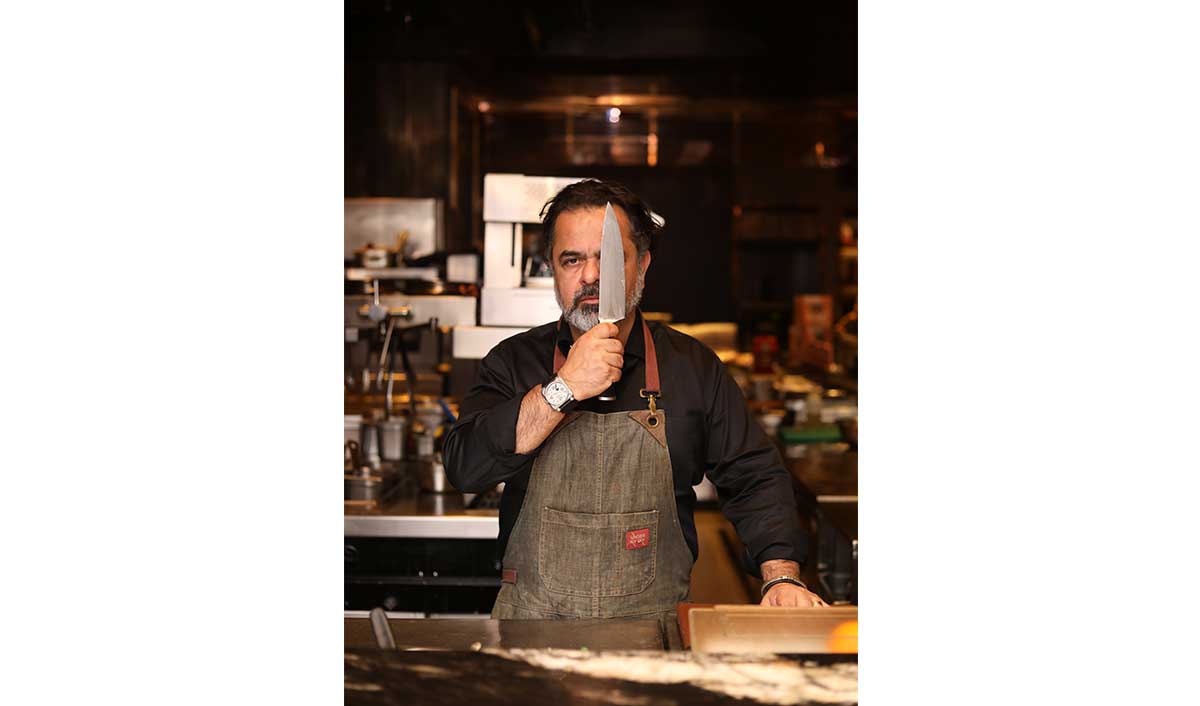
Vicky Ratnani is one of the most celebrated chefs in the country. Having been worked with top brands in many countries, he has got the best hands on ingredients, flavours and trends. He recently joined hands with his old-time friend and car guru Alberto Bestonso and model-actress Kashishh Rajput to open Speak Burgers that is a take on gourmet and fine-line of burgers. As we see burgers have become one of the top food product when eating at a restaurant or getting it delivered at home. As per research, it has become one of the top food items ordered online and that’s pushing the growth of the segment inviting new players, chefs to capture the larger share of the market. At Speak Burgers Chef Vicky Ratnani uses only the freshest ingredients possible which includes 100% hormone and antibiotic free meats, fish, shellfish and vegetables. Excerpts from the interview:
How it all began
The whole idea to launch Speak Burgers was obviously it has a large space in the market, people are looking to eat good, gourmet foods and I have always done good burgers at restaurants and why don’t I create something new, affordable and unique. I also wanted to create burgers that is more on the creative side as more and more people have starting loving burger. Speak Burger is a global kind of influences on my burgers.
What’s pushing the growth?
It’s the people who are willing to see different things than the ordinary also it’s the gut feeling of the chef/restaurant owners who want to create a benchmark, wantto do something different, disruption in the whole trend. It’s a mix of both- people as well as the providers. All thanks to more travel happening, social media, youtube that is keeping people informed about the trend.
Playing with flavours
At Speak Burgers I have designed menu- there is green revolutions that is the line of my vegetarian burgers each one has the character of the burger. My burgers are based on my global travel and each burger has a story. We make everything in-house- our pickles, sauces, ketchup, kettle chips etc.
From where do you source the ingredients?
Ingredients are locally sourced. We make everything in the house. We buy vegetables from local vendors and try that it is as fresh as possible, meat is halal from very reliable sources. Few sauces, Korean pastes etc. are imported.
Any competition?
Competitions are healthy but there is space for any good food in the market and I am very confident about my brand.
High on expansion
We are already on our second location. We are at Bandra West, Andheri West and we plan to take this brand around the country and would like to franchise these brands as well. We are also looking at a small burger cafe kind of model. We are working on different designs, people who will help us scale this brand. And, we want to establish our self in Mumbai before we enter other cities. But I can see Pune, Delhi, Bengaluru, Hyderabad happening soon as it is a scalable model and we want to disrupt the market.
Why cloud-kitchen?
The cloud-kitchen has great potential, scope. You save on high flying rents, good stepping point for a brand to test their products, delivery as people like to eat at home. Cloud kitchen are more economical than full blown restaurant and I think it’s a good way to test your product before you take a plunge.
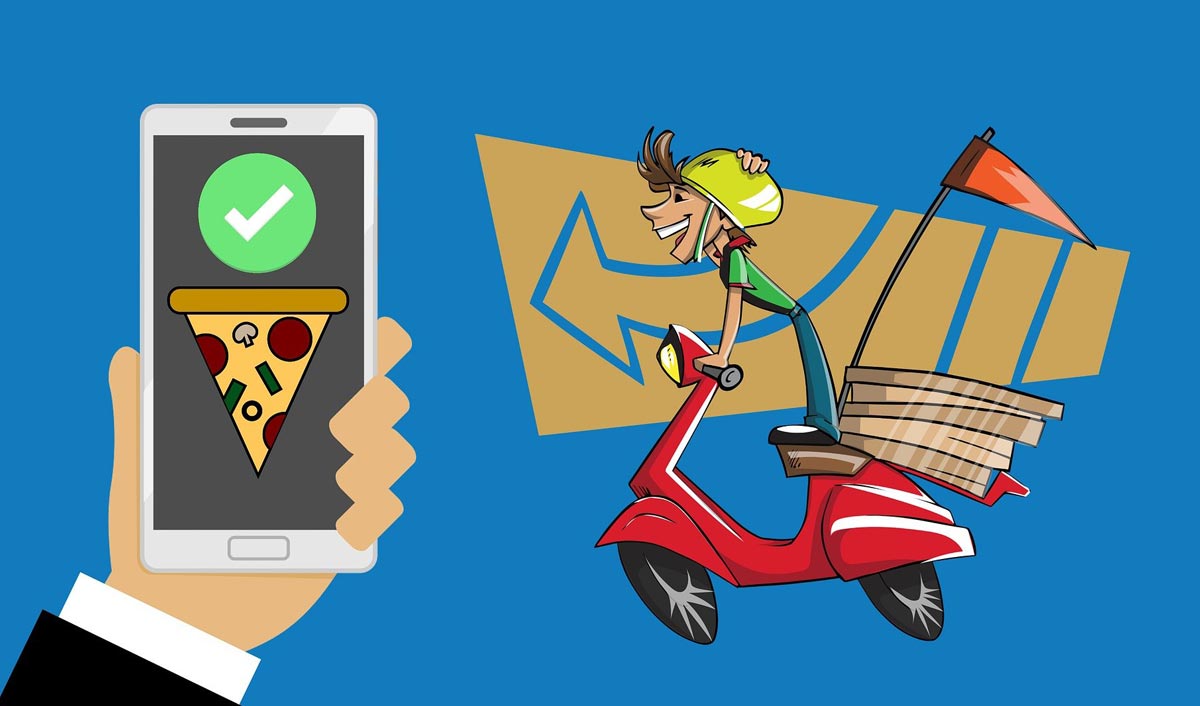
At the point when time is the richest thing in the existence of twenty to thirty-year-olds, imparting a few quality minutes to the family is the best present for them. Obviously, great food brings individuals closer, and that too at the world's most comfortable spot—Home. Along these lines, rather than investing energy in replacement and standing by long for an empty table, individuals lean toward partaking in the food of their cherished cafes' at home, rather than killing their valuable time in feasting out. This change in outlook as far as individuals can tell alongside quick headways in business kitchens and simple web openness on cell phones turns into a crucial impetus to the runaway achievement of online food aggregators like Zomato, Swiggy, Faasos, and numerous such players, however, this problematic progress was inconceivable without a clever idea, i.e., Cloud Kitchen, which is the distinct advantage in the ceaseless development of food startup aggregators.
Riding on the expanded by power and developing interest for non-home prepared food, the Indian internet-based food conveyance market (aggregators and cloud kitchen) is relied upon to be a more than $5 billion open door before the year's over 2023. The cloud kitchens projected market size in India is believed to touch $1.05 billion by 2023.
According to information referenced in that report, there were over 400 cloud kitchens by December 2018 worked by central parts like Faasos, Box8, FreshMenu, Biryani by Kilo, Sushiya, and Innerchef. The current numbers for which have expanded considerably. Ascribing to the ascent in several cloud kitchens, the food conveyance administration market in India has additionally developed a wide margin.
Each savvy business visionary not just imagines his business to use the current open doors, yet in addition plans for future developments. Being exceptionally adaptable, profoundly effective, and savvy types of gear control these cloud kitchens that not just help in dealing with the rising number of requests easily, yet additionally guarantee consistency in quality across the kitchens. Such apparatuses can be utilized for doing diverse undertakings, for example, a brilliant combi-stove plays out an assortment of assignments like barbecuing, broiling, baking, steaming, stewing and so on inside a space of not exactly around 1 m², with the assistance of right embellishments.
The mixture of cloud kitchens with food aggregators has totally re-imagined the F&B market in India
Food aggregators have worked really hard in the past in fostering a decent nexus between apparition kitchens and set up eateries or orders of things in the metros. The collaboration of cloud kitchens with food outlets has reclassified the F&B market in our country.
With an observable shift of buyers to the web-based food requesting stages, the market has seen new players too attempting to solidify their position. Future Group, which runs India's greatest corporate store, Big Bazar is ready to begin its cloud kitchen vertical. The gathering is hoping to convey reasonable dinners at the doorsteps of buyers under the haze kitchen idea. Likewise, then again, the worldwide online business behemoth, Amazon isn't a long way behind in foraying into cloud kitchens. According to the market reports, Amazon has additionally picked Bangalore for its lady kitchen.
Today, a cell phone is not a more specialized gadget, the instrument changes over a need into an open door and a thought into a business. Online food conveyance commercial centers are ideal guides to it. Right from giving fast conveyance of food to millennial clients, to offering fundamental elements of accomplishment to eateries and cloud kitchens via client expansion and maintenance, online conveyance accomplices are giving the fundamental push to this area and there is an incredible future ahead for them.

Looking at the potential that the cloud-kitchen segment holds, the Delhi government had announced a ‘Cloud Kitchen’ policy in its 2022 budget. In a step towards this, the Dialogue and Development Commission (DDC), in collaboration with the industries department, is going to hold a consultation with stakeholders on April 26 to discuss easing land and licence regulations.
“Cloud kitchens are emerging as a strong part of the restaurant industry and are growing at a rate of more than 20 per cent every year and cloud kitchens provide direct and indirect employment to many people,” shared Hanish Suri, COO, Wok on Fire by adding that considering the immense potential for growth and in order to maximize the potential of this industry, it is good initiative taken by the government to structure everything to ease out the overall process as planned to provide land to cloud kitchens with plug and play facilities and ease the number of licenses and regulations etc.
The DDC and the industries department will deliberate on the provision of land and other incentives to cloud kitchens, easing of licence regulations for such units, and setting up cloud kitchen clusters with plug and play features across different land parcels.
“It is the first time that a state government has recognised cloud kitchens as significant contributors to the food and beverage industry. They have a huge potential to attract investments, increase the market size of the food and beverage sector, and generate large-scale direct and indirect jobs,” pointed Jasmine Shah, Chairman, DDC.
Commenting on the Govt’s decision, Ravi Tokas, Chef Owner at Parat and Me-awww that has emerged as one of the most loved cloud-kitchen brand in NCR said, “Food delivery or cloud kitchen industry will boom in next few years till the time we are not getting the remedy of this pandemic. Now, people are more aware and health conscious while eating food from outside and they are comfortable in enjoying their food of their homes with their loved ones.” He also pointed that when the employees were unemployed in 2020, the cloud kitchens and deliveries started growing and gave them the opportunity to work due to which they had earned their daily bread and butter.
“The easing of getting permissions and licences to set up a cloud kitchen in Delhi will be very helpful for the people who wants to start a new business or enter in to this field. Again, lots of people will be employed in the activity of growing industry of dark/ delivery kitchens,” Tokas further added.
As per the Govt data, cloud kitchens are set to be a 2-billion-dollar industry in India by 2024, up from 400 million dollars in 2019. As cloud kitchens prepare and deliver food at the customer’s doorstep by taking orders via food aggregators or online platforms, they can operate from a fraction of a space that is usually needed for a restaurant.
“Govt is further facilitating the growth of this strongly emerging segment by encouraging setting up of shared commercial kitchen spaces across Delhi,” added Shah.
The official were also of the opinion that this segment got a boom during the pandemic, with many restaurants pivoting to focus on cloud kitchen setups that are based on deliveries rather than dining in. As per DDC, there are around 20,000 cloud kitchens functioning across the city which provide direct employment to around 2 lakh people and indirect employment to at least 50,000.
“The cloud kitchen space is still in its early days and works in a highly differentiated manner compared to existing traditional concepts of the food industry. Thus, particular nuances such as location, technology & facility planning should be taken into account before undertaking big investments or policy decisions and I’m hopeful that the government will take all stakeholders on board for the same. But no doubt a positive step in the right direction by the government,” concluded Mohit Dang, Co- founder and Director at Currynama by Seven Seas.

The Corona Virus outbreak which led to a complete lockdown in March 2020 had severe financial consequences. Millions of people were stuck in their homes, without any means to go outside. With restaurants closed, takeout dinner was the only option which drastically accelerated the adoption of cloud/ virtual/ ghost kitchens in the F&B industry. A thing which started as a trend is now a reality.
Cloud kitchen does not have high-traffic locations, but a huge number of online customers with big delivery radius. The ever-growing technology and increased optionality, transparency, affordability, and convenience that the people experience with cloud kitchen model gives it a further edge over traditional brick-and-mortar restaurant kitchen. Predictions by RedSeer Management Consulting reveals that the cloud kitchens are set to be a $2 billion industry in India by 2024, up from $400 million in 2019. Also the market value of cloud kitchens is estimated to reach $1.05 billion by the end of 2023. With such high numbers and scope of development, food aggregators are extensively moving towards cloud kitchen to cash in.
Here are a few reasons why cloud kitchens are the future of the food industry.
Experiment with low risk: Launching a traditional restaurant requires a strong market capital, it’s a time-consuming process which involves high risk venture. But with cloud kitchens, which are not tied to a physical location, you get an advantage of cutting down unnecessary overhead costs which increases your profit margins. As compared to an expensive brick-and-mortar business model, Cloud kitchens can easily take advantage of on-demand labor and inexpensive location. As long as you can draw people on your website, there is no need to rent a space for dining or pay high rent for a prime location. No need to spend money on interior-exterior, decor, furniture, silverware or plates. With a cloud kitchen you only need to focus on the quality and safety of food delivery.
Increased visibility with less marketing spends: Cloud Kitchens can gain quick exposure through delivery apps, rather than having to market themselves. At Cloud Kitchens, each one comes equipped with the proprietary software to launch new menus & promotion featuring discounted menu. Also, with a digital model it’s easier to make changes and experiment with the menu since the entire menu is always online, you can launch an item or remove one depending on its demand.
Quick and efficient service: One big advantage of running delivery out of traditional brick-and-mortar restaurant is that high customer demand can be handled easily. With online delivery solution, you can centrally manage customer orders onto one single tablet. The more accurate your ETA with delivery, means more happy customers leaving better online ratings. Moreover, through online ordering system, it is easier to gather valuable information about your customers’ choices, preferences, and habits. With digital business model operating on apps, you can understand the pulse of your customers and save crucial data insights that helps you to determine your future courses of action and innovate new ways of attracting new clientele.
Managing your restaurant has become accessible even in tough times. Cloud kitchen certainly gives you an opportunity to build a successful restaurant concept with little capital. Looking further forward, with millennials & iGen demanding digital, mobile-friendly solutions, cloud kitchens will always have an edge over storefront restaurants.

A lot is being spoken about the cloud kitchen industry ever since the start of the lockdown. However, it is interesting to note that the food delivery business was poised at a much more aggressive growth in comparison to the dine-in industry even before the COVID-19 crisis struck. It’s safe to say that a sound business model was considered a safe bet prior to the pandemic but what has happened is that with most restaurants shut and delivery aggregators reporting up to a significant decline in order volume, a pivot to a cloud kitchen model has been championed by some as a panacea to the industry’s current woes. Here are top women into the cloud-kitchen business that has grown to a new heights in the 2 years.

“Coffee isn’t just a beverage. It takes skill and craftsmanship to grow, to roast, to grind, to brew and to pour. Coffee is both social and personal. Coffee is a way of life,” shared a statement from Slay Coffee that was started by couple-duo Lakshmi Dasaka and Chaitanya Chitta who missed New York’s coffee culture, this Bangalore-based cloud-kitchen delivery startup has grown 3X amid the pandemic.
Before starting DropKaffe Food & Beverages, Lakshmi was the co-founder of her husband’s education learning solution enterprise, Smarton Learning Solutions. She is a Cornell University Graduate.

Started by sister-duo Ramya and Shweta Ravi, RNR Donne Biryani is a staple of Karnataka’s culinary culture and is not popularly known among other varieties of biryani. Started as a 200 sqft cloud-kitchen venture in November 2022 with an investment of Rs 5 lakh, a single cook and a couple of assistants.
“Covid has not vandalised the market. People still want to try new cuisines & avenues of growth with minimised risk is the could kitchen format,” shared Shweta by adding that one needs to keep up with the trend before they get outdated.
“We started our first kitchen in early 2019, as our restaurant had gone into renovation and we had a decent sized delivery and catering vertical that we did not want to hamper while we took a break. Eventually when the restaurant was ready for operations we never went back from the cloud kitchen model due to the efficiency and ease of doing operations,” shared Gulati who has also added 2 new kitchen to their existing operations and plan to expand more in the next few months.
Chiquita Gulati is a chef by profession and is also the co-founder of Spice Market along with her husband Sumit Gulati. She started cooking alongside her mother and grandmother from a very young age. Luckily for her, she was always encouraged and supported in everything she wanted to try and experiment.
Seefah Ketchaiyo is one of India's top emerging chefs and possibly Mumbai's very favourite Asian food wiz. Chef Seefah and her husband Karan Bane has taken the Asian cuisine to a new height with their restaurant in Mumbai. And. it was during the lockdown when restaurant business came to a halt, she also thought of entering into the delivery business with her bakery delivery brand Seefah Bakery.
She started her journey with Four Seasons as their Thai chef, and started a restaurant called The Blue with her husband that was never short of waiting queues. And, today she has made a mark among the culinary heroes.

Ishita Sudha Yashvi, Co-founder, Cross Border Kitchens
“Our kitchens are typically geared to dish out thousands of orders a day. Therefore, managing any increase in demand is never a problem. However, the rise in CBK portfolio is not due to people staying in and ordering more. The F&B industry continues to face a demand failure,” said Yashvi in one of her earlier interview with Restaurant India.
Cross Border Kitchen is a multi-brand cloud-kitchen based in Delhi that has tested the success during the pandemic.

The restaurant industry has always focused on innovation and readily accepted new ideas. And one area that has greatly benefited from this drive towards the future is the kitchens. A glance into this space can reveal the use of hi-tech appliances and equipment, helping the staff cut down on cooking time and increasing production.
Although the human factor has always been present, the Covid-19 pandemic has changed this and forced the industry to adapt to more significant kitchen automation. According to new survey data, the overwhelming majority of restaurants in India have invested or are in the process of investing in new automation technology. Restaurant consultants in India believe it is a matter of time before food establishments in India follow suit.
The new reality of lives during and post the pandemic has led much of the restaurant industry to re-imagine how they can conduct business. Dine-in has significantly reduced, while the trend for takeaways and deliveries, which was already rising due to the widespread use of delivery applications, has increased exponentially. Therefore, the establishments need to have a high level of production that could meet the rising demand. Whale automated kitchens are mostly associated with cloud kitchens, it has been observed lately that fine-dining set-ups too are looking to adapt this change.
Time is money: Having an automated kitchen saves on prep time and cooking time. While some restaurants are fast food or quick service, others provide fine dining. In any of these scenarios, the automated process will churn out the dishes quicker. Some restaurant consultants project that in the future, the entire kitchen can be automated. However, at present, in most places, one can see automation being used in specific ways, such as flipping burgers, assembling pizzas or nachos. While this does not remove the need for employees, it does reduce labour costs, cleanliness, and human error.
Reduces labor cost: While it may seem like automation in the kitchen would be more expensive, they ultimately may not be for some restaurants. Why? The automated kitchen is cheaper because the cost is incurred only once. It is cheaper to employee robots than it is to employ humans. The robot doesn’t cost to operate it, and one don’t have a monthly salary to pay. In addition, since they are virtually mistake-free, one can save time in overages and costly human error.
“I was a chef of multiple outlets, and use a lot of technology and had few experienced staff in my kitchen to increase efficiency. I am introducing Kitchen Display System in my all restaurants. These systems help in improving communication between the front-end and the back-end teams. Digital receipts of orders appear immediately on monitors/tablets installed in kitchen and also helps in improving cooking time,” Rahul Khare, Corporate Executive Chef, Finch Mumbai informed.
Additionally, at Finch Mumbai, Khare is using Smart Combi Oven in the kitchen, that is a three-in-one oven that can cook using convected heat, steam, or a combination of both. It adds another layer of technology to the appliance by offering the ability for remote control and monitoring. Benefits are as follows, it saves money and takes up less kitchen space and Increases food safety.
Highly consistent: Many companies who offers kitchen automation has seen increase in queries, specially post Covid. Bengaluru-based Mukunda Foods manufactures machines that make various foods without any human intervention. Its machines - DosaMatic, Eco Fryer, RiCo and Wokie, are all manufactured in-house, and used to make dosas, rice, noodles, and curries in a contactless format.
Today, Mukunda Foods counts several well-known names among its B2B clients including ITC, Rebel Foods, Wow Momos, Chaayos, The Bowl Company, etc. More than 3000 machines have been installed in India and in countries like the UK, the US, Australia and Singapore so far. In the pre-pandemic times, they were able to sell more than 150 machines quarterly, and this number has now gone up to more than 500.
Ghost Kitchens, a cloud kitchen company, has invested in a series of automated products that has transformed the kitchen into a semi-automatic workspace. An automatic cooking station, and not human chefs, call the culinary shots.
Higher profits: Increasing table turns isn’t the only the way the use of technology can increase profits. During lunch time service, or when customers have limited time to eat, speeding up service times gives them the opportunity to spend more by ordering additional courses, such as dessert.
“A well-organized kitchen is one of the most important prerequisites for running a restaurant. A diverse menu requires different segments in the kitchen for different types of cuisines like a different segment for Asian, Indian, continental and desert. In order to function smoothly the chefs are supported with equipment ranging from traditional fryers, mincers, grills to innovative machines like sous vide cooker, siphon gun, steamers and more. Efficient kitchens are the backbone of a successful restaurant and future-ready restaurants must be able to adapt to modern innovation and changes, given the dynamism in the F&B space,”
Shreevardhan Asopa, Co-owner, LMNO_Q commented.
By using kitchen automation restaurants have also gained higher profits simply because they’ve received fewer complaints. Usually when restaurants receive a complaint they offer complimentary food or drinks or even an overall discount. A reduced number of complaints reduces the money lost from these complimentary items.
“Our products ensure that our clients achieve ROI between one to a maximum of six months. To put it in context, the major cost heads in any F&B business are Manpower, Training, electricity & oil consumption, and wastage. These automations are aimed at reducing and minimizing each of these header costs,” Eshwar K Vikas, Co-founder and CEO, Mukunda Foods had commented.
Guest experience: A customers’ experience can be enriched by technology in a handful of ways. For guests seated near an open kitchen their dining experience can easily be ruined by the noise and disorder coming from chefs, because automation organises the cooking process this creates a calmer kitchen and as a result the surrounding dining area is quieter. The quality and accuracy of meals is also improved; automation software ensures an entire tables order is completed at the same time so every member of the group receives their food at the optimum temperature. The software also highlights when there changes to an order like extra cheese or no olives so that any variations are not forgotten.
Reduce waste: Wasted food means wasted money, not simply in physical form but in time as well. For quick service or single item restaurants cooking the right amount of food while minimising wastage is crucial. With the bin management component of automation software operators are able to automate the hot hold process, allowing food to be hot held but for the least amount of time possible, ensuring items are not discarded for being held for too long. Using historical sales data, a bin management solution predicts how much product will be sold in 15 minute intervals during service and can be adjusted by operators to adapt calculations based on busy days or service requirements.
More restaurants seeking opportunity: Shaurya Malwa, co-founder of Origin Restaurants (owns Nho Saigon and The Canary) informs that the company would like to explore new innovations and techniques in order to make the experience seamless and ease job of employees.
“In restaurant kitchens, technology is the one way to propel forward. The one technology that we have put in use is Automated Ordering System. This basically means that we have installed digital sensors in our refrigerators and other storage areas that automatically replenishes inventory in a busy restaurant, such as ours,” Malwa stated.
Furthermore, the team have installed automatic climate control systems which changes the room's temperature and humidity levels. This helps to create a better environments for the chefs to work in. “We would like to explore more such innovations to improve our kitchens,” he further added.
Remotely controlled kitchen: The Internet of Things (also known as IoT) is a network of physical appliances and devices that use a digital connection to communicate with each other. Implemented in a commercial kitchen setting, Internet of Things technology can be used to create a smart, remotely controlled kitchen.
In an Internet of Things commercial kitchen, the refrigerator could track and reorder inventory on your behalf. But really, this is just one example of the endless applications and possibilities of an IoT kitchen. Here are some benefits to an IoT remotely controlled kitchen like
Lowering the labor costs. With a smart kitchen that can automate repetitive tasks such as monitoring appliances and tracking inventory, one can accomplish more with a smaller team.
With remote monitoring through the Internet of Things, one can also keep track of the restaurant kitchen in a remote scenario. A remotely controlled kitchen is not a pre-made product but a bespoke network. IoT providers can design and install an Internet of Things kitchen that’s right for the restaurant.
While state-of-the-art restaurant technologies may cost more than their traditional counterparts at the outset, these tools quickly pay for themselves with the value they add to your restaurant. Some food service equipment trends come and go as quickly as the cronut, while others, like remote controlled smart appliances and digital kitchen display systems, are here to stay. This new technology in the food service industry can set you and your restaurant up for success for years to come.

In March 2020, when the pandemic brought about complete lockdown, no one realized that it would lead to repercussions to financial implications. One of the industries that were seriously hit was Food and Beverage, which led to the rise of a viable concept which helped masses enjoy restaurant-like food at home and made it less-stressful for foodpreneurs. Pandemic has taught us that we can survive in minimalism. Having said that, the urge to savour the "restaurant food" couldn't be satisfied with home cooked meals leading to recreating the restaurant style food at home and yet be craving for what the food industry offers in terms of taste, service and experience. An, that’s where we saw a new segment grow.
Also Read: Why Cloud kitchen over restaurant
“The perception that “healthy is boring'' is what we want to break. We promote clean eating with ingredients like hydroponic and Himalayan cheese, but on the same side we provide lip-smacking recipes. Tokarii is even using innovative ways of reducing their carbon footprint by soilless farming,” shared Jatin Katyal and Aditya Kapoor, Co-Founders at Gurgaon-based cloud-kitchen brand Tokarii that has adopted hydroponic farming methods to grow different types of lettuce, red and yellow Swiss chard and microgreens, reducing 95% of our water usage.
This brand practices ethical practices and sustainability as their key very fabric—whether it is the sourcing of ingredients, the storytelling packaging, or their unique concept of educating consumers about the importance of eliminating plastic in packaging process by following the zero plastic use initiative.
Similarly, for chef Amit Puri who left the corporate world to start his own venture, he want to offer premium restaurant quality food at affordable prices at his cloud-kitchen venture.
“Our topmost priority is the standard of ingredients we use. Our menu is well-balanced and we cater to families with large portion sizes and also the independent diner who wishes to opt for a single meal or a wrap,’ added Puri whose menu comprises of comfort and popular Indian food.
Local is the new ‘Buzzword’
Homegrown, Locally Sourced, and Freshly Prepared is what has been catching customer’s attention. A brand that has a seasonal menu with an entirely unique approach towards sustainability has seen a rapid growth. “We are inclined towards catering modern recipes using natural ingredients and showcasing them with a flavorful punch,” added founder at Tokarii that sources microgreens and vegetables through Hydroponic farming, which is popularly known as soilless farming and is highly productive than conventional farming.
Similarly, Mumbai-based cloud-kitchen brand The Blue Tiffin has tied up with local vendors who procure and supply high quality ingredients from various sources.
“Our menu is meticulously created incorporating current food trends wherever practical. Since The Blue Tiffin concept is associated with comfort royal cuisines of India, we have researched about the regional and seasonal preps that not only have distinct flavours but would also be commercially accepted, retaining the true essence of the original preparation,” pointed chef Puri by adding that the pandemic has got people to take keen interest and digging deep into such local vendors. It has also seen the growth of talented home chefs, promoting and selling their regional cuisines. “We as professional chefs are thriving to meet the need of consumers, by innovating and presenting such local and regional cuisine in a contemporary manner. Grains, seeds, leaves that were used in ancient times, have now gained popularity and are making way into commercial menus in a whole different way,” he concluded.
May Interest: “Ingredients that are Fresh and Locally available are Favored”
Meanwhile, Tokarii as a brand aims to create a warm connection between scrumptious meals and cultured millennials. “It’s been in our culture to consume freshly made products as we are an agricultural economy and food technology innovations have recently been explored in our country’. We believe we all will resort to our traditional food habits in the coming year,” the team Tokarii pointed.
Though, there is no denying that dining will remain popular as humans need to socialise and share their emotions with others, and food is the best catalyst to achieve the same. Cloud kitchen will be an alternate source, but they will not overpower the existing restaurant infrastructure around the world. There will be innovations in reducing human contact in food preparation, and overall hygiene measures will become more stringent.
India continues to be the fastest growing economy in the world with some of the factors like young population, increasing disposable income, demographic changes which actually turns right the consumption and also offer restaurants and hospitality business a considerable opportunity to grow. Despite all the right ingredients we still do not see much of VC and private equity investment in the brick and mortar restaurant business. And, we can say that 2021 was the year of tech-led investments where investors have showered their blessings on delivery, cloud kitchen, tech-enabled restaurants looking at the growth this segment holds.
Also Read: What Excite Investors to Pour Money in Your Restaurant
Also, there is a sudden shift in the venture capital business. In the last two three years a lot of venture capitalist have invested in the food technology or the restaurant space. Majorly there were two things happening- the large ticket venture capitalists, people who were able to invest about $60 MN or VCs who are back investing traditionally into the core technology products and hence, food and food service at large doesn’t feature as an area of interest to them.
From brands like Zomato, Swiggy that has become the market leader in delivery to home grown cloud-kitchen brand Rebel Foods that entered the unicorn club with the latest round of funding; each one of them received great appreciation from the investment circle.
“The food-tech space has evolved towards better personalization, innovation, and complete transparency which Rebel Foods continues to pioneer. With this round of funding, we will continue to serve newer customer food missions powered by technology and automation,” said Ravi Golani, Chief Strategy Officer, Rebel Foods recently during its announcement that it has raised USD 175 million in a Series F round led by Qatar Investment Authority (“QIA”).
According to a report, the Indian food service delivery market is expected to more than double to $13 billion (Rs 93,600 crore) by fiscal 2023 from $5.2 billion (Rs 37,440 crore) in fiscal 2020. With no physical presence, less commercial involvement and working as an internet restaurant wherein you can get the food delivered at the comfort of your home, cloud-kitchen segment is projected to become a $2 billion industry in India by 2024, as per a report by RedSeer Management Consulting.
Also, if we look at current market trend, more and more restaurants are happy sitting at home and binging on their favourite food. This has also led tech-led businesses to get investors attention.
“There is a huge opportunity in the cloud kitchen model because it allows a lot of aggregation and local food. I think at the end of the day, food is still local,” shared Shanti Mohan, Founder, LetsVenture by adding that this concept is a combination of asset light versus somebody managing the infrastructure.
May Interest: Ahmedabad-based Bigspoon bags Rs 15 Cr in pre-Series A round from NB Ventures, others
Commenting on the same Neelesh Bhatnagar, MD, NB Ventures, “We are excited to partner with Bigspoon, who are transforming the cloud kitchen landscape in Tier-II and III cities, with fresh-pier food and tech-led disruption in the F&B space. Our expertise in the Food-tech sector and their focus on a full-stack solution has great synergy.
NB Ventures recently invested Rs 15 crore in Ahmedabad-based multi-brand cloud-kitchen BigSpoon .

Cloud kitchen, dark-kitchen, ghost kitchen or we call it a delivery-only restaurant, is the new go-to model in food and restaurant sector. Not just in India, this is a global trend wherein more and more players are entering into the segment. With only a kitchen where food is prepared for the delivery-only meals, it has seen a huge attraction from top investors globally. From angel investors to venture capitalists, all are taking a bite into this segment. All thanks to the never ending home dining trend due to the pandemic.
With no or limited store front or seating availability, the rent to sale ratio as compared to restaurants where it is 15-20% in restaurants, it is only 3 per cent in cloud kitchen. The cloud kitchen format gives the flexibility to launch more than one brand using the same kitchen infrastructure and resources. Hence, giving customers and entrepreneurs an opportunity to serve multi-cuisine from a single kitchen. And, as per experts, cloud kitchens are the future of the food industry, with top customer access, low cost of set-up and operations, and high profitability.
As per a report by Goldstein Research, the global cloud kitchen market was valued at USD 700 Million in 2018 and is expected to grow at a CAGR of 17.25% through the forecast period (2017-2030). But running a multi-brand kitchen is not everyone’s cup of tea. You need to have a right mix of brands, categories, cuisine to target the right set of customers in a area where you have pre-identified clientele. Here are top reasons according to experts on how you should choose brand, categories for a multi-brand cloud-kitchen set up.
The right-mix of customers: “We serve various missions which are influenced by customers,” shared Karan Singla of Rebel Foods by adding that this is what drives us to create brand. This is the advantage of multi-brands as we can touch the customer from various brands depending on his mood and need. Today, Rebel Foods operated across multi-cuisine from serving best biryanis, pizza to coffee all under one roof.
What’s the need: Brands are also created on the need of a customer. Whether he is eating with family wherein different people have different preferences, ordering food as a team wherein people want to gauge on a multi-cuisine menu, to friends who just want to do binge watching. And, in last one year we have seen so many multi-brand kitchen opening doors across India.
Single/ Double serve: Driven by the need of serving, cloud-kitchen brands plan new categories and offerings. For example we have seen brands like Lunchbox and Faasos serving meal options for one person, two people and for a complete family. That ways it is driven by the number of serving.
Regular Meals: Many a times you just don’t want to cook food at home and want to order something healthy, regular from outside. From a simple rajma bowl to a plate of aloo paratha with curd, that’ where these kind of brand enter into the whole game.
Indulgent/Occasional meals: These days celebrating a birthday, anniversary or just wanting to have a fine-dine experience does not require you to visit a luxury dining destination. It can be created at home. There are brands in the market that are delivering luxury and 5-star like experience at home.
Hence, we all know by this time that cloud-kitchen brands offers multiple profits, benefits as compared to a traditional brick and mortar business.
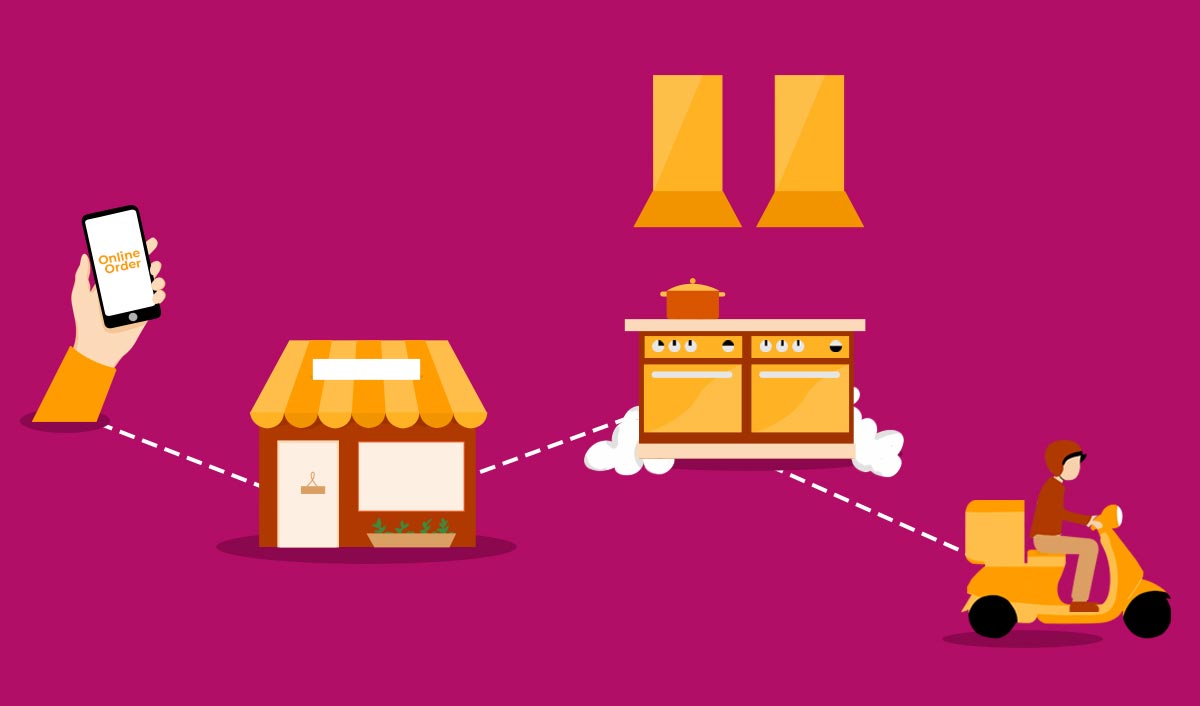
“The Indian food service delivery market is expected to more than double to $13 billion (Rs 93,600 crore) by fiscal 2023 from $5.2 billion (Rs 37,440 crore) in fiscal 2020,” shared a report by.
And, with more and more people staying at home and dining-in becoming the new dining-out, cloud-kitchen or the delivery business in India is estimated to grow five times bigger in next five years.
With no physical presence, less commercial involvement and working as an internet restaurant wherein you can get the food delivered at the comfort of your home, cloud-kitchen segment is projected to become a $2 billion industry in India by 2024, as per a report by RedSeer Management Consulting. Not only this, as per survey, 21% of the respondents said they were more likely to increase their online ordering of takeaway food after the lockdown, while just 9% said they were more likely to visit restaurants more often.
Looking at this opportunity, investors are pouring their money in the fastest growing segment during such a pandemic.
Ahmedabad-based cloud-kitchen startup Rolling Plates that offers ‘Ahmedabadi Biryani’, has raised USD 150K in its Pre-seed fund round from US-based investment firm EXL Investment LLC.
With this Pre-seed fund raise it is planning to expand in the tier two cities with its 'Delivery-Only' business model, focusing on west Indian market before venturing into the other territories.
“Being a food-tech startup our priority is to build a strong and sound technology that can enhance our online ordering experience and logistics capabilities. Going forward we would create a robust data analytics framework that can improve the way we work and the kind of food that we serve to our customers,” shared Shihab Sheikh, Co-founder, Rolling Plates.
In the next phase after strengthening the foothold in India, Rolling Plates plans to venture into The United States as its first global market. Rolling Plates is also in talks for a JV with a Tanzania based food delivery and logistics startup to expand in the African Market. Apart from its flagship brand 'Ahmedabadi Biryani' that offers authentic local taste of biryani, the startup also operates two other virtual restaurant brands - The Mughal Treat (A main course Indian, Mughlai & BBQ delivery brand) and Brunch'O' (Snacks & Breakfast delivery brand).
“The startup not only has the potential to grow in India and but also mark overseas due to the unique taste of ‘Ahmedabad Biryani’. It has high potential to grow in The United States, where there is a large chunk of Indian and Asian diaspora,” said Sadaf Mansuri Founder of EXL Investment LLC.
Founded in 2018, by husband-wife duo, Shihab Sheikh and Falaknaz Sheikh consciously chose to curate the authentic traditional ‘Ahmedabadi Biryani’ recipe with the sole purpose to propagate the unique taste of local sumptuous biryani found only within the walled city of Ahmedabad, still prepared by the Mughal era’s old-fashioned traditional cooks called ‘Bhatiyaras (cooks)’.
Similarly, Nino Foods earlier Francesco’s Pizzeria has raised $125,000 from Silicon Valley-based startup accelerator Y Combinator. Started by Nishant Jhaveri and Pranav Mehra a year ago by converting it to a delivery-only venture, today they also run a burger brand under Nino Burger.
The brand is also planning to launch their third brand in a few weeks.
As per Nino Foods that is focusing on the premium segment where average order value accounts for Rs 400 and above.
“We built our second brand, Nino burgers, to prove to ourselves that we could create a food brand that people love. We used data for some decisions and went with our gut on others. Being outsiders to the food industry but lifelong food lovers, we were able to take a more customer-centric approach. We experiment often, iterate quickly, and want to build a category-defining company with global impact," said Nishant Jhaveri, Co-Founder, Nino Foods.
They are also aiming to enter three cities by next year.
Also, as we have seen home dining trend rising with more and more people eating at home. End to end kitchen aide ChefKart that plans, shops and cooks for you in your home kitchen by providing trained and verified home cooks who create perfectly hygienic meals suited best to your taste, at the comfort of your palms.
The Gurgaon-based startup has bagged $300,000 in Pre-Seed Funding from Titan Capital, Pravega Ventures, Lead Angels and others.
ChefKart has served over 500 customers even during COVID times and managed to grow 50 per cent m-o-m. Since its inception, the brand has on-boarded 2200 service professionals covering almost the entire Gurugram.
“People see COVID as an opportunity loss but it has proved to be a blessing in disguise for us as people have realized the importance of home-cooked food. I believe we have the right set of investors who betted on the right set of people to solve the daily problem of managing a kitchen," said Vaibhav Gupta, CEO and Co-founder, ChefKart.
It is planning to use the funds to develop a product that can help users manage end-to-end kitchen needs, upskilling and training of cooks to make them more professionals, acquiring more customers and chefs on the platform, and scaling up the business in Noida.

Started as a QSR concept by Jaydeep Barman and Kallol Banerjee in 2011 serving wraps and rolls, Rebel Foods formerly known as Faasos wanted to create an Indian global QSR by creating something that we Indian’s love. “Over the years, we have been chasing lots of food missions as we developed this company by realizing that this is the new opportunity and we should explore that,” shared Karan Singla of Rebel Foods that has moved from a QSR model to delivery only cloud-kitchen and the company consider it yet another innovation which happened to the brand in 2015. With present across seven countries, it has become world’s largest internet restaurant company with presence in 45 cities with 350 multi brand dark kitchen/cloud kitchen or ghost kitchen whatever you may call it. The brand operate 3500 internet restaurant that mean it has presence only on internet and you can’t visit the restaurant for dine-in. “We have been operating 20 brands all lead by technology and data,” added Singla.
Also Read: How to market your cloud kitchen business
Looking at the growth rate of globally top brand like Rebel, here are few things that we should consider when operating a dark kitchen brand:
The new wave
2020 has given birth to many new cloud kitchen or delivery only brands. As per reports, Indian food service delivery market is estimated at INR 37,440 crore (US$ 5.2 billion) in GMV in 2019-20. Growing at a CAGR of 33 per cent over the last three years, it is expected to reach 93,600 crore (US $13 billion) by 2022-23.
As per industry experts, the concept of multi-brand or QSR is not new. “We have seen one high street restaurant operating multiple QSR as in Yum operating KFC, Pizza Hut and taco Bell from a single location. But they are still a traditional restaurant which operates individually. Whereas Rebel Foods has one premise to run multiple brands,” pointed Singla.

Cost vs Profit: “A Same store sale is a term in restaurant business. In a traditional FnB model while your cost starts from day 1your sales pick slowly and your payback is very late,” pointed Singla for whom in a dark kitchen model though the cost go up but since the sales comes very quickly against those cost and they go very well augmenting those sales by adding more brands on same cost. So, this helps in getting your kitchen profitable much more early.
Must Read: How Rebel Foods is focusing on building ‘customer-first’ approach brand

Faster payback and Breakeven: There’s no denying that cloud kitchen/ dark kitchen model involves low cost and faster profits as compared to a traditional F&B model which has 3-5 years of time for breakeven or return whereas a dark kitchen breakeven time is less than 12 months.

For generations, brands building a national presence relied solely on a brick-and-mortar strategy and made significant investments over decades. Brick-and-mortar brands often end up spending maximum revenue on rent and operation costs and face various challenges while scaling up across geographies. India also has a high rent-to-sales ratio and even before the pandemic, the business model was not always profitable. With the onset of the pandemic and lockdown, many restaurants were forced to shut down as they could not possibly cover their overhead costs with just delivery. That is where cloud kitchens became the game-changers. “Cloud kitchens are now a reality, and here to stay for a variety of reasons such as ease of scaling up and lower operation costs,” shared Ankur Sharma, CBO, Rebel Foods who believed that as an industry, cloud kitchens have been performing well even in the pre-covid era, while the pandemic has given the concept the much-needed push. This has also been successful since brands nationally and internationally realize that cloud kitchens are a great way to scale up a brand at an optimum cost and multiply the speed of growth. Excerpts from the interview:
Must Read: How Rebel Foods has Built the Largest Dark-Kitchen Business in India
Being the leader in the segment
Our focus on the ‘customer first’ approach has been our key ingredient while building Rebel Foods, its brands, and partner brands. Today, we are the world’s largest chain of internet restaurants building on the principle of placing our customers before us and business. Our Rebel operating model is built to scale brands and their growth in a meaningful manner. While building brands, our first step is to understand the market gap in the customer's want. Once that has been defined, we build and scale brands across the regions. However, our customer journey does not end here. We continue focusing on customer feedback and introduce and modify our offerings on our platform. The customer delight teams constantly work with brands to ensure that customer’s feedback is not only heard but also considered and implemented wherever possible. Our journey of putting ‘customer first’ continues with our promise of serving the best quality of ingredients, 100% transparency, 200+ quality checks, and no artificial flavour or colouring.
You recently partnered with Wendy’s, Naturals, MOD to name a few to open their cloud-kitchen. How does it work? Is there a royalty fee?
Rebel Launcher is where we welcome great restaurant brands to utilize our cloud kitchen to scale pan-India and even abroad. From finalizing a location, infrastructure, getting the kitchens running, getting legal and compliance in place, to setting up a supply chain, there are constant challenges to overcome while setting up a restaurant. Not forgetting, the latest challenge Covid-19. The pandemic has heavily impacted dine-in sales and given further impetus to the pre-existing food delivery business. This is where the Rebel Operating System comes in.
The Rebel Operating System comprises three things:
1. A full-stack technology from inventory and kitchen management all the way to demand management and fulfillment.
2. Supply chain capabilities for sourcing, warehousing, and moving input materials safely in any shape and form.
3. Culinary expertise and capabilities to break down menus into small SOP-driven steps that don’t require any additional skill.
These elements are available across all 350+ kitchens across 45+ cities. Brands as a part of Rebel Launcher can integrate instantly with all distribution channels and cost efficiency with shared resources. We partner with brands who reflect our promise of placing customers first and extend our expertise and scale them towards becoming a national brand on delivery. Our journey with Natural Ice Cream, Mad Over Donuts, Baskin Robbins India, SLAY Coffee, The Belgian Waffle Company, and other brands which now operate as a part of the Rebel Launcher program was smooth and successful. These brands started operating on the Rebel Operating model and scale up easily rather than create awareness by building offline stores which would be much more time-consuming and capital intensive. The Rebel Operating System simply enabled these brands to plug and play while using our world-class kitchen infrastructure. We further achieved a milestone in 2020 through our partnership with Wendy’s. In the coming months, we will scale Wendy’s presence pan-India across locations and aim to make America’s leading burger brand a household name in India.
Also Read: Wendy’s partners with Rebel Foods, to open 250 cloud-kitchens
Building a ‘Customer’ first approach
There are significant mutual benefits in partnering with brands as a part of Rebel Launcher. Over the years, we have launched some of the most loved, category-leading brands in India such as Behrouz Biryani, Ovenstory Pizza, Faasos, etc. This has allowed us to build a system that is easy to onboard and scale brands. With Rebel Launcher, we are allowing brands to access world-class distribution networks across 45+ cities and giving them visibility for the business. Partner brands also allow us to appeal and address various food missions of our customers and strengthen our offerings. As an organization, we want to continue powering brands that create products with the same thinking - customer first.
Tell us something about your existing brands. Which has been the customer and your favourite?
We have created some of the category-leading brands which have received customer love in its existing markets. Our brands currently appeal to various food missions such as single meal orders with Faasos to royal indulgence with Behrouz Biryani. Ovenstory has also seen a popular demand for its USPs such as different cheese offerings, thinner crust, etc. We are also looking forward to expanding Mandarin Oak, Sweet Truth, Lunch Box, etc. across locations.
While each of the brands we have a special story, Behrouz Biryani and its inception remain closest to my heart. The brand within one year of its launch was scaled pan-India which showcases the trust and love it has received. Behrouz Biryani has by far exceeded our expectations and helped us realize the potential of serving customers in different geographies.
What is the timeline on the scale-up for brands such as Wendy's, MOD, and naturals?
With Rebel Launcher, we take as less as 15 days to onboard brands, which starts from initial discussions to the date of the first sale from Rebel kitchens. Brands like Natural Ice Creams and Mad Over Donuts now operate at 40+ locations across India within 6 months of being a part of the Rebel Launcher family. We have scaled up Wendy’s in 30+ locations in the last four months and will reach 100 locations by the end of this year.
High on Expansion
We have opened kitchens in 15 new Tier-2 cities in India in addition to our international expansion which is underway. We have noticed that during the lockdown, a lot of people went back to their native cities or hometowns. Our consumers are shifting from one market to another, but this has further helped us in our expansion plan. We are now present in newer markets such as Amritsar, Jalandhar, Rohtak, Guntur, Trichy, Mangalore, Ranchi, Agra, Madurai, Kanpur, Dehradun. We are optimistic and committed to our growth in India and internationally
Food Trend
The pandemic has increased focus on food safety and cooking procedures which we believed will only gain prominence this year. Adhering to health and well-being while preparing food will be the focus while putting the control back into the hands of the customers. Apart from food safety, another important trend will be the use of Artificial Intelligence (AI) across the food industry. For instance, voice-command features for ordering food are expected to hit the scene soon. The power of AI can be used in multiple ways due to its intuitive nature and recommending customers as per their tastes and likes on various dishes while ordering.

With the pandemic, eating out as a group and celebration with family and friends has drastically reduced. And, hence brands have introduced various home dining experiences, not just bringing meals at the comfort of home but they have also come with accompaniments which provide the ambience of going out and celebrating, while staying at the comfort and safety of homes. According to a recent report by Adobe, “where technology is a gap, brands are taking a broader look at personalisation, evaluating all of the building blocks that support a better experience: data, content, decisioning and delivery. The pandemic has helped teams to understand where they have struggled to bring the experience together.”
“Delivery is no longer a retro-fitted business. The business has evolved so much and you have specialist needs to this category,” shared Joseph Cherian, India Head, Kitchen Plus who started a cloud-kitchen brand himself 5-6 years ago before partnering with Swiggy.
Also Read: How Cloud Kitchen has Emerged as a New Online Vertical
It’s no more about MORE is good: Today the ecosystem in the food delivery is far more evolved in comparison to few years back. These days’ brands just need to focus on quality. “In dark kitchen you can spend your money on operations, efficiency, people, detail understanding and flexibility of the menu etc. But in an offline world if you have to change the menu the cost is huge, you have to change a lot of collateral, communications. It’s much easier in terms of quickly change in dark-kitchen and delivery space,” added Cherian by pointing that data is available wherein you have an understanding of the consumer. So, how do you leverage all of that and quickly adapt and make these changes is easier at the delivery front.
Getting the right transaction: The emergence of ‘delivery-only restaurants’ has been expedited because of the current crisis. The global cloud kitchen market size was valued at $43.1 billion in 2019, and is estimated to reach $71.4 billion by 2027 with a CAGR of 12.0% from 2021 to 2027, as per reports. People may be very selective in terms of which restaurants and crowded places they visit in years to come but delivery is definitely going to change the whole gamut of dining-in trend. “Delivery and dark kitchen business looks very appealing as everyone knows that it is low capex, quick on return business. We at Wendy’s took almost 2 years to decide on it. It may look fun initially but it’s all about the mass and getting the volume,” shared Jasper Reid, Founder, IMM that runs Wendy’s, Jamie’s India by adding that the bottom line is about getting the transactions.
It’s all about optimisation: With delivery model soaring, an entirely new model as we may call it dark kitchen/ cloud-kitchen has emerged. In comparison to the delivery business, dark kitchen is much optimized business. “Earlier for most of the dine-in centric outlet delivery was only 3-5 per cent of the business. So, you didn’t optimize. People need to understand that delivery is one of the core business today and as restaurant sale has increase to 60-65 per cent from an average 5% per cent today is all because your optimisation has moved to such pace,” said Rakesh Ranjan, Chief Sales Officer, Zomato.
The right menu engineering: “The biggest mistake that a restaurant do when they enter into delivery or a cloud-kitchen business is that they put in the same fine-dining menu that they have online. Restaurants need to think here differently because the same customer might behave very differently when he comes online verses when he visits a restaurant for a dine-in experience. Hence, a nuance approach in menu engineering is very helpful,” pointed Renjith Prahladan of UrbanPiper as online business is all about making yourself visible to the right customer. And, with more restaurants and start-ups looking at online availability and visibility, aggregators are also trying to fix on how they would give space to each of these restaurants.
Must Read: Covid-19 has made most restaurant kitchen a dark kitchen, Is Brand Trust Next
The better ‘For You’ space: The consumption pattern has change in last 2-3 years wherein people are looking at healthy options that has both health and entertainment attached to it. We see that calorie counting foods, chef-driven menus, immunity booster ingredients are also high on demand in all these years. “Based on our internal data 35% per cent of our customers that are on subscription basis, half of which would have a goal attached to it whether it is weight loss, diabetes, heart conditions etc. I think that number continues to hold as we look at completely new kind of customers seeking more entertainment. I think the whole concept and awareness about health has gone few notches up and it’s now about goal-based approach. Health food is important and it will complete to improve in years to come," concluded Ankit Nagorio of Eatfit who has completely changed the health food spectrum in the country.
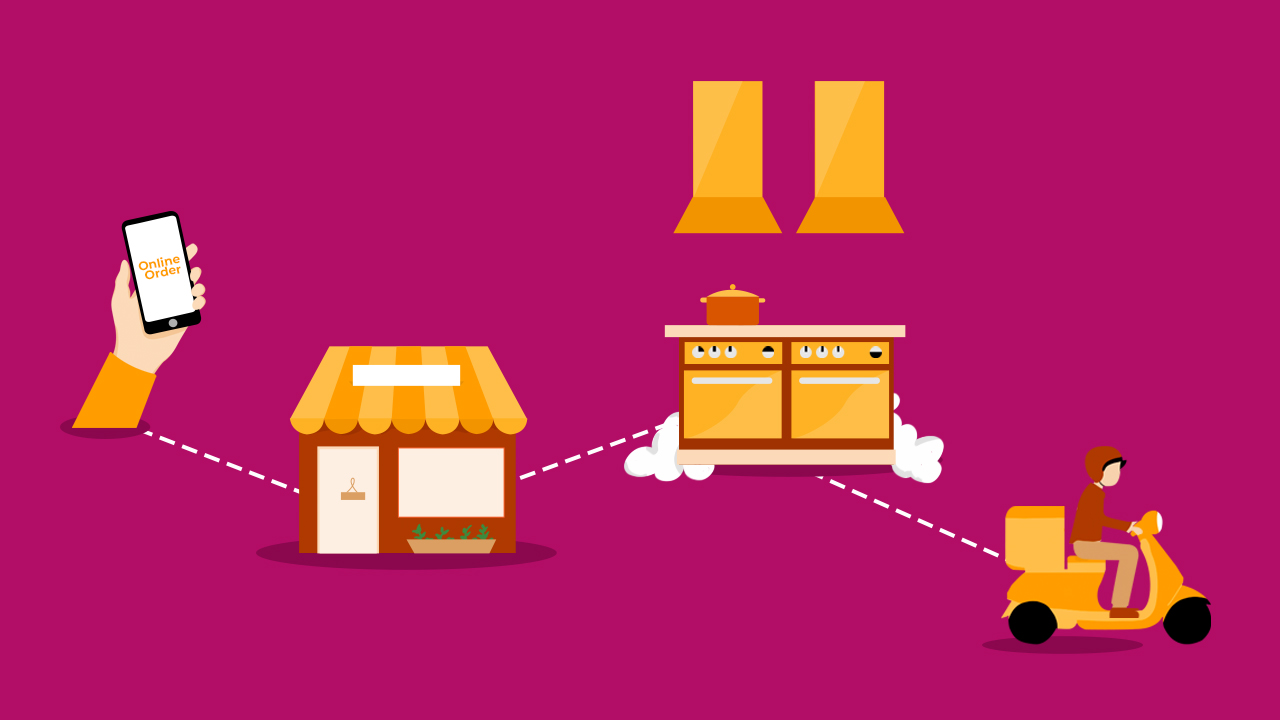
No one would have ever thought that the concept that would get started as a small budget option would be a global trend in few year. Today, cloud-kitchen or ghost kitchen/ dark kitchen what we may call the model, is projected to become a $2 billion industry in India by 2024, according to RedSeer Management Consulting.

Also Read: How Rebel Foods has Built the Largest Dark-Kitchen Business in India
Cloud kitchens have disrupted the food industry the same way Netflix did forhome entertainmentor what Uber did to the traditional taxi industry. “Traditionally, the food industry has seen large QSR chains opening huge restaurants where customers would come and dine-in. For a food business, this model is high on overheads and not very profitable, especially in countries such as India which have very high rent-to-sales ratio. This is where cloud kitchens disrupt the market of food services,” shared Karan Singla, Head of Operations, India.
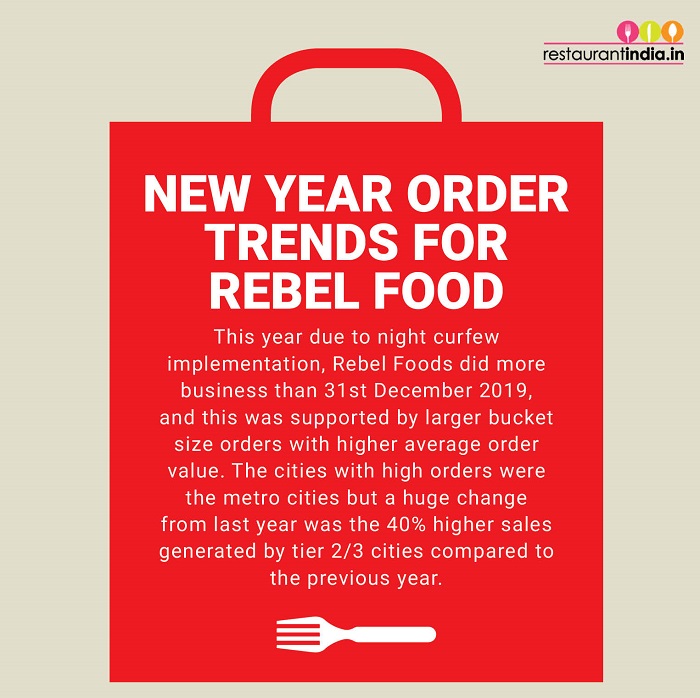
“With the trend of “ordering out” we realized that delivery was slowly becoming the real king. Considering the same we started to convert some of our ‘dine in’ kitchens to ‘delivery kitchens’, said Anjan Chatterjee who launched 3 cloud-kitchens during the pandemic with plans to add 26 more in coming months.
Low on capex, high on returns
2020 has been a year of surprises and the era of new trends being born. One of them is the introduction of cloud kitchens which is definitely here to stay. Another form of it that already existed was home deliveries from restaurants. The best part about cloud kitchens is that it has given the small players a chance to enter and test the market. The cloud kitchen model has various pros that work best in the industry's favour. For example, Swiggy and Zomato didn't play a big role earlier in the hospitality industry but have now become significant platforms for the growth and visibility of cloud kitchens. Cloud kitchens have lower operations costs along with saving a lot of money as you don't invest in large premises which is definitely profitable than a restaurant. In a nutshell, because of their low-cost maintenance and broader reach via online visibility, they are far profitable than restaurants.
“In terms of driving factors, I believe that cloud kitchens have lesser break-even time and fewer inventories. Although, the exposure to your clientele is almost the same as factors like social media, delivery portals, etc. help in reaching out to your customers and be visible. Not only it is a smaller and easier approach but is also a lucrative business strategy compared to starting a restaurant that takes up to 4-5 years to break-even,” pointed Rahul Bajaj, Director and Conceptualizer at One Tight Wrap.
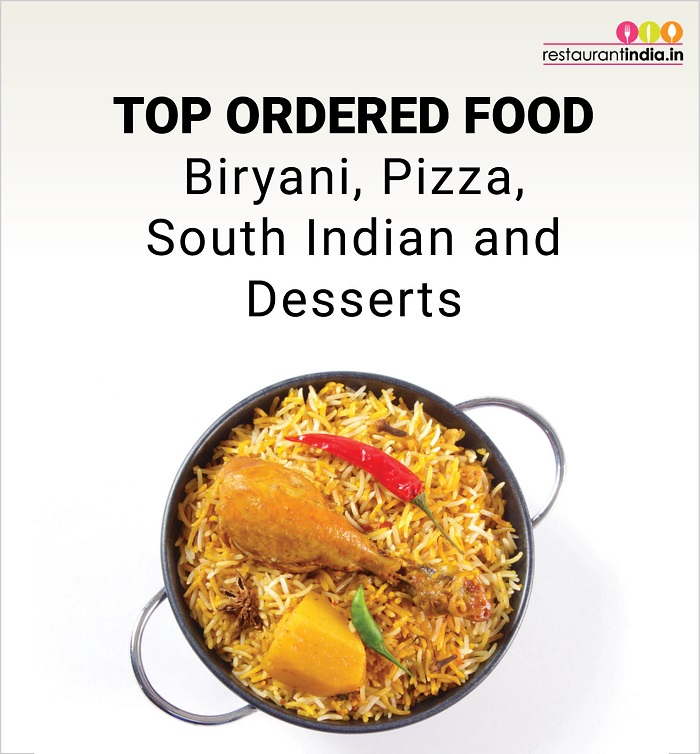
Packaging is the new storefront
“Packaging is becoming the new storefront. People love visiting new restaurants and share their opinions on the interiors, ambience, and customer experience. With social distancing, in-store experiences have taken a backseat and food packaging becomes the new customer touch-point,” added Singla who believed that people will take note of great packaging experience, share it on social media making it a good conversation starter.
Also, it’s not just about packaging, a safe packaging is also a major concern for people these days. The Masala Story from the house of Punjabi by Nature uses packaging that serves as a sustainable approach to the environment. Catering to hygiene and safety guidelines, The Masala Story didn’t fold and had to sacrifice some of the energy and character that had defined them in order to operate safely during the ongoing pandemic. The delivery kitchen adds additional sanitary and social distancing requirements like checking temperature, sanitising the kitchen etc. similarly, Rebel Foods has introduced – ‘UV sure bag’. Food which is ordered on any of the Rebel Foods brands will be put in an outer bag, which is run through a UV chamber, deployed at all partner kitchens, before being handed over to the delivery person. The UV chamber disinfects both the outer and inner surfaces of the bags making sure that it’s completely safe.
It’s a global boom
“In many countries, take out or delivery for restaurants has converted from 5-20% of their business, to now, 80-100% of their business. And hot food delivery has, in the last 6 months, increased user penetration from 20% to 80% of the population. When you factor in generational demographics, this sort of user shift would normally have taken 10-20 years to occur. Handling that level of demand increase in such a short amount of time is not an easy feat, especially for restaurants not designed for the significant reversal of demand and distribution channel, from dine-in to take-out / delivery,” shared Kent Wu, COO of Taiwan-based JustKitchen that has grown to 40 per cent month-on-month in just ten months of starting its business.
Backed by the customer support, the segment heavily relies and works on internal feedbacks, loops and interactions as it believed that customer feedback plays a huge part in the success and accomplishing product market fit.
“We're proud to state that 30% of our customers provide feedback and 99.5% of it is positive. We have huge customer loyalty and ultimately, they make us the success we are today,” added Wu of JustKitchen that has decided to go public on TSX Venture Exchange.
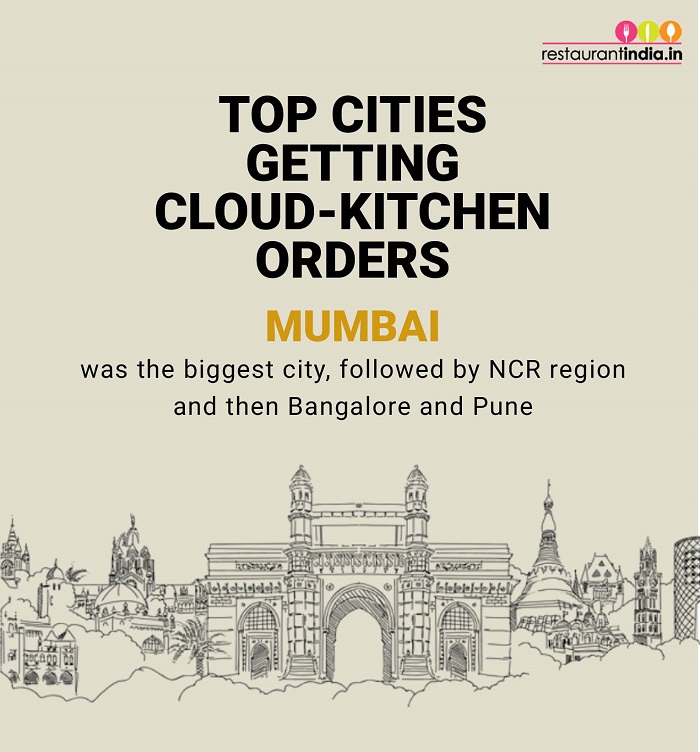
It has also partnered with Kuwait-based KLC Virtual Restaurants for expanding KLC in GCC region last week.
“Our mission is to satisfy the world’s appetite, and partnering with KLC brings us one step closer to achieving that mission,” said Mohamad Ballout, CEO and co-founder of Kitopi by adding that they achieve this by taking care of the operations – such as sourcing of ingredients, cooking, packaging – and also delivery by partnering with third-party aggregators.
Hence, we can say that with all the numbers and attentions that the cloud kitchens have lately garnered, as consumers have been forced to turn to online for food delivery due to the pandemic-induced lockdowns and movement restrictions, it is surely going to rule the food sector for quite some time.

“Creativity is intelligence having fun.” – Albert Einstein
Cloud kitchens are popularly known as “Dark Kitchen” or “Ghost Kitchen”, as they are not visible to customers. So far, they have been playing second fiddle to the Dine-in Restaurants. But with the pandemic, their prospects have changed for a brighter one. With this in mind, many are stepping into this business segment.
For those who are venturing into the cloud kitchen business, it is important to note that like all other businesses, cloud kitchen has its challenges. The main challenge faced by cloud kitchen is reaching customers, securing a place in their mind. Here are few steps to promote your cloud kitchen & make it a success.
Also Read: How to make your cloud-kitchen business operation efficient
Built your website: Whoever starts cloud kitchen, starts with the option of enlisting them with the various food aggregators available. Here I would like to add that apart from enlisting with the food aggregators, have your own presence online. Start with creating an online ordering website. Many platforms help you build your website in no time and with absolute ease. While designing your website make sure that the customer order & checkout process should be very smooth. Also, it is good to keep your menu crisp & easy to understand and have enticing food photographs.
Create Social Media Page: "You can't sell anything if you can't tell anything.” Keeping in mind the above saying, once your website is ready, create your brand’s social presence with Facebook & Instagram pages. Start posting about your brand, your products, your products benefit / USPs consistently. Use good food shots in the post so that your customers get enticed by seeing them. Social media can help you to grab customer eyeballs. You can also use them as a revenue generation channel by running Ads on Facebook & Instagram and get the order through them.
Customer Relationship Management: Next is to have an automated CRM program in place. One of the secrets for a successful business is that majority of sales should come from old/ present customers. Using the CRM program, you build a relationship with your customers & always remain connected with them.
Run various campaigns to engage with your customers. These will help you to be in the recall mind of your customers.
Content Marketing: We generally get hooked to any narration, when conveyed in story format as it establishes an emotional connection with us. In the same way, if you can convey to your customers, your brand purpose, brand journey, product USPs in a story format, you will be able to establish a connection with your customers. The story can be in form of a blog post, videos, podcasts, memes that will connect to your customers emotionally.
Enlisting with Google My Business: There is a tool by Google to bring your brand more visibility. Using this tool, Google My Business, to enlist your brand with the right description, content, food images, videos and
information. Google My Business is a free tool that allows you to promote your business profile and business website on Google search and Map.
May Interest: Dealing with New Trends of Social Media Marketing
Social Media Influencer: Another great way to promote your cloud kitchen business is by tying up with social media influencers in your area of operation /service. When their followers see that influencer speaking about your brand, it builds social trust and increases your brand recall value. According to the Digital Marketing Institute, 49% of consumers depend on influencer recommendations that could lead to sales.
Sponsoring Events: Sponsoring events is another way of spreading brand awareness among your target customers. This approach is quite an old one, but effective if used strategically. You increase your brand awareness by being present in front of the attendees there. To generate curiosity about your brand, you can use social media to post about the event on your page & also on your brand page. By participating you get the database of the attendees, which can be used for future engagement. You can also sample your products to your target customers, and follow up with further engagement.
Sampling Kiosk: If your cloud kitchen is in the residential locality or a corporate area, showcase & sample your product to the RWA and/ or the corporates. Doing so will create your brand visibility & brand awareness. You can initially offer some special discounts/ offers to convert your target customers to your loyal customers. Here too, you can get the database of the members of the RWA or the corporate, which can be used for further engagement.
Also Read: How Kiosk Model is Turning Big in India
Your Loyal Customer – Your spokesperson: Lastly, always use your loyal customers to act as your brand's brand ambassador/ spokesperson to spread words about your brand, your brand's offerings. You can have a referral system for your loyal customers. This will help you to minimise your customer acquisition cost too.
These are some of the ways to promote your cloud kitchen. But strategies are not just limited to these ways only. There can be many more innovative ways that you can use to draw the attention of your target customers.
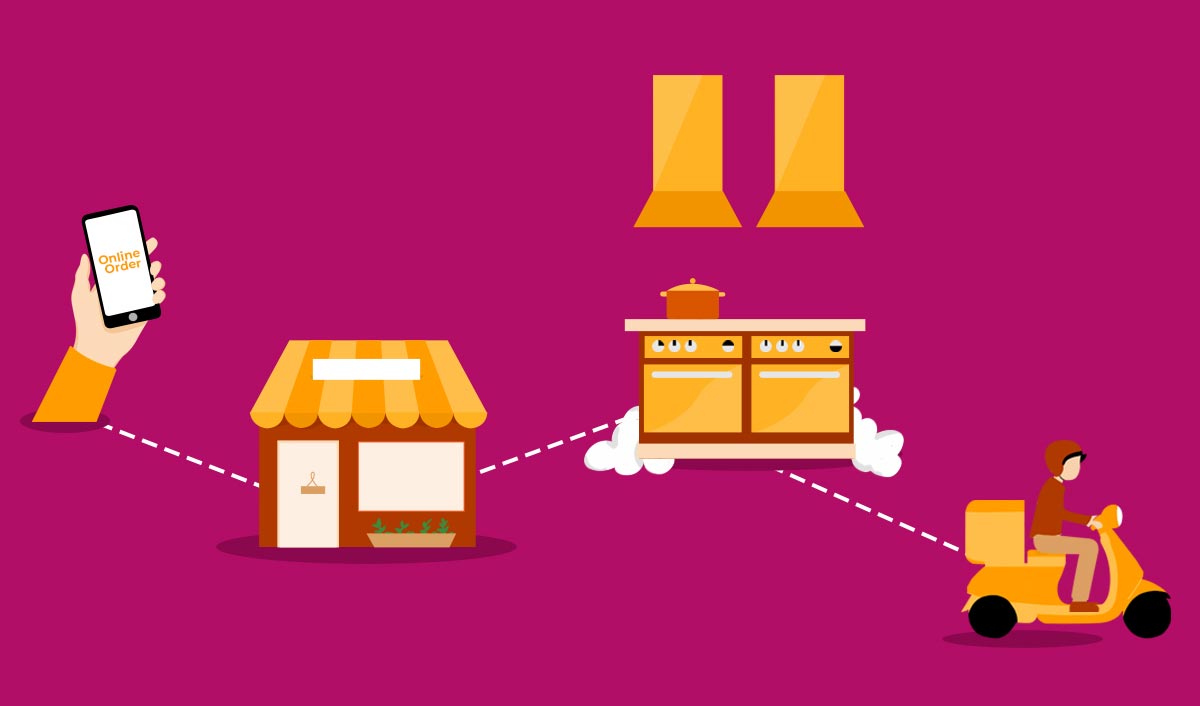
World is getting techsavvy so why don’t your food!
Virtual kitchen, ghost kitchen, the dark kitchen is all the synonym of cloud kitchen. Restaurants are turning online, the facility of ordering and delivering food through food aggregator apps or through the restaurant’s own app.
Concept of Cloud Kitchen
“Technology is best when it brings people together.”
It creates a rainbow when it brings food to people similar rainbow is created by a cloud kitchen.The idea of a cloud kitchen emerges with the arms spread of technology in our modern life of the techy world. Travis Kalanick invented the cloud kitchen. It allows customers as well as restaurateurs to fulfill their wishes by swiping a single key. Customers can place their orders over the internet through their choice of the portal and the food is instantly prepared and gets delivered at their place at your customized or comfortable time.
Time is unstoppable but cloud kitchen is a massive help to walk with time, in time, and beforetime. In the busy world, we want everything at our pace and time. The cloud-based technology system gives us a sigh relief by fulfilling our wish like genie. It is simply one stop to pamper your hunger with scrumptious delicacies in no time.
7 Reasons Why Cloud Kitchen?
It reduces expenses and need not spend on establishments; it can work efficiently in minimal infrastructure with low starts-up costs. It prevents petrol-high rental payment hassles. From age-old restaurants to naïve restaurateurs are welcoming cloud kitchen with smiles to add techy stars with their quality and services.
1. Towering OPs- It inflates the Operating Profits (OPs), by opening the doors which minimize the set-up worries, unlike traditional restaurants. Plus, it opens the window of extra profit by saving overhead costs such as administrative costs and maintenance utilities.
2. Savings in Capital Expenditure- It reduces the fever of rental issues and the only thing about which the one should concern is that your modest, hygienic kitchen is established near to consumers.
3. Less time consuming- Through this tech advancement, customer demand can be handled easily and restaurateurs have more diversification, options, manners, services to pamper their customers.
4. Quality Service- It helps in maintaining quality with quantity. It not only helps in making customers happy but also satisfied.
5. Dive in choices- It helps in analyzing the preference, taste and pulse of customers to innovate and improve services.
6. Just a swipe away- It took as much time as we took in blinking eyes, super easy to explore, experiment, and customized menu online according to your tongue.
7. Standardized Delivery Procedure- The standardized delivery procedure makes it more trustworthy and convenient.
Predictions – Cloud Kitchen soon at zenith
Cloud Kitchen is not only trendy but also the convenient and time saving.
1. On decrease in setup costs, cloud kitchen will evolve faster and better.
2. Full kitchens in some arena will become a thing of past.
3. The focus of restaurateurs is going to face positive shift in terms of efficiency and experience.
4. Cloud kitchen franchises will be a cupcake treat to start up.
Cloud Kitchen: Business Model
1. Classic Model- This model focuses on consumers comfort at low cost. No tangible dining space or seating establishments.
2. Kitchen Umbrella Model- This model contains multiple brands under one mother kitchen umbrella. Consumers will have multiple cuisine at one stop.
3. All in One Model- As the name suggest it is a mix of both the afore- mentioned models. It includes multiple brands under one roof and customers will have numerous cuisine choices.
4. Garnish Model- This model consist of restaurants can rent the space and rest of the thing will be done by online delivery platform. This model ensures quality food.
Conclusion
Cloud Kitchen does have lesser hassles and provides quality, quantity and customized scheme to customers as per their tongue and pockets.
One of the emerging sectors of business in 2021 is Cloud Kitchen Business. Cloud kitchen business has been on the roll for the past few years and with Covid-19 affecting the sector at large, it has seen an exponential growth. Before going further it is important to understand what is a Cloud kitchen Business? It is an online restaurant with no physical storefront and that runs mainly on online delivery system.
The entry barrier for cloud kitchen business is quite low and so the competition is very high. In order to succeed in cloud kitchen business, it is very important to make the business operation, very efficient.
Also Read: Do's and Dont's of Cloud Kitchen Business
Here are few ideas to make your cloud kitchen business operation efficient:
Max/ Optimum utilization of Space: One of the key elements of the success of cloud kitchen is, optimum utilization of space by having immaculate kitchen design, keeping in mind the smooth work flow from production to packaging. When kitchen space is optimized, you will have to pay fewer rentals and that has a direct effect on your profitability.
Implementing system & process: Every function in the cloud kitchen operation should have a process that has to be followed to the toe. Have SOPs (Standard Operating System) for each of the operation processes like procurement, production, inventory management, recipe management in place. And each of these processes should be integrated with the technology. Install Recipe management system software to automate your food preparation process which will help you to get consistency in the quality and quantity of the food prepared and get an edge in the competitive market. Also automate your procurement & Inventory management system with Supply chain Management tool to understand your wastage, Food Cost & Stock of Material. The attrition rate in F & B is very high so, it is almost essential for a cloud kitchen business to have a system that is integrated with technology, to remove human error and have consistency in quality.
Customer ordering system: Having an efficient customer ordering system is also one of the key elements of success for a cloud kitchen business. One needs to have a POS (Point of sale) installed in the cloud kitchen through which all online orders land up. This will help you to smoothen the customer order management. Time being essence in cloud kitchen operation, POS is a saviour. Various food aggregators like Zomato & Swiggy also can be integrated with the POS and thus, help to streamline all orders at one place. Another advantage of having a POS is being able to get analytics on customer buying behaviour that will help you to know the pulse of the customers. These helps to have an efficient CRM, which leads to happy customers and that result in happy cloud kitchen owners.
May Interest: The Masala Story by Punjabi By Nature to open three cloud kitchen outlets
Efficient delivery Process: Tying up with food aggregators has a lot of advantages. One of them is being the prompt presence of delivery person for the orders. Delivering orders efficiently in the stipulated time is one of the key elements of cloud kitchen business operation.
Efficient Packaging Process: Although packaging process is part of the cloud kitchen operation process, but thought to mention this separately because of its importance in the cloud kitchen business operation. At the very beginning, I have mentioned having an excellent kitchen design as it is important to have an efficient flow of prepared food from the preparation point to the packaging point for onward delivery. Next important thing is the packaging that is being used. It is utmost important to have packaging that is tamper proof & leak proof so that customers can have food in its right temperature.
Effective Delegation: To manage your cloud kitchen operation efficiently, you have to bring in skilled manpower, train them and delegate the urgent & important work. As a business owner, it is very important for you to concentrate on the most important task that is increasing revenue generation. With delegation, you can do so.
Manpower planning & training: Spend time with your team; train them not only to perform their work efficiently but also to motivate them with the brands vision & purpose. These help to have a strong work culture within the organization. With the increase operation efficiency, your cloud kitchen business will be able to give a WOW experience to your customers. By gaining happy customers, your revenue will increase. With increase in sale, your unit fixed cost will decrease and you will get better economy of scale. This economy of scale, in turn will help you to have increase profitability & better ROI.
About the Author
Mahua Ghosh is the Founder of “The Filling Station”, a Food E-comm Brand & Food Startup Coach. She started her entrepreneur journey in 2010. “The Filling Station” started as a QSR brand in 2013 and presently they have completely migrated to E-Comm. With her entrepreneur experience, she help aspiring entrepreneurs to start their entrepreneur journey in cloud kitchen business, one of the hottest sector of 2021.

The coronavirus has pulled the rug from beneath for any industries including the food and beverage sector. Once considered as plan B for the sector, Cloud-kitchen has acted as a saviour, game changer for the restaurant and food business at the time of the pandemic. According to a report by Allied Market Research, the global cloud kitchen market is estimated to reach NT$2,103 billion (US$71.4 billion) by 2027, almost doubling the amount in 2019. Taiwan-based JustKitchen is one of that startup that rides on the cloud-kitchen boom. Started in February 2020, it currently has 14 kitchens in the country. Excerpts from the interview:

This is a great question and very pertinent in current times due to COVID. In many countries, take out or delivery for restaurants has converted from 5-20% of their business, to now, 80-100% of their business. And hot food delivery has, in the last 6 months, increased user penetration from 20% to 80% of the population. When you factor in generational demographics, this sort of user shift would normally have taken 10-20 years to occur. Handling that level of demand increase in such a short amount of time is not an easy feat, especially for restaurants not designed for the significant reversal of demand and distribution channel, from dine-in to take-out / delivery. What was once an optional consideration for the consumer is now exclusively the only choice. And even post-COVID, this new modality will be part of the landscape; just as fast food (QSR) became part of the F&B space.
Also Read: Cloud-kitchen will be the next big trend post covid
Tell us something about JustKitchen and its journey.
With only 10 months of history, we currently have 14 Spoke Kitchens (smaller kitchens where final meal preparation and packaging before delivery takes place) and one large Hub Kitchen (larger commercial kitchen where earlier stage food preparation takes place), and we have already achieved best-in-industry customer loyalty of 75%. We're very fortunate to be at the right place at the right time, and have gained significant traction, even without COVID being a significant part of daily life in Taiwan. As we expand internationally into other countries, where habits and everyday life have been more impacted, we expect to see even greater traction and momentum.

We've created a new standard for hot food delivery, just as fast casual restaurants like Panera, Corner Bakery, and Chipotle have done for casual dining. We are able to offer the experience of fast casual dining, built for delivery. Another aspect of our business that sets us apart is our online grocery delivery platform, JustMarket. The global online grocery market is already estimated to be worth around $200 billion, and it is only gaining strength due to the pandemic. We’re also offering pre-packaged, ready-to-cook food items from our proprietary food brands that appeal to certain demographics, such as our “Nutritionist Guided” range, which offers a variety of healthy cook-at-home meals and food items.
It is mentioned that you are getting 40% month on month growth. What are the driving factors?
Yes, that's true. We are very fortunate to be in this position. Part of it is timing, as I mentioned earlier. But with any opportunity, being at the right time and place only allows you to be positioned for the opportunity. It does not allow you to seize the opportunity. We have improved on Mark Zuckerberg’s mantra in the early days of FaceBook: "Move Fast, Break Things", and we have added in "Improve", resulting in "Move Fast, Break Things, Improve". As methodical as we try to be in our creative cycles, we realize that until we go to market, we'll never know what's going to work or not.
Who do you target as your customer?
We have a wide target demographic, mainly because of the new normal that the world is experiencing. Prior to COVID we targeted the main user groups of food delivery, people aged 18-45 who are digitally inclined. However, with COVID, the addressable market has expanded to include the 45-65 year old demographic. Currently we segment our customer base by age, eating preference, and lifestyle, and variations of them all; totaling 9 different customer segments. We have product verticals that are targeted for each segment,resulting in 11 of our own proprietary food brands, plus 5 partnerships with existing established brands such as TGI Friday’s, that together appeal to all segments with a little overlap.

How does Hub and Spoke model work in delivery?
Fundamentally, this model allows for 85% of the food preparation to be completed at economies of scale in the Hub, then distributed to the spokes for final prep, assembly, and delivery. With this model, our preparation time per meal can be as low as 45 seconds. The thesis behind this model is the last-mile delivery for hot foods is the difficult leg of the logistics arm. So we need to get our kitchens deeper into the communities to service those geographies, which is where the Spoke kitchens come into play. We're able to accomplish better economies of scale and get greater breadth of reach because our Spokes are located inside high-density neighborhoods and communities. Currently the Hub is 60% virtual and we've distributed the workload of our Hub to other contracted facilities.
Packaging it right
This is a big part of our focus during menu creation. Each menu item needs to be able to be packaged well, withstand the delivery process, AND unpackage beautifully. But in reality, this is only part of the equation. The food has to be good, then the food has to withstand being in a box for 20 minutes, and finally it has to retain the flavor, temperature, and aesthetic appeal that we intended for it to have when the customer receives, opens, and experiences the food. Potentially this is where other players in this sector have failed, over emphasizing a specific aspect of this entire supply chain, when in reality, it's a total solution. For example, we would never do french fries, unless we've mastered all components of this supply chain from sourcing of potatoes, cutting and preparing, frying, then packaging it correctly to stay crunchy, and to not be damaged by the driver / carrier. There have been restaurants who have figured this out, but it's not an easy task.
May Interest: How cloud-based POS is helping the food business grow during the pandemic
How much do you work on customer surveys and data? How does it help enhance the service?
This is a huge part of our culture and belief system. As much as we work on internal feedback loops and interactions, customer feedback is a huge part of success and accomplishing product market fit. We're proud to state that 30% of our customers provide feedback and 99.5% of it is positive. We have huge customer loyalty and ultimately, they make us the success we are today. In addition, we send out surveys to all customers quarterly to check in and ask for feedback: what do they want to see or eat, how can we make their experience better, to some extent, we crowd source our innovation.
We are also working on incorporating a customer loyalty rewards program into our platform, similar to the way Expedia, Uber and other online platforms have – which will offer our customers promotions and rewards for ordering meals and groceries from us, and help keep them in the JustKitchen “ecosystem”.
You are planning to expand your business not just in Taiwan but other countries. Any plans entering India?
Yes, we have very ambitious expansion plans. We currently have total of15 locations in Taiwan, one Hub kitchen and 14 Spoke kitchens, and plan on having 35 Spokes and two Hubs in Taiwan by the end of 2021. Simultaneously we expect to launch in Hong Kong and Singapore in Q1 of 2021. These two locations are "low hanging" fruit for us to expand into, both because of user behavior, eating preferences, and digital adaption. We have other plans for South East Asia, Asia, and North America. We expect that India will be part of our roll out in Asia, but not until 2022. By the end of 2022 we are aiming to have 80 self-operated locations and 200 licensed locations.
 TechnologyAs food costs continue to rise and customer expectations evolve, AI is becoming a critical ingredient in building smarter, more efficient, and more…
 RestaurantsHis journey into the industry was shaped early on by his training at the iconic The Taj Mahal Palace, where he learned the fundamentals of service…
 Food and BeverageWasabi has traveled a remarkable path from Japan's mountain streams to restaurant tables around the world. What began as a regional ingredient…
 BeerFor Indian beer enthusiasts looking to expand their horizons, Taiwanese beers provide a refreshing and exciting alternative. Their smooth character,…
Copyright © 2009 - 2026 Restaurant India.