





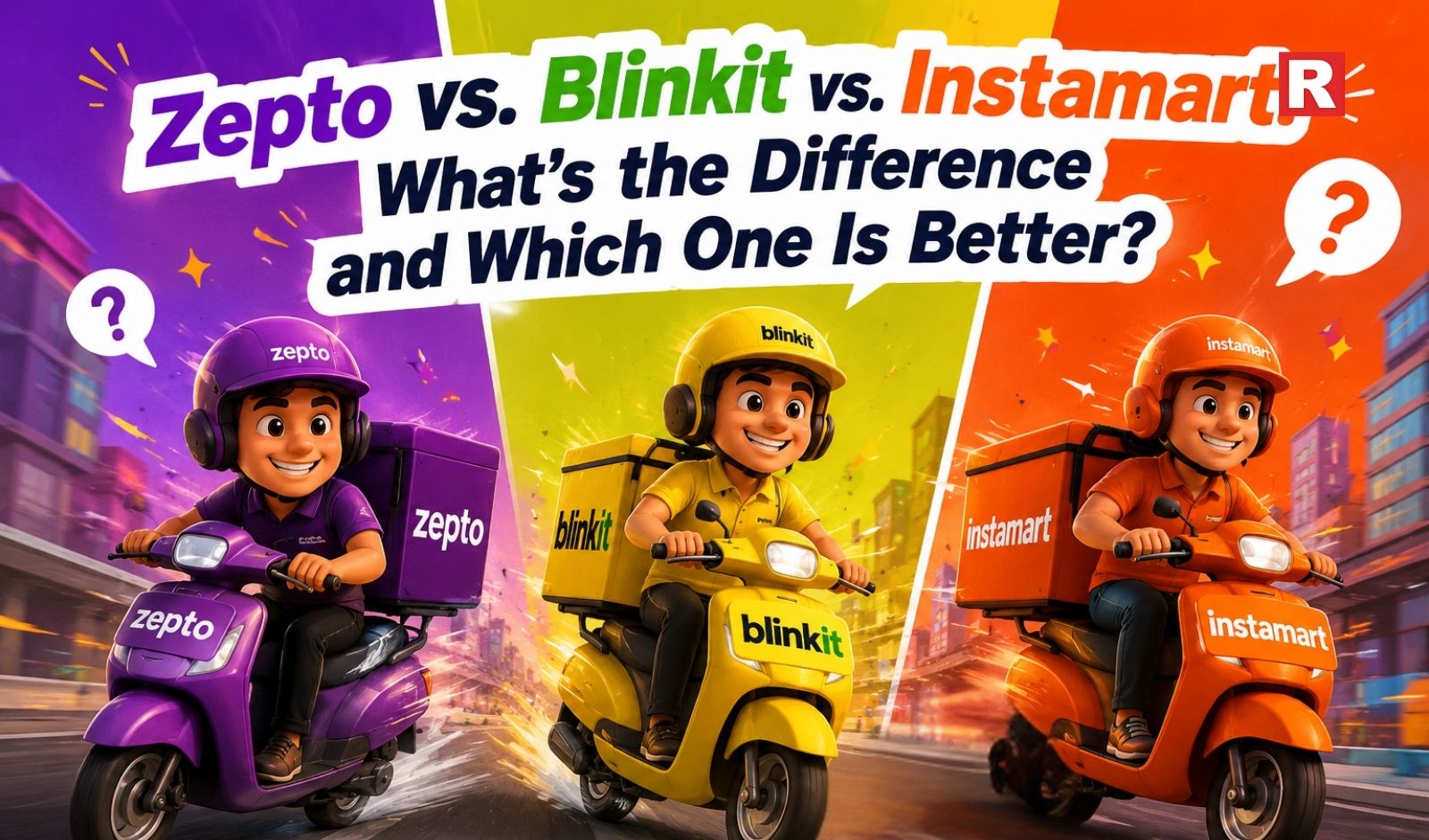
India's grocery shopping habits have changed dramatically over the last few years. Consumers no longer want to wait days for essentials. Instead, they expect groceries, snacks, personal care products, and even electronics to arrive within minutes. This growing demand has given rise to quick commerce, a segment that promises ultra-fast deliveries.
Today, three major players dominate this space: Zepto, Blinkit, and Instamart. While all three offer similar services, they differ in terms of delivery speed, product assortment, technology, pricing, and customer experience. If you're wondering which platform suits your needs best, here's a detailed comparison.
What is Quick Commerce?
Quick commerce, often called q-commerce, is a delivery model designed to bring products to customers within 10 to 30 minutes. Unlike traditional e-commerce platforms that operate through large warehouses, quick commerce companies use small fulfillment centers known as dark stores. These stores are strategically located close to residential areas, enabling faster deliveries. Initially focused on groceries, quick commerce platforms now sell beauty products, electronics, household essentials, pet supplies, and much more.
Zepto vs Blinkit vs Instamart: Quick Comparison
Feature | Blinkit | Zepto | Instamart |
|---|---|---|---|
Parent Company | Eternal (formerly Zomato) | Independent Startup | |
Launch Year | 2013 (as Grofers) | 2021 | 2020 |
Delivery Time | 10–20 Minutes | 8–15 Minutes | 10–25 Minutes |
Product Variety | Very High | High | Moderate to High |
Market Position | Market Leader | Fast-Growing Challenger | Strong Competitor |
Best For | Wide Selection | Fast Delivery | Swiggy Users |
Technology Focus | Inventory & Logistics | Automation & Speed | Ecosystem Integration |
Blinkit: The Market Leader
Blinkit has become one of India's most recognized quick commerce platforms. Originally launched as Grofers, the company rebranded to Blinkit and later became part of Eternal. One of Blinkit's biggest advantages is its extensive dark store network. This allows the platform to maintain product availability across multiple cities and neighborhoods. Consumers can find everything from groceries and fruits to mobile accessories and kitchen essentials. The platform also frequently introduces new categories, helping it stay ahead of competitors.
Key Strengths
- Large product assortment
- Strong availability across cities
- Reliable delivery network
- Seamless integration with the Zomato ecosystem
For shoppers who prioritize variety and product availability, Blinkit is often the preferred option.
Zepto: The Speed Specialist
Zepto entered the market much later than its competitors but quickly gained attention through its promise of ultra-fast deliveries. The company built its entire brand around speed and convenience. Its technology-driven approach focuses heavily on inventory management, warehouse efficiency, and route optimization. This helps reduce order processing times and improve delivery speed. Zepto is particularly popular among young urban consumers who value convenience and often make smaller, more frequent purchases.
Key Strengths
- Fast delivery experience
- Modern and user-friendly interface
- Strong focus on premium and imported products
- Advanced fulfillment operations
Consumers looking for the quickest possible deliveries often prefer Zepto.
Instamart: Swiggy's Convenience Advantage
Instamart benefits from being part of the Swiggy ecosystem. Millions of consumers already use Swiggy for food delivery, making it easy for the company to cross-sell grocery and household products. The platform focuses heavily on everyday essentials and frequently ordered products. While its delivery speeds may vary depending on location, it remains a reliable choice for many households.
Key Strengths
- Strong customer base through Swiggy
- Convenient app experience
- Efficient delivery infrastructure
- Good product availability in major cities
For existing Swiggy users, Instamart offers a seamless shopping experience without requiring an additional app.
Delivery Speed: Which Platform is Fastest?
Speed remains the biggest factor in quick commerce. Zepto built its reputation on delivering products in as little as 10 minutes. Its dark stores are optimized for rapid order processing and dispatch. Blinkit also delivers quickly and maintains consistent service levels across many locations. In densely populated urban areas, delivery times are often comparable to Zepto. Instamart provides dependable deliveries but may occasionally take slightly longer depending on demand and location.
- Winner: Zepto. When speed is the top priority, Zepto generally has the edge.
Product Range: Who Offers More Choices?
The number of available products can significantly influence purchasing decisions. Blinkit currently offers one of the broadest selections in the market. Consumers can purchase groceries, electronics, beauty products, stationery, pet supplies, and more. Zepto focuses on grocery essentials while also expanding into premium and imported products. Instamart concentrates largely on daily-use items and household necessities.
Winner: Blinkit. For maximum product variety, Blinkit leads the category.
Technology Behind the Platforms
Quick commerce is not just about delivery riders. Behind every order is a sophisticated technology system.
Blinkit: Blinkit uses artificial intelligence and demand forecasting tools to predict purchasing patterns. This helps optimize inventory levels and reduce stock shortages.
Zepto: Zepto relies heavily on warehouse automation and real-time inventory tracking. These systems improve efficiency and support its fast delivery promise.
Instamart: Instamart benefits from Swiggy's extensive logistics network and customer data. This allows the platform to personalize recommendations and streamline operations. Technology is becoming one of the biggest competitive advantages in the quick commerce industry.
Pricing and Discounts
Pricing can vary from one platform to another, depending on location, product category, and promotional offers. All three companies frequently provide discounts, cashback offers, and membership benefits to attract customers.
- Blinkit often runs category-specific promotions.
- Zepto focuses on first-time user offers and bundle deals.
- Instamart regularly introduces discounts for Swiggy users and loyalty members.
Because prices change frequently, there is no permanent winner in this category.
The Role of Dark Stores
Dark stores are the backbone of quick commerce. Unlike traditional supermarkets, these facilities are designed solely for fulfilling online orders. They are strategically placed within residential neighborhoods to reduce delivery distances. The more dark stores a company operates, the faster and more reliable its deliveries become. This is one reason why companies continue investing heavily in expanding their fulfillment networks across India.
Which Platform Should You Choose?
The answer depends on your priorities.
Choose Blinkit if:
- You want the largest product selection.
- Availability matters most.
- You frequently shop across multiple categories.
Choose Zepto if:
- Speed is your top priority.
- You prefer a modern shopping experience.
- You often purchase premium grocery products.
Choose Instamart if:
- You already use Swiggy regularly.
- Convenience matters more than speed.
- You prefer a unified ecosystem for food and grocery deliveries.
Final Verdict
The battle between Zepto, Blinkit, and Instamart is much bigger than a race to deliver groceries in 10 minutes. It is a competition driven by technology, logistics, dark-store expansion, customer retention, and operational efficiency. Blinkit currently leads in scale and product variety. Zepto stands out for speed and innovation. Instamart leverages the strength of Swiggy's ecosystem to provide a convenient and reliable experience. For consumers, there is no single winner. The best platform depends on individual needs, location, and shopping habits. As India's quick commerce industry continues to grow, these companies will keep innovating to make shopping faster, easier, and more convenient than ever before.

India's organised food services market may grow at about 10.5 per cent CAGR to $37 billion over during FY20-25, stated a report by Kotak Institutional Equities.
Within the organised segment, chains can potentially grow at 13 per cent CAGR to $9.5 billion, capturing 12 per cent share in the overall food services market from 9 per cent at present, the report added.
"We expect India's organised food services market to grow at about 10.5 per cent CAGR to $37 billion over FY2020-25E, garnering 46 per cent market share from 40 per cent at present," it said.
This shows the bottom-up analysis of the market opportunity for western QSRs (quick service restaurants) across 541 districts in India that indicates potential for over 50 per cent store growth by FY2025E.
As per Kotak's city-wise forecast, factors include purchasing power, addressable population, palate preferences, extant QSR penetration, cluster-based expansion and economic viability.
Even as western QSRs are widely accepted in India, their penetration and share of the food services market at 3-4 per cent is much lower than in developed markets (over 15-20 per cent), it added.
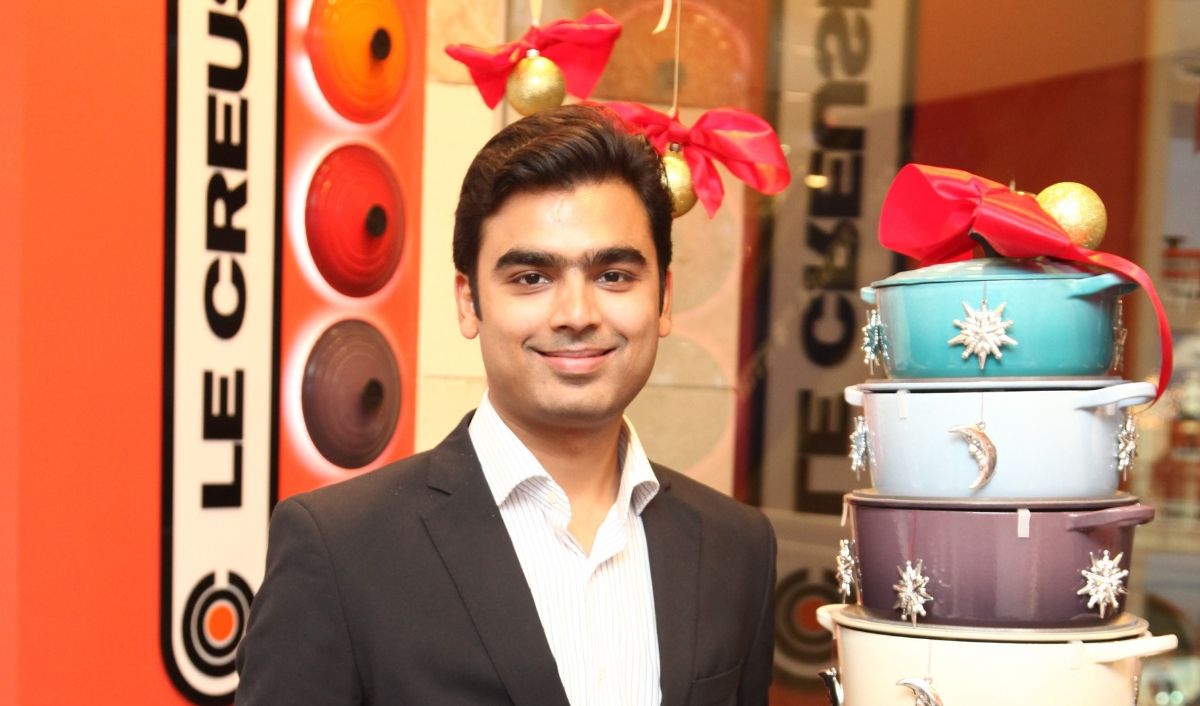
Ankur Damani is the Country Head at Le Creuset, the world's leading French cookware brand and a renowned market leader among the premium cookware brands globally.
In an interview with Restaurant India, Ankur Damani, Country Head at Le Creuset India, speaks on why hotel and restaurant chains prefer Le Creuset products in the country.
Cultivating Innovation With Le Creuset India
It has been an absolute pleasure to partner with an iconic brand like Le Creuset, which is best in the world in its category and has a legacy dated back to 1925. The 6-year journey has been more than enriching from securing the brand in retail via FDI in the single-brand retail route, to opening eight stores in the best malls across India and replicating the wonderful Le Creuset experience in India. Le Creuset has a very open culture, and cultivates innovation and creativity, especially with immense freedom to implement ideas locally, and relevant for each market. Such independence is very motivating and impactful to each local market.
The Top Selling Products

Le Creuset's enamelled cast iron collection has been the company's signature best-selling collection worldwide. Cast Iron, which is still forged and crafted by hand, is our world-leading cookware range offering versatility, unprecedented appearance and the ability to retain and spread heat evenly.
Must have signature pieces for every kitchen would include Le Creuset Cast Iron Round and Shallow Casseroles & the iconic Wok, 3 Ply Stainless Steel Chef Pans, Toughened Non-Stick Frying Pans & Shallow Casseroles all complemented with the superbly crafted and vibrant stoneware mugs.
Contribution To The HoReCa Segment
Le Creuset is the preferred brand across many hotel chains and our products are used in India in leading star and luxury hotels.
Products Designed for Restaurants
The first Le Creuset Casserole was cast in 1925 using the raw materials of coke, iron and sand at our foundry in Fresnoy-le-Grand, France. The same foundry is still handcrafting our enamelled cast iron cookware in much the same way today. Craftsmen still apply the same skills and high standards to produce each individual cookware piece guaranteeing unrivalled quality each time you purchase Le Creuset. Throughout the process, the products are continuously quality checked passing through at least 20 pairs of hands to ensure the highest product quality is maintained for every cast iron piece manufactured at the foundry, ensuring every Le Creuset product is fully tested for a lifetime of cooking.
Therefore, Le Creuset ensures the same quality, functionality and durability of their products whether it's a household or a hotel/restaurant.
Le Creuset India's Innovations
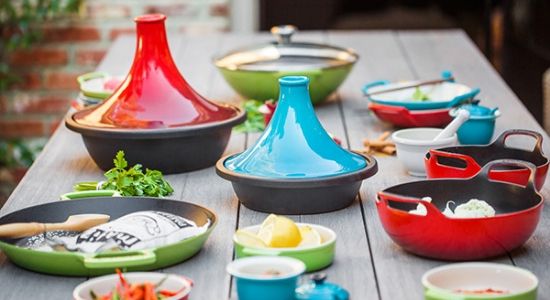
Le Creuset India offers the latest 'Freestyle Collection'. The Freestyle colour palette includes the classics; Volcanic Orange, Marseille Blue and Rosemary. The chosen shades are available across Cast Iron, Stoneware and Kitchen Accessories. The collection also showcases the diversity and unrivalled cooking performance of the 3-ply Stainless Steel and Toughened Non-Stick ranges. The store also offers the newly-launched professional Kitchen Knives.
Impact of Le Creuset India
Le Creuset entered India in 2007, primarily operating in the HoReCa and wholesale segments. The iconic French cookware brand opened its first company-owned retail store in February 2014, after being amongst the first four brands to secure the single brand FDI license for retailing in India.
The response has been phenomenal in the HoReCa segment, with most premium hotel chains using Le Creuset products. The response to the retail stores has been great, and it is extremely encouraging to see many consumers aware of the brand and using our products for years now, having bought from other countries in the past.
Le Creuset is expanding rapidly in India with its focus on retail stores and is one of the fastest growing markets for Le Creuset globally. We have already opened 8 stores in Delhi-NCR, Mumbai, Bangalore, Chennai and Pune and are happy to share that the brand has been well received. Le Creuset plans to open more stores across metropolitan cities like Hyderabad and Kolkata in the near future.
Challenges Faced While Marketing the Product/s

Being a brand of French origin, it has often been perceived that the cast iron pots are ideal only for European cuisine. Secondly, cast iron as a category is not widely used in India & stainless steel is the staple cookware in Indian households. The brand has worked really hard to change the perception via cooking demonstrations with Celebrity Chefs, recipe handouts to showcase the versatility of the cookware, cookery shows on television, educating the customer on a continuous basis in our stores, on social media and through Chef interactions.
Expansion Plans of Le Creuset India
Retail has been a key focus area & we have expanded into 8 company owned & company-operated stores in premium malls across India.
Hospitality is a strategic channel for us where we have expanded our footprint into premium hotels across the country and are a preferred brand across many hotel chains.

The NRAI India Food Services Report 2019 estimates Indian foodservice industry’s market size at INR 4,23,865 crore in 2018-19 which is expected to grow at a CAGR of 9% to reach INR 5,99,782 crore by 2022-23.
Amitabh Kant, CEO, NITI Aayog (National Institution for Transforming India), Government of India, launched NRAI India Food Services Report 2019 (NRAI IFSR 2019) in Delhi. CEO, NITI Aayog, GOI, while releasing the report, said, “The Food Service industry is evolving rapidly with India being the youngest country with internet and tech-savvy consumer base, having a high disposable income with little time to cook indoors. This is reflected in the number of eating out frequency – an average of 6.6. per month in the country, providing food service players with an exciting opportunity to expand.” He further added, “India is the seventh largest travel and tourism economy in the world according to the World Travel and Tourism Council. Globally, food businesses are being promoted to boost tourism. A similar effort can be implemented in India capitalizing on the diversity that the country has to offer. Food hubs, envisaged as experience centres can serve as places for experiencing local and regional cuisines as part of a larger culture.”
Kabir Suri, Delhi Chapter Head, NRAI, said, “Delhi has limited pockets available to open restaurants and that is why delivery has picked up the pace.” As per the report, “Delhi NCR is the ‘Restaurant Capital of India' with the highest number of restaurants in the country,” said Kabir Suri.
The NRAI IFSR 2019 is the 4th edition of National Restaurant Association of India’s research study mapping trends, opportunities and challenges of the restaurant sector in India- is a comprehensive compilation of data on India’s food service sector gathered from in-depth interactions with over 130 restaurant CEOs and 3500 consumers across 24 cities in India.
Rahul Singh, President, NRAI said, “It is the largest industry in the service sector in the country after retail and insurance and is 20x of the film industry, 4.7x of hotels and 1.5x of the pharmaceutical sector.”
Rahul Singh, while noting contributions of the Restaurant sector mentioned, “The Indian Restaurant Industry employed 7.3 million people in 2018-19. The organized food service sector, which is only 35% of the total market, contributed a whopping INR 18,000 crore as a way of taxes in 2018-19. The number is expected to more than double if the unorganised sector becomes organised.” Rahul Singh also shared his thoughts on GST in the food sector. He said, “Govt’s tax collection will improve and increase if Input Tax Credit is given to the restaurant industry.”
Introducing the trade report to the audience, Samir Kuckreja, Past President and Trustee, NRAI said, “NRAI IFSR 2019 is an in-depth research study which maps out the scale and impact of India’s food services sector. This report is crucial for the industry to garner the necessary support and recognition from the government and its agencies for providing a fillip for consistent and sustained growth. I would like to thank all the NRAI members for their contribution to the research study.”
While the food services industry has seen steady growth over last three years, the report reveals that the industry has its fair share of roadblocks and challenges like high real estate and manpower costs, inadequate supply chain infrastructure, financing issues and majorly policy formulation. The main aim of the report is to aid entrepreneurs and investors to take informed decisions and unite the industry under one banner.
No matter how successful your concept may be, you always have to maintain the value. Today, nobody believes in eating the same food whenever out on foodies trail. You need to introduce that change, whether in terms of menu, recipe, design creation, improvement in technology. There should always be a flow of Innovation from one side or the other.
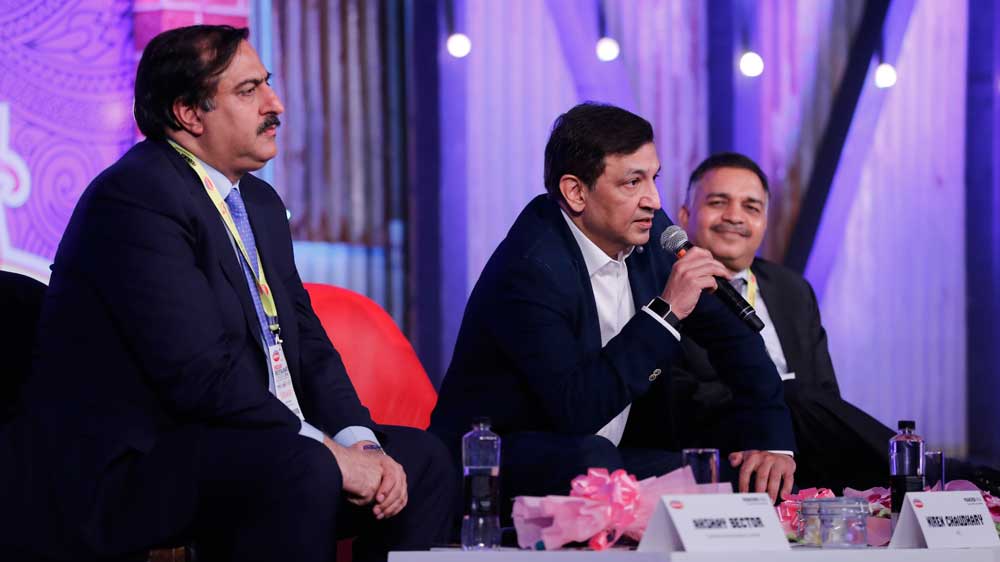
According to market data, India is expected to be the largest consumer market by 2030. In the next 15 years, India will cater to many opportunities in food service and other businesses. India is predicted to be the youngest country in terms of age where average age consumption is 20 years followed by China 30s and US 40s. “We will add two billion people in the global workforce in next 15 years, which is four times to that of the US,” shares Niren Chaudhary, President KFC Global who has built brands like KFC, Pizza Hut and Taco Bell in India before moving to a global role.
Brand needs to be youth centric
As larger percentage of crowd living in India is young, tech savvy and technology connected, the brands entering in India or the ones who have already created a landmark in India have to be youthful and aspirational in terms engaging more customers. “After China, India is the second largest country where people are digital savvy and technically connected,” adds Chaudhary who believes that gateway innovation and value for money is what works in India.
“to build an inspirational brand, one has to do sound marketing, and until all this is not done, you are not going to make any businesses. In the last few years we have seen strong dip in sale of the food brands in India and it’s all because of the economics and supply chain,” shares Akshay Bector, Chairman, Cremica Food Industries.
The tech-disruption
Also, as technology is driving business in India, we have seen almost 10,000 food tech start ups hitting India’s start up ecosystem. According to NRAI food service report, rise of discretionary spending and increase in internet users, which was 193 MN in 2013, has gone up to 462 MN in 2016, increase in numbers of smart phone users from 35MN in 2013 to 204 MN in 2016. Time scarcity among urban crowd and willingness to order various cuisines for home delivery are some of the favourable reasons for the growth of this segment.
“We have over 8MN FaceBook fans which is more than Pepsico in India, points Chaudhary, who believes that smart phone penetration is one of the important catalyst in making people technology addicts.
Food safety is the key
Restaurant industry is an important part of the food business sector and is becoming much diversified with the new opportunities in the market. Though, comprehensive food regulation is quite new to the market, food safety should be kept as an agenda for successful food businesses. “Each restaurant must have a food safety supervisor who needs to be trained by the food safety regulator,” says Shri Pawan Agarwal, CEO, FSSAI.
Adding to the same line, Bector shared, “It’s a digital world. Even a small mistake gets viral before it gets published in the news or on a shown on television. So, the operator and the food service people need to be more alert. It is extremely important for the restaurants to maintain safety measures and consistency while serving food.
And, as there is a long way to go, focusing an eye on economics of the business and value adding to the systems will brings back the customer and will be a key to run a successful brand.

Lately, lots of people are talking about going green. From restaurant owners using edible crockery’s to making sure there is less food wastage, everyone is focusing on ‘Going Green’ and recycling the used materials. Many restaurants are today using the old and junk products as a design element recycling at their restaurants and this trend is fast catching in the industry. And, to meet all these requirements restaurateurs are adopting several practices to become ‘Green’ or ‘Eco-Friendly’ restaurant.
Here are few pointers that can make you succeed in restaurant business:
Adopting eco-friendly products: Avoid chemical-based cleaners that have a damaging effect on water and wildlife. Also, using edible crockery’s can be the best method in these fast evolving and speedy life to remain eco-friendly. KFC India in yet another initiative has tested edible rice bowls in few parts of India.
Saving Energy and Water: Use renewable source of energy in your restaurant and ask your employees especially the kitchen people not to waste too much of water, ask them to close the taps after they have done with their work. Also, avoid using plastics at our restaurant.
Using Recyclable materials: Use paper and napkins which can be recycled. And, also use recyclable toilet paper in your restaurant’s washroom. Try avoiding use of plastic straws and boxes for foods in your restaurant. Today, most of the restaurants are using recyclable materials to meet the demand of the eco-policy.
Organic is the ‘New Green’: In last two years people are focusing on organic and gluten free foods. With more exposure and knowledge about food, people are avoiding restaurants that are still serving pesticides and chemical fertilizers grown produce. Today, restaurants are using organic products and local ingredients which are easily degradable to follow the concept of going green.
Getting local supplies: Try getting all your raw materials from a local supplier. Using ingredients that have traveled a long way will add to your carbon footprint. Buying raw materials from local suppliers will cut the amount of energy used to import the food from a distant place to your restaurant.
Using Eco- friendly equipment: Try using equipment which is eco-friendly, computer- controlled fryers, ovens and refrigerators. Electrolux has come up with a wide range of professional ovens in Indian market which are very cost effective. The Electrolux touchline ovens suits all types of restaurant whether a small or a QSR, where you need quick and dynamic service of quality meals for customer with little time and different taste.
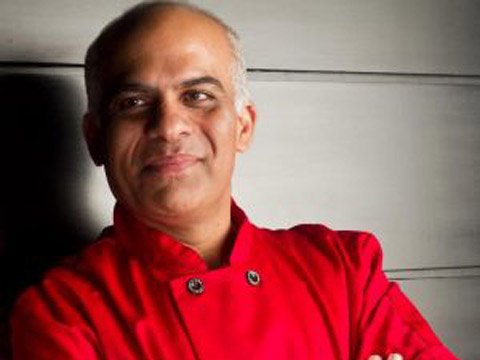
What made you serve an expansive menu ranging from Indian and European to fusion? And which is the top selling cuisine?
When everyone goes out together for dine out, they do not want to eat the same cuisine. So they all cannot eat at the same place, so we decided to give them a place, The Spare Kitchen, which will serve a mix of all the cuisines, thus giving customers a variety of eating options according to their choice.
Indian is the top selling cuisine among all other cuisines that we serve.
Being a chef, how do you check the healthiness of the ingredients used in your menu?
Checking on the healthiness of the ingredients is the most important thing to do. However, it is very difficult to figure it out as it is a personal check that one needs to do at restaurants.
What according to you is the new trend? What new have you brought recently in your restaurant?
Indian cuisine with a modern touch is the new wave in the market today. Modern Indian cuisine is technically how the way you cook the food and how you serve it on the plate. Earlier, it just used to be a bowl or something similar in which you served. But now, how you serve is also very important. With the availability of so many things, it is becoming better and better each day.
What is your view on the changing taste of the consumers?
Travel has become so easy for people and TV relays the best options that they can get. So, everyone wants to try once the food or restaurant they have heard about.
What do you think about the fast food chain that is entering India creating competitions for restaurants like yours?
I love competition. And being aware of the market, we are a few steps ahead of the others. People who are coming from another country are told to see The Spare Kitchen and the way they are doing things.
So, it is enough for me, where I stand. I am ahead of everybody who wants to come in the competition.
What are your views on the FSSAI law and its take on food products?
Everybody needs to follow them but they should have come a little earlier. Because there was a time when there was no material coming in. But technically I tried to store ingredients which were locally available.
What strategies do you adopt to deliver contemporary food to your customers?
I start planning on my menu when I see my customers coming into my restaurants. I put something on their table which they haven’t ordered. Then I ask feedback from them.
What is your expansion plan?
The Spare Kitchen second one is coming in Worli by December, and the second Café Cubano is coming by October-November of this year and another of The Spare kitchen is coming in Dubai next year.
Are you planning for fund raising?
Not really, I need to grow the company a little more before the investors come in.
You are the owner and the chef of The Spare Kitchen. Tell us about your journey.
It has been an interesting journey. I have partnered with two young boys who came up with the idea of doing this business. At that time I was at Nasik, when they called me up and shared the idea of starting a restaurant. The restaurant has three owners including me and my share is 15 per cent and the other two share a split balance.
I have many restaurants like The Spare Kitchen- serving modern Indian and global cuisine. Wok this way- QSR format, outlet in Versova and Bandra, doing Pan-Asian cuisine, Curry Leaf- Multi cuisine restaurant in Vile Parle, Cafe Cubano- Casual bistro in Vile Parle, O:h Cha- Authentic Thai cuisine stand-alone restaurant, The Playlist Pizzeria- QSR format wood fired baked pizza restaurant, The Bakers Cafe- Make it, bake it n take is the concept of this cafe located in Juhu, Whispering Woods Resort- Located in Lonavla, Boomerang Bistro (Malaysia)-A fun place for food n drinks located in Kuala Lumpur, The Rolling Pin (Malaysia)-Classical Indian and oriental cuisine, located in Kuala Lumpur. These are Chef owned Restaurants.

How the idea of starting a marketplace for home cooked meal was born?
Home cooked food which usually people think is like another Tiffin service or Dabba System is going by. The city like Bombay, Gurgaon or Delhi is the one which actually understand this concept. So, when we started this concept, we wanted the people who actually need this type of food. Normally when people order from outside, they think it will carry the extra butter or extra makkan on it.
But with the changing time people are understanding and lot of them are becoming very conscious about their body. That is how this idea came out.
Who are some of the chefs at your platform? What is the revenue sharing model between you two?
We have around 70- 75 home chef at our platforms who are housewives. Other than this who loves to cook, and are in catering business are also good for us.
It depends on how the quantity it will take to, how it is high will be for company.
As you are serving a wide variety of home cooked cuisine. How do you maintain the authenticity of each of the food?
When you get home chefs, one thing you are clear that you have specialized lot of things. As an individual home chef is good in a single cuisine. Recipes which we never heard off, family recipes which we never tried, but they are specializing in and they are comfortable in.
What is the unique marketing strategy at cyber chef as we have number of home cooked food players today in the same place?
Whenever we do our marketing, we see three or four strategies, which we keep in our mind. First is to communicate the idea that we have. Second is to reach out to lot and lot people. We do lot of reference program, we give our food to taste 5-6 people who can say how it is. This is showcasing our product, something we do.
What is the number of order that you are targeting to get in next two months?
We are looking at 600 plus orders, as we are three months old company and there are many repetitive customers.
As you are presently operating in Mumbai and Delhi. What is your expansion plan?
By the end of 2016 we want to reach out to Pune and Bangalore.
Who are some of your regular customers and who do you see as your target group?
Our regular customers are nuclear family, 16-17 year old teenagers and the people who understand the concept like this. And the target groups are all foodies, people who are health conscious and who are away from the family.
As companies like you are a hot topic among food investors. When can we see funding at your end? Where can we see those funding being used?
We are effectively funded at the financial year end. A lot of things have to done within the organization, company and technology for the customer who comes to us.
What are the numbers of employee you have presently. What is your view on building a smart team?
Presently, there are nine people in operation and 12 delivery boys. The team is efficient enough and good at what they are doing. Whenever I hire anyone, they have done their work perfectly.

Operated by techie Monica Rastogi and Shashaank Singhal Shekhar, who are both Red Bus ex-employees, Dazo has become a new and integrated food solution for people who have an appetite for fresh and healthy food. Presently, doing close to 300-350 orders on a daily basis, the food market place is planning to expand its services across Bengaluru and in other cities soon.
How was the idea of ‘TapCibo’ born?
Monica: When I returned to Bengaluru in 2012 after spending time in the US, I found that the city’s busy working population consumed mostly unhealthy food. Either they were having ‘rich’ food or expensive salads (or worse, skipping lunch altogether). And they couldn’t find enough places that could suit their tastes and could be counted as healthy. And hence, to bridge the gap, I decided to start this together with my colleague Shashaank, who was also facing the same problem.
Shashaank: My colleague and me were working with Red Bus, and finding the same problem in getting the right quality food. Being from a technology background, we thought of doing something in food along with technology and nothing looked best for us other than venturing into the food delivery service, where we could deliver food conveniently to customers.
As you both are a ‘Techie’, how are you ensuring service through food app?
Monica: From the day of the operation, we focused on the convenience of our customers, and hence, we started our food app. Once a customer downloads the app, they get an option for food listed on our site. And the customers can have a choice of vegetarian and non-vegetarian meals including salads.
Once the customer selects the meal option and the quantity he is taken to the next screen which shows their current location or the location where the order has to be delivered. After selecting the location, the customer is taken to checkout screen wherein they need to fill the exact address, if need be, and your contact details and confirm (the third tap). And the food is delivered to them within 2-3 hours. Meanwhile, we have also included technology in our next order, wherein if a customer comes back to us next time by using the app, they won’t need to re-confirm the details on the third screen.
What is the operation process? Who are some of your restaurant partners?
Shashaank: When we receive an order from our customers, the meals are already discussed with our restaurant partners, when the order is made; our delivery boy reaches the restaurant and delivers it to the customer. We have Tadka Singh, The ants cafe, Chai Point, Bhukkad and the Kitchen of Joy amongst others.
From where did you get the initial investment? You also received funding recently, where can we see that money being invested in?
Shashaank: The initial investment was done by both of us. However, I wouldn’t like to disclose the amount. And in my recent seed funding, which I did last month, we would focus on building technology, what does the customer want and how would we leverage technology into the same. We would also focus on bringing young talent and also expand our services.
Where is Dazo today?
Shashaank: We launched our services in Koramangala and Bagmane Tech Park last month reaching out to potential customers. We have launched a wallet through which customers can make the entire transaction cashless. Lunch, dinner and evening snack options are changed on a daily basis and include a wide variety of cuisines. There is a significant integration of technology at the backend to automate and optimise the logistics of food delivery.
And for the next two-three months, we will focus on Bengaluru by launching in new areas. And after a few months, we will enter into markets like Pune, Delhi, Mumbai, Hyderabad and Chennai.
Why did you rebrand yourself as Dazo from ‘TapCibo’?
Monica: We wanted a catchy and small name and as Dazo comes from the foodies, it was a much easier name to pronounce and relates better as compared to TapCibo, so we thought of re branding it.
How is Dineout different from other eCommerce players in the restaurant industry?
We are in the space of managing the diners’ expectations in terms of discovery, dining out and savings. Below are some of the ways in which we differentiate ourselves from the others in the food tech space.
• Online Table Reservations at top restaurants in the city • Great offers for the customers absolutely free of cost • Authentic reviews by real customers • Comprehensive tiered customer loyalty programme. • We plan and organise parties for our customer saving them time and money • Fully functional customer service division with late night support • A complete tech-based solution for the restaurants for table management and manage their database
You have also entered into the mobile app market; do you think eCommerce will give way to mobile commerce? How do you see the consumer’s behaviour changing in the near future?
Today, people prefer different devices depending on the online activity or task, the desktop v/s mobile skews by content category can vary widely. Categories such as Photos, Maps and even in the case of dining out too, are more often than not used on the go, lending themselves to heavy mobile usage, while the Portals and Business/Finance categories comparatively index much higher on desktop devices. Although Portals function as an accessible hub of information on desktop, the mobile environment is markedly different where apps have taken on the role as the gateway to the web.
We just released a very cool version of our app with fantastic integrations with Paytm and Uber, empowering the user with lucrative cash back options. And that’s how we are going to be moving forward.
In my journey with Dineout so far, I have seen the user behaviour change significantly. In 2012, when we went live, 75-80 per cent of our users were engaging with us on the phone/web and today we have around 60 per cent-70 per cent using our mobile platforms. So this does seem like the trend especially in our industry.
Talk to us about the opportunities and challenges being in your kind of business.
Our target demographic is urban population in Tier I cities where dining out has become fairly common. The growth in ‘eating out’ has been contributed to several factors including; the increasing middle class population, rise in the working class population, emergence of more nuclear families coupled with the rise in disposable incomes and double income households. The age group of 20-45 views dining out more as a lifestyle activity with the average urban consumer in that age group dining out 8-10 times a month. This has led to an explosion in the organised sector of the restaurant industry in India, which is growing at CAGR of 40 per cent and is worth 15,000 crore, clearly proving that there is a huge market waiting to be tapped.
First Challenge- To change the current behaviour amongst diners - from waiting outside a restaurant, to reserving a table in advance by educating them about the benefits of a restaurant reservation platform like ours. The consumer is still not aware of the benefits of reserving in advance and specially by using on-the-go technology. Once this becomes a part of the habit, almost the entire eco-system will fall in place. We are seeing a trend shift for the good.
Second Challenge- Getting the restaurants to adopt technology is one major challenge. But that’s also changing fast. The new age restaurateurs are in sync with the latest technology and are at least open to the idea as compared to what was the mindset in 2012.
Although large, this business is extremely sensitive, how do you make sure that the quality of the products is intact and is in no way compromised?
When the core motive of the entire organisation is to help the diner come what may, this becomes fairly easy. We have opened all the channels of approach (App, web, mobile site, in house call centre and whatsapp) for the diner. And each and every aspect of the user engagement is closely monitored. We are very quick to make changes or adopt functionalities as per the user behaviour and user expectations. Our entire core leadership team is involved in the day-to-day, each of us owns a core piece of the user experience and stay on top of our game. This helps us keep the service quality at par with the user expectations and often exceeding them.
Tell us more about your business model.
Dineout is a table reservation service that enables customers to book a table using our mobile apps, the website and through phone concierge; at their favourite restaurants in town and provides them exclusive discounts, FREE of cost! We also enable Dineout users to plan and organise parties, corporate lunches and dinners, anniversaries etc for FREE without the hassle of having to call many outlets themselves. Our platform does all of that for them, thus saving their time and effort. We specialise in organising gatherings even in the tightest of budgets. Our restaurant partners love us for building this service just as much. By using technology, they are able to be very efficient with group bookings on Dineout, and are happy to pass on savings to Dineout users; it is a great win-win.
Our partners pay us a fixed fee per seated diner. So it’s based on customers not the table. This is a winning combination for a restaurant as nowadays any outreach to acquire customers is prohibitively expensive. Our channel is the most cost effective for a restaurateur today, as it is entirely performance based.
What would be the average orders that the website gets in a day?
In the past 12-months, we’ve doubled our monthly seated diners, and over the past quarter we are seeing strong growth of nearly 25 per cent month-on-month. Dineout has also expanded its footprint from 2 to 7 cities in that time frame. We have over 2,000 partner restaurants in 7 cities, where booking is possible.
Is there a particular segment that has a huge demand?
Today, the diner is spoilt for choices, when it comes to non QSR Dining. The user seeks a unique dining experience every time he goes out. And his search horizon is huge. And this is exactly where we help him out, doubling it with savings. To quote any specifics in terms of user demands, would be incorrect, since every user is repeatedly coming to us with a unique expectation each time. For example, the queries can vary from locality, to cuisine, to the dining occasion etc.
Talk to us about your business rivals and if you think the category is getting somewhat crowded today.
This is an emerging market, and it is expected for many to enter this space. However, as the ones who started this industry in India, Dineout is the only one with a national presence, strength of fabulous relationships with restaurants and a unique reward and loyalty programme which ensure that people stick to us because of our service quality. The category will take a while to get occupied, let alone crowded.
What do you have to say about the changing trends in online food marketplaces?
The reason consumers prefer online over traditional (phone or in-person) means of searching restaurants is because it offers instant gratification. It’s all about being able to have the convenience to go online, look at a menu, look at the pics etc on the go. Plus, the social shareability and ability to chronicle experiences is what makes the online food industry so dynamic. So, I just see this trend rising at a tremendous velocity proportional to the rate of increase of smart phone users.
Are there any new initiatives being launched at dineout.in?
As I mentioned, we have just revamped our app on android and iOS. Apart from that, the following; but not limited to them-
• Paytm integration- This is part of the Dineout loyalty programme, where users get the advantage of having a table reserved, discounts and additional savings in the form of cashback and loyalty points credited as points to their DINEOUT WALLET, which is transferrable to their Paytm wallets.
• Carlsberg Zone- Along with Carlsberg Club Glasses and Timescity, we have categorised some of our partner restaurants as per their service delight rating into a special Carlsberg Best Rated Restaurant Zone. This enables people to choose the right place to eat from a curated list. There is also an introductory promotion where Carlsberg Club Glasses serves our diners who book through the Carlsberg zone, complimentary refreshments. Going back to our basic goal of serving the user with exactly what he desires and expects.
• Host App- We have built a very innovative app for our partner restaurants, where he can manage his entire guest list and the establishments promotional communications through a single platform. The restaurant also has the means of tapping customer data and manage the entire CRM.
• Uber Integration- Now the user can book an Uber through our app whenever he books a table through us. This is our endeavour towards spreading more consciousness of ‘dine, drink but don’t drive’ philosophy. With the uber integration, the diner doesn’t have to go from one app to another – it is all done seamlessly, and the payment through paytm (which is a partner) completes the loop.
• Luxury Dining- We have got most of the 5-star properties onboard with us with fantastic discounts for the diner only looking out for a luxury dining experience. The properties which are part of this programme are our giving us exclusive discounts.
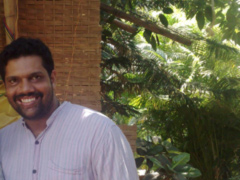
Fast-forward a decade ago, Antonio & Janet got a place of their own, in a quiet spot off south of the Chapora River. Given its diminutive size, they converted it into a restaurant and guest house, embellished by scattered plants and trees, giving a feeling of discovery into a secret garden in a tropical rainforest, and along with their background in private cheffing, the place easily fits as a fine dine family atmosphere restaurant.
The restaurant is a quaint little place and is open throughout the day for service of breakfast, lunch and dinner. It serves traditional Goan food as well as continental cuisine. There is a breakfast bar, vegetarian menu, and provision for bar and music. Serving fresh seafood and vegetables grown in their own garden, Blue Bird offers a family atmosphere and a relaxing, open air ambience.
You offer a mix of Goan, Continental, Seafood and desserts. How challenging is it to serve different cuisines under one umbrella?
It’s not at all challenging for us as we see customer satisfaction first. In fact, it’s good as a customer comes to us either to celebrate or they are hungry, somebody likes Goan, somebody likes Continental and others go for fusion, that’s why our focus is to serve a mix of all cuisines.
There are lots of restaurants in Vagator. Why should a prospective diner choose yours?
We have a wide range of dishes both for vegetarians and non-vegetarians. We are specialised in Goan food. And everyone who comes to Goa loves to try Goan food and for that we are one of the best options as we don’t believe in doing business, we believe that the person should get the best taste of Goa and moreover, we work for customers’ satisfaction.
Tell us about Blue Bird’s journey. How and why did you open Blue Bird restaurant?
I started my restaurant with a small set up in 1982. And then it was renewed to a proper restaurant in 1986. Since I operate at a tourist spot, I have a guest house also. The idea came up to give tourists something different at Goa so I planned to cook food for them and serve people with my different ideas and techniques.
What is your secret to keeping customers coming in?
People are coming from far away and I don’t believe in making only business, my motive is to make them happy and serve them in a way that they must take something memorable from Goa. So, with my different cooking styles and techniques, I keep my customers coming in.
What is your signature dish?
The prawns which we prepare by the combination of crushed pepper and brandy is our signature dish. A person can have it as a starter or as the main course depending upon their preference.
Who do you see as your competitor in the market?
We don’t take it that way, we just believe in serving our customers the best way we can, and this is our overall concern. We try to represent Goa through our taste and service.
What are some of the challenges of being a restaurant owner?
There are a lot of challenges to being a restaurant owner like finding the correct raw products which are fresh, authentic and easily available. Also, the availability of right manpower is also a challenge for us.
Are you present in cities other than Vagator? What is your expansion plan?
We are one of the leading casual dining restaurants of Vagator. No, we are not planning to expand as I am happy with what I have and I believe in giving the best from where I am.
Which is the best season for business as Goa is among the top tourist destinations?
The best season for the business is in the month of December and January as that is the time when people mostly come to celebrate Christmas and New Year and the weather also remains cool and pleasant in Goa.

Pune based Mother’s Recipe (A part of Desai Brother’s Ltd. (DBL)- food division) has announced the acquisition of one of Kolkata’s trusted brand ELMAC (ElmacAgro Manufacturing Pvt Ltd ).
This alliance is valued at 1.9 times sales turnover which will help the group’s aim of capturing a larger market share in the Indian packaged food industry in the East.
“This deal will be a positive development for DBL- food division and is in line with our company’s vision to be a valued brand in Indian Packaged Food Space. ELMAC which has strong brand equity in the eastern region will help us strengthen our existing product portfolio and enable us in expanding our product categories. Plans of new product extensions under the Mother’s Recipe brand name which is already in process is expected to give us an additional growth of at least 25% in eastern region. In the next three years we are targeting a sales turnover of over INR 70 crores under ELMAC brand from the region,” shared Sanjay Desai, Executive Director, Desai Brothers Ltd. Cashing on ELMAC’s existing manufacturing and network, Mother’s Recipe to strengthen their reach and cater to the eastern region more effectively and efficiently, while expanding their product portfolio.
In the new setup the existing management will continue to look after the manufacturing & operations facilities, while Mother’s Recipe will manage the overall marketing, sales and distribution for the brandELMAC.Over a period of time, Mother’s Recipe looks at growing their volumes from Kolkata and the eastern region which currently contributes about 20% of theirdomestic sales.
DBL will further strengthen the ELMAC brand using its good brand re-call in the region.Desai Brothers will continue supplying products to ELMAC’s existing customers under their Private label brands, who will now stand to benefit from enhanced efficiencies of production, timely supply &stringent quality control. The company understands the potential of supplying quality products for private label and recognizes its businesspotential, hence will specifically focus on growing this part of the business with this strategic alliance.
In the Retail segment ELMAC products will focus on sauces & condiments andin the Food Service (HORECA) segment their well accepted sauces, condiments; canned Foods will augment the presence of Mother’s Recipe range of culinary products.
“The company is eyeing a growth of30% in the current financial year against a turnover of over INR 200Crore in 2014-15,” added Desai.
The company’s product expansion in RTC and RTE food segment comes at a time when the sector is emerging and growing extensively. A fast paced urban lifestyle, increasing prevalence of the nuclear family structure, rising disposable income and rising number of globetrotting Indians who are willing to experiment with food, are all favorable factors encouraging adoption of RTC/ RTE foods in India.

There is a saying that the taste of any food cannot match up with the hands of a mother as she has an excellent knowledge about the mix and match of items. Home cooks bring a unique offering i.e. the delicious food that is cooked only at home kitchens with an extremely personalised recipes. Year 2015 can unarguably be titled as the year of food-tech in India. The impeccable thirst of buying it all, be it an enduring ambience, high quality food, convenience or irresistible cuisines at a reasonable prices, is spoiling greedy customers’ today.
The common breakfast table conversation in Indian homes- What to make for dinner? - is now increasingly being replaced by- what to have for dinner? The notion is already changing with the online food ordering trend catching up.
Answering the Daunting Question- Aaj Khane Mein Kya Hai?
Conceptualised as a solution to the perennial dilemma of every food enthusiast, Saurabh Saxena, an IIT Mumbai alumnus, launched Holachef, a platform where professionals and amateur chefs can sell their meals.
Always battling between academics and his passion, Saxena first encountered entrepreneurial thrust with Aakar Knowledge Solution in April 2006. The journey from Aakar to venturing into the food space with Holachef has been both insightful and fascinating.
“Like any classic story, ours too began in a basement, except that it wasn’t as much of basement, but our dinner table. All we wanted was to have some good food delivered to us without burning a hole in our pockets,” points Saxena.
The online food business is turning out to be the next big hit for the start ups for both home chefs and professional chefs. Home cooked chef’s concept is very much different from the Dabbawala or Tiffin services. It is also an option for those people who don't have the funds to open a full-scale catering business.
There are many advantages for the start-ups as it is a low budget, part-time working hours for the housewives making it a profitable business. These home based chefs can earn very well on an average. To open a home chef business one has to have a perfect business plan and effective financial planning, through marketing and making the most of the internet, training and certification.
Homemade food Vs Packaged food
Package items which are convenient option for today’s generation like frozen pancakes and waffles, instant oatmeal or maggie, sandwiches etc are not only contains preservatives but also contains added sugar, fats, additives which is not at all healthy. Therefore, it is preferred to have homemade food which contains nutritious values and does not lead to food borne diseases.
“It’s like comparing chalk with cheese or comparing the goodness of mom's kheer to the plastic instant noodles. A home cook takes pride and joy in hand selecting each ingredient and cooks food with personalised attention and care. This surely cannot be compared to a factory made packet of food lying on the isle of a department store for months”, pointed Sheetal Bhonsle, Co-Founder at Once Upon My Kitchen.
Future prospects
“We would like to scale up and set up a sound logistics system in key cities. Community management is a key area of development as we continue to nurture the home cook ecosystem focussed on getting in varied and different home cooks from across the country. A mobile first strategy in terms of user experience is on the anvil. Lastly enhancements in terms of technology across the CMS, user module to ensure that the brand essence and consumer offering of once upon my kitchen comes alive,” said Bhonsle.
Home cooked food is not a desire for the food lovers and working population but crave for those authentic flavours which can’t be understood by anyone else. So, they cannot afford to miss out that opportunity to get food from these home cooked chef’s kitchens.
With Inputs from Joyshree

In a bid to strengthen the mobile payment services, Starbucks Cafes will begin accepting Apple's mobile payment system in a pilot programme starting this year, said Jennifer Bailey, Vice President, Apple to Reuters.
Speaking at Re/code technology conference in Half Moon Bay, California, Bailey also mentioned that restaurant chains like KFC and Chili's will also begin accepting Apple Pay in 2016.
The service gives Apple a chance to tie customers more tightly to its phones and its smart watch, as well as to take a tiny bite from every retail transaction.
Apple launched the payment service a year ago and has claimed 2015 would be the "year of Apple Pay" as it aggressively courts retailers.
But interviews by Reuters with analysts, merchants and others have suggested that Apple's forecast may have been too optimistic and that many retailers remain sceptical about the payment system.
Customer demand for mobile wallets has been slow, and analysts agree that they remain a tiny percentage of US retail transactions.

According to a report, restrictive regulations including progressive taxation and pricing controls are shortening profit growth in alcoholic beverages market, while keeping high barriers for new entrants in the country.
The ongoing high barriers for new entrants would favor European beverage makers already established in India, said Global research major Moody's in a report.
Moody's Investor Service said, "We believe India's alcoholic beverage market has strong long-term growth potential for European producers. This is supported by a number of factors, including our expectation that India's economic growth will continue to outperform that of its peers in 2015-16".
In India, alcohol production, distribution and sales are regulated by each state. The different regulations and existence of central state tax (CST) payable on goods moving from one state to another are the biggest limit on growth, it said. Furthermore, states set rules on alcohol consumption, set the drinking age and also control distribution and pricing.
Moody further added in existing manufacturers will have strong protection until regulation change, "We do not expect the regulatory environment to materially improve during the next two to three years and this will impede any broad improvement in operating profit margins for alcoholic beverage companies".
Along with other restrictive regulations, liquor prices are dogged by individual state governments once a year and so alcoholic beverage companies operating in India cannot adjust prices based on fluctuations in the cost of raw materials, inflation or competitive pressures.
Moreover, the sector also faces progressive taxation, which further limits price increases. Changes in excise duty in larger states can significantly influence annual volume production. Higher duties can sharply reduce consumption because alcohol is still relatively expensive for many consumers.
Moody's Investor Service expects, in 2015-18 beer volume growth of 8.8 per cent a year; albeit from a low base and spirits segment volume growth to moderate to around 3.7 per cent a year, more in line with the global average.

QLA, a modern European-style eatery, intimately tucked away behind Qutub Minar located in The Kila, hasopened the door for food lovers in the city.
The word Qla is a play on the word ‘Kila’, which in Hindi means a castle or fort. It thrives on high Indian hospitality standards, thus standing true to its name.
Qla offers its patrons a welcoming courtyard that houses long, informal wooden tables and benches that provide a highly convivial and social atmosphere for guests to interact.
“Post completion of my graduation from IIT Kanpur in 1983, the seed of hospitality started to emerge in my mind. I discovered the insight into the domain of customer experience during my span with Apple and Philips. After 25 years I decided to give Delhi, QLA, a European-Style eatery with impeccable service and warmth as its core components,”said, Rajan Chopra, Entrepreneur and Managing Director of a 30 year old IT company.
Qla creates stylish European food with French, Italian and Spanish influences, to complement a fabulous array of wines and cocktails. The entire menu is an abundance of vibrant innovative and classic flavors, with a focus on grilled imported meats, steaks, local seafood and social platters.
Ranjan also has a keen passion for music and plays the saxophone. He has built another platform called Zorba.
Zomato, the restaurant search engine which acquired Urbanspoon, the US based restaurant discovery site in January this year, has closed the website drawing complete traffic to Zomato’s app.
After six months of the acquisition, the food service company has declared on its blog that Urbanspoon is becoming Zomato for good, and while all restaurant and user information has been migrated over from Urbanspoon to Zomato, a few things look and work differently. Here’s a rundown of what’s changed.
At the time of the acquisition, Zomato has already announced that the team will be working closely over the coming months to integrate Urbanspoon into Zomato.
“In due course of time, all Urbanspoon traffic will move to Zomato.com, and all Urbanspoon app users will be able to use the Zomato app. This acquisition also has a lot to offer to restaurant businesses. Zomato's hyperlocal advertising model, combined with Zomato for Business app suite, will allow restaurant businesses to reach out to, connect with, and engage customers like never before,” said Deepinder Goyal, CEO and Founder, Zomato.
Here’s a rundown of what has changed after the merger:
The rating system: Urbanspoon had a like or Dislike voting system, but Zomato uses a 5-point rating scale. And now, the percentage scores from Urbanspoon have been translated into 5-point scores on Zomato, and Likes/Dislikes from users’ profiles have been moved over to Zomato as ‘Positive’ and 'Negative’.
A wide variety of choice: Urbanspoon being a bigger company in the game, the most important thing it brought to Zomato is the user base. Adding to all the existing locations on Urbanspoon where company had its presence, customers can now explore restaurants in 22 countries globally. There are over 1 million restaurants to choose from in 10,000+ cities.
The review system: Zomato allows only one review per user per restaurant. Why? Because it believes that the most recent experience one had at a restaurant is the most relevant one. And now, multiple reviews for the same restaurant from Urbanspoon have been merged into one, broken down by date of submission.
The personal food journey: This timeline helps customers keep track of all the places they eat at, with chronologically sorted reviews, photos, and check-ins. Scroll through it anytime they want to relive their foodie memories. Also, the check-ins from your Dineline will appear as 'Been There’ on Zomato.
Source:Zomato
Including Bookmarks: All Wishlists and Favourites have been moved to Zomato as Bookmarks, which one can find on your profile page. On the desktop site, Bookmarks can be filtered by city so customer knows what’s around them, and find what they are looking for even quicker.
Leaderboards: Leaderboards on Zomato help identify the most prolific contributors in a city. A review or blog post on Zomato earns 25 points, while every photo uploaded earns 2. Leaderboard positions (and defended) depending on points earned in the past six months. We also have a separate leaderboard for bloggers, and one’s position on that depends on how many restaurants one has written posts for with Spoonbacks.
Login-only apps: Unlike Urbanspoon, the Zomato app requires one to log in to be able to personalise and customise the product experience. This includes trusted recommendations from friends and Bookmarks for easy access. And since this has been a point of concern, Zomato takes security and personal information seriously.
And as Urbanspoon has a huge following, and is home to legions of people who are as passionate about food, Zomato plans to integrate the two products to bring the best of both products to our users in the United States as well as the rest of the world.
Indian food market size which was at Rs 23 lakh crore in 2014, growing at a CAGR of 17 per cent is expected to reach Rs 42 lakh crore by 2020, shared, Boston Consulting Group.
"India's food market size which is at around Rs 23 trillion in 2014 is set to reach around Rs 42 trillion by 2020, along with a three-time increase in average household income from 2010-2020," said, Rohit Ramesh, Principal, BCG.
Indian food habit is evolving over the years with increase in the consumption of fresh dairy products and protein and healthy foods.
According to experts, food expenditure is perceived second to health expenditure in India.
The higher disposable income, women working and the urbanisation of people is increasing the consumption level in the country.
“Presently, Indian food market constitutes 41 per cent of fresh perishable dairy, 34 per cent staples and 15 per cent on beverages and foods,” added, Ramesh.
Meanwhile, the country is witnessing lots of new concepts, innovations in the food and beverages segment. Major global chains like Burger king, Carl’s Jr, Wendy’s, Pita Pan are entering India.

· Central Kitchens: The demand for central kitchens will increase in the near future as a result of the growth of large institutions, airlines, educational institutions, and hospitals, etc. On an average, a central kitchen entails an investment of INR 1.6-2.1 crore (USD 0.3-0.4 million) and is opportune for expansion, aided by a business model that enables both onsite and offsite delivery.
· Commissary: The growth of organised QSR and Cafes will advance the setting up and expansion of commissaries in order to meet the demand in these segments. Commissaries are lucrative as an investment opportunity as they hold the potential for adding separate business models by supplying to other brands, once a brand is established.
· Cold Chain: A lack of development and limited presence of players trouble the cold chain segment in India, translating into high costs of distribution. However, with the growth of the frozen dessert/ice cream market, cold chain infrastructure will also need to develop, to meet the heightened requirements of players. It is anticipated that many regional players will emerge in the next few years. While cold chain in India is a highly capital-intensive market, the widening gap between demand and supply presents a lucrative market ready for the entry and growth of cold chain companies.
Back-end Investments - Indian food services market
| Year Invested | Investor | Company | Deal Amount (USD mn) |
| Dairy | |||
| 2012 | IDFC Private Equity | Parag Milk Foods | 28.2 |
| Staples | |||
| 2011 | Standard Chartered Private Equity | Bush Foods Overseas Private Ltd | 20 |
| Beverages | |||
| 2011 | SAIF Partners | Manpasand Beverages | 10 |
| 2007 | Orkla Group | MTR Foods Ltd | 80 |
| 2012 | IDFC | Staragri Warehousing and Collateral Management Ltd. | 27.3 |
(Source: India Food Services Report, 2013, NRAI)
 How to start a restaurant in IndiaToday's diners want to know where their food comes from, who grows it, and the journey it takes before arriving at their table.
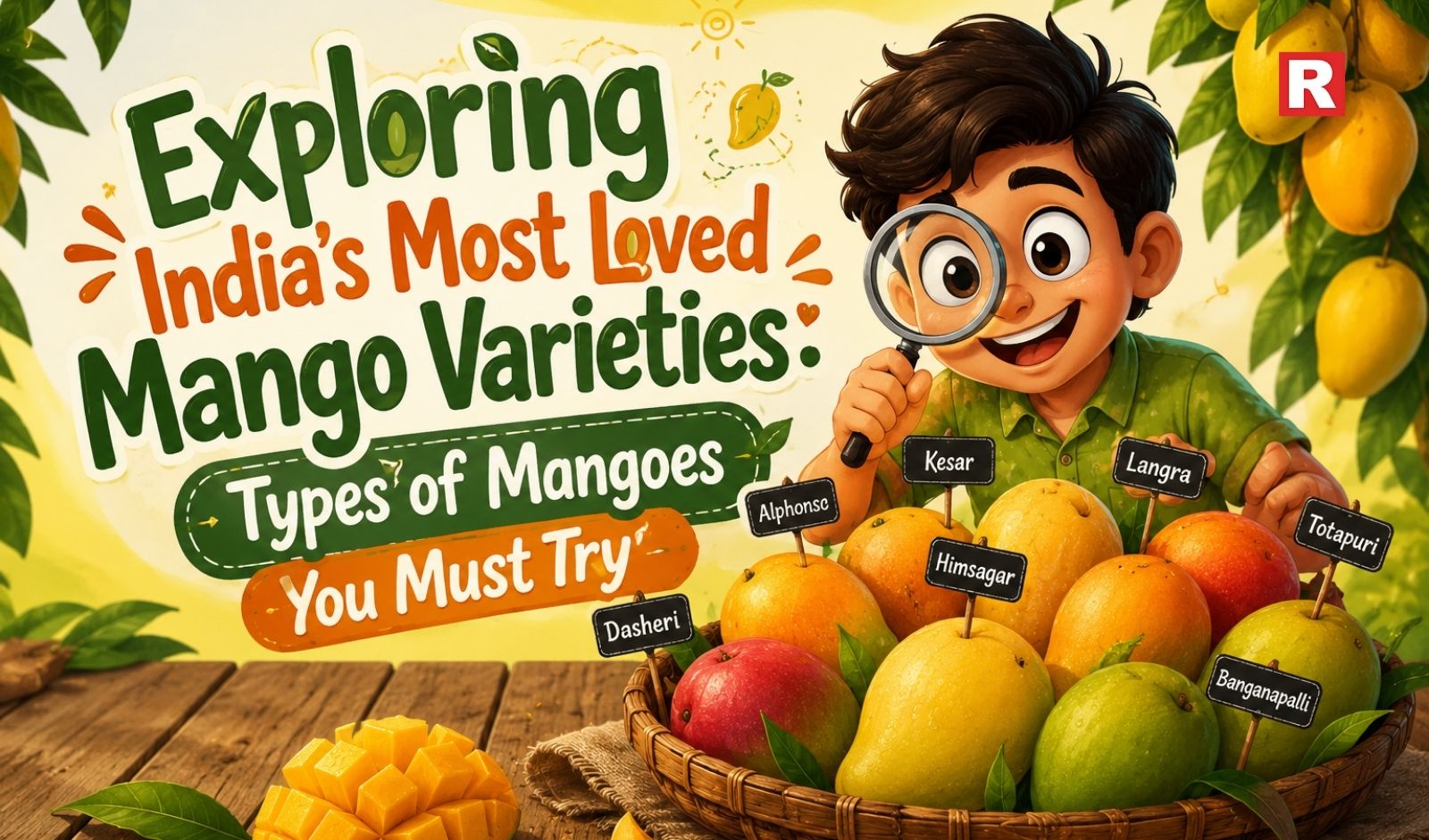 Summer SeasonThe best mango depends on your personal preference. If you enjoy rich and creamy flavors, Alphonso and Imam Pasand are excellent choices.
-
Quick ServiceThe best platform depends on individual needs, location, and shopping habits. As India's quick commerce industry continues to grow, these…
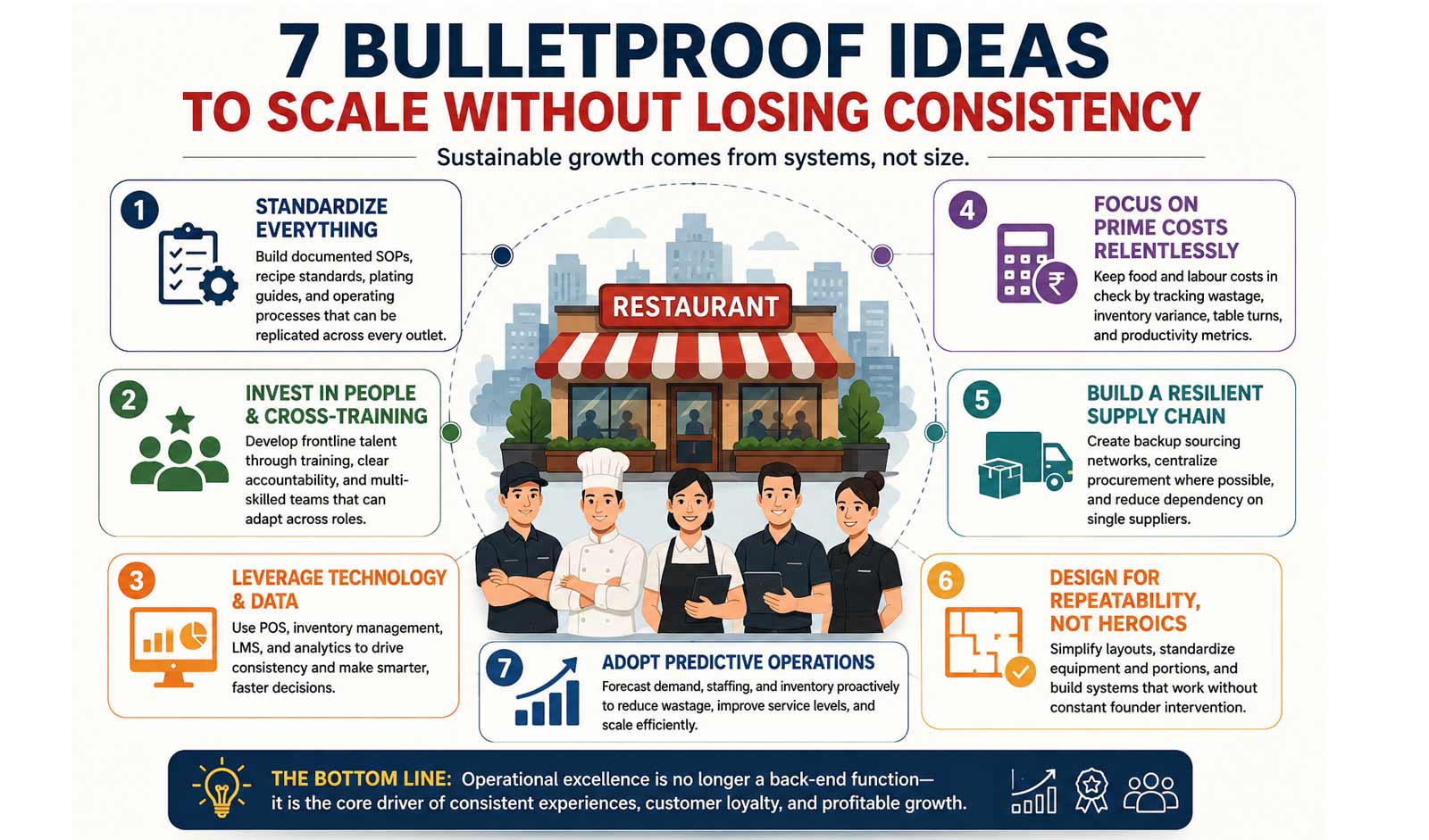 How to start a restaurant in IndiaWith labour costs accounting for 18–25% of revenue and food costs ranging from 28–40%, even small operational inefficiencies can significantly impact…
Copyright © 2009 - 2026 Restaurant India.