


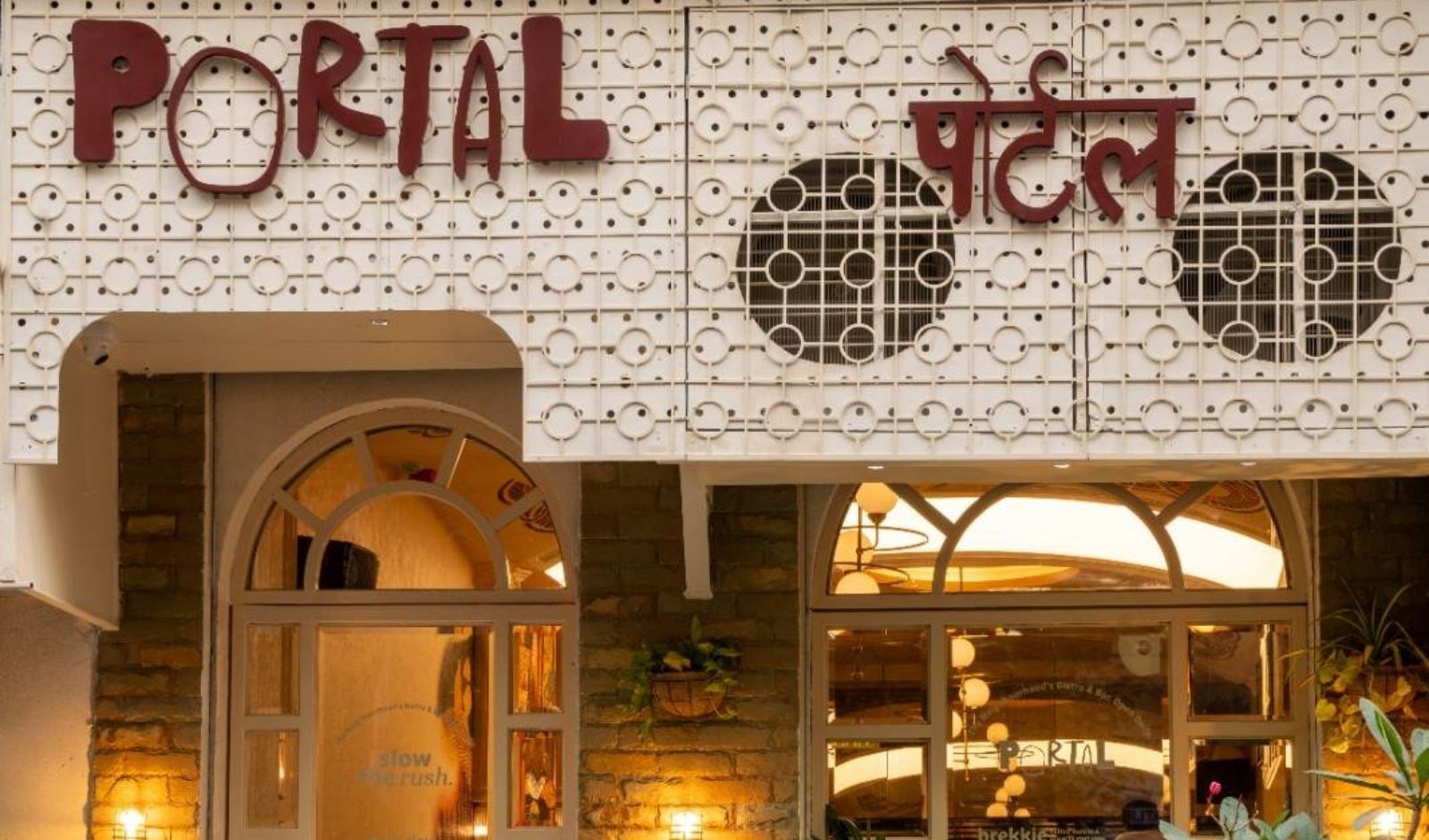
Portal, positioning itself as an all-day dining and beverage destination. The concept is built around flexible consumption patterns, allowing the space to operate across breakfast, afternoon café service, and evening bar formats, reflecting changing urban dining behaviour.
Portal is led by hospitality entrepreneur Punam H. Singh, who brings over three decades of experience across retail and hospitality. Her professional background includes roles with the Taj Group of Hotels, FabIndia, and Fine Foods Pvt Ltd., as well as co-founding Mustard, a Goa-based restaurant known for regional Indian cuisine. The new venture reflects a shift towards intuitive hospitality models where guest experience is not tied to a fixed dining occasion.
Singh said, “I wanted Portal to feel intuitive. A place where you arrive, settle in, and let the experience unfold.”
The outlet spans 1450 sq ft with 50 seats and has been designed to adapt to different dayparts. The interiors, developed by Sparc Design, combine elements inspired by the Kala Ghoda art district with functional layouts. Features such as arched ceilings, zoned seating, and adaptive lighting enable the space to transition between daytime and evening operations without major structural changes.
The food programme is led by Chef Gregory Bazire, who has over three decades of experience across multiple markets. His previous work includes projects such as Taj Mahal Tea House and Mango Pickle in Chicago. At Portal, the menu follows a flexible, ingredient-led approach rather than a fixed cuisine format, aligning with current consumer preferences for variety and familiarity.
Bazire said, “The idea was to cook the way people eat today. A little bit from here, a memory from somewhere else. Dishes that feel familiar but still carry a small surprise.”
The offering spans breakfast items, small plates, and larger dishes, incorporating influences from Indian, European, and Asian cuisines. Menu items range from chia-based breakfast bowls and flatbreads to lamb-based preparations, seafood dishes, and rice-based formats inspired by global cuisines. The structure allows for extended dining occasions, encouraging higher dwell time and multiple order cycles.
The beverage programme has been developed by the team behind Spill It and focuses on structured cocktail formats rather than high-concept presentation. The cocktail list is organised into categories such as Foundations, Expressions, and Intervals, alongside a selection of classic drinks and non-alcoholic options. The wine list is categorised based on consumption style rather than geography, reflecting a shift towards simplified decision-making for consumers.
Operationally, the concept integrates food, beverage, and music programming, including a vinyl-based listening experience curated by Revolver Club, aimed at creating a consistent in-store environment throughout the day.
Industry observers note that formats like Portal indicate a growing trend in metro markets where hospitality operators are designing spaces to function across multiple use cases, improving asset utilisation and increasing per-customer spend.
-
ExpansionThe offering spans breakfast items, small plates, and larger dishes, incorporating influences from Indian, European, and Asian cuisines.
 ExpansionAt the same time, the company has renewed its exclusive franchise agreement with Domino’s Pizza International Franchising Inc for a period of 15…
 LeadershipIndustry analysts note that structured HR leadership is becoming critical in hospitality, particularly in managing large workforces, improving…
 Healthy and fitLaunching as a delivery-first service, EatFit Lab’s food is be available to order in the Delhi NCR region via Swiggy and Zomato.
Copyright © 2009 - 2026 Restaurant India.