


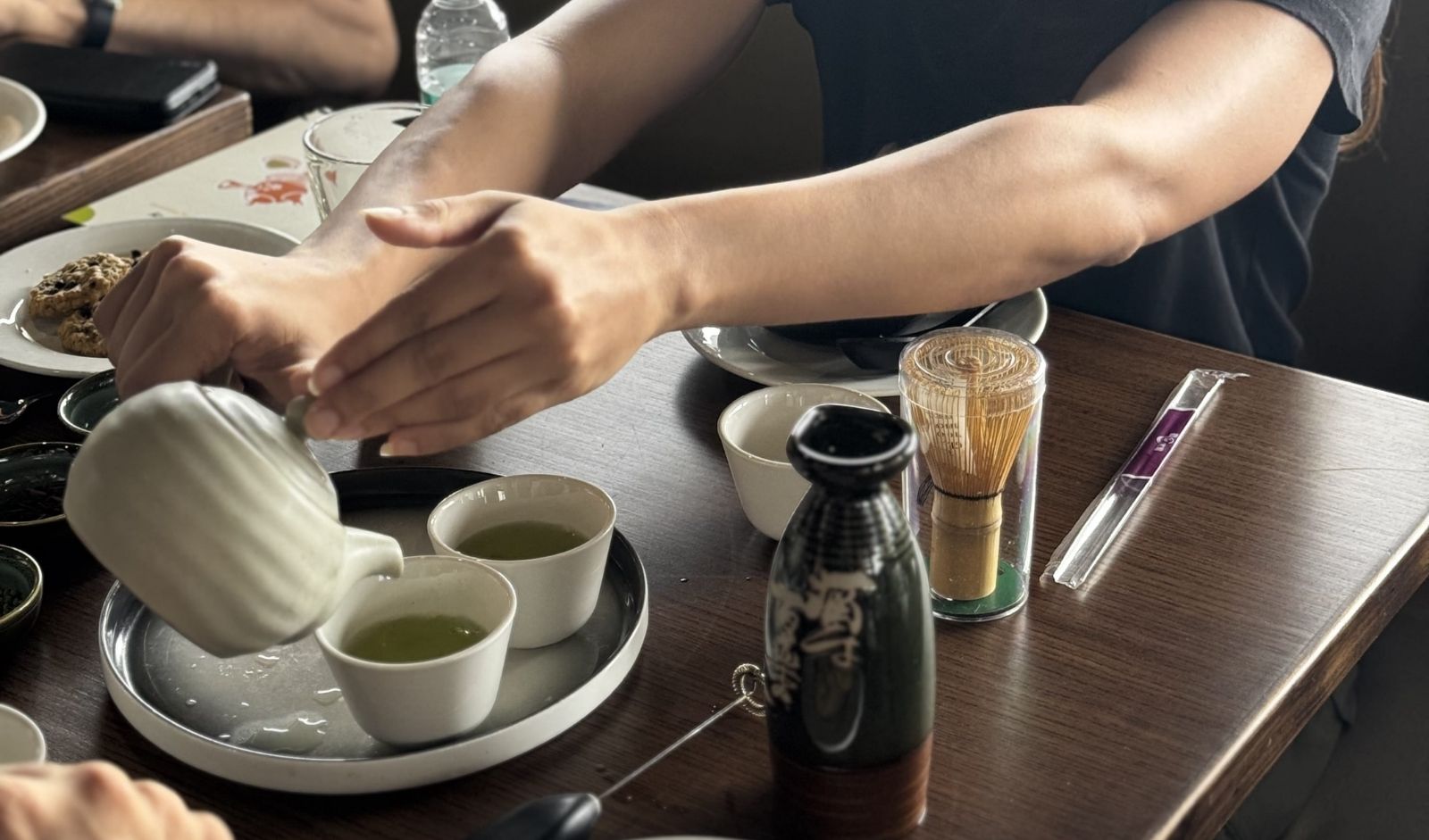
Mumbai’s increasing interest in mindful and intentional beverage consumption has found a structured outlet at Journal, Santacruz, which has partnered with Trove Experiences to host a guided Japanese tea-making session. Designed for both first-time learners and experienced tea drinkers, the experience reflects a broader shift within hospitality spaces toward slower, knowledge-led consumption formats.
The session focuses on Japanese teas that often evoke strong first impressions, including roasted and stone-ground varieties known for their layered flavours and distinct aromas. The format aims to familiarise participants with the craftsmanship behind Japanese tea traditions while responding to their growing relevance in global beverage culture.
Ateet Singh, Founder, Journal, said, “At Journal, we’ve always been interested in what people choose to drink when they slow down. Tea, especially Japanese tea, has a way of encouraging presence and curiosity. This experience felt like a natural extension of that philosophy, giving our guests the context, confidence, and appreciation to enjoy teas like hojicha and matcha beyond trends, and as part of a more mindful everyday ritual.”
Led by tea expert Reagan Creado, who is trained in Chado under the Urasenke School of Tea, the guided session combines storytelling, tasting, and practical brewing techniques. Participants are introduced to Japanese teas such as matcha, genmaicha, and hojicha, with the session structured to balance cultural context with skills that can be applied at home.
The experience begins with an overview of Japanese tea’s historical journey from China to Japan and its integration into daily routines and ceremonial practices. Guests are also guided through different tea styles across regions, including oxidised Indian black teas, partially oxidised Chinese oolongs, and lightly oxidised Japanese green and white teas, highlighting how processing methods affect flavour and aroma.
Attention is given to key Japanese tea-growing regions such as Uji, Shizuoka, and Kagoshima, with discussions on how geography, climate, and harvest timing shape each tea’s characteristics. Participants are introduced to genmaicha, hojicha, and both ceremonial- and cooking-grade matcha, learning to assess quality based on visual, aromatic, and taste indicators.
The hands-on component focuses on the fundamentals of brewing Japanese tea, including water quality, temperature control, steeping time, and traditional tools such as kyusu teapots, chasen whisks, and chawan bowls. Guests prepare and taste the teas themselves, gaining a practical understanding of techniques that prioritise balance and restraint.
The session concludes with a detailed exploration of matcha, covering its cultural role, quality markers, and traditional whisking methods. Participants also experiment with contemporary preparation styles, including making a matcha latte, reflecting how traditional practices can adapt to modern consumption habits. For the hospitality sector, the initiative highlights how experiential formats centred on education and ritual are becoming an effective way to engage urban consumers seeking depth over volume.
 LeadershipThe appointment reflects ibis and ibis Styles India’s focus on strengthening commercial leadership as the brands continue to expand their footprint,…
 RestaurantsWhile a state government circular dated October 1, 2025, allows hotels and restaurants to function кругл-the-clock, excise-licensed establishments…
-
ExpansionThe format aims to familiarise participants with the craftsmanship behind Japanese tea traditions while responding to their growing relevance in…
 Hotel and RestaurantsCygnett Hotels & Resorts continues to strengthen its presence through the Cozzet brand, with upcoming hotels in key business and leisure…
Copyright © 2009 - 2025 Restaurant India.