





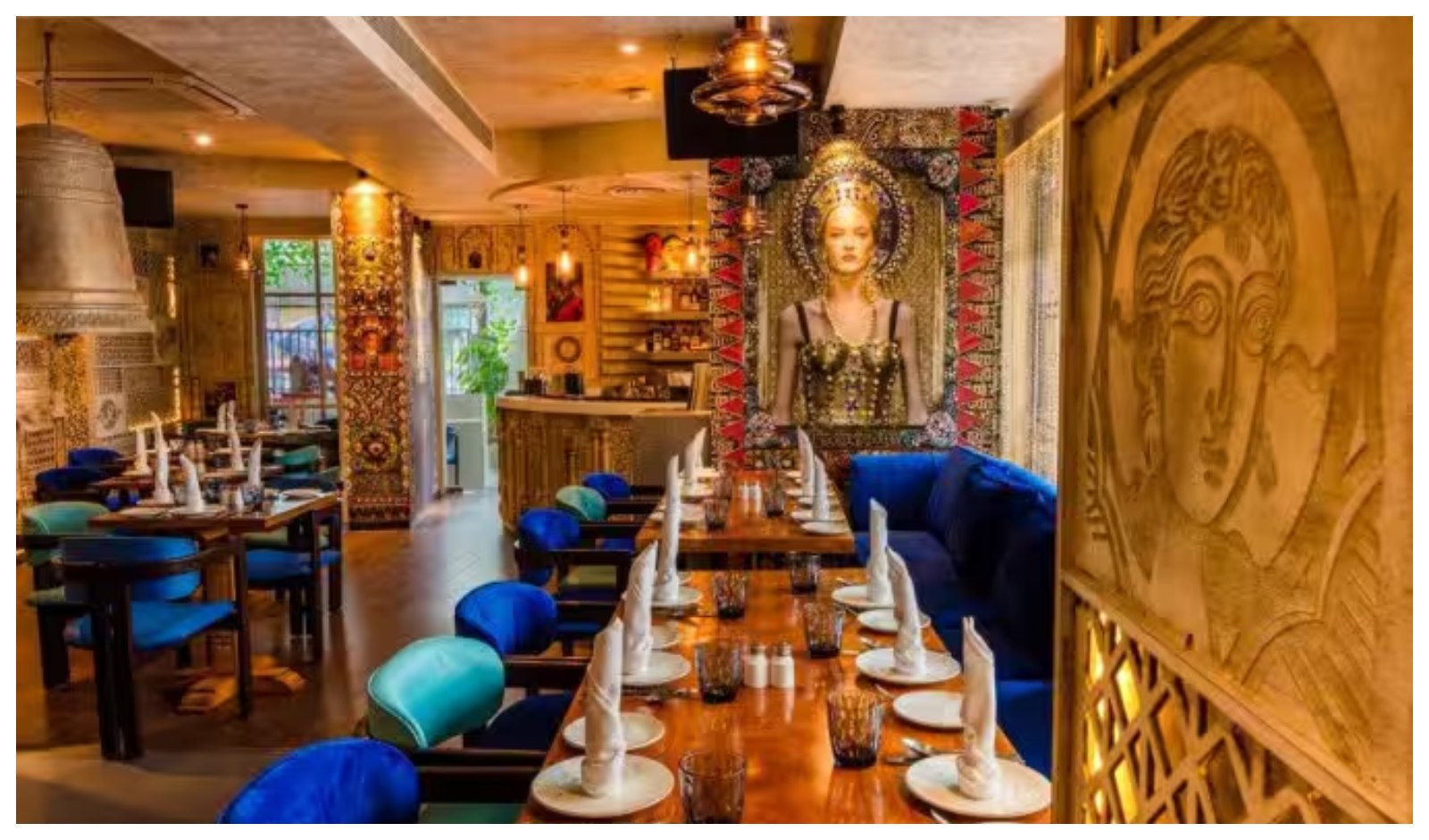
Indian food in Northern England is no longer limited to the familiar curry-house format. A new mix of restaurants is bringing regional Indian cooking, modern interpretations and more polished dining experiences to cities and towns across the region.
From long-running family businesses to newer restaurants built around contemporary Indian food, these destinations show how Indian cuisine is finding its own place in the North and, in many cases, attracting diners beyond the Indian community.
Asha’s — Manchester
Asha’s has been one of the more recognisable names in Manchester’s Indian dining scene. The restaurant, part of the international group associated with legendary singer Asha Bhosle, opened on Peter Street in 2015. The idea was to take familiar Indian flavours and put them into a more refined setting. The menu covers tandoori dishes, slow-cooked curries, biryanis and other Indian classics, while the restaurant itself leans towards a more luxurious, occasion-led experience.
Over the years, Asha’s has built recognition through restaurant guides and awards, helping establish Indian food as part of Manchester’s more premium dining landscape.
+
TYGA — Manchester
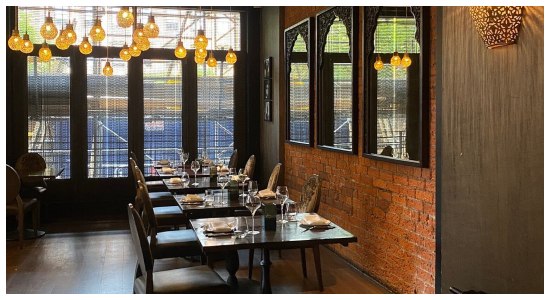
TYGA is part of a newer wave of Indian restaurants looking at the cuisine through a more contemporary lens. The restaurant opened in December 2025 on Peter Street, taking over the site previously occupied by Asha’s. Owned by Amar Seth and Devang Gohil, with chef Rakesh Singh Rawat leading the kitchen, TYGA combines modern Indian food with cocktails, design and a more social evening-out proposition.
The menu keeps Indian flavours at the centre but presents them in a more contemporary way. With private dining and a cocktail-led offering, the restaurant is targeting diners looking for more than a traditional Indian meal.
Mumbai Flavours — Alnwick, Northumberland
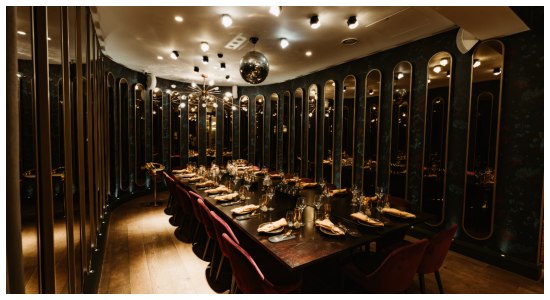
Mumbai Flavours has a different story. The restaurant is part of a family business with more than five decades of experience in the Indian restaurant industry in the North East. Owned by Salam and Abz, Mumbai Flavours opened in Alnwick in 2012. The restaurant takes inspiration from Mumbai and brings those flavours to a part of the country better known for its historic towns and countryside than its Indian dining scene. The menu combines traditional Indian cooking with a contemporary approach, while the business also operates a takeaway. Its longevity is perhaps its biggest strength — it has built its reputation by staying close to its food and its family roots.
Shantii Restaurant — Formby, Liverpool
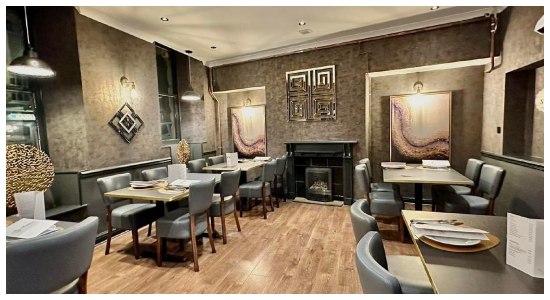
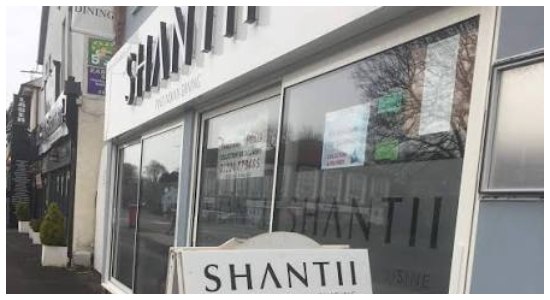
Shantii is a family-run Indian restaurant serving the Formby area near Liverpool. Its approach is fairly straightforward: familiar Indian food, plenty of choice and a focus on making the restaurant work for both dine-in and take away customers. The menu covers tandoori dishes, curries, biryanis and vegetarian options, alongside more distinctive preparations. The restaurant also puts an emphasis on using locally sourced ingredients and reducing its environmental impact.
What makes Shantii interesting is its neighbourhood positioning. Rather than trying to be a destination restaurant, it has built its place around serving its local community while bringing a broader range of Indian flavours to the area.
TAVA — Tynemouth
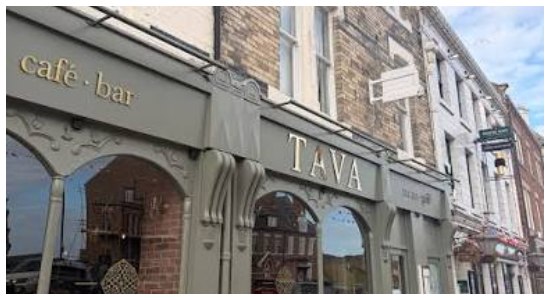
TAVA takes a slightly different route. Instead of focusing only on Indian food, it brings Indian, Turkish and Mediterranean cooking together under one roof. The menu moves between Indian favourites, Turkish grills and Mediterranean dishes, making the restaurant a broader option for groups where diners may not necessarily want the same cuisine.
That is also the restaurant's biggest point of difference. TAVA is built around the idea of sharing food and bringing different tastes to the same table. It caters to families, couples and larger groups, with a private room for events and celebrations. The concept shows another way Indian food can fit into the UK's changing restaurant landscape — not always as a standalone cuisine, but as part of a wider dining experience.
Dhamaka — Cramlington
Dhamaka comes with a family history that goes back almost 60 years. The family behind the restaurant has been involved in the North East Indian restaurant business since 1969, when they opened what they describe as Newcastle's second Indian restaurant.
Dhamaka itself opened in Cramlington in 2022 and is led by Abdul. The restaurant brings that family experience into a newer setting, with a kitchen focused on Indian flavours and a front-of-house team that puts considerable emphasis on hospitality.
For Dhamaka, the story is as much about continuity as it is about a new restaurant. It represents a family that has spent generations adapting to the changing Indian dining market in the North East.
Manasa South Indian Restaurant — Sale, Manchester
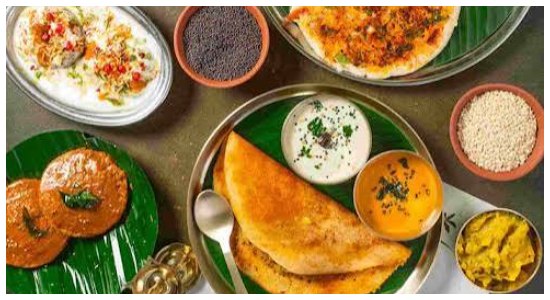
Manasa brings a different side of Indian food to Greater Manchester. Based in Sale, the restaurant focuses on vegetarian South Indian cuisine rather than the North Indian dishes that dominate many Indian restaurant menus in the UK. Dosas, idlis, vadas, thalis and regional rice dishes make up much of the menu, with dishes such as Mysore Masala Dosa, Rameshwaram Dosa and Thatte Idli among the popular choices.
The restaurant's appeal is its specialisation. Instead of trying to cover every part of Indian cuisine, Manasa gives South Indian food its own space and introduces diners to flavours and dishes that are still less familiar to the mainstream UK audience.
What connects these restaurants is not one particular style of food. It is the way Indian dining is evolving in Northern England. Together, they reflect a broader shift: Indian food in Northern England is becoming less about one familiar idea of a curry restaurant and more about regionality, experience, family heritage and new formats.

Spreading its wings to the city of Hyderabad, Indian Restaurant Congress hosted 2nd edition of its Leadership Series at ITC-Kohenur Hyderabad that witnessed great footfall from the restaurant and F&B fraternity. Top restaurateur, policy makers, food service professionals, chefs and consultants, food ingredient and raw material suppliers came together at the event and awards held on 5th December.
“I am super excited and delighted to be a part of Restaurant India Awards in Hyderabad and this is the place to attend and meet the who’s who of the Hyderabad F&B industry and I am very excited and happy to be a part of it,” shared Amar Ohri, MD, Ohri’s that is into the business for almost four decades now.

A Platform for Restaurant Entrepreneurs
The restaurant and F&B (Food & Beverage) professionals came together on the single platform to interact, share their knowledge and experiences on various topics related to Curating Experience, Investing n technologies, Trends and Expasion. Keeping in mind the theme of the event ‘Consistency, Connection and Convenience’, experts shared their insights on how to create business concept and food palates that are modern in their traditionalism.
“The big news for the restaurant industry growth is the interpolation of independent restaurateurs’ and Hyderabad stands out both for its brilliant concepts and restaurant owners ambition,” pointed Ritu Marya, Editor-in-Chief, Entrepreneur Media & Restaurant India by adding that restaurants are not as insulated in their regional pockets as they used to be.
She also mentioned that we will be seeing restaurants that focus on regional cuisines, crossing the state borders, and will alight a new array of Andhra food options in Indian cities.

“I congratulate Restaurant India that has come to Hyderabad to recognise the best of the talent, best of cuisine. It’s a beautiful platform where like-minded people come together and share ideas, thoughts and knowledge. We also get to see some great food and food-tech products that help hoteliers, industry to make their job faster, convenient and efficient and affordable and I think restaurant India has provided a wonderful platform for all of us at Hyderabad,” mentioned Chef Dharmender Lamba, President, Telangana Chefs Association and Hotel Manager, Trident Hyderabad.
Commenting on the same, Ramit Goyal, National Sales Head, Hyperpure by Zomato added, “It’s been a great experience at Restaurant India and it was pleasure connecting here with lots of restaurant partners. It is a great platform to meet restaurant and F&b partners and share ideas.”
It’s Gala Time
Restaurant India Hyderabad Awards 2023 was held in the evening of 5th December that acknowledged the contribution of market leaders and innovators from the Restaurant fraternity. Organised by Franchise India and judged by leading business experts including the Editor-in-Chief of the group, these awards were the perfect opportunity to show the awardees’ outstanding success in the industry as they received national recognition and extensive media coverage with the partners.
The awards night was attended by the top leaders including Amar Ohri of Ohri’s, Shashank Annumula of Café Niloufer, Teja Chekuri from Ironhill India amongst others. The awards night was also blessed by the presence of Shri Jayesh Ranjan, Secretary, IT&EC, Govt of Telangana and Shri Meela Jayadev, President, FTCCI.

“Restaurants today need professional level of high level, trained and qualified staff as it is very important to know who the team that works with you are is. Also, a training facility by restaurant people is required since it's different from other sector, the training has to come from within the industry,” mentioned Mr. Ranjan by adding that restaurant business should also align themselves with the Govt and as we are celebrating the International year of millets, restaurants should popularise this in restaurant and organise food fest around the same and support the same.
In the last two years, Restaurant India Conference and Awards has become the authority and the final word when it comes to food and beverage in the country. A night full of applauds and recognition of customers was sponsored by Ohri’s, NuTaste, Hyperpure by Zomato, On2Cook amongst other. The prestigious brands that were a part of the evening included Paradise Biryani, Café Niloufer, Ohri’s, Cock & Bull, Trident, Marriott Hotels, The Park, IronHill India, Bawarchi, Pista House to name a few.

The Indian Restaurant Congress- Mumbai took an in-depth look at the restaurant innovation and growth trends happening in 2019 and beyond.
How Delivery is Disrupting the Restaurant Biz
Delivery has become a huge business today both for restaurants and the third-party aggregators and the food-tech players. It has become a big opportunity for players like Domino’s that set the tone of delivery business in India way back in 90s. It does 70 per cent of delivery through Zomato and Swiggy etc and the rest is done by Domino’s itself. Hence, we can say that Zomato and Swiggy have disrupted the urban and the semi-urban areas. “Delivery has become a great market and we at Speciality Restaurants have hired somebody from Domino’s to learn the art of delivery business,” shares Anjan Chatterjee, Founder & MD, Speciality Restaurants Ltd.
Quality v/s Quantity: Better Quality Food over more Food is the way to go
Handcrafted foods, off beat experience, multi-cuisine food moment are some of the emerging trends for diners wherein quality is more focused upon over quantity. With customers’ demand for high quality, locally sourced and organically grown ingredients, food in any restaurant is going through a change wherein restaurant owners and chefs are becoming smart by growing their own ingredients, partnering with local farmers and also making customers’ aware about their food and from where it is sourced.
There is no denying that diners expect more than just great food when they dine out – they crave great experiences. “You need to provide a hearty meal where your guests say, ‘Hey! I enjoyed the food’,” shares Rahul Dhavale, Executive Chef, Westin Mumbai Garden City, by adding that everything remain sensation as it depends on guests what they want to have.
Keeping Brand Fresh & Relevant
Millennials' eat differently than their parents'. As a growing restaurateur it is a constant trial to keep up with numerous food fads and crazes, as well as determining, which trends are more lasting and how to adapt them to a specific market and food segment. Keeping in mind about the new age diners and customers, brand evolution is a continuous process.
Commenting on the same, Vishal Kamat, CEO, Kamat Group shares, “We have a fantastic global as well as Indian fare. But what we serve in the south of India is different to what we serve other markets. The whole idea is to give our customers a differentiated experience when they come to a part of south of India for breakfast. Those items are traditional recipes that you don’t get in a 5-star restaurant. And, that’s where the evolvement happens.”
Innovation is the Key
Innovation is not just limited to food, menu or service but it is also about creating customer experience. Restaurants these days do lots of fun activities to keep customers coming back to them again and again. “When we started Sassy Spoon at Nariman Point we started it as a fine dining restaurant but four years later when we thought of starting it in Pune and saw the demographic over there, we found that the target audience was very different from the kind of target audience we had for fine dine in Mumbai. So, we had to tweak our offerings and price points as per the Pune market,” shared Rachel Goenka of the Chocolate Spoon Company that owns Sassy Spoon.
The Right ‘Money’ Finding the Right ‘Concepts’
As the Indian consumer story is growing, investors are seeing a huge interests in the sector in the last one and two years. There are myriad ways operators are funding expansion and development. “The primary bet we do at Gaja when investing in a brand is that we bet on the team. We want to be very clear about the team, the concept and the ability to scale,” adds Manoj Balan, Director of Finance, Gaja Capital. The restaurant business is all about scale and growth and at any point of time when an investor decide to exit and it becomes exciting for another investor there has to be growth and a path that has to be made. So, for any investor, the initial filters are what the team demonstrated, how capable is the team is, etc.

The West Edition of Indian Restaurant Congress 2019 was held at Hotel Sahara Star in Mumbai.
The exclusive one-day Summit in Mumbai, on 13th June, was divided into ten prominent sessions including a state-of-the-art workshop specially designed to empower the fraternity with business consultancy pointers shared by restaurant industry experts. With 30+ speakers and 400+ delegates from the restaurant industry, the Summit aimed at delivering value through setting a two-way dialogue among the participants and delegates to find passages of exponential business growth together.
Over the past few years, the west region in the country has witnessed a humungous cultural shift across consumer demand algorithms. The restaurateurs are, hence, keeping pace with emerging demand triggers and key trends by introducing innovative gourmet concepts which seems to be scalable and popular already among masses.
Indian foodservice industry's market size is at Rs 4,23,865 crore in 2018-19 which is expected to grow at a CAGR of 9% to reach INR 5,99,782 crore by 2022-23, estimates the NRAI IFSR 2019. The Report states that Indian Restaurant Industry employed 7.3 million people in 2018-19. The organized food service sector, which is only 35% of the total market, contributed a whopping Rs 18,000 crore as a way of taxes in 2018-19. The number is expected to more than double if the unorganised sector becomes organised, reveals NRAI report.
It is estimated that the chain market share of QSRs, alone, will reach 48% by 2021.
Considering all these factors, Restaurant India, felt the need to bridge the gap and create a cross lineage between the industry players and emerging brands to come on a single platform to tackle various business challenges and celebrate the new partnerships.
The Indian Restaurant Congress Mumbai 2019, West Edition, started with the welcome note of Ritu Marya, Editor-in-Chief, Franchise India Holdings Pvt Ltd. "It's truly the market which sees some remarkable growth when it comes to food service. The cloud kitchens which are becoming a source of food delivery will surely hack the home kitchens; they aren't the threat to restaurant kitchens. Technology will play a far bigger role in the restaurant sector, today. Every year the veterans from the restaurant industry, of the western region of the country, gather together to make it a bigger and a better sector.
While speaking at the inaugural session, Anjan Chatterjee, Chairman, Speciality Restaurants Pvt Ltd, said, "There are certain things in the industry which will disrupt the sector in coming years."
Celebrity Chef Amrita Raichand, who won the Indian Restaurant Community Champion Chef Award 2019, said, "I'm excited to be a part of the Indian Restaurant Congress 2019, looking forward to meeting a really great bunch of people from the food industry and indulging in thoughtful conversations and ideas towards making our country more health-conscious and responsible when it comes to feeding the gut!"
Gaurav Gidwani, F&B Director, Corum Hospitality, said, "Indian Restaurant Congress brings together the leaders and experts from all categories across the industry. It curates mutual dialogues on key agendas that not only help everyone gain more awareness on a particular topic, it also allows them to clarify their doubts and queries. All this surely helps everyone to strategize their future plans. Furthermore, this forum is a great opportunity for building a potential network of partners, vendors, manufacturers, service providers, domain experts and many more. This forum also recognizes and rewards the talent within this industry, the restaurants and the people behind it, and that is truly a great effort to appreciate the hard work and to encourage striving harder."
Key Takeaways from Indian Restaurant Congress Mumbai 2019 were:
- Identifying the growth drivers & business opportunities in the Restaurant sector
- Achieving Quality, Consistency & Food Safety in Multi-chain restaurant operations
- Understanding the scope of Technology deployment in a conventional Restaurant design
- Networking with HNIs, PE/VC & Funding bodies
- Collaborating opportunities for Restaurant Franchisors & Franchisees
- Comparing two business growth strategies - Company Owned vs. Franchise Stores
Some of the special guests and speakers who attended the Summit were:
Anjan Chatterjee, Chairman, Speciality Restaurants Pvt Ltd, Chetan Arora, DA and Multi-Unit Owner, Subway India, Vishal Kamat, CEO, Kamat Group of Hotels, Sahil Jain, Co-Founder, Dineout, Ankit Gupta, Co-Founder & Director, Burma Burma, Animesh Damani, Group Director, Artha Group of Companies, Sharad Sachdeva, Director of Operations, L Catterton Asia, Manoj Balan, Director of Finance, Gaja Capital, Nandini Mansinghka, CEO & MD, Mumbai Angels Network, Hariharan Premkumar, VP, DSG Consumer Partners, Vivette D'cruz, Director, Consumer Products & Retail, Ernst & Young LLP, Hitesh Keswani, Founder & Director, Silver Beach Entertainment & Hospitality, Karan Tanna, CEO, Yellow Tie Hospitality, Rachel Goenka, Founder & CEO, The Chocolate Spoon Company, Reynold Fernandes, COO, Foodlink Services India, Tanmay Kumar, CFO, Burger King India, Varun Verma, Associate, Lightbox Ventures, Sumant Vikas, Corporate Chef, Cremica Food Industries Ltd, Amrita Raichand, Celebrity Chef, Aishwarya Bhende, Founder & Director, AB Celestial, Anirudhya Roy, Executive Chef, Taj Group of Hotels, Altamsh Patel, Executive Chef, The Park Mumbai, Rahul Dhavale, Executive Chef, Westin Mumbai Garden City, Vineet Manocha, Sr. VP- Culinary, Lite Bite Foods, Subhash Talekar, President, Mumbai Dabbawala Association, Gauri Devidayal, Director, Food Matters India, Saransh Goila, Celebrity Chef and Owner- Goila Butter Chicken, Gaurav Dewan, COO, Travel Food Services, Gaurav Gidwani, F&B Director, Corum Hospitality, Shraddha Bhansali, Owner, Candy & Green, Prahalad Sukhtankar, Sommelier & Owner, The Black Sheep Bistro, Joy Singh, Founder, Raasta and Partner- Yeti HKV, EIPosto and Back to Basics, Chef Sanjyot Keer, Food Producer & Founder, Your Food Lab, Mujeeb-ur-Rehman, Chef and Restaurateur, Krishnakant Thakur, Co-Founder & CEO, Charcoal Eats, Ashish Sajnani, Director, OPA Hospitality and Raj Mehta, MD, Little Italy Group of Restaurants
India’s restaurant sector, currently pegged at Rs 3,09,110 crore ($48 billion), growing at a CAGR of 10 per cent to reach Rs 4,98,130 crore by 2021 as tier-2-3 regions are set to drive growth, reports the two-day Indian Restaurant Congress 2017 held on 28th and 29th August. Apart from Indian cuisine, Indian filter coffee is also making a comeback with pan-India growth plans as the Coffee Board of India plans a marketing and branding push to expand this niche market. “Our vision is to create a pure Indian filter coffee. By next year, we will have modern, clean, cool and affordable Coffee Houses across India offering Indian filter coffee and snacks. Till now, India has been a tea country, my objective is to also make it coffee country,” shares Srivatsa Krishna, CEO & Secretary, Coffee Board of India speaking at the congress. .
Zorawar Kalra, Founder and Managing Director, Massive Restaurants who owns Farzi Cafe, Masala Library and Papaya to name a few and the conference chairperson, says, “We are an important industry in India. The Indian restaurant market is 40 times that of Bollywood. The Indian food industry produces 2 per cent of India’s GDP and is second largest employer of human capital in the country after agriculture. As the Indian middle class is now spending more and more, food sector will automatically receive larger share out of their spending.”
Restaurateurs, chefs and industry leaders including Celebrity Chef Akmal Anuar (Co-Founder & Chef, 3Fils Restaurant),Unnat Varma (MD, Pizza Hut- India Subcontinent), Ashish Kapur (Founder & Director, Moods Hospitality Pvt. Ltd.), Sameer Bhasin (CEO, Barbeque Nation) and Varun Tuli (Director, Yum Yum Cha), among others were some of the speakers at the event.
Talking about consumer psychology in food and restaurant business, Indian Celebrity Chef Ranveer Brar points “It’s important to know what consumers want, but it’s also important not to just give them what they want,” addingthat food is the balance of what consumers want and what you want to sell. And today there has to be a certain aspiration, certain newness behind any cuisine or concept in market. Otherwise, it’s like there is no expression left in the business.
According to the industry analysis and experts, North Indian is the highest preferred cuisines at 28% followed by Chinese at 19% and South Indian at 9%. Many Indian restaurants are now also looking to expand to global markets apart from the UK in the fine dining space.
The Restaurant Congress also organised a Bar & Cigar Summit and a Chai n Bun Summit on the sidelines of the two day conference.
"Today consumers who are drawn to an experiential dining experience are willing to pay more. Indian Restaurant Congress 2017 will share the building blocks of the food service in an innovative ecosystem. It is the platform where restaurants, chefs, brands would find future business models and ideas to address tomorrow's market demand", adds Ritu Marya, Director and Conference Convener, Franchise India.
Indian Restaurant Congress also organised, Indian Restaurant Awards on 29th evening to appreciate the brands in the industry. Award honoured over 90 restaurateurs and foodpreneurs for their outstanding work and prominence by acknowledging outstanding creativity, customer service and top quality dining that is on offer throughout India. Mr. Zorawar Kalra was awarded National Restaurateur of the Year, Chef Ranveer Brar was awarded est Chef of the Year, Mr. Priyank Sukhija of Lazeez Affaire Group was awarded Restaurant Icon of the Year, Maplai Restaurant was awarded by Best Indian Cuisine Restaurant of the Year-South, The Darzi Bar and Kitchen- A Unit of Radioactive Hospitality LLP was awarded Best Theme based Gastro-Pub of the Year, Chai Galli was awarded Best Regional Café of the Year – South to name of a few.

With rising disposable income and time poverty, eating out has tremendously grown in India with consumption expenditure accounting for 60% of the total GDP. Western India market which remains a top market to invest in for both global as well as domestic investors has given the industry some of the key trends and leaders. Being a market which has 37% per cent share of the quick service restaurants west was the first region to create nightlife scene in Indian market. It is also home to the lost Iranian cuisine and local regional delicacies, including coastal cuisine, Marathi cuisine amongst others.
Indian Restaurant Congress which has become an important destinations for Restaurant and Food service brands to discuss and debate about the key trends in Indian food business after doing six mega editions in Delhi, thought of capturing the regional markets by doing Restaurant India at all the four regions India has. Building on its success, Franchise India replicated the platform in the southern region with the launch of Restaurant Congress in Bengaluru on 18th December at Hotel Sheraton. And, now the much acknowledge show is coming to West India to take a bite of the western region. The show will also acknowledge the region’s top achievers at the gala awards evening on 19th March at Hotel Westin Pune.
“The Restaurant Market in West India is clearly calling for an exponential expansion, requiring brands to open more restaurants at faster pace and in optimal locations,” says Mr. Gaurav Marya, Chairman, Franchise India, adding that, as Indian palate gets more diverse, restaurant owners must find a niche market, distinguish themselves from their peers, and maintain a nimble attitude. Majority of the beneficiaries will be the stand alone restaurant operators expanding in an organised format.
Themed around ‘A Bite of West India– Innovation with Growth’, the show will focus on the juggernauts of restaurant business in west market which has created an impact in the overall restaurant business by introducing the best of concepts and bringing the best menu to the table.
The congress will be attended by more than 300 restaurateurs and over 50 restaurant industry leaders, and chefs along with an incredible speaker line up including Riyaaz Amlani, President- NRAI, Sanjay Vazirani, CEO & MD- Foolink Services Pvt Ltd, Akshay Bector, CMD- Cremica Food Industries, Chef Vicky Ratnani, Chef Harpal Singh Sokhi, Anurag Katriar, ED & CEO- deGustibus Hospitality, Tanmay Kumar, CFO- Burger King India to name a few.
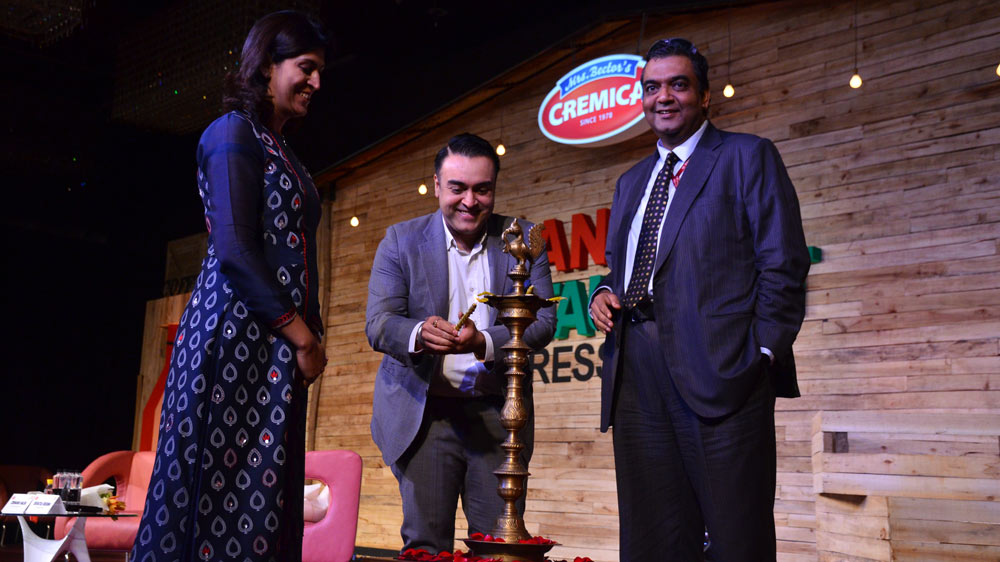
Sponsored by Cremica Foods, Restaurant India Pune will be a one stop platform for knowledge sharing and networking for all the shareholders of the ecosystem. We, on behalf of Franchise India, welcome you to the Congress.
Keep posting about the Congress!
@IndianRestCong #Restaurant2017 #Pune

In today’s restaurant scenario where change is the only constant, food brands are constantly coming up with new and innovative ideas to sustain in the fast evolving market.
And, supply chain being major concern in the industry, these brands is facing great concern when it comes to sustaining the best raw materials. “30-40 per cent foods are wasted because of supply chain and logistic,” shared Krish Iyer of Walmart India.
Speaking at 5th Indian eRetail and Retail Congress organized by Franchise India and Retailer magazine, the congress saw over 50 industry leaders sharing their view on creating and contributing to sustainable environment.
At a time when food is the major sector to grow in India, both in terms of inviting local as well as international investments, the sector is major job creator than any other sectors.
“We are poised to create ease of doing business in India,” added Atul Chaturvedi, Joint Secretary, DIPP, Ministry of Commerce & Industry who is of the view that customers today look for an experience while shopping.
Innovation is the key
Not only this, lately food brands are focusing on delivery best customer experiences when it comes to gaining recognition. Players like Burger King, Pizza Hut are constantly bringing loyalties and newer experiences at their restaurants to attract more customers and make their regular customers comeback customers.
“Freshness of the ingredient is the biggest need today. We regularly focus on launching new flavours, product to enhance customer experience at our outlet,” said Unnat Varma, MD, Pizza Hut, Indian subcontinent who is running close to 400 restaurants of Pizza hut world’s famous pizza franchisee in India.
Likewise, Burger King which is another QSR chain and is one of the leaders in burger business globally tries to play with the flavours and launching new range of burger every four months so that whenever a customer comes to their outlet there is something new for the brand to offer.
Hence, in order to continue grow in a competitive market lie India where every single day a restaurant is opening its door, innovation and uniqueness is the only key to get healthier business.
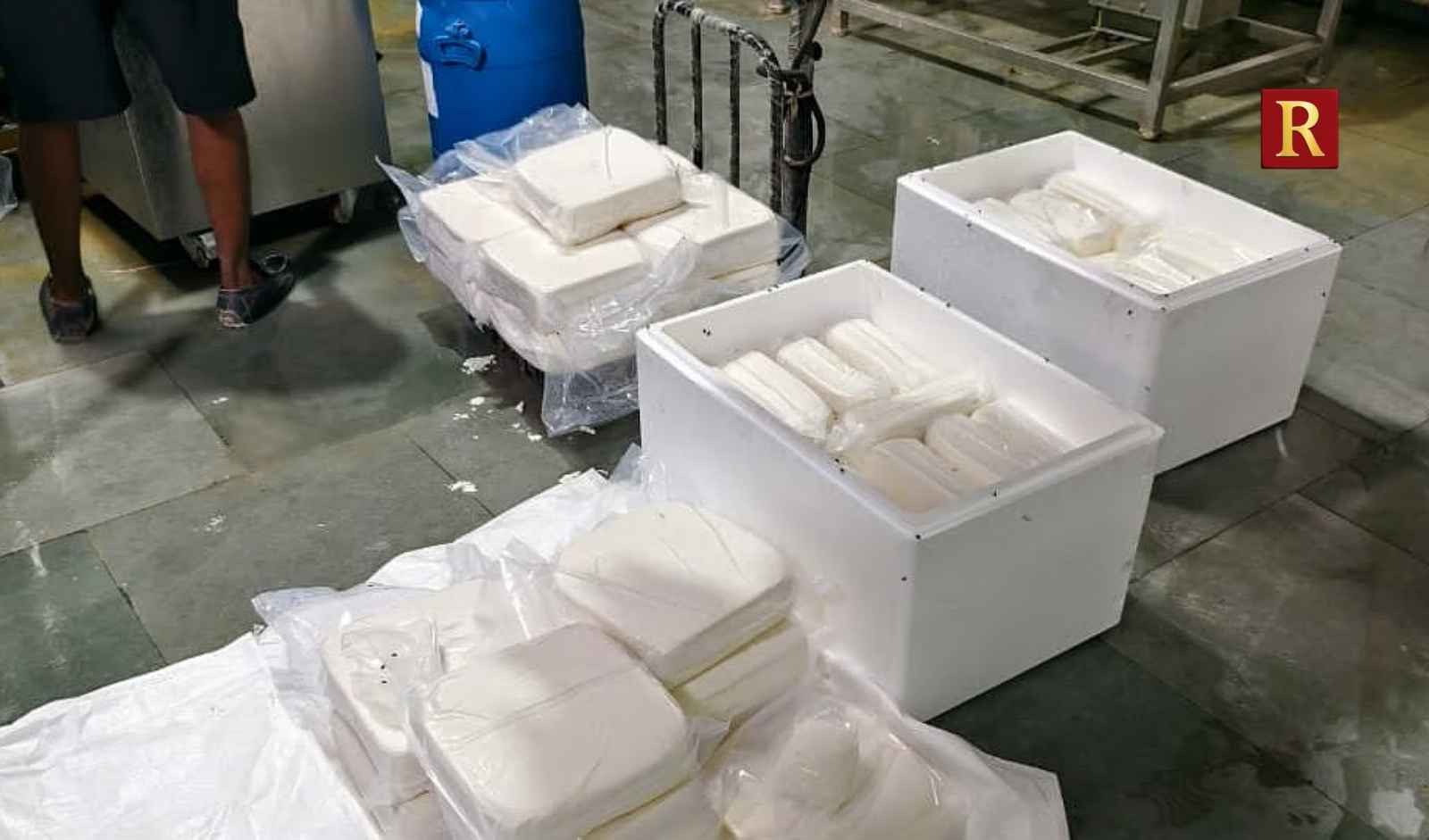 Vegetarian FoodBut with FSSAI already taking enforcement action around the use of analogue products as paneer, the country's restaurant industry has a clear…
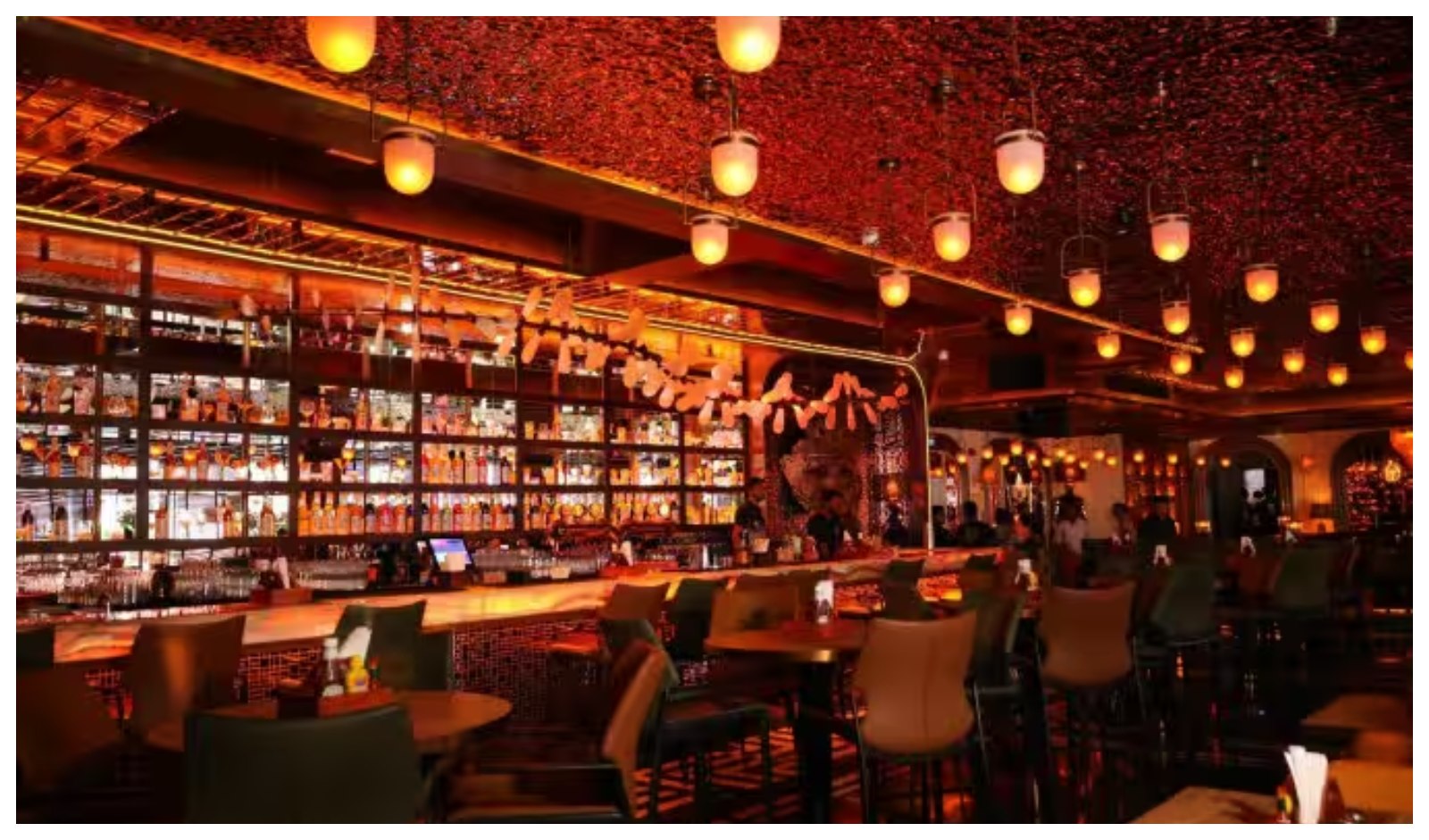 Growth in food industryThe basic break-even formula remains Fixed Costs ÷ Contribution Margin. With fixed costs of ₹6 lakh, a 60% contribution margin requires ₹10 lakh in…
-
Indian restaurantsFrom long-running family businesses to newer restaurants built around contemporary Indian food, these destinations show how Indian cuisine is finding…
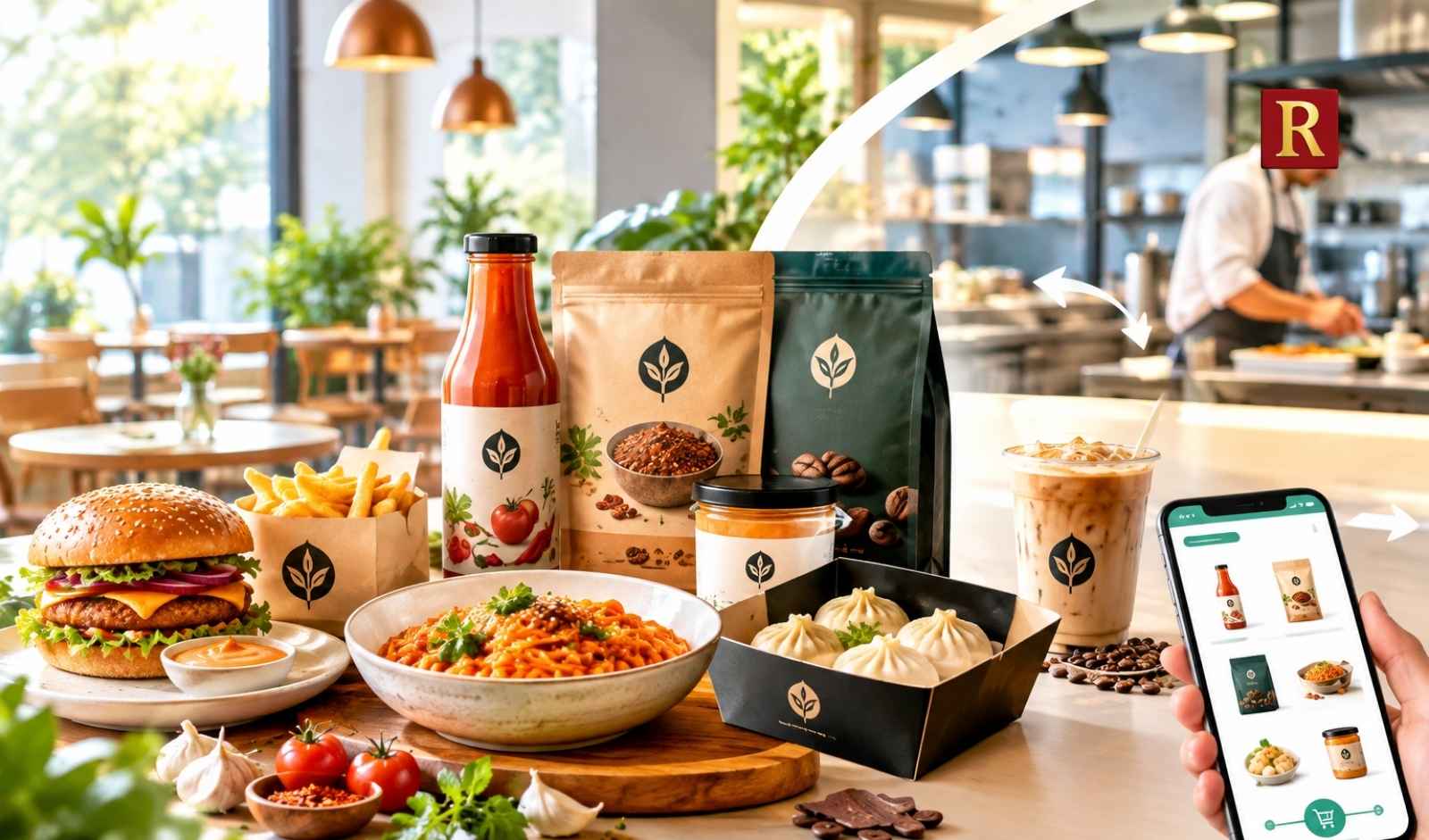 Food and BeverageThe brands that understand how to connect the two could turn their most recognisable dishes into products with a life far beyond the dining table.
Copyright © 2009 - 2026 Restaurant India.