





Veganism is on rise across the world. So much so, that major food chains are launching vegan options to cater to vegan customers. Recently, the world’s largest burger chain, McDonald’s announced that it will be testing plant based meat with Beyond Meat (a company that is known to offer vegan burgers which taste similar to meat burgers) in Canada, where several players are already into offering vegan meal.
Not only this but Yum Brand Inc’s KFC chain also offered plant based nugget meals in a restaurant in Atlanta, Georgia. So, what is compelling these F&B giants to test vegan option? Several vegan cafes and restaurants are opening across the world to cater to the demands as people are shifting to vegan lifestyle more than ever.
In India, we have cafes and upscale restaurants that are including vegan options in their menu. For example, Cafe Delhi Heights offers a Vegan menu with dishes like Vegan Poha, Brown Rice Buddha Bowl, cheeseless Pizzas and Pastas, Thai curry, Raw Papaya Salad, and Minestrone Soup.
Chef Ashish Singh, Corporate Chef at Cafe Delhi Heights & Nueva says "As more Delhiites give up meats & milk, the city seems to have become Vegan rich. From a majorly dairy dependant city to a Vegan city, the trends of Veganism are changing every season here. A cultural pot and a home to people from different countries, Delhi has started to accept this change wisely. The city recently hosted its first vegan fair too.”
From increasing farm to fresh concepts to vegetarian mock meats and vegan protein options available, the diet and nutritional sector is also promoting veganism. Ashish further adds that “With actors like Anushka Sharma and more influencers promoting Veganism, the vegan community in Delhi is becoming bigger than ever. Delhiites today are devouring everything from Vegan Pizza & Pasta to Vegan Kheer, Cakes and more. With this increasing trend, more epicureans are switching their preferences and adding more plant based nutritional meals in their diet making the whole city a "vegan friendly affair."
Meanwhile bakery cafes are also offering quite a range of vegan options for people who prefer to have guilt free sweet desserts. Chocolate Caramel Verrine, Vanilla & Raspberry Verrine, Almond Tart, and Vegan macarons are some of the options available in their latest vegan menu. “We believe that veganism is rapidly growing and this could be gauged from the fact that a number of vegan cafe have come up really fast all around,” says Kazem Samandari, Executive Chairman, L’Opéra. He adds “Today, the customers are even more aware of what they eat and live a conscious life. L’Opéra has launched the new vegan line that has been introduced across all our outlets. For our vegan range, we have used Margarine that is mainly made of refined vegetable oil and water instead of butter and water and fruit juice instead of cream and milk.”
Counter to this, Corporate Chef Sagar Bajaj at First Fiddle Restaurants says “The vegan trend was slow to pick up, and it is still picking up. However, F&B establishments are now becoming more aware of the different eating options and often offer vegan options for the health conscious people.”
From ice creams to sushi, everything has a vegan variant, but the challenge, he says is in ensuring that the taste isn't altered due to a switch in ingredients. He further shares “At Plum by Bent Chair we serve a satiating variety of comforting vegan soups like classic hot and sour with tofu and soy broth and signature Hazel chair soup with mushrooms. Crystal dumpling with celery and water chestnut, Black pepper gyoza with black fungus, shitake, beans and Portobello are some of the vegan options we have. We also do large vegan plates with Asian green in oyster sauce and tofu mushroom boy choy in black bean sauce.”
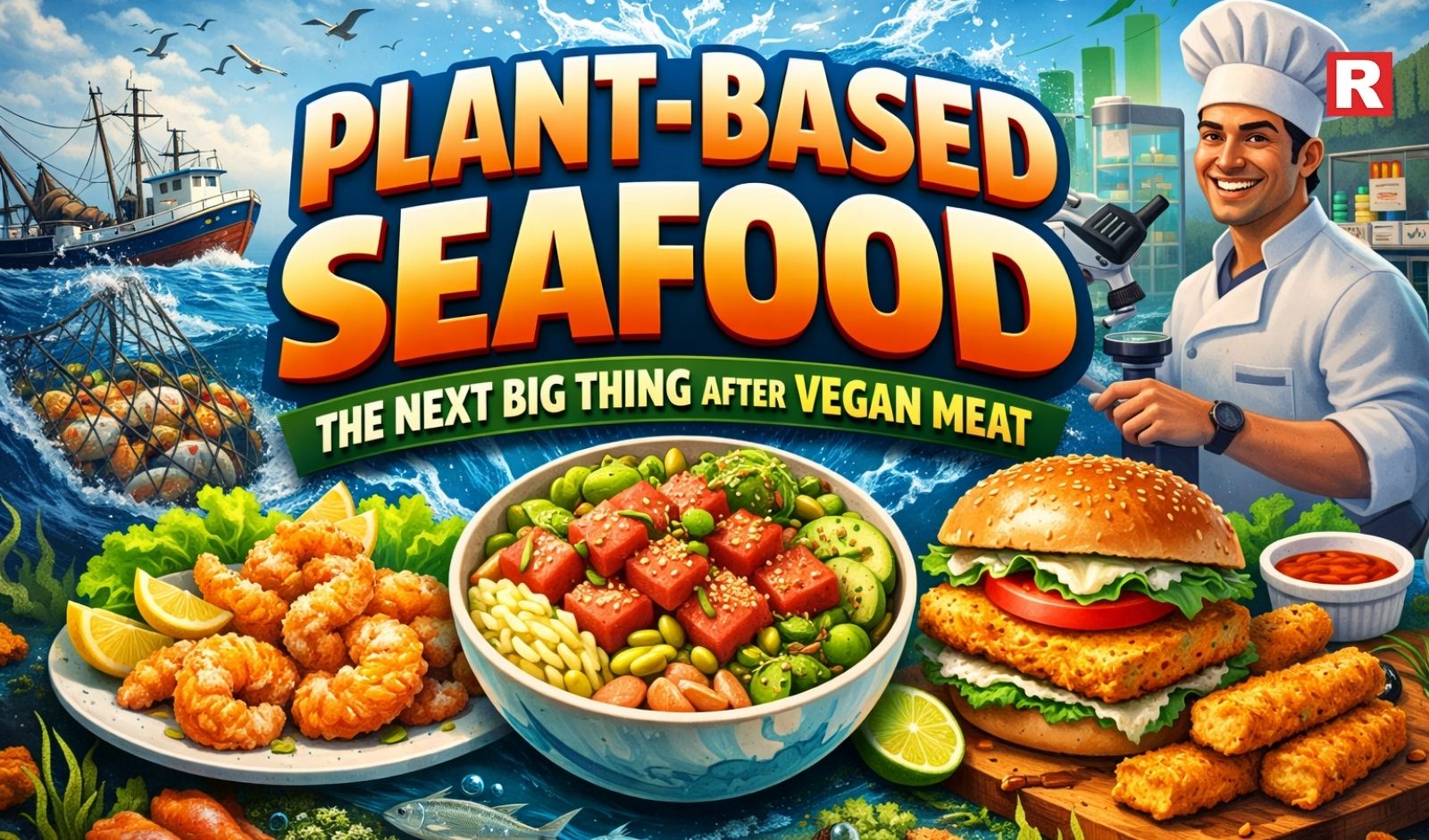
Vegan burgers had their growth cycle. Now attention is turning toward the ocean. Plant-based seafood is moving beyond specialty stores and entering mainstream retail and food service channels. Investors are studying the segment closely. Chefs are running pilot dishes. Retail buyers are reviewing shelf allocation with a long-term strategy in mind. This is no longer a novelty product. It is forming a defined subcategory within alternative proteins. The real driver is not lifestyle positioning. It is structural pressure. Climate change is affecting marine ecosystems. Overfishing is tightening global supply. Fuel costs and fishing regulations are increasing volatility in seafood pricing. At the same time, contamination concerns such as mercury and microplastics are influencing urban purchasing behavior.
Food technology is responding with precision. High-moisture extrusion is improving flaky textures. Seaweed and algae derivatives are refining marine flavor notes. Algal oil is addressing omega-3 expectations. For restaurants and retailers, this creates both differentiation and risk mitigation. For investors, it signals early-stage opportunity in a technically complex category with long-term relevance.
Why Seafood Is a Bigger Sustainability Issue Than Meat
Most people talk about cattle and carbon. Fewer talk about oceans. Yet the pressure on marine ecosystems is severe. Global fisheries assessments show that the majority of fish stocks are either fully exploited or overfished. Industrial fishing removes large volumes from oceans every year. Bycatch remains a major issue. Non-target species get trapped and discarded.
Shrimp farming has also led to mangrove destruction in several coastal regions. Mangroves are natural carbon sinks. When they disappear, both biodiversity and climate resilience suffer. Then there is contamination. Mercury accumulation in large fish species concerns many consumers. Microplastics have entered marine food chains. These concerns are not abstract. Urban buyers read labels. They track sourcing. They question quality. Plant-based seafood enters this gap. It removes pressure from oceans. It avoids mercury. It eliminates bycatch. And it gives brands a strong sustainability narrative.
Why Vegan Meat Slowed, But Seafood Has Room to Grow
Plant-based meat saw rapid expansion. Then growth stabilized. There were reasons. Consumers complained about price. Some questioned ultra-processing. Texture did not always meet expectations. The burger aisle became crowded. Differentiation became difficult. Seafood is different. First, alternatives are limited. Second, seafood prices fluctuate more due to climate shifts, fuel costs, and fishing regulations. Third, contamination fears are stronger in seafood than in poultry or red meat.
This creates white space. When a category has fewer players and stronger environmental urgency, it can scale differently. Seafood is also harder to replicate. That makes technological expertise a competitive barrier. Brands that solve texture and taste can build long-term defensibility.
Read more: What is Kimchi? Top Veg Kimchi You Can Try at Hom
12 Delicious High-Protein Foods to Eat Daily for a Healthier You
The Technology Behind Plant-Based Seafood
Replicating seafood is more complex than replicating beef. Fish muscle has delicate flakes. Shrimp has a springy bite. Tuna has a fibrous yet tender structure. These are not easy to mimic.
Most plant-based seafood products rely on:
- Pea protein
- Soy protein
- Fava bean protein
- Konjac root
- Algae protein
High-moisture extrusion technology is used to create fibrous structures. During extrusion, heat and pressure align plant proteins to form layered textures. This helps replicate the flaky structure of fish fillets. Marine flavor is another challenge. Seafood taste comes from ocean-specific compounds. To recreate this, companies use seaweed extracts and microalgae. These ingredients help build briny and umami notes. Precision fermentation is also emerging. Certain companies are using fermentation to produce fish-like flavor molecules without using fish. This increases authenticity.
Omega-3 content is important. Traditional seafood is valued for omega-3 fatty acids. Many plant-based seafood brands now fortify products using algal oil. Algae is the original source of marine omega-3. Fish accumulate it from consuming algae. This closes the nutritional loop. Some companies are experimenting with 3D food printing to mimic tuna sashimi texture. Others are focusing on ready-to-eat canned formats where texture tolerance is higher. The technology is improving quickly. Early versions lacked authenticity. Newer formulations are more refined.
Market Opportunity and Growth Outlook
The alternative seafood market is still early stage compared to plant-based meat. But projections show strong growth over the next decade. Asia-Pacific is a major region to watch. Seafood consumption is deeply rooted in culture. At the same time, climate vulnerability in coastal areas is rising. This makes sustainable alternatives relevant.
Urban India is also evolving. Flexitarian eating is increasing. Consumers are reducing meat without eliminating it fully. They want variety. They want responsible options. Retail chains are beginning to test plant-based fish fillets and vegan tuna. Quick service restaurants are experimenting with fish-free fingers and shrimp-free tacos. Cloud kitchens can integrate such products with lower risk because they do not depend on daily fish supply. This category is not replacing seafood overnight. But it is carving out a parallel lane.
Know more: 10 Mountain Foods to Keep You Warm While Visiting One
Product Categories Gaining Traction
Some formats scale faster than others.
- Plant-based tuna is gaining traction because it fits into salads, sandwiches, and wraps. Canned formats are convenient.
- Vegan shrimp appeals to restaurants. It is versatile. It works in Asian dishes, pasta, and fusion menus.
- Fish fillets and sticks are suitable for QSR formats. They are easy to integrate into burgers and platters.
- Crab cakes and sushi alternatives target premium segments.
From a business perspective, ready-to-eat formats often scale faster in retail. In food service, operators test products in limited menus before expanding.
Why Restaurants Should Pay Attention
For restaurant owners, seafood has operational challenges.
- Supply is inconsistent.
- Prices fluctuate.
- Storage requires strict cold chain management.
- There is trimming loss and waste.
- Plant-based seafood offers stability.
- Pricing is more predictable.
- There are no bones.
- There is minimal prep waste.
- Food safety risks are lower because there is no risk of parasites or mercury.
It also strengthens brand positioning. Sustainability messaging resonates with younger diners. ESG reporting is becoming important for larger chains. Offering alternative seafood can align with corporate responsibility goals. Menu integration does not require full replacement. A chef can introduce a plant-based prawn taco or a fish-free slider as a limited-time offer. These tests demand without heavy capital risk. Early adopters can differentiate before the category becomes crowded.
Challenges That Still Exist
The category is promising, but not perfect.
- Texture replication is still evolving. Premium seafood eaters are highly sensitive to mouthfeel differences.
- Price parity has not been achieved everywhere. In some markets, plant-based seafood remains more expensive than conventional fish.
- Consumer skepticism around processed foods continues. Brands must improve label transparency.
- Regulatory frameworks vary. Labeling terms such as “vegan tuna” face scrutiny in certain regions.
- Cultural attachment to traditional seafood is strong, especially in coastal communities. Education and sampling will be necessary.
A realistic outlook builds credibility. Growth will be gradual, not explosive.
The Blue Economy and Climate Lens
Oceans absorb a large share of global carbon emissions. Protecting marine ecosystems is critical for climate stability. Reducing industrial fishing pressure can help restore fish populations over time. Alternative seafood contributes indirectly by offering choice. Investors are increasingly evaluating food businesses through ESG metrics. Categories that combine sustainability, innovation, and scalability attract attention. Plant-based seafood sits at the intersection of climate tech and food tech. That positioning gives it strategic weight beyond simple dietary trends.
Also check: 7 Desi Alternatives to Oatmeal for Weight Loss
5 Ways to Use Garden Cress Seeds (Halim) for Stronger Hair and Bones
Top 5 States With the Spiciest Food in India
The Road Ahead!
Vegan meat helped consumers accept alternative proteins. Now attention is shifting to seafood. Industry analysts see strong structural drivers behind this shift. Global fish stocks are under stress. Climate change is disrupting marine ecosystems. Mercury and microplastic concerns are influencing buying decisions. Seafood supply chains remain volatile due to fuel costs, regulation, and seasonality. Urban consumers are asking harder questions about sourcing and safety. At the same time, food technology has advanced. High-moisture extrusion is improving flaky textures. Algal oil is enabling clean omega-3 fortification. Seaweed extracts are refining marine flavor profiles. The market is still early, which gives operators room to experiment. Restaurants can test limited menu integrations with lower supply risk. Retailers can position products within sustainability-led portfolios. Investors see defensible innovation due to technical complexity. Early entrants can shape category standards and brand trust. The next protein shift may not replace seafood entirely. It may redefine how seafood is produced and consumed.

The side dishes on a dinner plate are often secondary to the main dish, but they can influence the overall dining experience. In plant-based cooking, side dishes take on an even more significant role by providing contrast to the primary dish, adding extra nutrition, and creating a sense of satisfaction. Well-chosen vegan side dishes also create a visual and flavorful balance to the main dish by adding color, freshness, and texture to enhance the overall experience rather than detracting from it.
While the concept of creating side dishes is relatively easy, the questions that arise about seasoning, cooking methods, and combinations frequently halt progress. However, once the basic principles are understood, vegan side dishes will become one of the easiest aspects of daily cooking.
In this article, ten ideas for side dishes are listed, which can be easily used in either Indian or international cooking. Although relatively easy to prepare in a short amount of time, these ten ideas can be quite flexible for larger meals.
Read more: How to Dry Foods at Home for Beginner Meal Preppers
What Makes a Great Vegan Side Dish
Clean flavours are the basis of any good vegan side dish. Fresh vegetables, grains or legumes provide the foundation, and herbs, spices and acids provide brightness and clarity to the dish. A good side complements the main dish without oversaturating it.
In addition to flavour, texture plays a role. A plate should include a mixture of crunchy slaws, tender greens, soft grains and crispy roasted vegetables that create a balanced meal. When textures are mixed, this adds to the overall impression of a complete meal.
Most importantly, a good side dish is quick to prepare. The ideas below can be created using a minimal number of steps. They use simple preparation methods like Roasting, Sautéing or Simmering. These techniques allow for the ingredients to be highlighted, while still being flavourful without using any heavy seasoning.
Ten Vegan Side Dish Ideas
1. Roasted Seasonal Vegetables
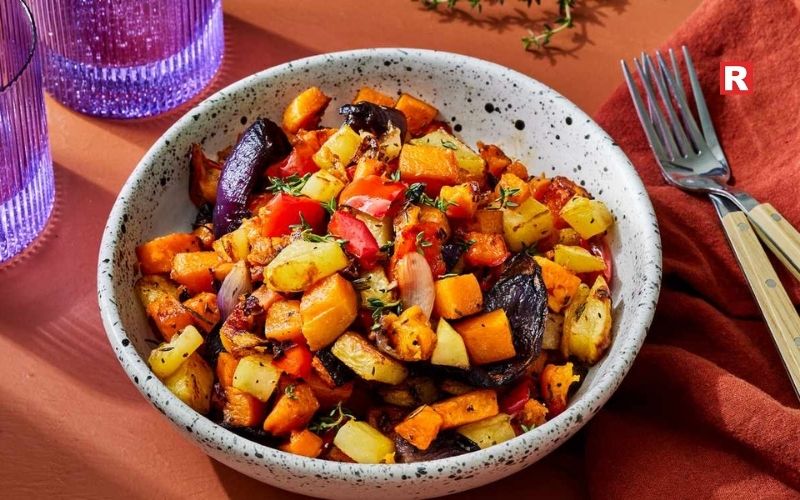
When it comes to meal preparation, roasted vegetables are a versatile option and can be made with whatever you happen to have on hand. If you cut your vegetables (carrots, pumpkins, beans, peppers, potatoes, etc.) into uniform pieces, toss them in oil and salt, and add whatever spices you want to use, you will have a wonderfully roasted vegetable that is full of flavour due to the heat, and a crispy outer layer while being very soft on the inside. You can serve roasted vegetables with rice bowls, light tofu, or any type of lentil base. Additionally, roasted vegetables can be refrigerated for a day or so, making them easy to prepare in advance for large meals or to use as leftovers.
Know more: 10 Healthy Spreads Ideas That Turn Bread Into a Better Snack
2. Warm Lentil and Herb Salad
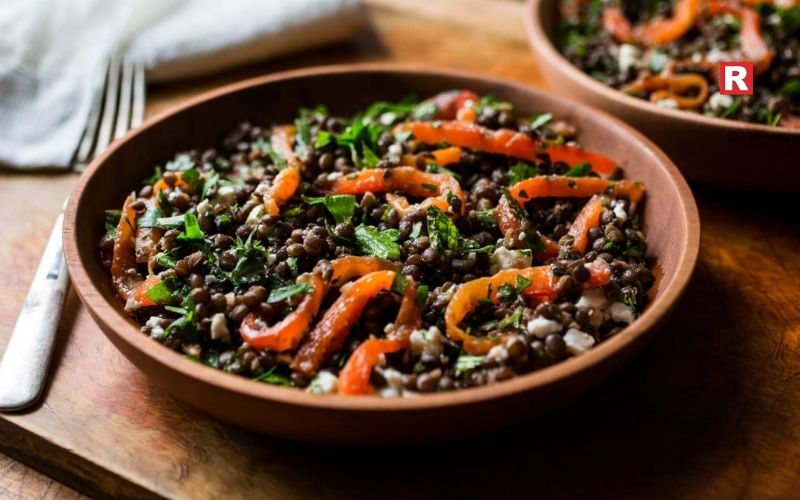
A warm lentil salad provides healthy protein to eat as a side dish with stews, bread or grilled vegetables. Brown and green lentils can maintain their texture when cooked. When cooking lentils, you can add cooked lentils to a salad of chopped fresh herbs, lemon juice and a bit of olive oil. To give it a vibrant look, add a sprinkle of freshly ground black pepper and chopped onion and tomato. The heat of the lentils allows them to absorb the seasonings, giving the salad a wonderful depth of flavour. The salad is intended to complement rather than compete with main courses.
3. Garlic Sautéed Greens
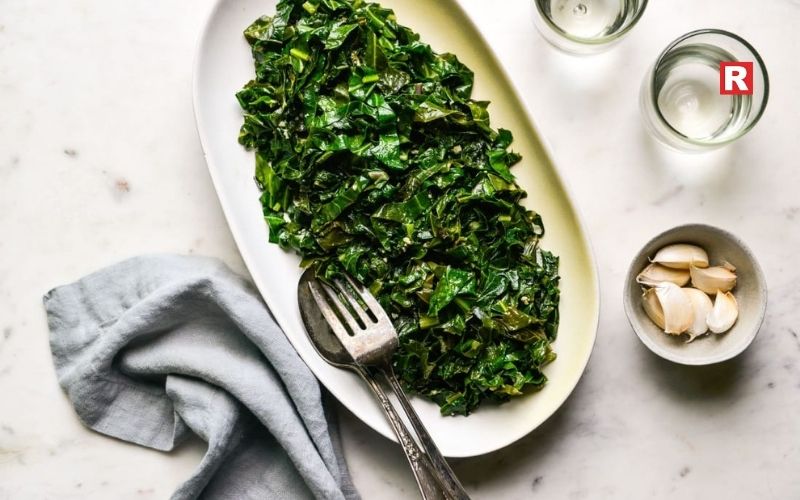
Garlic sautéed leafy greens like kale, spinach, mustard leaves, or amaranth soften rapidly once placed into a sauté pan. The garlic provides a strong enough taste that you could serve these sautéed greens by themselves; however, their flavours also complement many different types of larger meals and entrees. With sautéed greens, you can prepare them using very few ingredients. The cooking time is so quick that nutrients and colour are retained while providing a tender texture. As a side dish, sautéed greens complement grain bowls, pasta dishes, and bean-based main dishes extremely well. Sautéed greens are an excellent method of adding freshness when your main dish may seem too heavy or dense.
4. Crisp Vegetable Slaw with Light Dressing
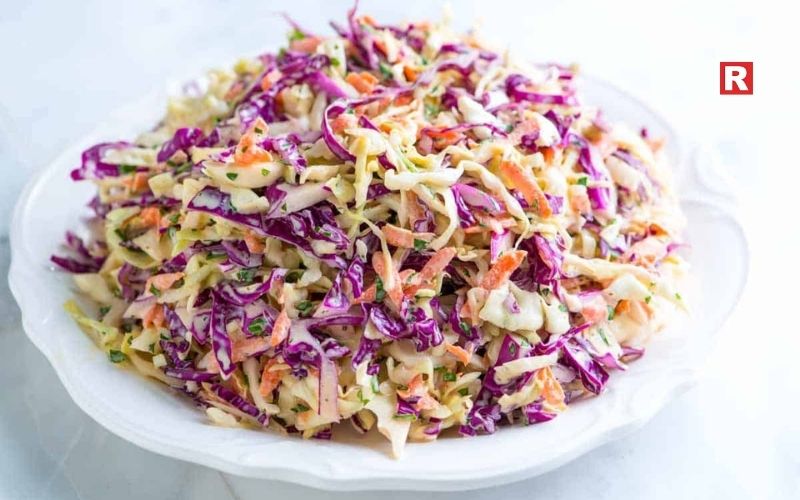
Shredded cabbage, carrot sticks and sliced bell pepper provide good crunch. When using shredded cabbage for slaw, you may want to keep the dressing on the light side: just a squeeze of lemon juice, salt, pepper, and a drizzle of oil will suffice. Keep the vegetable pieces thinly sliced to maintain their crunch. Slaw works really well when eaten with sandwiches, in stir fry dishes, as an accompaniment to baked tofu recipes and on any platter where a cool and crunchy addition will enhance the dish. As slaw keeps fairly well in the refrigerator for several days, if you decide to make slaw ahead of time, it will be convenient to have it ready before making your meal.
5. Chickpea and Cucumber Toss
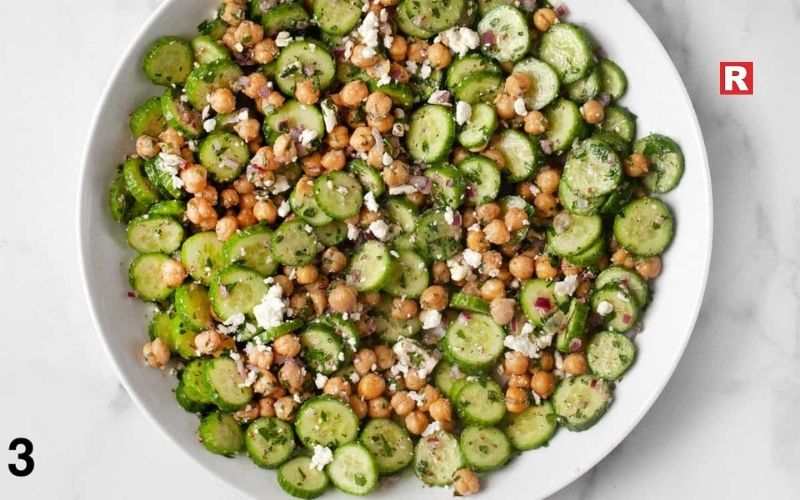
To create a tasty salad that is high in protein, it is best to use chickpeas as your base. Chickpeas are an excellent source of protein, and their dense texture provides an excellent foundation for a salad that is refreshing and light. Adding cucumbers, tomatoes and fresh herbs results in a happy combination of flavours and textures that are crisp and satisfying, with just a sprinkling of salt, lime juice and black pepper typically required for seasoning. This salad pairs perfectly with pita breads, rice, grilled vegetables or other simple side dishes, and it can also balance out heavier meals that rely upon cooked ingredients. Because the preparation method involves using only pre-cooked chickpeas and uncooked vegetables, it is considered to be quite easy to prepare.
6. Pan-Seared Tofu Bites
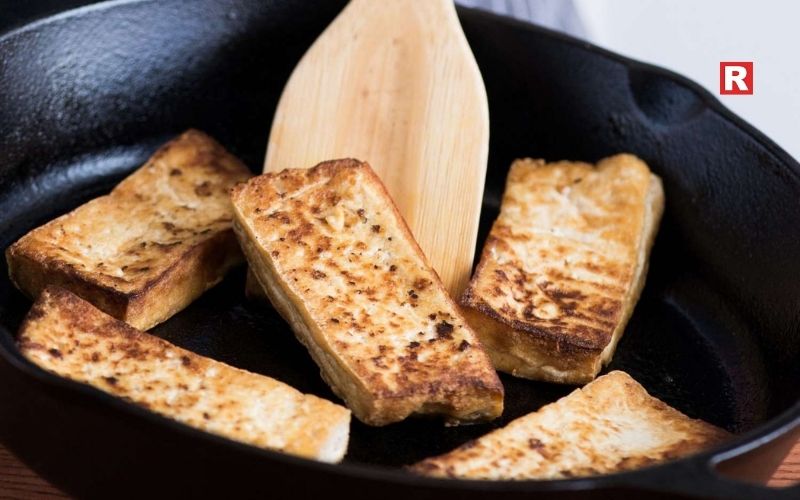
Tofu absorbs flavour easily when cooked this way, so once the tofu cubes are well browned on each side, seasonings such as salt, pepper, lemon or lime juice can be added to enhance the flavour of the dish. This tofu recipe provides a delicious texture, as well as providing the savoury flavour that will complement a variety of dishes, including stir fries, grain bowls or soup. In addition, adding these cubes of tofu to any dish will provide protein that can make a meal more significant. The secret to achieving a good sear on tofu is to remove any excess moisture before placing the cubed tofu into a hot pan. Removing excess moisture will lead to cleaner sears on the tofu cubes.
What's new: 10 Vegan Fusion Curries From Around the World
7. Quinoa Pilaf with Nuts and Herbs
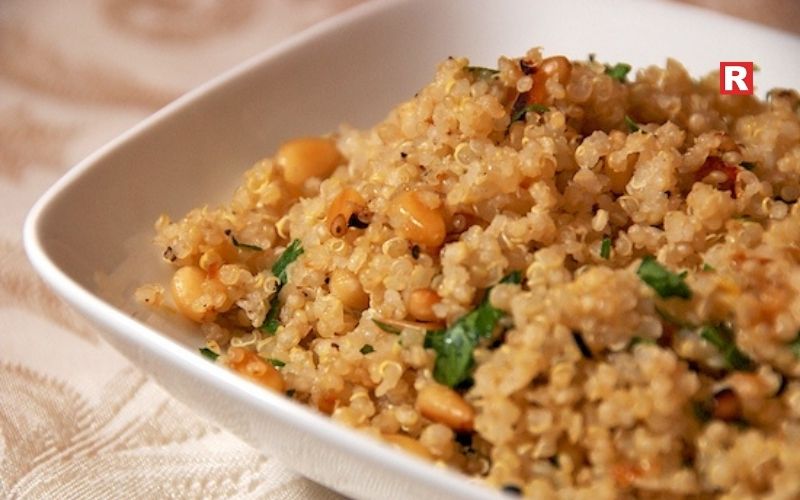
Quinoa is a grain that provides an airy base for both Indian and international dishes. Quinoa can be mixed with nuts, herbs, and a light, indulgent seasoning once cooked and sprinkled with a touch of lemon juice to enhance its flavour. The quinoa pilaf absorbs flavours nicely, remains fluffy and does not become sticky. You can use it as a side dish for lentil curries, grilled tofu, or roasted vegetables. Another advantage of using quinoa is that it cooks quickly and does not need any preparation for quick weeknight meals.
8. Mashed Sweet Potatoes

Sweet Potatoes are naturally sweet and are smooth-textured. They add to the texture and appearance of the plate. Simple boiling with a little oil and salt can be mashed into a deep consistency, with pepper or cinnamon added to produce complexity in flavour. This mash pairs nicely with other roasted vegetables, mushrooms, or bean-based main courses and also balances out spicy dishes by providing steady, mild flavours. The texture of the mashed sweet potatoes softens the crisp texture of many of the meal elements on the plate.
9. Sautéed Mushrooms with Fresh Pepper
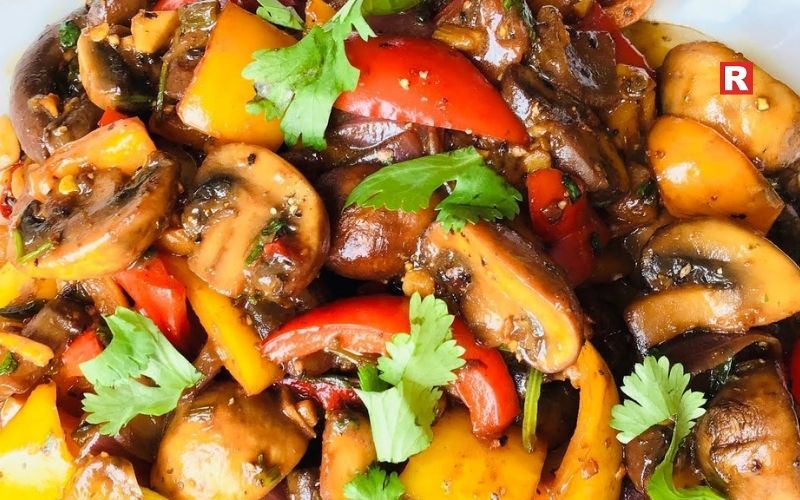
Pan-fried mushrooms have a nice brown colour and earthy flavour, which provides a nice pairing for rice and bean-based meals. Sautéing mushrooms with garlic or onion adds a great tenderness to the mushrooms and an added depth of flavour. Freshly cracked black pepper is very complementary to their earthy richness. Mushrooms work nicely as a side dish with rice bowls, tofu stir-fry and warm salads. Cooking mushrooms is quick and requires minimal additional ingredients, which is a strength of the mushroom, especially when the other items on your plate have a lot of complex flavours.
Check out: Top 10 Vegan Street Foods in India Every Indian Loves
Top 10 Vegan Dishes in Asian Cuisine
10. Stuffed Bell Peppers or Baked Vegetable Cups
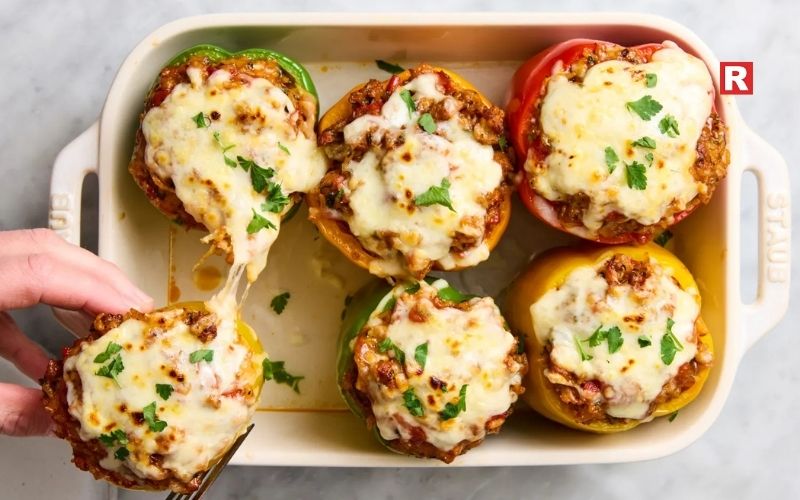
Stuffed vegetables are a nice way to have a more significant side-dish and create a bit of an elevated feel for your meal without having to go out of your way. You can stuff bell peppers, tomatoes or small pumpkins with cooked grain, vegetable or bean mixtures. The shells of the vegetables will become soft and tender while the filling stays warm through a short baking time. Stuffed vegetables are a great addition to any kind of festive or everyday meal that needs to have a central support item. Stuffed vegetables add colour and a nice touch of care to your dining table. Additionally, you can always change the colour of the filling depending on the season, giving you lots of flexibility with the concept.
Ingredients to Keep Ready for Quick Vegan Sides
- Olive oil, mustard oil or any non-aromatic oil can be used to season your dishes.
- The simplest ways to add flavour to your meal are to add salt, pepper, cumin and paprika.
- Adding citrus fruits, juices will provide the additional acidity you want for a more balanced flavour profile.
- Fast-cooking grains like quinoa, millet and rice are reliable bases for your meals.
- Beans and lentils are great additions for texture as well as protein and bulk.
- Using seasonal vegetables will help to make it easier to create fresh combinations of meals.
- Finishing touches using herbs such as coriander, mint and parsley will give your dish a clean taste.
Learn more: 7 Protein-Rich Vegan Foods That Pack a Punch – No Meat, No Problem!
Plant Powered Sides
Choosing thoughtfully created Vegan Sides can make a simple meal feel like a complete and comforting feast. When cooking with vegetables, grains and legumes in their most natural state, you'll find endless options with minimal work. Seasonal and personal taste variations also work well for each dish, making everyday cooking practical. As you create new combinations, you'll build a sense of balance within your creations and add flavour, texture and visual interest to your table. Having a small collection of go-to vegan sides will also help you easily and quickly create delicious plant-based meals.

Plant-based eating has significantly expanded over a period of a few years, not only among vegetarians but also among people who intend to decrease the amount of meat in their diet while still keeping the flavour and nutrition intact. More and more households in India are using vegetarian proteins that can give the same satisfaction as chicken but are better in terms of fibre content, cholesterol level, and affordability.
The idea is pretty simple. One needs meals that can provide the necessary nutrients, taste familiar, and be compatible with a certain exercise routine or simply serve as daily nourishment. Luckily, nowadays, the market offers plenty of ingredients that imitate the texture of chicken or serve the same purpose on your plate. Every one of them can easily be mixed with curry, grills, stir-fries, biryanis, or any other daily meals.
This article features the ten most excellent vegetarian chicken substitutes, with explanations about their flavours, cooking methods, and their strongest points. You can create a diet that not only contains an ample amount of protein but is also diverse and easy to prepare at home with the ingredients listed in this article.
Read more: 10 Most Popular Coffee Blends in India
What Makes a Good Chicken Substitute
Most of the time, the vegetarian ingredients fail to replace chicken as effectively as one might want. A proper substitution should have sufficient structure to maintain the integrity of the cooking process, it should be able to soak up the flavours well and most importantly, it should be a good source of protein. Texture is the most important factor since chicken is often liked for its specific bite and firmness. Protein levels indicate whether the meal meets your dietary needs, especially if you are into fitness or just want to have a stable source of energy. Furthermore, accessibility is also a factor that contributes to this. Substitutes only make sense if they are available in normal markets and at a reasonable cost. Therefore, flexibility also counts.
10 Vegetarian Chicken Alternatives
1. Soya Chunks
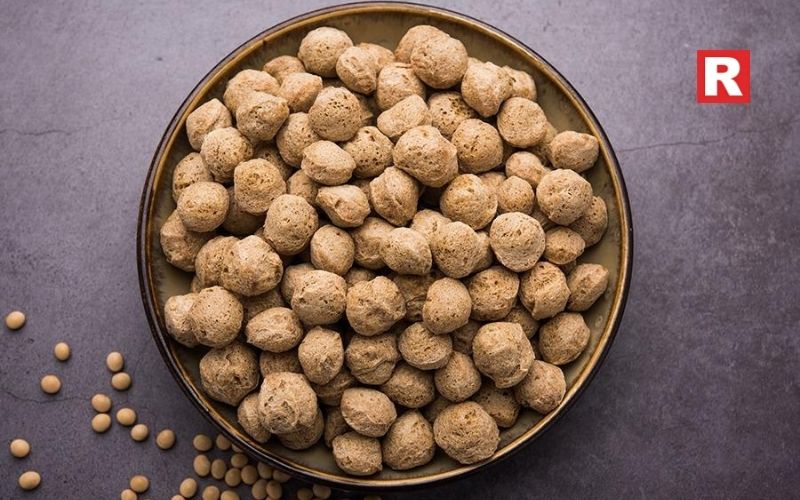
Soya chunks are still one of the easiest high-protein meat substitutes to get in India. After they are rehydrated, they have a texture that is chewy and somewhat firm, just like the textured mutton pieces or pieces of cooked chicken. So, they are perfect to make curries, biryanis, pulao, kebabs, and even sautéed dry dishes. Their ability to soak up marinades and spices is what makes them so powerful. A quick soak in hot water and a gentle squeeze will rid soya chunks of any raw smell. Since they can be used in simmering or slow cooking, what is more, they are great because they retain their shape. A 100-gram serving is an excellent source of protein and the highest among all vegetarian ingredients.
Know more: 10 Vegetarian Indian Foods That Help You Gain Weight the Healthy Way
2. Tofu
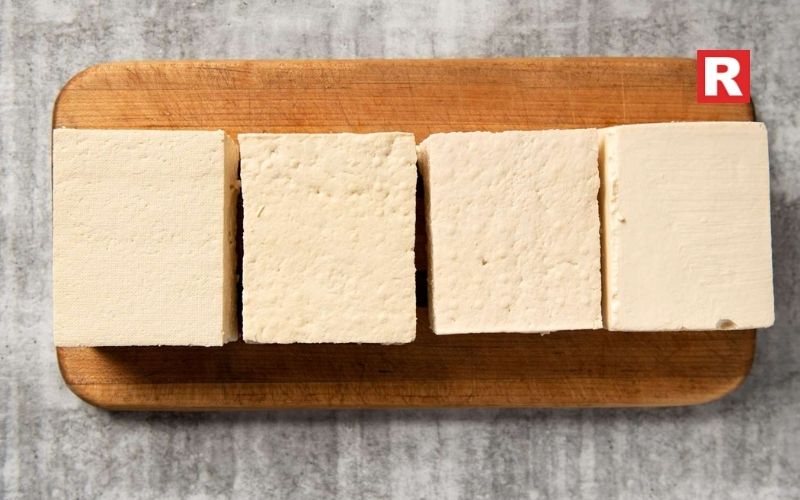
When you change a little, tofu can become a softer but still satisfying chicken replacement. It is a product of soy milk, and it comes in different textures, but density-wise, firm tofu is the closest substitute for dense chicken pieces. When cooking it, brown tofu is best. It is very fast at absorbing a marinade, and it can even be spiced without turning into a pulp. The best possible uses would be in stir-fries, grilled skewers, salads, and very mild curries like the ones from Thailand with coconut gravies. The texture gets more springy after wiping tofu with a towel. Small yet steady, the protein content of tofu is a reliable everyday ingredient. Without changing the flavour, one gets to season tofu to their best liking; thus, they are free to make any dish they want.
3. Tempeh
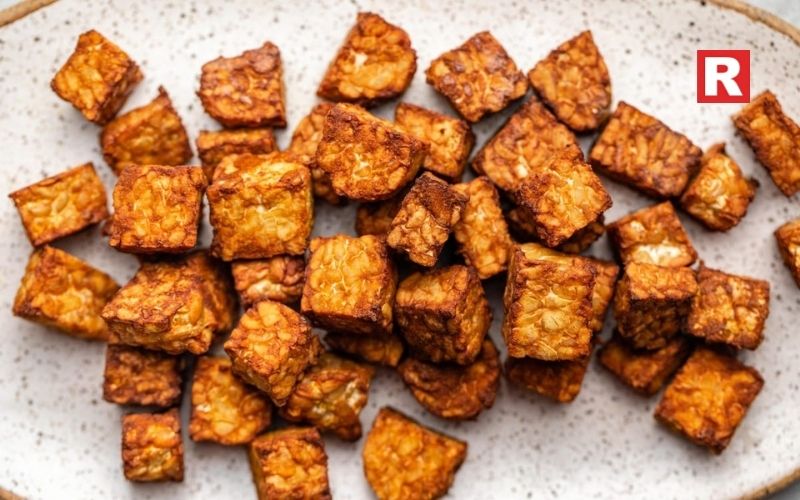
Among the vegetarian proteins, tempeh uniquely stands out. As it is made from whole fermented soybeans, it is firmer, earthier, and more structured than tofu. Its nutty flavour performs like a charm in deepening the dishes, and its compact body provides a bite similar to that of grilled chicken. You may cut it into slices, cubes, or simply crumble it in your recipes. Particularly, it is delicious in sandwiches, stir-fries, tandoori-style grills, and wraps. Along with other benefits, the fermentation process supplies tempeh with extra advantages, and its protein becomes more bioavailable. Due to its thickness, it is very good at holding marinades and browning fast on a pan or grill. Although tempeh is rarely found in normal stores, its increasing presence is turning it into a viable choice for those who want to spice up their diet of protein.
4. Paneer
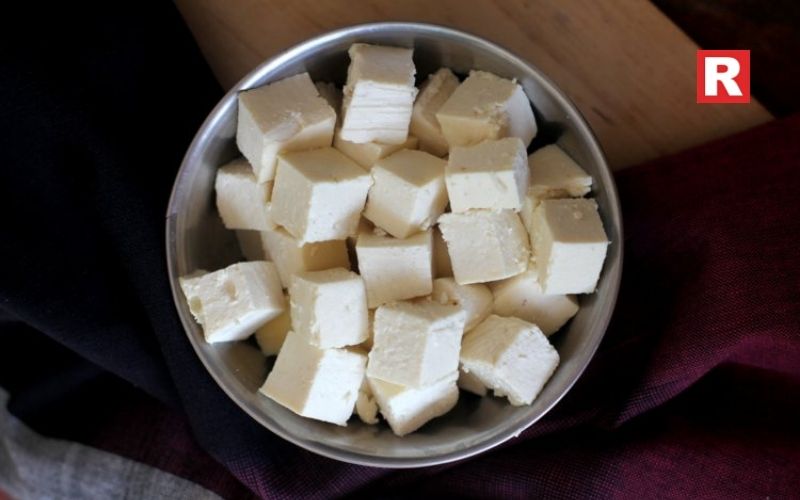
Paneer, the quintessential Indian protein, is a very simple chicken alternative that has been around forever. A firm yet soft texture of paneer can be used without limitations in creamy gravies, grills, or dry tawa dishes. To be able to keep the shape of paneer when heated, it must be handled properly, and then it will not turn rubbery. Its protein content is not high, but still, it can be a reliable source of protein when combined with vegetables, lentils, or whole grains. Paneer tikka, paneer bhurji, paneer butter masala, and paneer stuffed rolls are some of the many examples that show how easily paneer can be a substitute for chicken in both everyday and festive meals. Moreover, as it is available everywhere, it is one of the most convenient substitutes for households that are short on time.
What's new: 7 Tequilas That Deserve a Spot on Your Bar Shelf
5. Raw Jackfruit
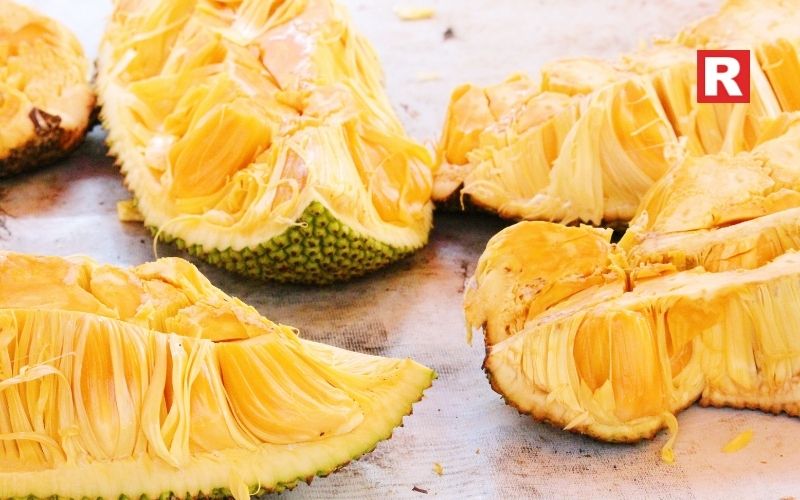
Raw jackfruit gives a naturally fibrous texture, which is very similar to that of shredded chicken. After cooking, it stays tender but has a little stringy texture, thus making it ideal for pulled “meat” sandwiches, curries, and slow-cooked dishes. It is a spice lover since it absorbs the spices without any problem and can then be utilised in cutlets, rolls, or stir-fries. The raw version of the fruit, unlike the ripe one, has a very subtle flavour that hardly changes when mixed with the other savoury seasonings. First of all, it is great for preparing comforting home-style curries; secondly, it is an excellent ingredient for creating plant-based versions of such dishes as korma or kofta. Furthermore, its nutritional profile contains moderate amounts of carbohydrates and fibre, together with a light dose of protein, thus making it a nutritious source of everyday meals.
6. Seitan
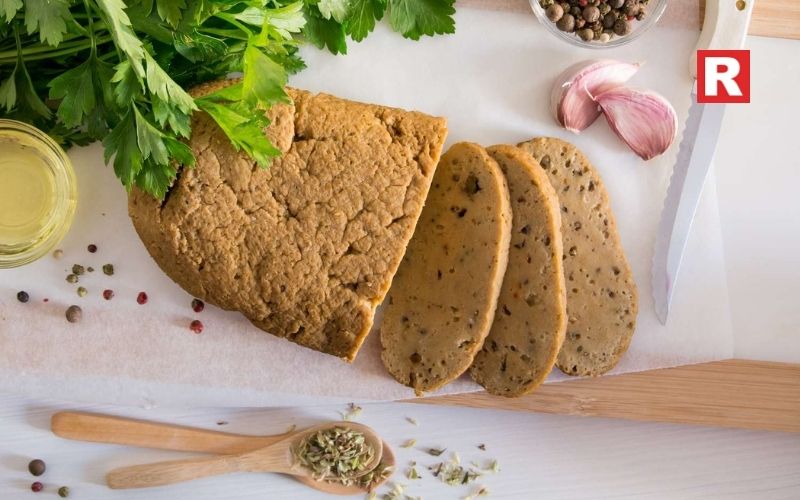
Seitan is a gluten-based product which is derived from wheat and is one of the plant-based proteins that most closely resemble the texture of chicken. It is very firm, elastic, and, therefore, it can be used in grilling, roasting, and stir-frying without falling apart. Due to its high protein content, it is a favourite among athletes who follow vegetarian diets. Seitan is also a quick flavour absorber, and if browned in a pan, it develops a very nice savoury taste. It is especially good in Indo-Asian dishes, wraps, skewers, and any recipe where a firm bite is required. Nevertheless, the best thing for people without a gluten intolerance is that seitan is still a great choice if they want hefty meat-like meals.
7. Plant-Based Mock Meats
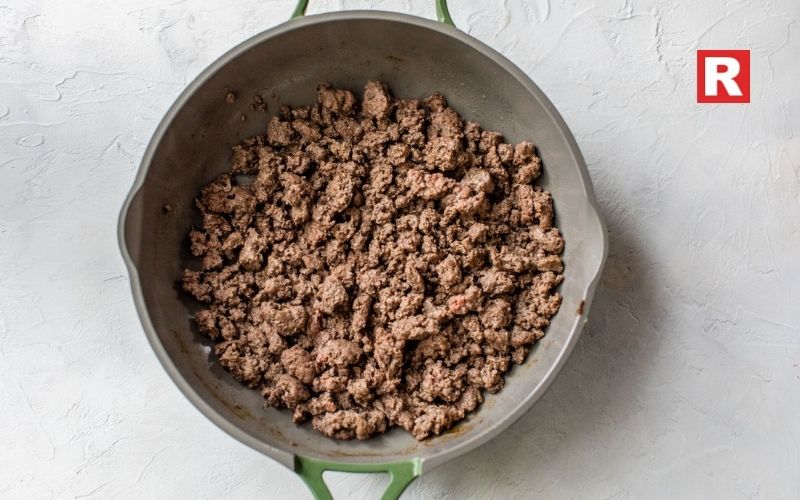
Mock meats made from soy, pea protein, wheat protein or any blend of plant ingredients have become widely popular in India. The products have been made keeping in mind that they should look and taste like chicken, which makes them very handy when used in dishes that are already familiar to the users. You can easily make kebabs, burgers, mixed vegetable curry, biryani, and even tandoori dishes without going far in your kitchen. Most of them also come pre-marinated or pre-shaped, so you do not have to worry about the time you spend getting things ready. Their protein content varies, but in general, they are not less than or equal to chicken. Mock meats are the perfect choice for beginners who want a very close replica without going out of their way in the lab.
Check out: 15 No-Oil Recipes That Taste Amazing
Top Korean Noodles Brands You Can Find in India
8. Mushrooms (Oyster and Shiitake)
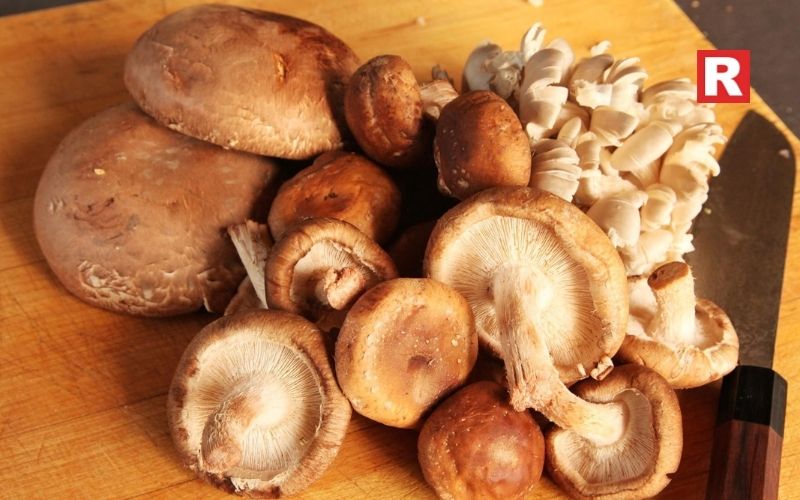
Oyster and shiitake mushrooms have a natural fibrous structure that is very similar to chicken and therefore works as a good chicken substitute. Their flavour is mild and becomes stronger when the mushrooms are cooked in a pan or on a grill, thus making it a perfect base for treats like curries, pasta, stir-fries, and fried rice. The mushrooms offer less protein than soy-based substitutes, but their texture, umami, and versatility overcome that easily in well-balanced vegetarian meals. By shredding and seasoning oyster mushrooms, one can get very close to the chew of shredded chicken. Mushroom pepper fry, mushroom masala, and mushroom stir-fried noodles are just a few of the many simple dishes that can be made using mushrooms.
9. Lentils and Dals
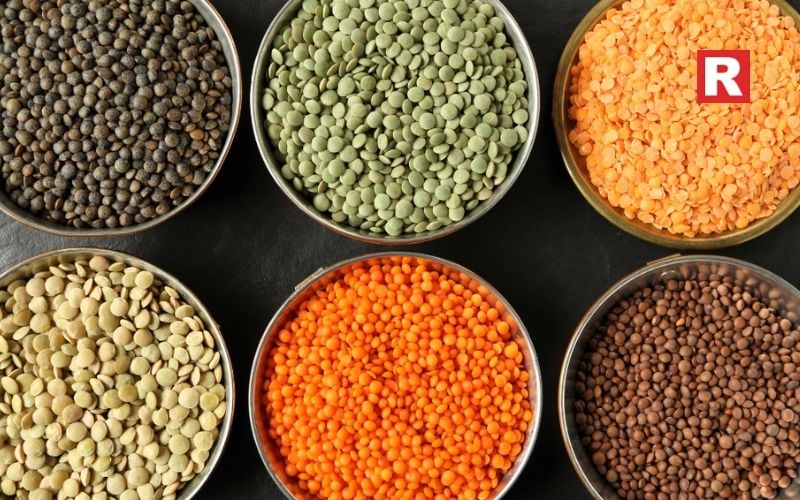
Lentils may not imitate the texture of the chicken, but they do provide the necessary protein and are the main ingredient of the vegetarian diet. On their own, lentils are incomplete, but when coupled with vegetables, spices, and whole grains, they ensure total nourishment. Lentil kebabs, lentil cutlets, dal-based curries, and mashed lentil patties are some of how one can replace chicken in everyday meals. Besides, they are quick to cook, can be used in a variety of cuisines, and are still affordable. Also, their inherent fibre content makes them good for digestion and gives the body energy that is stable. Dals are still a reliable and healthy option for those seeking high-protein meals without soy or mock meats.
10. Chickpeas
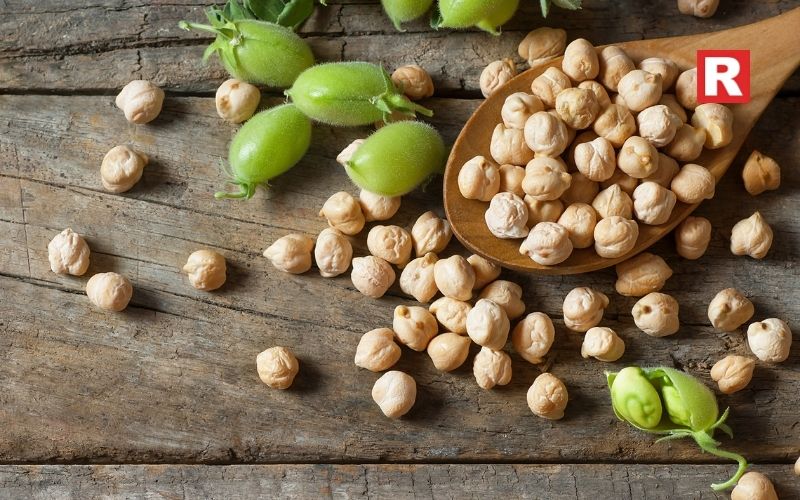
Chickpeas can give a solid texture and provide a steady amount of protein, thus making them trustworthy substitutes in dishes that are body and richness-dependent. They can be cooked as curries, thrown in salads, wraps, stews, grills, as well as many other things. Mashing them makes the perfect base for patties, koftas, and burger fillings, while keeping them whole makes them suitable for such dishes as chole, chickpea sauté bowls, or Mediterranean-inspired plates. In addition, chickpeas can be mixed with paneer, vegetables, or grains, which gives you the freedom to easily create nutritious meals. Moreover, their feature of giving saturation without heaviness makes them equally appropriate for lunch and dinner.
Learn more: Top Veg Japanese Dishes You Must Try on Your Next Visit
Smarter Veg Choices
Transitioning to vegetarian alternatives doesn't confine your meals. It actually gives you more options and allows you to be more creative. These components provide the body, taste and are a source of healthy nutrients in equal amounts. No matter if you are cooking for health, saving money, or just for the pleasure of it, plant-based chicken substitutes enable you to make meals that are both delicious and nutritious. Through the use of texture, flavour, and method, you can discover the mixture that works best for you and your daily routine. Each replacement on this list is equipped to perform a certain function in the kitchen, and as a result, they form a complete, protein-rich plan for regular meals.
Vegan cooking is not just limited to salads and smoothies. It has become an exciting space where cultures, spices, and ingredients mix to create comforting, bold, and inventively gorgeous dishes. And fusion curries hold the top spot in plant-based cooking. They can embrace flavors from every culture in the world. And with plant-based cooking gaining popularity on every continent, fusion curries are transforming into a modern representation of global culinary fusion.
These fusion curries are not "just" recipes, but instead, stories of spices and stewing pots. They show how very simple vegetables, legumes, and plant-based proteins can be transformed into incredible meals through the fusion of cultures.
In this article, we’re sharing 10 vegan fusion curries that are truly surprising in their cultural pairings, ingredients, and techniques.
Read more: How to Cook Prawns Like a Pro: Restaurant-Style Curry Recipe
Why Vegan Curries Adapt So Well to Fusion
Vegan curries are naturally versatile, allowing them to perform admirably in the fusion cooking space. As plant-based ingredients such as coconut milk, cashews, lentils, tofu, or other hearty vegetables absorb flavors naturally and interact comfortably with different spices from around the world, there is no need for either dairy or meat to be added to the aromatics of garlic, ginger, herbs, and spices that form the backbone of food around the world. From the creamy to the spicy, tangy, or simply earthy, vegan curries have an easy evolution to fusion while remaining wholesome, comforting, and full of fun.
The 10 Vegan Fusion Curries
Below is the list of 10 vegan curries that have different origins, taste profiles but share the same idea of being vegan.
1. Thai Green Coconut Curry With an Indian Masala Twist
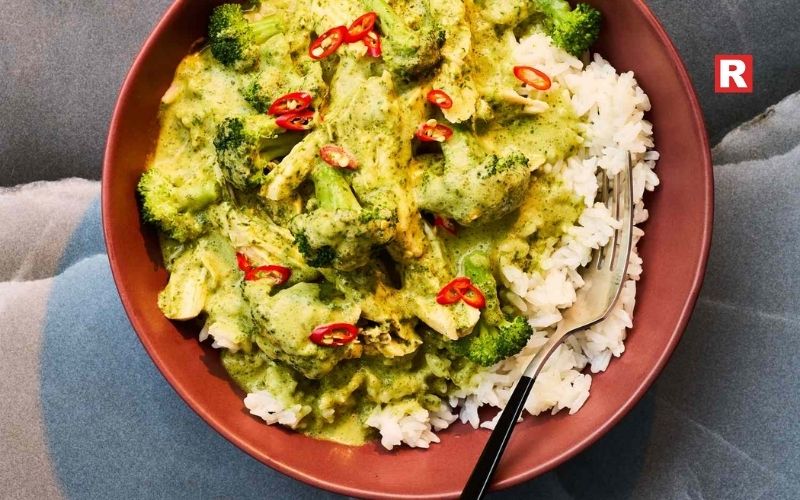
This colorful curry combines the bright flavor of Thai green curry made with lemongrass, basil, galangal, and coconut milk, with comforting Indian spices like cumin, coriander, and garam masala to create a creamy, herb-filled dish complete with veggies such as zucchini, green beans, and tofu. The flavor is bright, mildly spicy, aromatic, and has the layered complexity of both cuisines. Serve it over jasmine rice or with soft rotis for a perfect Indo-Thai fusion.
Know more: Top 10 Vegan Dishes in Asian Cuisine
2. Japanese Katsu Tofu Curry With Caribbean Spice Blend
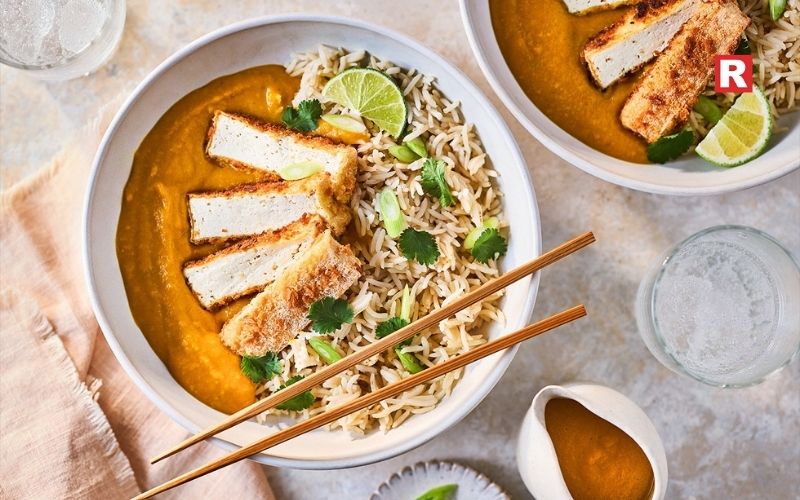
This curry fuses the comforting richness of Japanese curry with bold Caribbean flavors such as allspice, scotch bonnet pepper, and thyme. Crispy tofu cutlets can be used for katsu, adding texture to the silky coconut sauce. The taste is sweet, spicy, savoury, deeply aromatic, and has notes of tropical warmth. Best served with sticky rice or coconut rice and fresh scallions or pickled ginger for contrast.
3. Moroccan Chickpea Curry With Mediterranean Herbs
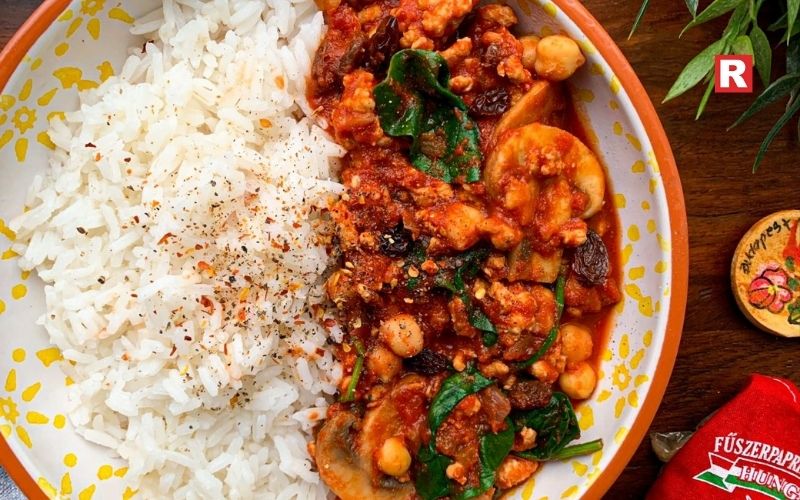
A fragrant mixture of Moroccan spices like cinnamon, cumin, paprika, and saffron is paired with fresh Mediterranean herbs such as rosemary, oregano, and parsley. And to make it hearty, chickpeas and tart tomatoes, and olives are added, creating a tangy and savoury dish. The combination creates a curry that is warm and uplifting, sweet and earthy. Serve with couscous, bulgur, or warm pita for a filling North African-Meets-Mediterranean dish.
4. Ethiopian Berbere Lentil Curry With Italian Tomato Base
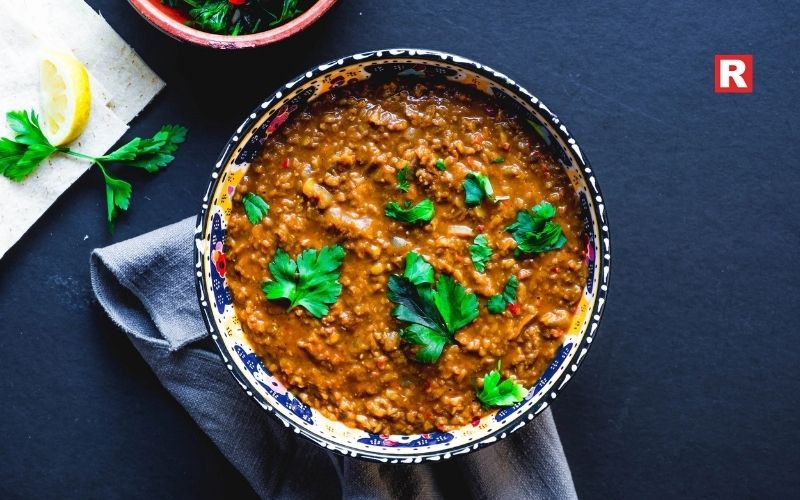
This recipe puts a spin on lentil curry, utilizing Ethiopian berbere spice, a spicy blend of chilli, fenugreek, and warming aromatics combined with a slow-cooked Italian-style tomato base. Instead of lentil curry's typical spiced lentils and seasoned tomato base, this curry is layered with a slow-cooked Italian-style tomato base. These spices yield spicy, smoky, slightly sweet, and incredibly cozy flavours. The red lentils turn into a creamy texture that goes well with polenta, crusty bread, or injera.
5. Mexican Mole-Inspired Vegetable Curry
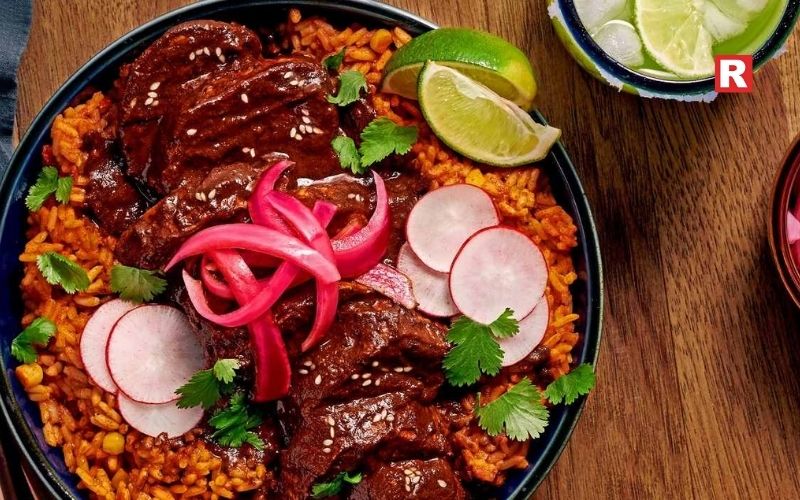
This dish blends Indian curry cooking techniques with the nutty and chocolate flavours associated with Mexican mole, drawing on chilies, nuts, cocoa, and cinnamon along with tomatoes to create a dark and rich sauce. We find that root vegetables and mushrooms soak up the earthy complexity beautifully. The taste is smoky, slightly sweet, and subtly bitter yet wonderfully satisfying. This dish works harmoniously with rice, tortillas, or quinoa to create a whole Latin-Indian fusion feast.
6. Korean Gochujang Coconut Curry
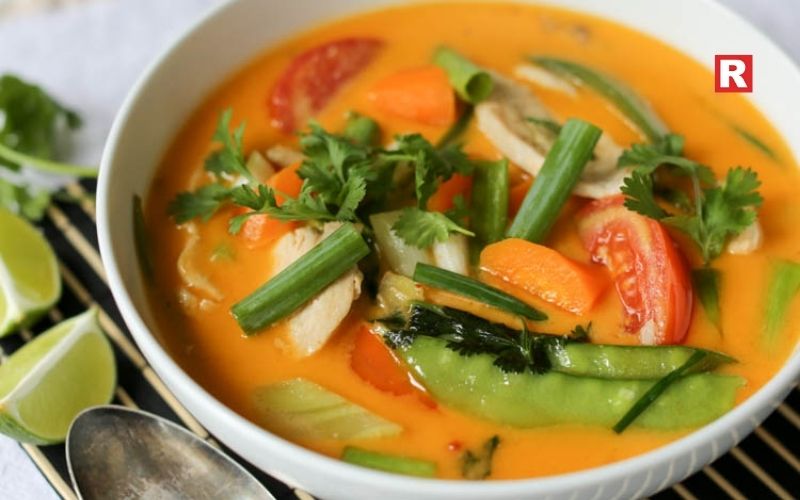
This modern twist on curry utilises Korea’s famous fermented paste, gochujang, for heat and tang, which is added into a smooth coconut milk base. Add texture with mushrooms, bok choy, tofu, or sweet potato. The flavour profile of this dish is spicy, umami-heavy, creamy, and slightly caramelised from the paste. Ladle it over on top of rice noodles or steamed rice sprinkled with sesame seeds and scallions. It is a comforting Asian fusion bowl.
7. Middle Eastern Tahini & Lemon Cauliflower Curry
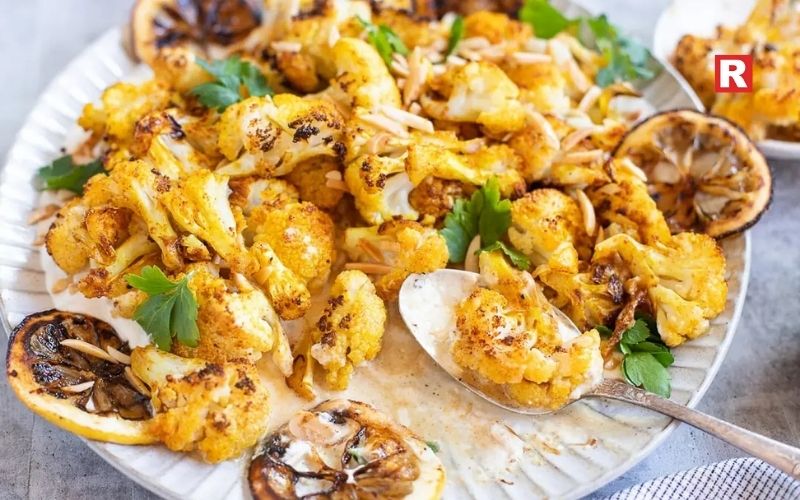
A creamy tahini sauce is used in place of classic dairy as a substitute, while zesty lemon, cumin, and garlic add a Middle Eastern flair. Roasted cauliflower absorbs the flavours beautifully to make a curry that is nutty, tangy, earthy, and silky with a touch of smokiness. Pair it with couscous, flatbread, or herbed rice, and garnish with parsley or toasted pine nuts if you are feeling fancy.
What's new: Top 10 Vegan Street Foods in India Every Indian Loves
8. Jamaican Jerk Mushroom Curry
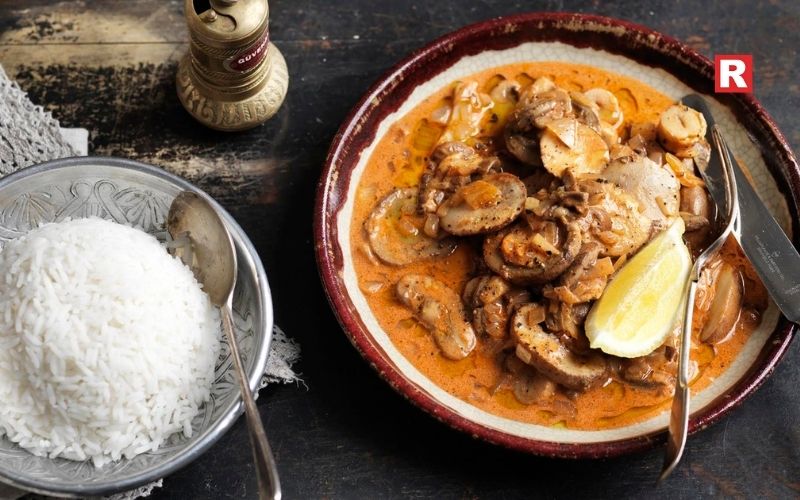
Drawing inspiration from the bold flavours of Jamaican jerk seasoning, this curry combines scotch bonnets, allspice, thyme, ginger, and cloves in a rich coconut-based sauce. The mushrooms provide a meaty texture to the dish, yielding hearty comfort without making it feel heavy. The result is a fiery, smoky, aromatic, and slightly sweet taste. It is best paired with coconut rice, plantains, or roti for a tempting Caribbean fusion meal.
9. Sri Lankan-Style Pineapple Curry With Southeast Asian Notes
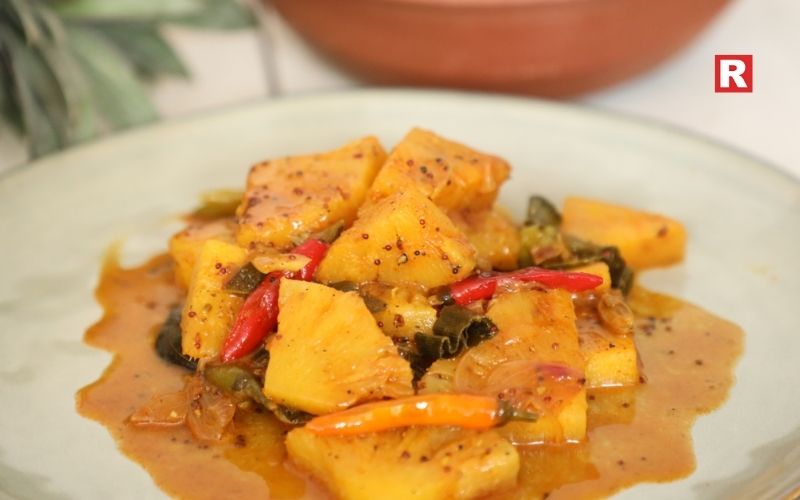
This tropical fusion curry combines Sri Lankan spices (mustard seeds, turmeric, curry leaves) with Southeast Asian components (kaffir lime leaves, lemongrass). The key ingredient is pineapple, which brings a sweet, tangy, and fragrant note to the dish. The bright and citrusy flavours pair well with the richness of coconut milk. Enjoy it with rice or rice noodles for a bright and unique curry experience.
10. French Ratatouille Curry With Indian Spices
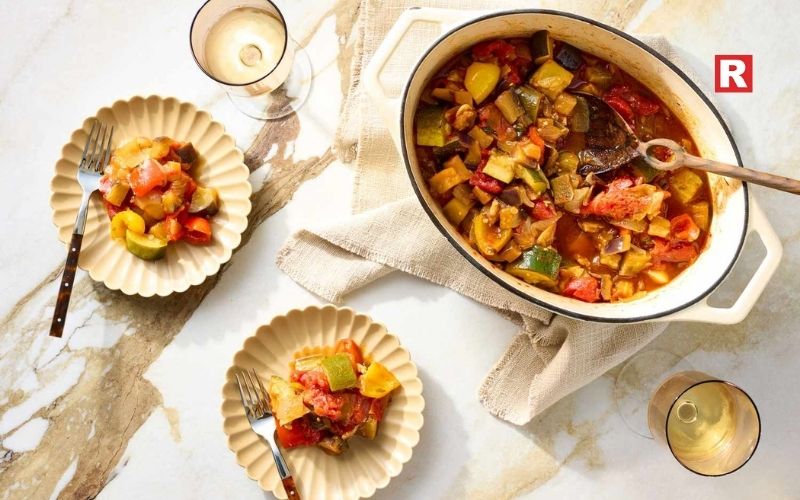
Traditional French ratatouille vegetables like zucchini, eggplant, tomatoes, and bell pepper are cooked down in a flavorful Indian curry base infused with cumin, ginger, turmeric, and garam masala. The mix produces a rustic yet fragrant dish that is hearty, bright, and aromatic in flavor. The texture is soft, stewy, and comforting, with layers of sweetness and heat. The ratatouille can be served with crusty bread, rice, or quinoa for a French-Indian twist.
What Makes Fusion Curries Special
Fusion curries stand out due to their invention. They take the opportunity to take flavors from a variety of cultures to create something new, while still being similar to flavors you may already know. Fusion curries borrow aspects of traditional curry, like slow simmering, layering spices, or creating aromatic bases, and combine them with globally inspired ingredients like gochujang, tahini, mole, or Mediterranean herbs to create complex, multi-dimensional flavours.
The difference between a traditional curry and a fusion curry is that, while traditional curries are associated with one region of origin, fusion curries are limitless and can be adapted for the seasons, dietary restrictions, and modern cooking styles. Fusion curries are compatible with balance, heat, creaminess, acidity, sweetness, and umami that work together in one thoughtful bowl of food. Fusion curries make daily plant-based cooking even more fun, approachable, and inspired by the world.
Check out: 20 Unique Fritter Recipes From Every Corner of the Globe
Best Exotic Fruits to Enjoy This Winter for Taste, Health and Glow
Ingredient Overview
- Coconut Milk around Cashew Cream: Great, dairy-free substitutes for richness.
- Plant Proteins: Add richness to dishes with tofu, chickpeas, lentils, and mushrooms.
- Spice Blends around the world: Gochujang, berbere, za’atar, jerk seasoning, curry pastes.
- Aromatics: The building blocks of flavor, with garlic, ginger, lemongrass, shallots, and onions.
- Acid/Sweeteners: Use lime, vinegar, tamarind, maple syrup, or pineapple juice for balance.
Tips to Make Fusion Curries at Home
- Create an equal balance of flavors: sweet, salty, spicy, sour, and creamy.
- Roasted or charred vegetables will provide a better flavor.
- Toast spices before adding any liquids to add depth of aroma.
- Use herbs and spices from different cultures, but don't mix the most strong and pungent ones.
- Use a vegetable platter instead of water for added flavor.
Learn more: 10 Classic Wine and Cheese Pairings That Taste Luxurious
A World of Flavour in Every Bowl
Fusion curries combine the satisfaction of traditional food and the excitement of new experiences. Each bowl symbolizes a collaboration of cultures, or a blend of ingredients, or an opportunity for creativity. This list of 10 vegan fusion curries shows that cooking with plants can be more than just healthy or ethical; it can also be creative and delicious. You will find something here that you enjoy, either because of the flavours of bold spices, creamy textures, or light tropical flavours. Now go ahead, explore, experiment, and enjoy international flavours from your kitchen.
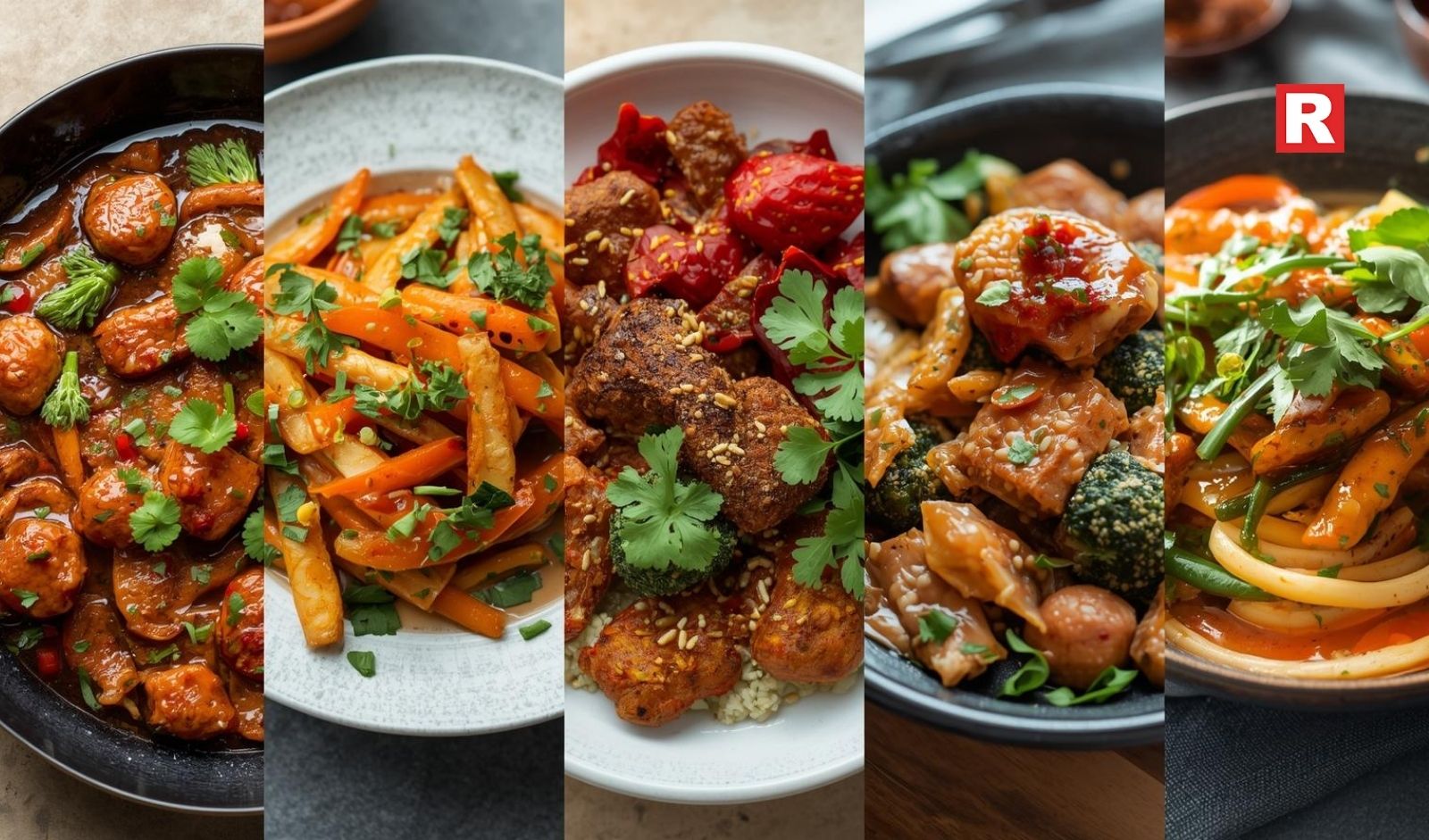
Veganism isn’t just an online trend anymore. It’s a real movement, and one that’s all about living more sustainably, eating healthier, and showing some compassion along the way. These days, more people are swapping out meat for plants, and in doing so, they’re finding more and more traditional vegan recipes. Asian cuisines have been making delicious vegan food for ages.
Plant-based food isn’t some new idea over there; it’s woven into the culture. What’s cool about Asian vegan dishes is the way they pack in flavor without leaning on animal products. Tofu steps in for meat. Lentils bring the protein. Coconut milk gives that creamy touch, no dairy needed. Somehow, the food still ends up balanced, full of nutrients, and seriously tasty. Plus, you’re being kinder to the planet while you eat.
So, let’s dive into the top 10 vegan dishes from across Asia. Every recipe has a story, about tradition, about culture, and about how some of the oldest food wisdom out there fits perfectly with what today’s vegans believe in.
Read more: Top 10 Vegan Street Foods in India Every Indian Loves
Why Asia is a Vegan Food Paradise
For a lot of people in Asia, plant-based eating isn’t a trend. It’s just normal life. What sets Asian vegan food apart is the balance of flavors that don’t wipe out your health, spices that don’t kill the subtle stuff. Cooks rely on whole foods like lentils, soy, coconut, fresh herbs, and plenty of rice. The result is dishes that pack a nutritional punch and taste incredible.
The Top 10 Vegan Dishes Across Asia
Below are the ten simple Asian dishes that are filled with flavor, nutrients, and are also totally vegan.
1. Thai Green Curry (Thailand)
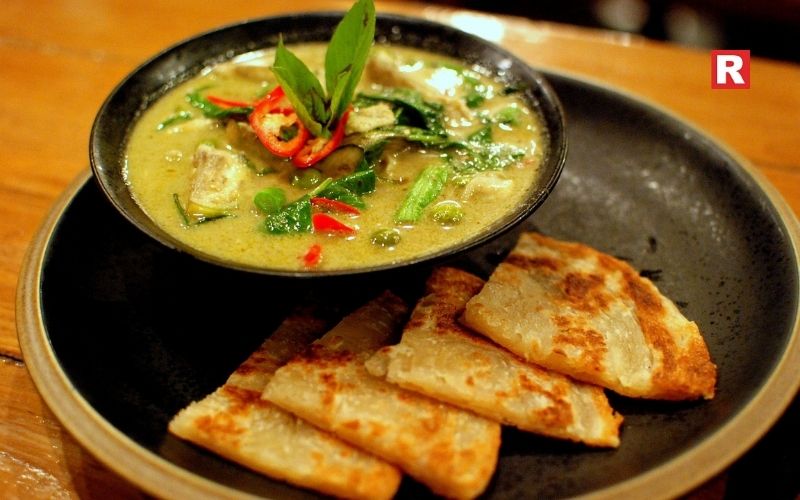
Thai Green Curry is pure comfort. It is spicy, fragrant, creamy, all at once. The base is green curry paste and coconut milk, with veggies like eggplant and bamboo shoots, plus hints of Thai basil. Skip the fish sauce and swap in soy sauce or miso, and you’ve got your vegan curry. It is loaded with healthy fats and antioxidants; these dishes help your digestion and give your immune system a boost. You get healthy fats from coconut milk and a boost to your immune system from chili and basil. With jasmine rice on the side, it’s everything you want in a meal. It is warm, rich, and totally Thai.
2. Mapo Tofu (China – Sichuan Style,)
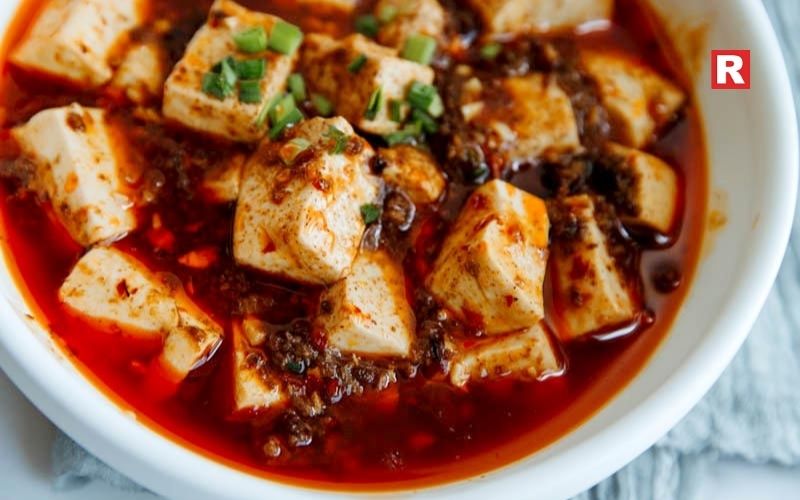
Sichuan’s Mapo Tofu is a flavor bomb. It is hot, tingly, and packed with umami. The vegan version swaps the meat for mushrooms or tofu, which soaks up the chili bean paste and fermented black beans like a pro. You’ll find plenty of plant protein and calcium here too, along with capsaicin to fire up your metabolism. It’s loaded with plant protein and gut-friendly probiotics from the fermented stuff. This is the magic of Asian vegan cooking at its best. You get bold flavors with super simple ingredients.
3. Dal Tadka (India)
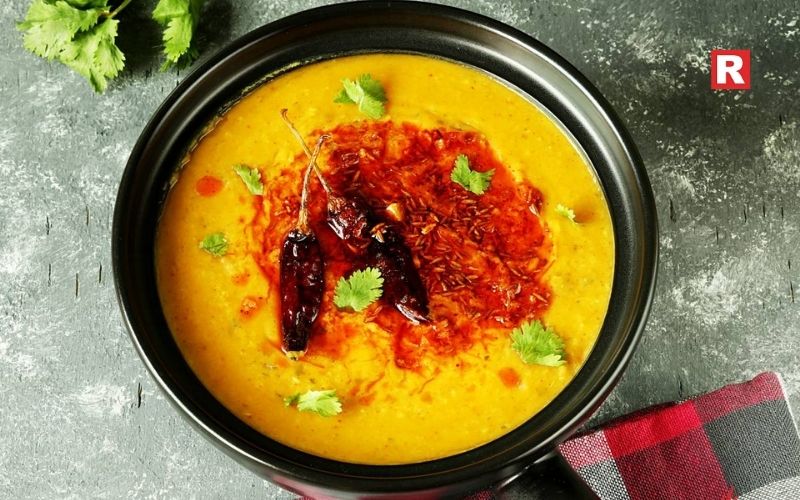
Dal Tadka isn’t just food in India, it’s a definition of home. Yellow lentils simmer with turmeric, cumin, garlic, and usually ghee (but coconut oil works for vegans). Pair it with rice or roti, and you’ve got a protein-packed staple. There are tons of folate, iron, and magnesium, which are good for your heart and your gut. This dish is everywhere, not just in India but also in Nepal and Bhutan, where lentil soups called Dal Bhat fuel everyday life.
Know more: Vegan Food Revolution: 6 Dishes Everyone Should Try in 2025
4. Aloo Palak (Pakistan)
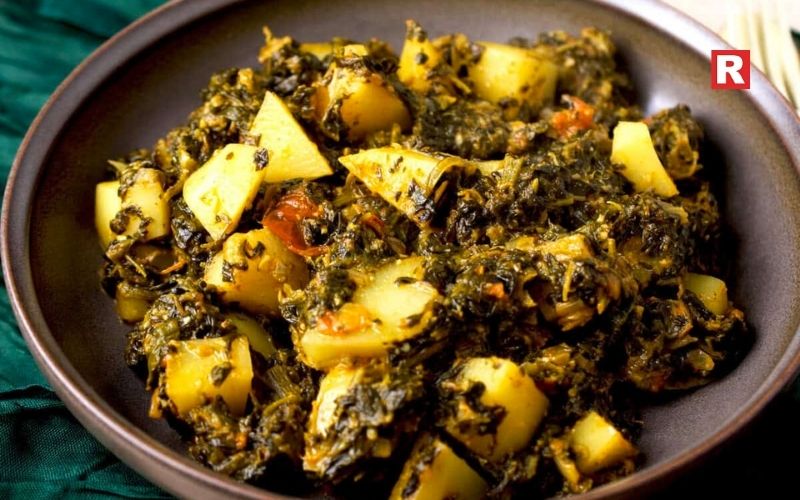
Aloo Palak is a classic from Punjabi kitchens. It is made from potatoes and spinach cooked with turmeric, cumin, and green chilies. It’s simple, hearty, and usually eaten with roti or paratha. It is a pure vegan comfort food. You get your carbs from the potatoes and a ton of antioxidants from the spinach. Combining complex carbs from potatoes with antioxidants from spinach creates a balanced vegan meal that is rich in minerals. It’s proof that humble ingredients can make something totally satisfying.
5. Gado-Gado (Indonesia)
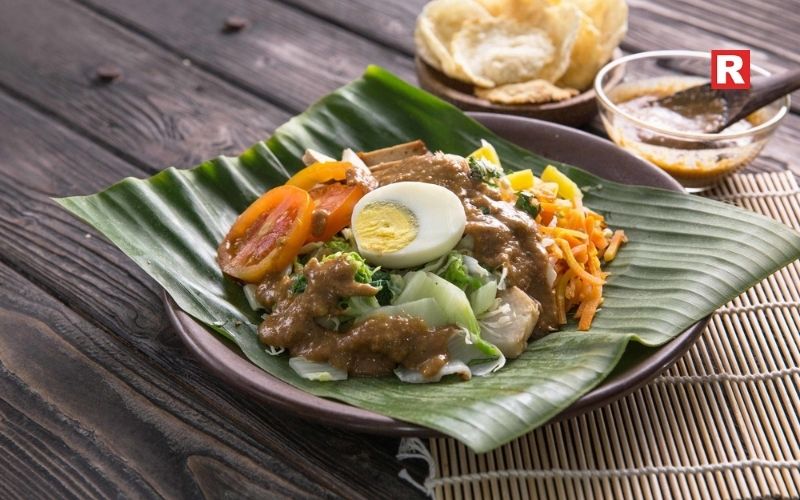
Gado-Gado means “mix-mix,” and that’s exactly what it is: a big pile of steamed veggies, tofu, tempeh, all mixed with a creamy peanut sauce. The dressing’s got roasted peanuts, tamarind, and lime for that tangy-sweet kick. You get Vitamin E, magnesium, and loads of antioxidants from the peanuts. With peanuts and soy, you get a good mix of plant protein, fiber, and healthy fats. It’s a full meal of carbs, protein, and fat, all in one, and it leaves you feeling light but full of energy.
6. Shukto (Bangladesh)
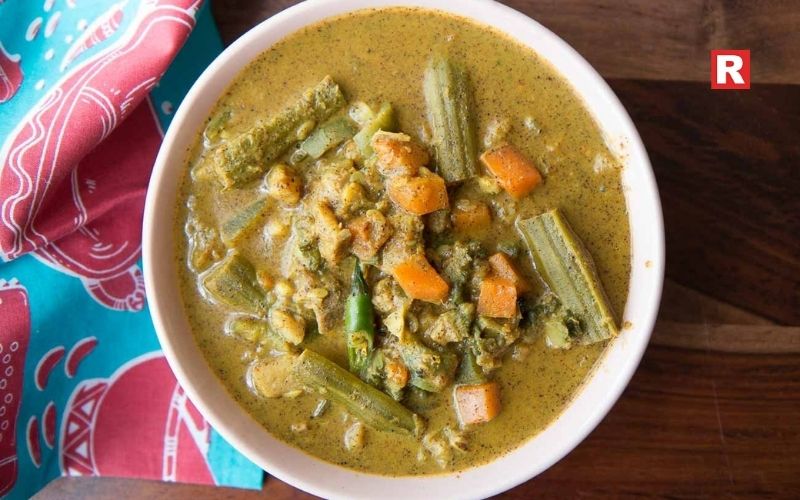
Shukto is a dish from the coastal kitchens of Bengal. It is a light mixed veggie curry with a hint of bitterness, thanks to things like bitter gourd, plantains, and drumsticks, all cooked in mustard oil. It's a classic Bengali dish that balances sweet and bitter, and totally nails it. It’s loaded with antioxidants that are good for digestion and your liver. Shukto is a staple of Bangladeshi home-cooking. It is nourishing, balanced, and vegan.
7. Pho Chay (Vietnam)
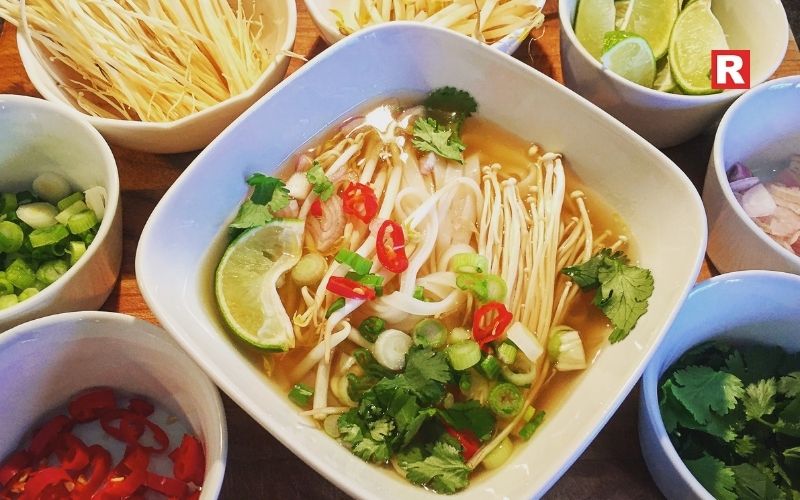
Pho Chay is Vietnam’s vegan spin on the classic noodle soup. The broth is all veggies, slow-simmered with star anise, cloves, and cinnamon for that deep, cozy aroma. Tofu, rice noodles, bean sprouts, and loads of fresh herbs are used to complete it. It’s light but surprisingly satisfying. It’s packed with herbs and antioxidants that help your lungs and boost immunity. Pho Chay is a great example of Southeast Asian vegan food because it is comforting, soothing, with a bit of a cleansing feel.
What's new: 7 Protein-Rich Vegan Foods That Pack a Punch – No Meat, No Problem!
8. Kottu Roti (Sri Lanka)
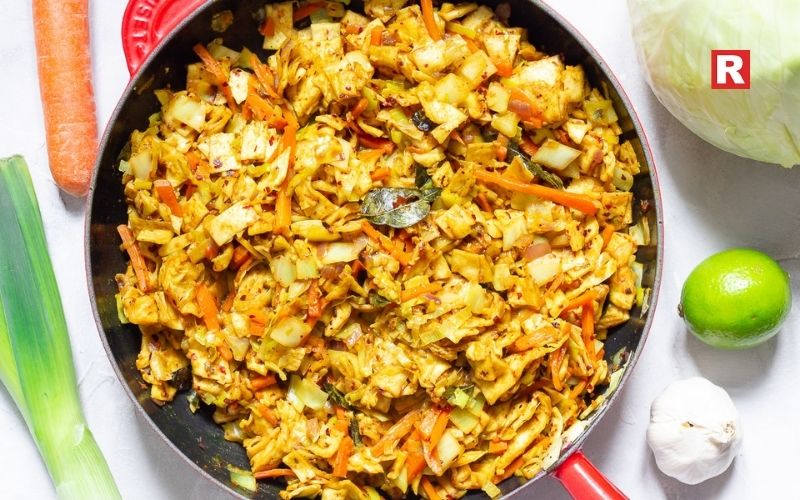
Kottu Roti is one of Sri Lanka’s favorite street foods. Imagine chopped flatbread tossed with veggies and a bunch of curry spices. The vegan version skips eggs and meat, using tofu or chickpeas for protein. Even just the sound of it being chopped up on a sizzling griddle feels like a treat. It’s a hearty, carb-rich meal that fills you up and keeps you going. Kottu Roti captures Sri Lanka’s wild mix of spices, tropical veggies, and the unique island spirit.
9. Ema Datshi (Bhutan)
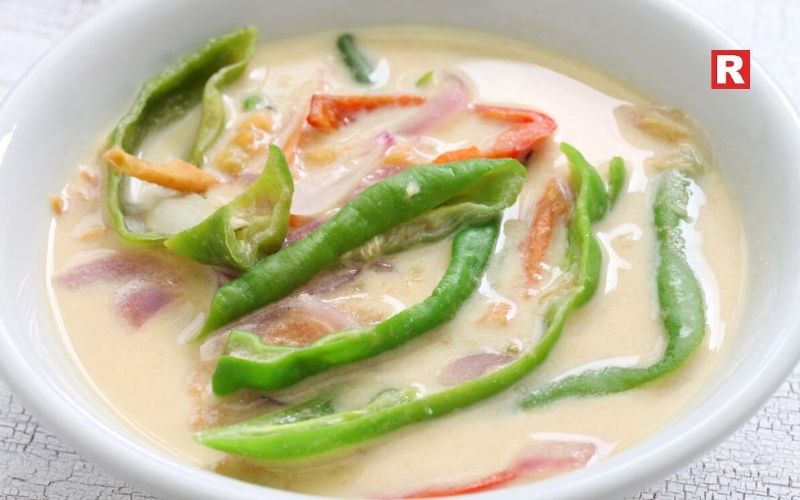
Ema Datshi is Bhutan’s national dish. The original uses chilies and cheese, but the vegan version swaps in cashew or coconut cream, so you still get that spicy, creamy magic. Served with red rice, it’s a mainstay in Bhutanese homes. This dish is proof that you can go plant-based without losing the flavors that make local food special. Each serving has about 260 calories and is high in Vitamin C, providing around 80% of the daily requirement. The chilies in the dish contain capsaicin, which helps boost metabolism and improve the body’s natural endorphin levels. This leaves you feeling both energized and satisfied.
10. Mas Huni (Maldives)
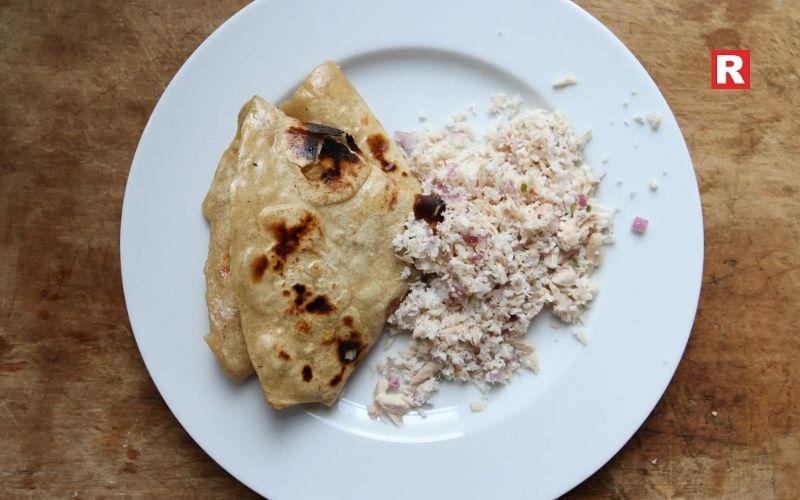
Mas Huni is a classic Maldivian breakfast. Made with usually tuna, coconut, chili, and onion. For the vegan take, mashed jackfruit or chickpeas can work instead of tuna, keeping the same flaky texture and tropical taste. Mas Huni is light but filling. It is a high-fiber, high-protein meal that’s perfect for warm, coastal mornings. Paired with flatbread (roshi), it shows how island food can be vibrant and totally cruelty-free.
Check out: Top 10 Easy Soup Recipes for You to Try This Winter
10 Famous Fast Food Brands in India That Everyone Loves
Bonus: Japchae (Korea)
Japchae is Korea’s famous glass noodle stir-fry. It’s simple, colorful, and honestly impossible not to love. Made with sweet potato noodles, crisp veggies, and a drizzle of sesame oil, it’s vegan, gluten-free, and rich in flavor. It is Light, glossy, and perfectly seasoned, making Japchae a must-try for noodle lovers.
Cultural and Nutritional Insights
What makes Asian vegan dishes special is their nutritional balance. Most combine a source of protein, such as tofu, lentils, or chickpeas, with fiber-rich vegetables and healthy fats from nuts, seeds, or coconut. These dishes provide sustained energy, support digestion, and promote overall well-being. They are also low in processed ingredients.
Asian cooking emphasizes freshness and minimal waste. Meals are often prepared using locally grown produce, which makes them healthier and more environmentally friendly.
Tips for Cooking Vegan Asian Food at Home
- Stock up your pantry: Soy sauce, coconut milk, sesame oil, lentils, rice noodles, all these are your basics.
- Don’t skip on protein: Toss in tofu, tempeh, or beans to ensure complete nutrition.
- Layer the flavors: Add fresh herbs like coriander, lemongrass, mint, or basil. They can elevate any dish.
- Healthy Balance: Mix carbs, fats, and proteins. Don’t be afraid of spice. It really boosts your metabolism.
- Mindful Eating: In lots of Asian cultures, eating is about harmony. Savor your food, and eat with gratitude.
Learn more: 10 Indian Dishes That Don’t Need Any Vegetables
Go Vegan with Taste
From Pakistan’s cozy Aloo Palak to Thailand’s fragrant Green Curry, from Bhutan’s spicy Ema Datshi to Vietnam’s gentle Pho Chay, all these Asian vegan food takes you on a journey that is full of flavor, tradition, and nourishment.
Whether you’re trying new flavors or switching to a vegan lifestyle, these dishes are the ideal starting point. They’re nourishing, adaptable, and skillfully made to highlight what Asian cuisine does best: balance, freshness, and flavor.
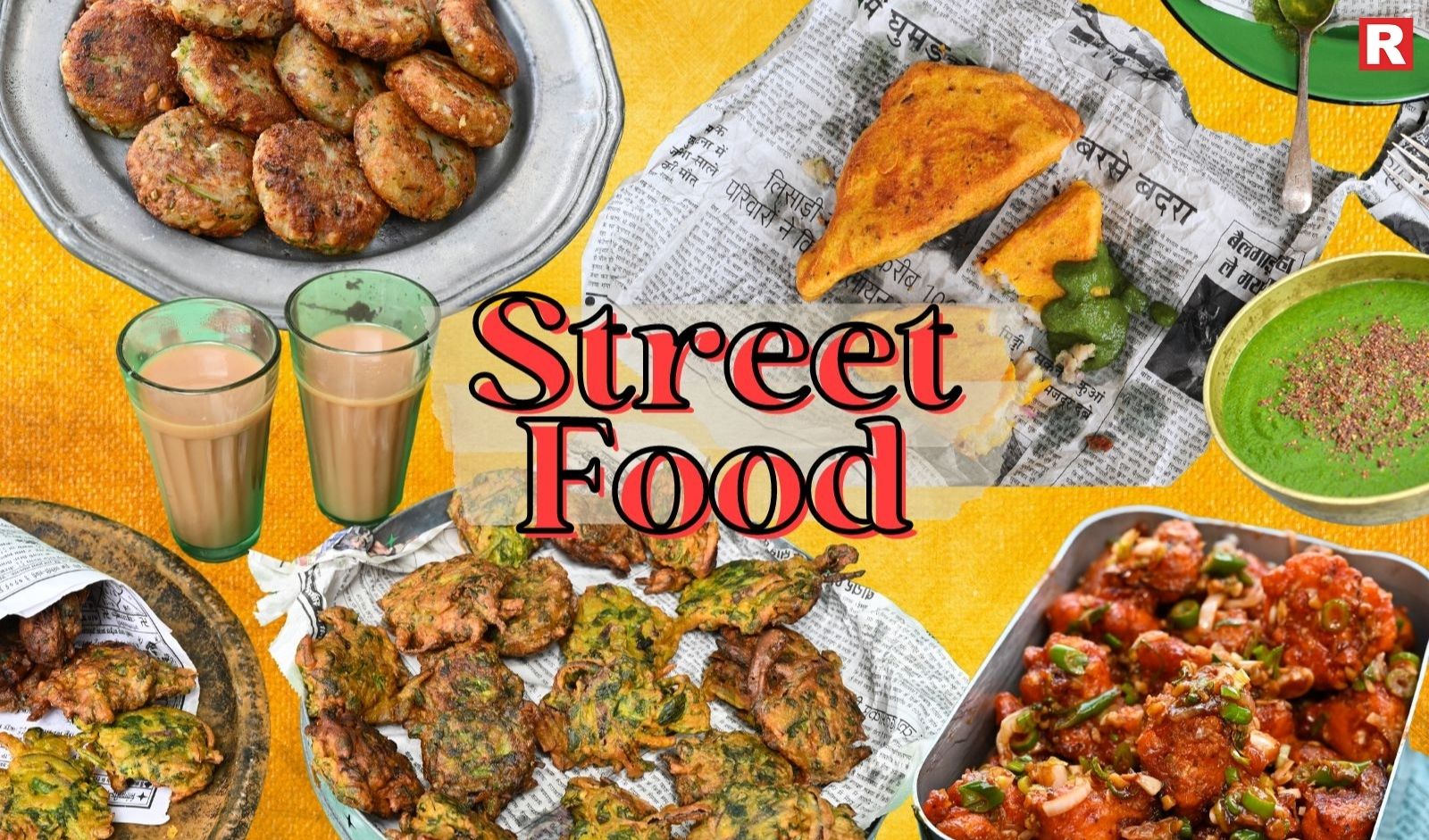
India’s connection with food runs deep. Every corner of the country tells a story through its street food — full of flavours, colours, and traditions. The aroma of spices, the sizzle of pans, and the buzz of local stalls capture the true spirit of Indian culture. Indian street food is truly special because of its natural inclination towards vegan ingredients. Most snacks are prepared with vegetables, grains, lentils, and spices, making them both wholesome and cruelty-free. From the spicy tang of chaats in Delhi to the crisp dosas in Chennai, every region offers a unique vegan experience.
Vendors across India have perfected the art of balancing taste and texture. Simple ingredients come together to create dishes that are affordable, nutritious, and bursting with local flavour. For those following a plant-based lifestyle, India is a paradise. Its street food scene proves that vegan meals can be rich, vibrant, and deeply satisfying. Whether it’s a quick snack or a hearty meal, India’s vegan street foods promise an authentic taste of the country — one bite at a time.
India’s Street Food—A Vegan Paradise
Indian cuisine has always been rooted in vegetables, grains, lentils, and spices — making it inherently plant-based. Many dishes that people enjoy daily are already vegan or can be easily made so by skipping dairy-based chutneys or ghee.
From the coconut-laced dishes of Kerala to the tangy chaats of Mumbai, vegan food isn’t a modern import — it’s been a part of Indian kitchens for generations. With the rise of conscious eating, street vendors are now adapting to vegan preferences by using oil instead of butter and curd-free chutneys, keeping the traditional flavours intact.
Explore Top 10 Vegan Street Foods in India
1. Pani Puri (Across India)
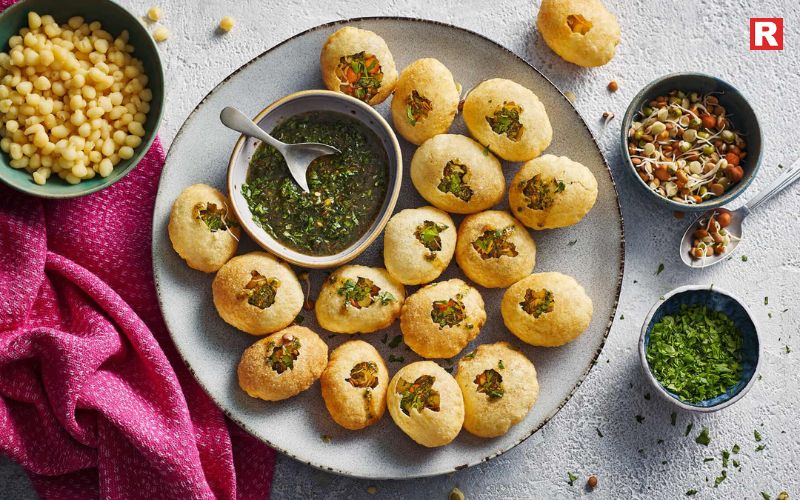
Crispy, hollow puris filled with spiced potato mash and tangy water — Pani Puri (also called Golgappa or Phuchka) is India’s most loved street snack. It’s light, spicy, and totally plant-based. Vendors across cities prepare different versions — Kolkata’s phuchkas use tamarind and black salt, while Mumbai’s Pani Puri has a hint of sweetness. Just ensure the puri water is made without hing (asafoetida with wheat) if you’re strictly vegan.
2. Vada Pav (Mumbai)
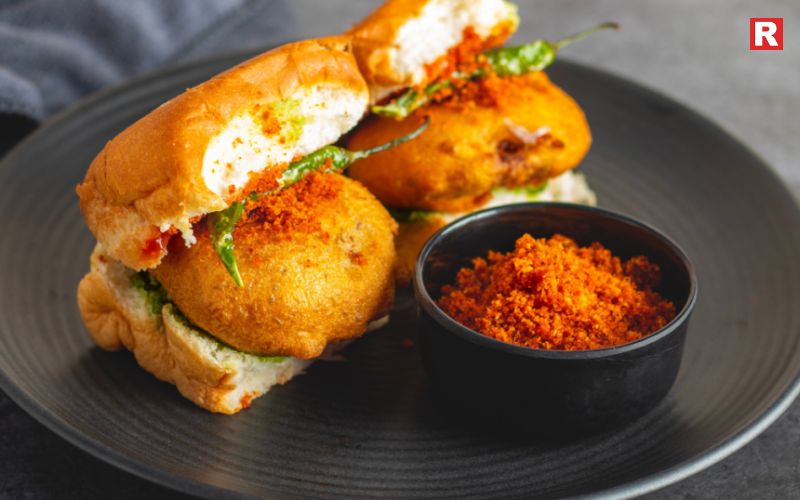
Known as Mumbai’s answer to the burger, Vada Pav is a spicy potato fritter tucked inside a pav (bun), served with chutneys and fried chillies. It’s simple, filling, and naturally vegan when made without butter on the bun. The street stalls outside Dadar and CST stations serve some of the city’s most authentic vada pavs — a perfect blend of crunch, spice, and warmth.
Read more: 8 Famous Vegetarian Dishes of Uttar Pradesh and Their Timeless Legacy
5 Cities That Serve the Best Non-Vegetarian Street Food
3. Chole Kulche (Delhi & Punjab)
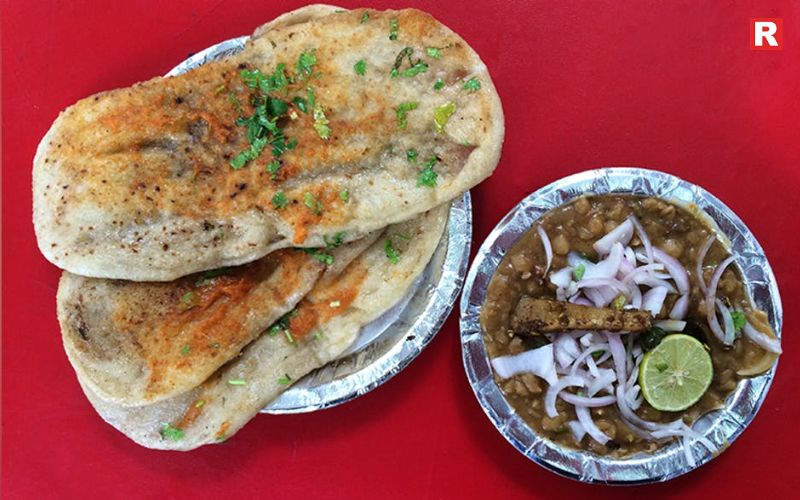
A North Indian staple, Chole Kulche is a protein-rich vegan dish made with spicy chickpeas and soft flatbreads. It’s often topped with onions, coriander, and lemon juice for extra zest. Street vendors in Delhi’s Chandni Chowk or Amritsar’s Hall Bazaar are known for their signature recipes that use pure plant-based ingredients. It’s wholesome, hearty, and bursting with Punjabi flavours.
4. Dabeli (Gujarat)
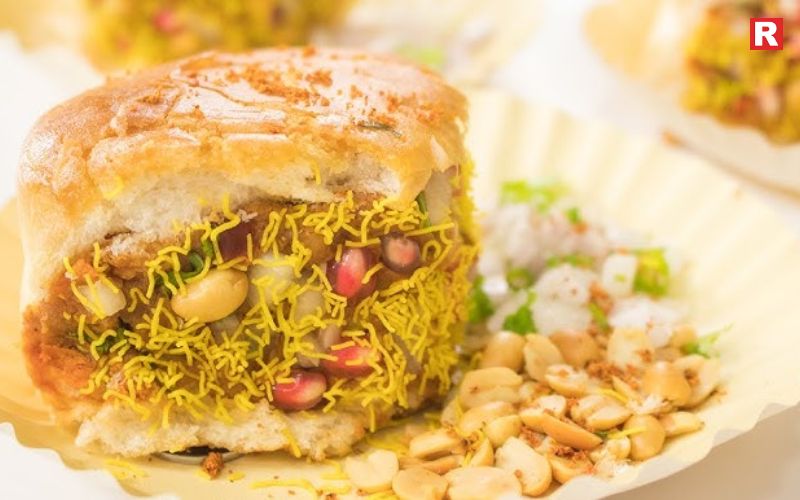
Originating from Kutch, Dabeli is a flavour-packed street snack made with spiced potato mash, peanuts, chutneys, and pomegranate seeds stuffed inside a soft pav. The sweet and spicy balance makes it unique. It’s completely vegan and a must-try when visiting Ahmedabad or Surat. Vendors prepare it on hot tavas, toasting the buns with oil instead of butter for that perfect crisp.
5. Masala Dosa (South India)
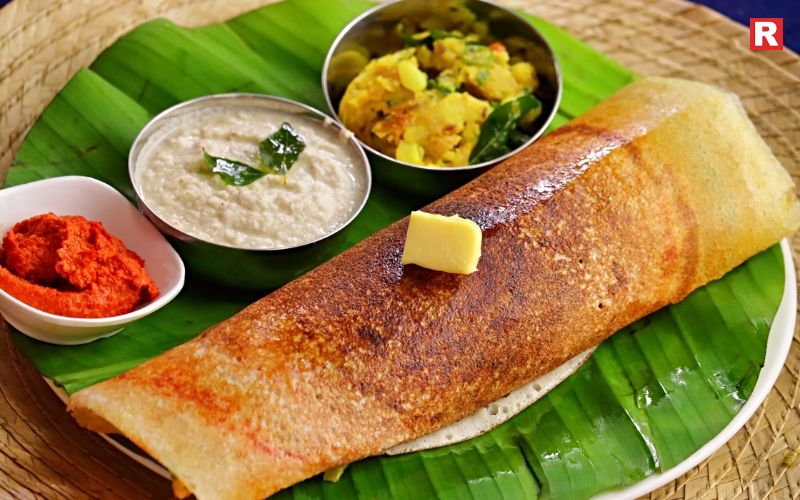
Masala Dosa is one of India’s most famous vegan-friendly dishes. Made from a fermented batter of rice and lentils, it’s filled with a spiced potato masala and served with coconut chutney and sambar. This South Indian classic is not only delicious but also healthy and gluten-free. Bengaluru, Chennai, and Kochi offer some of the best dosas — crisp, golden, and fragrant with curry leaves.
Know more: Pani Puri Has Different Names in Different Indian States—Know Them All
6. Bhel Puri (Mumbai)
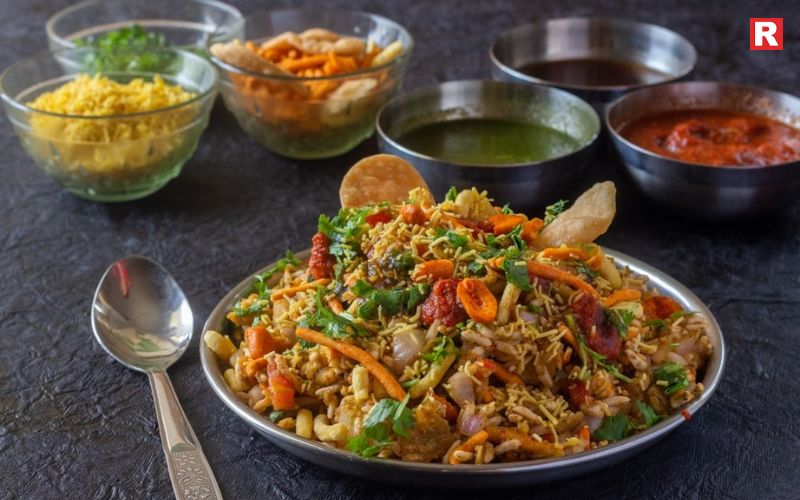
Light, tangy, and crunchy — Bhel Puri is the ultimate Indian street snack. Made from puffed rice, chutneys, onions, tomatoes, and sev, it’s a burst of flavours in every bite. It’s completely vegan and easy to find at every beachside stall in Mumbai. The best part is that it’s low in oil, making it a guilt-free indulgence for plant-based eaters.
7. Aloo Tikki Chaat (North India)
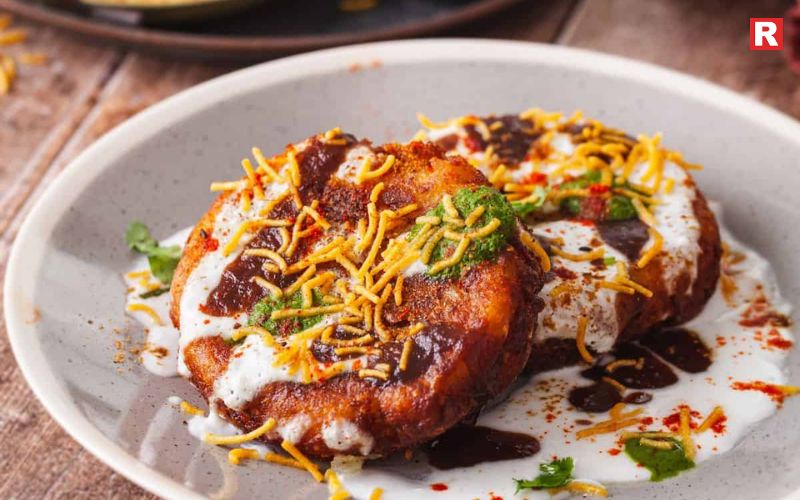
Aloo Tikki Chaat is a North Indian favourite that combines crisp potato patties with chickpeas, tangy chutneys, and spices. It’s rich in texture and flavour — spicy, sweet, and slightly sour. In Delhi, Lucknow, and Kanpur, you’ll find vendors who add pomegranate seeds and coriander for freshness. Just request the vendor to skip curd and ghee, and you have a completely vegan treat.
Also check: 5 Foods to Avoid for Better Cholesterol
8. Idli with Sambar (South India)
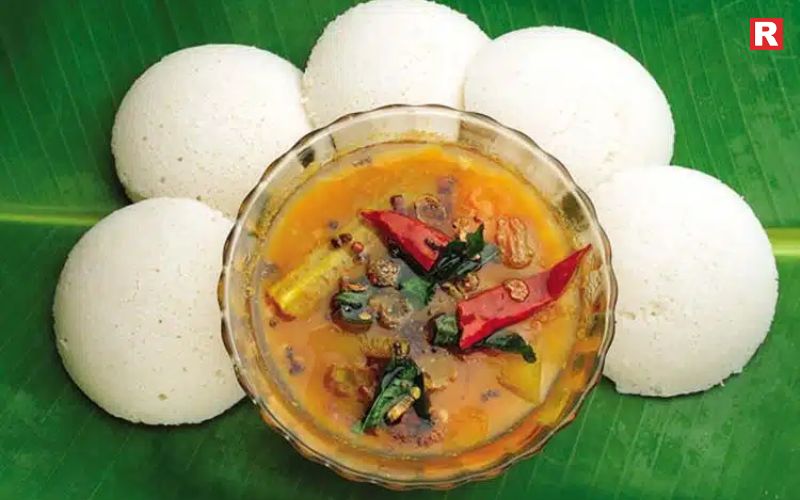
Soft, steamed rice cakes known as idlis are a breakfast staple in South India. When paired with spicy lentil sambar and coconut chutney, it’s a wholesome, protein-rich vegan meal. It’s light yet filling, and you’ll find it on almost every street corner in Tamil Nadu and Karnataka. Most authentic stalls use coconut oil and plant-based ingredients, keeping it perfectly vegan.
9. Momos (Delhi, Sikkim, Darjeeling)
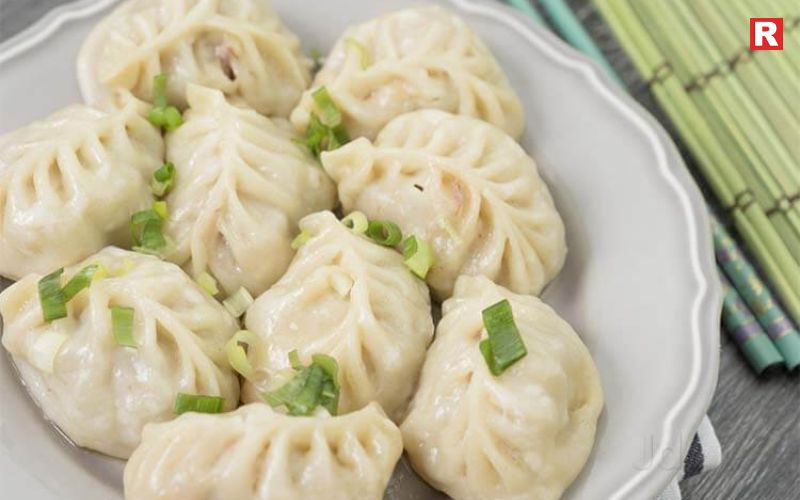
A Tibetan influence on Indian street food, momos are small steamed dumplings that have taken over Indian cities. The vegetable version, stuffed with cabbage, carrot, and onions, is entirely vegan. Just make sure to skip mayonnaise-based dips. In Delhi, the Tibetan colony at Majnu ka Tilla serves some of the best vegan momos with spicy red chutneys.
10. Poha (Maharashtra & Madhya Pradesh)
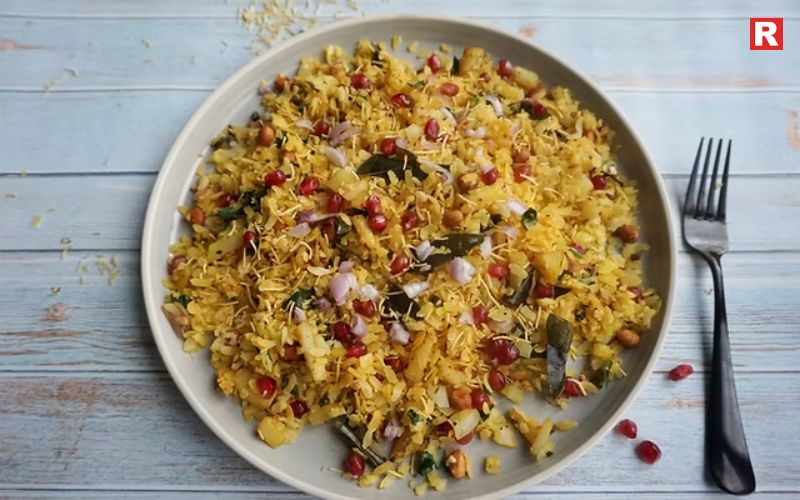
Poha is a light, comforting dish made from flattened rice, turmeric, mustard seeds, curry leaves, and peanuts. It’s often garnished with lemon and coriander. Found widely across Indore and Pune, Poha is both nutritious and vegan. It’s commonly served for breakfast or as a quick snack and pairs perfectly with hot masala chai made with plant-based milk.
Why Indian Street Food is Perfect for Vegans
Indian street food has always celebrated vegetables, grains, and pulses — making it ideal for those following a plant-based lifestyle. According to recent reports, India’s vegan and plant-based food market is projected to cross USD 100 million by 2026, showing how fast people are embracing conscious eating.
Street vendors have also started adapting by using refined oil instead of ghee, avoiding curd in chutneys, and replacing butter with vegan-friendly options. In cities like Mumbai and Bengaluru, vegan food trucks and plant-based pop-ups are becoming popular, introducing sustainable street eating experiences.
Tips to Eat Vegan on Indian Streets
- Ask before you order: Some vendors might use butter or curd — always request plant-based substitutes.
- Choose coconut-based chutneys: They’re naturally vegan and add authentic flavour.
- Avoid creamy teas or lassi: Go for coconut water, lemon soda, or black tea instead.
- Carry reusable cutlery: It’s eco-friendly and aligns with the vegan philosophy of sustainability.
Check more: Top 5 States With the Spiciest Food in India
10 Different Types of South Indian Rice Dishes
5 Tasty Coconut Dishes You Can Try at Home
India’s Vegan Street Food Revolution
The charm of Indian street food lies in its honesty and simplicity. Many of these dishes are already plant-based, making them perfect for a growing vegan community. Across India, street food reflects the flavours of each region. The tangy chaats of Delhi, the coconut-rich snacks of Chennai, and the spicy treats of Mumbai show how plant-based eating is part of everyday life. Vendors rely on age-old recipes, passed down through generations, proving that good food doesn’t need meat or dairy to be delicious. Every bite carries tradition, creativity, and heart. As veganism rises, India’s street food culture stands ready to inspire the world. It reminds everyone that great taste comes from simple ingredients, skill, and the perfect touch of spice — not from excess, but from authenticity.
Plant-based eating is no longer just a trend. It has become a lifestyle for millions across the world. More people are turning to vegan diets for health, fitness, and sustainability. At the same time, protein has become a buzzword in food conversations. From athletes to office-goers, everyone is aware that protein is vital for energy, muscle repair, and overall wellness.
But here’s the question many still ask: Can vegans get enough protein?
The answer is a strong yes. Vegan foods today are rich in protein and are as powerful as animal-based sources. The rise of new-age plant proteins has made it easy to get nutrition without compromise. Let us explore the top vegan foods that are high in protein, how they work, and why they are in demand today.
Read more: 12 Delicious High-Protein Foods to Eat Daily for a Healthier You
10 Superfoods That Will Supercharge Your Diet & Make You Feel Like a
Why Vegan & Protein-Rich Foods Are Trending
The demand for vegan high-protein foods is driven by three key reasons: health, sustainability, and accessibility.
- Health benefits: Plant-based proteins lower cholesterol, reduce inflammation, and support better digestion. They also help in weight management and provide long-lasting energy.
- Sustainability: Plant proteins use fewer resources than animal proteins. Producing one kilogram of lentils, for example, uses far less water than producing the same amount of beef.
- Accessibility: From supermarket shelves to food delivery apps, vegan protein options are now widely available. Packaged foods, protein powders, and ready-to-cook meals have made it easier for people to choose vegan protein every day.
The global plant-based protein market is booming. According to industry reports, it is expected to cross $23 billion by 2030, growing rapidly each year. This growth shows how demand is shifting worldwide.
Top Vegan High-Protein Foods
Here is a detailed look at the best vegan foods that are rich in protein. Each of these is not only high in nutrition but also versatile in cooking.
1. Lentils
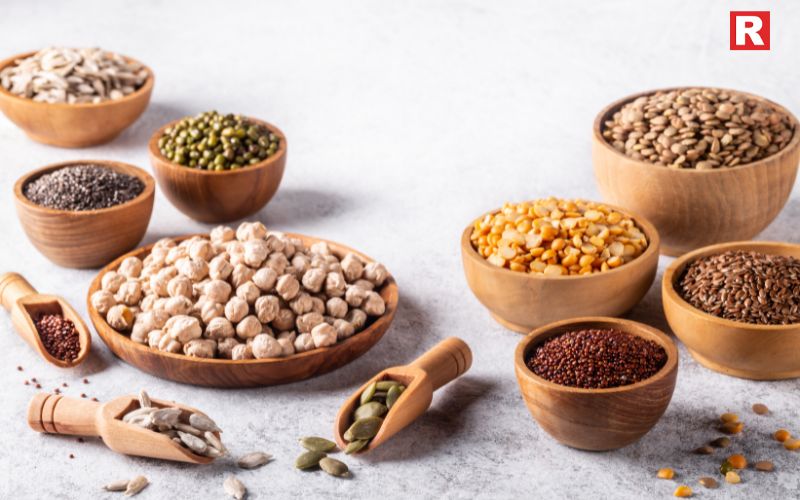
Lentils are among the best plant-based proteins. One cooked cup has about 18 grams of protein. They are also rich in fiber, folate, and iron. These nutrients support digestion and heart health. In India, lentils are eaten daily as dal. They can also be added to soups, curries, or tossed into salads for a filling meal.
- Protein content: About 18 grams per cooked cup.
- Benefits: High in fiber, iron, and folate. They support heart health and aid digestion.
- How to use: Add them to soups, curries, or salads. In India, dal is already a staple, making lentils an easy choice.
2. Chickpeas
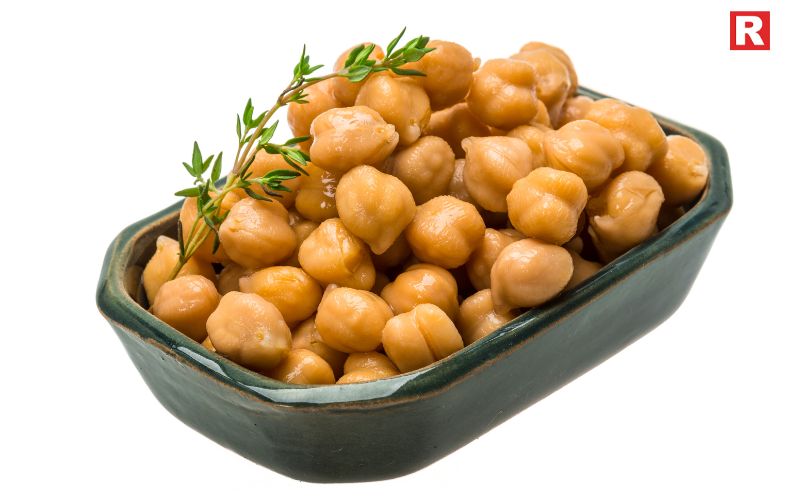
Chickpeas, also called garbanzo beans, are a protein-rich food. A cooked cup provides around 15 grams of protein. They are packed with fiber and manganese, which keep you full and support gut health. Chickpeas are very versatile. They can be blended into hummus, tossed into salads, or added to curries, making them both healthy and tasty.
- Protein content: 15 grams per cooked cup.
- Benefits: Rich in fiber and manganese. They keep you full for longer and support gut health.
- How to use: Blend into hummus, add to curries, or toss into salads.
Know more: Top 10 Health Benefits of Eating Dry Fruits Daily
3. Quinoa
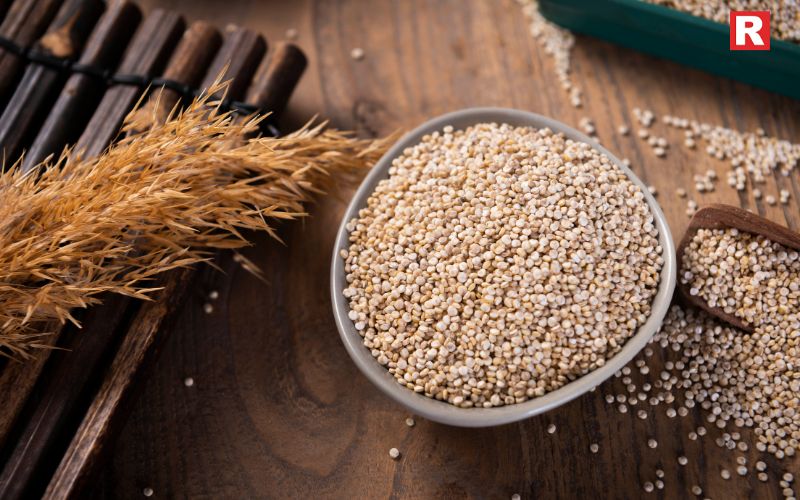
Quinoa is a superfood and a complete protein. One cup of cooked quinoa has 8 grams of protein. It contains all nine essential amino acids, along with magnesium and antioxidants. Gluten-free and light, it is ideal for daily meals. Quinoa works well as a rice substitute, in breakfast bowls, or as a base for fresh salads.
- Protein content: 8 grams per cooked cup.
- Benefits: Gluten-free, rich in magnesium and antioxidants.
- How to use: Cook it as a rice substitute, make breakfast bowls, or use it in salads.
4. Tofu
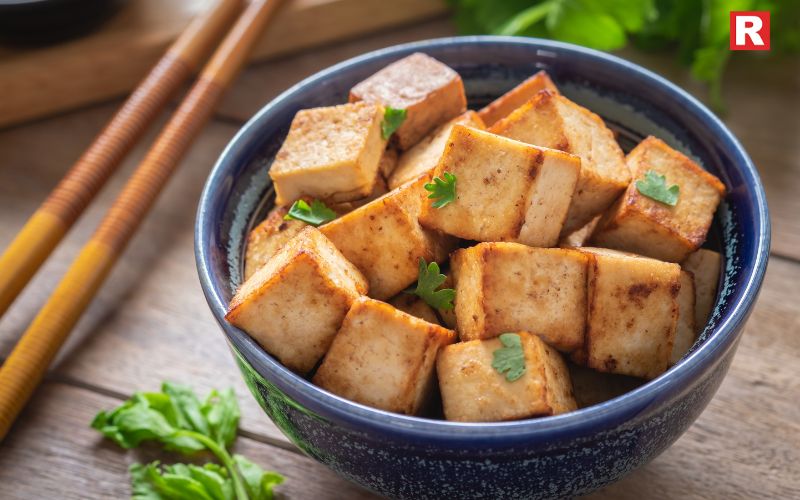
Tofu is made from soybeans and is popular worldwide. A 100-gram serving offers about 10 grams of protein. It is rich in calcium, iron, and amino acids, making it very nutritious. Tofu is known for its soft texture and neutral flavor. It can be grilled, stir-fried, or even blended into smoothies, fitting into many simple recipes.
- Protein content: 10 grams per 100 grams serving.
- Benefits: Contains iron, calcium, and all essential amino acids.
- How to use: Can be grilled, stir-fried, or blended into smoothies. Its neutral taste makes it very versatile.
5. Tempeh
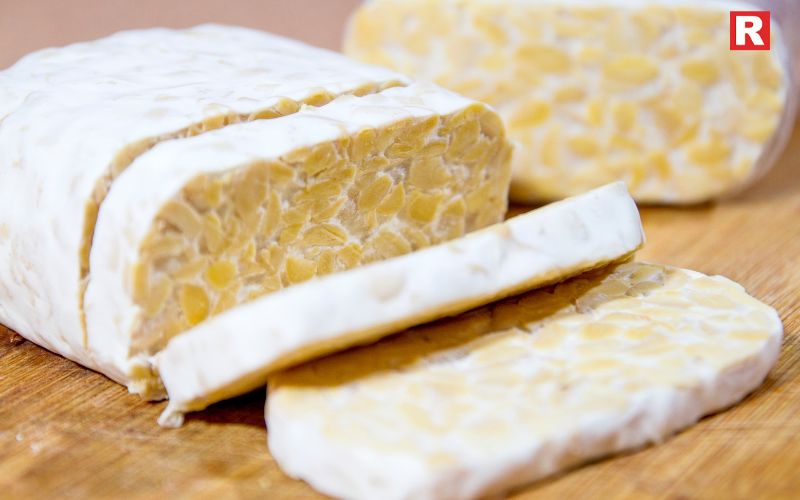
Tempeh is a soy-based food with a firm texture and nutty taste. Every 100 grams has around 19 grams of protein. As a fermented food, it supports gut health while also providing minerals like magnesium and phosphorus. Tempeh is filling, healthy, and versatile. It can be added to stir-fries, sandwiches, or grain bowls for balanced meals.
- Protein content: 19 grams per 100 grams serving.
- Benefits: Fermented, which makes it good for gut health. It is also rich in magnesium and phosphorus.
- How to use: Best used in sandwiches, stir-fries, or grain bowls.
6. Seitan
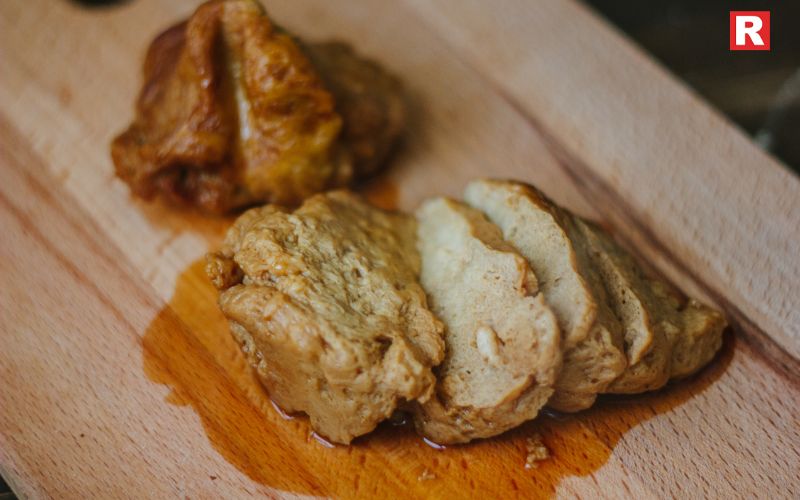
Seitan, often called “wheat meat,” is one of the richest vegan protein foods. A 100-gram serving provides about 25 grams of protein. It is low in fat and has a dense, chewy texture. Seitan works well as a meat substitute. It can be used in curries, wraps, or grilled recipes, making it perfect for hearty meals.
- Protein content: 25 grams per 100 grams.
- Benefits: Dense in protein and low in fat.
- How to use: Works well as a meat substitute in curries, wraps, and even grilled dishes.
7. Edamame
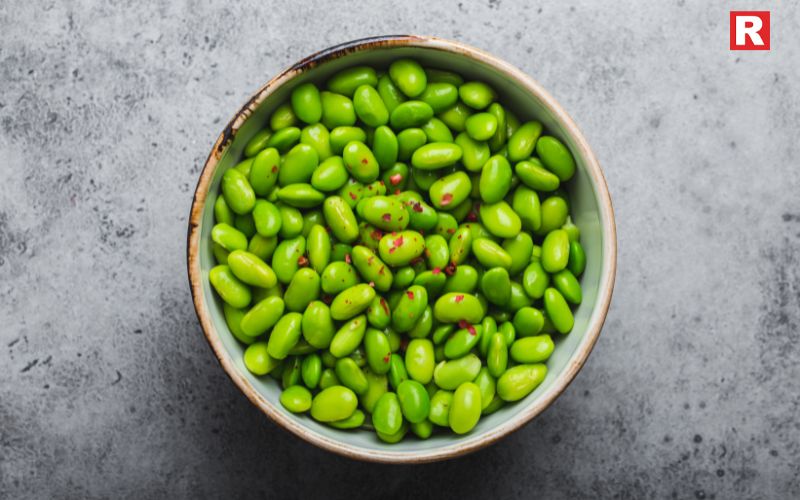
Edamame are young soybeans eaten as a snack or side dish. One cooked cup provides 17 grams of protein. They are rich in iron, vitamin K, and fiber. Edamame is tasty, light, and easy to prepare. Simply boil and season with salt, or add to soups and stir-fries. It is a healthy choice for everyday meals.
- Protein content: 17 grams per cooked cup.
- Benefits: Packed with protein, iron, and vitamin K.
- How to use: Boil and sprinkle with salt, add to stir-fries, or use in soups.
8. Chia Seeds
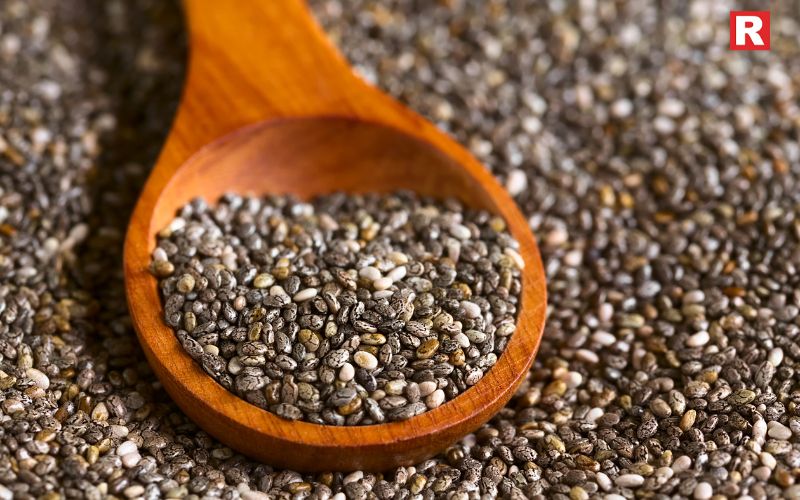
Chia seeds may be small, but they are full of nutrition. Two tablespoons contain about 6 grams of protein. They are also packed with omega-3 fatty acids, calcium, and fiber. Chia seeds help with digestion and provide long-lasting energy. They can be added to smoothies, oats, or made into pudding. Their texture makes them versatile in recipes.
- Protein content: 6 grams per 35 grams (2 tablespoons).
- Benefits: High in omega-3 fatty acids, fiber, and calcium.
- How to use: Add to smoothies, overnight oats, or chia puddings.
Also check: Health Benefits of Quinoa: A Superfood for Every Diet
9. Hemp Seeds
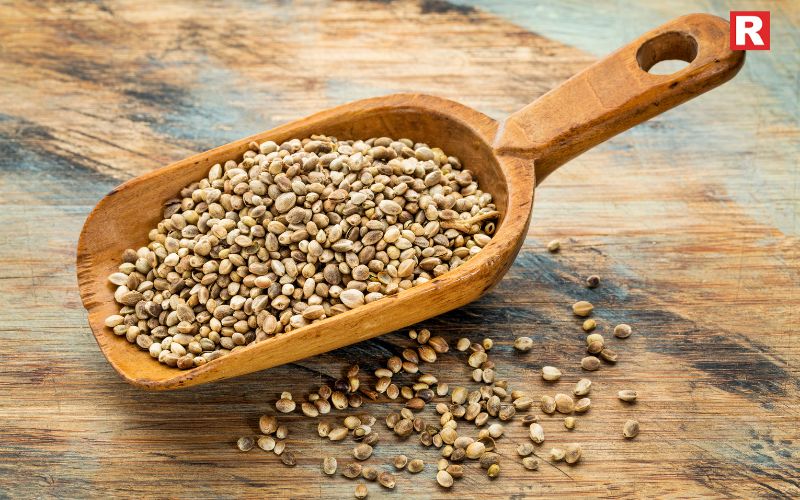
Hemp seeds are gaining attention for their nutrition. Three tablespoons provide about 10 grams of protein. They are a complete protein and contain healthy fats, including omega-3s. Hemp seeds also have essential minerals like magnesium. With their mild, nutty taste, they can be sprinkled on salads, blended into shakes, or added to energy bars and snacks.
- Protein content: 10 grams per 3 tablespoons.
- Benefits: Complete protein with healthy fats and minerals.
- How to use: Sprinkle on salads, blend into shakes, or add to energy bars.
10. Pea Protein Powder
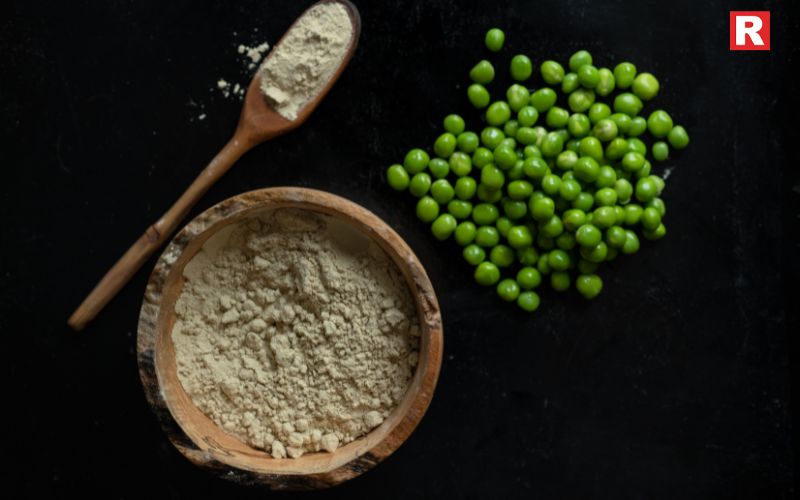
Pea protein powder is now a favorite among fitness lovers. One scoop gives about 20 grams of protein. It is easily digestible, allergen-free, and rich in amino acids. Pea protein is often used in shakes and smoothies after workouts. It can also be added to baking recipes. Simple to use, it is a trusted vegan supplement.
- Protein content: Around 20 grams per scoop.
- Benefits: Easily digestible, allergen-free, and used in vegan protein shakes.
- How to use: Mix with water, add to smoothies, or use in baking.
Easy Ways to Add Vegan Protein
Switching to vegan high-protein foods does not mean complicated cooking. Here are some simple ideas:
- Add lentils or chickpeas to your weekly meal prep.
- Start your day with chia pudding or a quinoa bowl.
- Replace meat with seitan or tempeh in wraps and stir-fries.
- Snack on roasted edamame instead of chips.
- Use pea protein powder for quick shakes after workouts.
Athletes and fitness lovers are increasingly adopting these foods. Plant proteins are easier on digestion, reduce inflammation, and provide long-term health benefits.
Check more: Best International Cuisines You Should Try Once
Best Food Delivery Apps & Quick Commerce Platforms in India
How to Choose the Healthiest Cooking Oil for Your Kitchen
Market & Trend Insights
The rise of vegan high-protein foods is not just about health. It is also about demand and business.
- The global plant-based food market is projected to grow at over 10% every year.
- More brands are introducing high-protein vegan snacks, ready-to-eat bowls, and fortified beverages.
- India is also seeing rapid growth, with urban consumers exploring vegan protein powders, snacks, and traditional pulses in new forms.
This trend is here to stay as more people seek nutrition that is both powerful and sustainable.
Power Pack Meal!
Protein is a vital part of every diet. Many assume it is difficult to get enough protein from a vegan lifestyle, but this is not true. Foods such as lentils, quinoa, tofu, seitan, and chia seeds show that plants can easily meet protein needs. These foods are not limited to athletes or bodybuilders. They are for anyone who wishes to stay healthy, eat clean, and care for the environment. Vegan protein sources are rich, varied, and widely available today. From simple home-cooked meals to modern snacks, there are endless options to choose from. Eating this way supports energy, digestion, and long-term wellness. It also reduces dependence on animal products. Plant-based protein is more than a trend. It is a smart, sustainable choice for the future. Strong, nourishing, and satisfying, it proves that health and taste can go hand in hand.
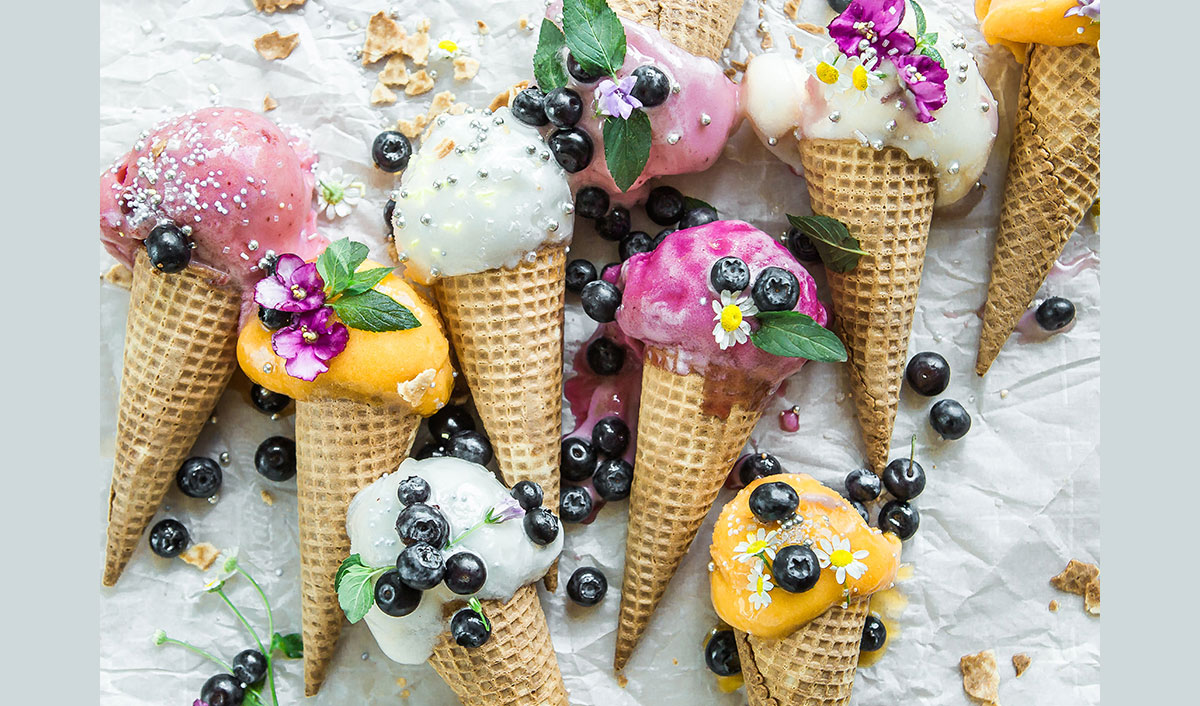
It was in year 1944 when Dorothy Morgan and Donald Watson coined the term "vegan" and they co-founded the Vegan Society in the UK. At first, they used it to mean "non-dairy vegetarian." However, by May 1945, vegans explicitly abstained from "eggs, honey; and animals' milk, butter and cheese". And, today veganism has become a new fad with more and more people turning into a more eco-friendly, healthy lifestyle.
“Being vegan is a choice of choosing food groups such as non dairy, no meats and avoiding using animal products. It’s a lifestyle change and a choice which any individual makes. However healthier options are a generic term to anything which you eat which is non-processed,” shared Rahul Kamra, Founder, Ketorets.
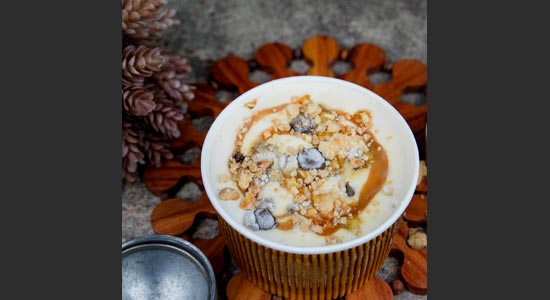
There are a lot of studies and research that link a vegan lifestyle to better heart health, reversal of diabetes, obesity, and hypertension and so on. Since a vegan diet primarily consists of fruits, vegetables, nuts & whole grains the health benefits are plentiful. As these foods offer fibre, antioxidants and essential nutrients. Today, veganism has become a lifestyle and is gaining momentum every single day. People are becoming more conscious of their health, they want to try new things that not only show results but are also sustainable for themselves and the environment.
“Health enthusiasts advocate that vegan ice creams are higher in protein content and rich in omega oils, fibre and essential fatty acids. In short, nutritious. With vegan ice cream, you can have a sweet tooth and be in the pink of health too,” pointed Taranjit Singh, Founder, Giani Icecreams by adding that studies show that vegans have better heart health and lower odds of having certain diseases.
Rise of vegan ice cream brands
There has been a conscientious shift in the way people approach their food. Ice-cream has not been an exception to this. People have always thought vegan ice cream as boring and bland but in last few years there has been lots of experiments to make ice cream more creamy and with different flavours, all thanks to all new artisanal brands and products available in the market.
“Vegan food products have come a long way. There is significant R&D being conducted all over the world in developing vegan offerings. We feel they often taste just as good as or better than its dairy alternative,” shared Ashni and Varun Sheth, co-founders of NOTO that is planning to launch vegan variants of Noto pops soon.
Driven by popularity and flavours
Vegan Ice-creams primarily have nut milk like almond or coconut milk as the main base. The milk protein which is essential in giving ice cream its texture needs to be replaced, so Nut proteins such as almond, cashew are often used. Soy, Pea & Rice Protein is the other popular sources that are also used.
“Our vegan chocolate ice-cream, vegan mango passion fruit ice-cream, snicker doodle ice-cream and vegan salted caramel brownie fudge ice-cream are top favourites among customers,” said Vidisha Bathwal, Founder, Paprika Gourmet by adding that being vegan is a way of living that attempts to exclude all forms of animal exploitation and cruelty, whether for food, clothing or any other purpose.The world is slowly changing, which in a way is pushing us to be more mindful of what we eat and what its source is. It’s a breath of fresh air to see more and more Kolkatians adapting to this lifestyle, becoming increasingly conscious of their health and the environment.

Way Ahead
“Veganism is still picking up in India, there’s a lot of potential and it’s a developing segment. It’s definitely here to stay,” added Sheths.
Similarly, Pradeep G Pai, Managing Director of Hangyo Ice creams Pvt Ltd believed that vegan delicacies are also in line with Prime Minister Narendra Modi’s slogan - Make in India. Vegan ice-cream globally is driven by the simple market dynamics of increasing number of vegetarian and diet conscious people. Another facet for this growth, according to research is lactose intolerance in a section of the population, who stay from dairy products due to the inherent nature in which their intestines work. Lack of intestinal catalyst lactase keeps this section of foodies away from dairy products or veggie foods. Global market leaders in ice-cream industry recognizing this have diversified their business to tap in to the needs of a new growing set of clientele that is hypersensitive to dairy items.
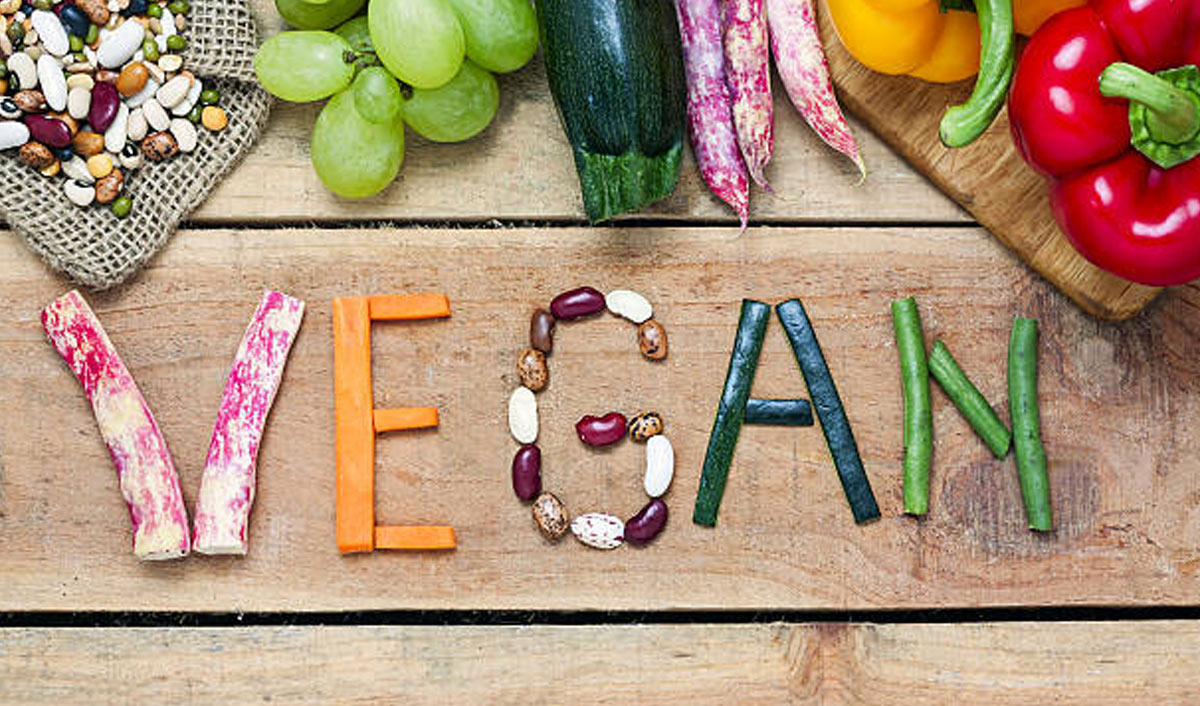
Everyone wants to eat healthy, but many of us are too busy for the kind of cooking that requires long recipes and even longer cooking times. Sometimes, it may be tough enough just to find the energy (or time) to even boil water. One sure-fire way to ensure that you can enjoy quick, easy and healthful vegan meals is to have a well-stocked plant-based pantry close at hand.
Many of us have this notion that vegan bakery dishes can never taste good! And it’s very evident when it comes to this respective industry that eggs and butter are the most mainstream ingredients in the following process. Yet there are amazing supplements that can replace these items and give great yield sensational output
Though there’s still a chance that the final result may suffer, since there is less scope for such drastic changes where baking is concerned. These days however the workarounds are super easy. Thanks to vegan milks, vegan butter, vegan whipped cream, vegan condensed milk etc which will be a perfect substitute and make your cakes, cookies & bread taste delicious.
As mentioned above, eggs definitely play a prominent role in baking. Sometimes they are included to add moisture. In these cases, tofu or apple sauce may be a very good substitute. Several times, they bind ingredients and enhance the resilient properties required for a cake to rise rightly. There are a plethora of vegan options available in the market that can easily replace eggs, even on the online platforms. Usually each tablespoon of this product mixed with three tablespoons of water will replace one egg in baked recipes.
So now you know being vegan is definitely not boring! You can have all kinds of food when it comes to being vegan - Gluten free vegan bread, vegan pizzas, vegan casseroles, vegan pie, vegan cupcakes , specially vegan cookies and many more.

Veganism as a trend is growing globally and not just in India. With people becoming more aware and more compassionate, they are beginning to care about what they are eating and the source. This is why we can clearly see a boom in veganism and vegan brands. It’s only going to grow more. Though, there are no set target for such kind of products, it’s for anyone who’s willing to open their minds and try something new and conscious.
Running on Trend
“One of the hypotheses that we initially had that India has the largest vegetarian population in the world with almost 30% of the population being vegetarian. All Indian households will always have lots of vegetables, salads, lentils on their plates which is why a lot of vegan companies are looking at bringing plant-based protein to India. These are not new but there are a lot of things which Indian customers are already very used to. Plant-based protein is huge market in India,” shared Shraddha Bhansali, COO, EVO Foods that is on a mission to bring the plant-based revolution to India.
Also Read: Vegan Food Trend to Hit Restaurants in 2020
A recent research by SEMrush shared that globally there has been a sharp uptick in searches for services that deliver vegan food to people’s homes. Also, searches for keywords like “vegan delivery”, “vegetarian delivery”, “order vegan food”, and “order vegetarian food” increased by 128%, 233%, 51%, and 27% respectively from January to May 2020.
“People are becoming more aware and more compassionate. They are beginning to care about what they are supporting with their money. This is why we can clearly see a boom in veganism and vegan brands. It’s only going to grow more,” said Susmitha Subbaraju, Co-Owner, Carrots that is India’s first vegan restaurant.
Targeting the right people
“I think the target for plant-based food products is not vegan people but that are flexitarian and are looking to include more plant-based diet. A large population of India is protein deficient so we look up to them and people who want to substitute their diet and want a better egg, higher quality, more ethical, that has no cholesterol,” added Bhansali who is a passionate foodie and vegan who also owns and operates a vegetarian restaurant and bar in Mumbai called Candy & Green.
May Interest: Why Global QSR Majors are Including Vegan Option in their Menu
The study indicates that there are a significant number of people globally committed to vegetarianism. As many parts of the world have been in lockdown, an increasing number of vegetarians around the globe have been ordering vegetarian food from outside. The study suggests that searches for vegan/vegetarian deliveries have slightly decreased" in India.
“There are no specific target customers. Vegan products are for anyone who’s willing to open their minds and try something new and conscious,” added Susmitha who believed that the pandemic hit the food industry very badly. But the good thing that’s come out of it is that people are making healthier choices while eating. So food businesses that care about the health of their guests will thrive on the other side of this pandemic.
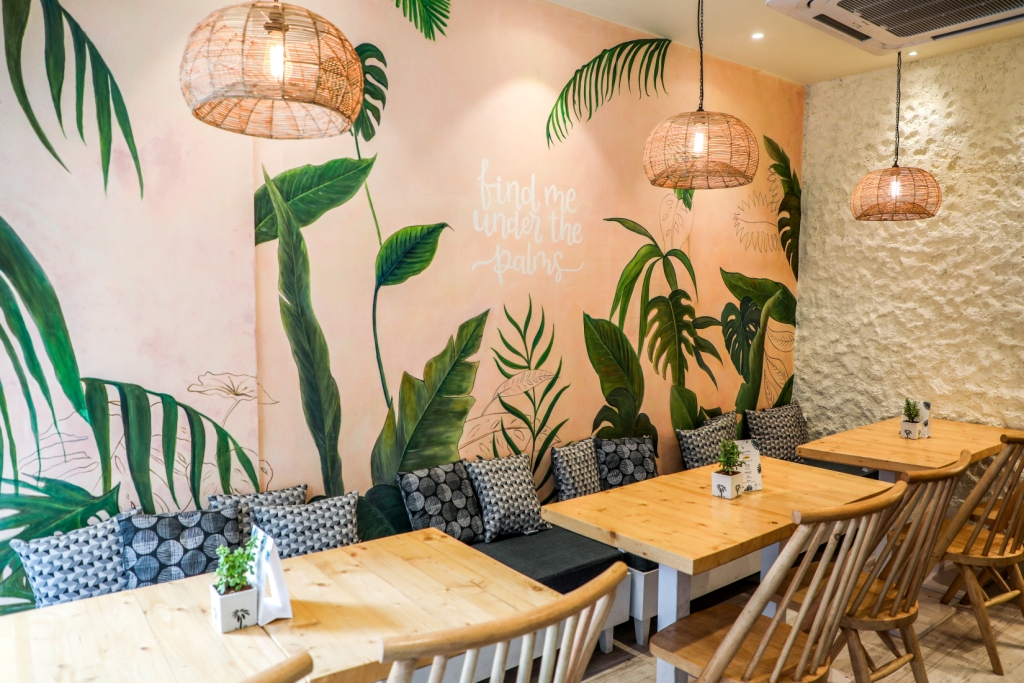
Nut & Bowls is Delhi's first 100 per cent vegan café and juice bar, which is launched with an idea to serve clean, plant-based food that is healing to the body and soul. The 15-seater café is known for offering scrumptious fresh food to gastronomists and vegans prepared in olive oil and protected from all types of chemicals and preservative agents.
The menu at Nut & Bowls is designed in a very simple-yet-interesting way that anyone and everyone can go through with ease. The menu-mix is amazing; toasts are everyone's favourite, almond milk is the best available in the country, and coffees are organic and made from almond milk. Loaves of bread are freshly done and on every fresh morning, people can relish amazing sugarless desserts and they literally die for ice creams. Nut & Bowls is the paradise of vegans where they fall in love with nature and maintaining harmony with birds and animals.
Surruchi Joshhi, her husband Nikkhil Joshhi, the head chef at Nut & Bowls, and Mayank Gahlot are the brains behind the vegan cafe. Their motive is to spread awareness and inspire people to choose a healthier, greener, and more compassionate lifestyle through veganism.

In an interview with Restaurant India, founder of Nut & Bowls, Surruchi Joshhi, talks about the first raw vegan café in Delhi.
How did you come up with the concept?
Nut & Bowls is Delhi's first raw vegan cafe and food company where we produce everything fresh every day and serve the Plant-Based goodness to our customers. Our focus is on serving natural food provided by Mother Nature without any chemicals or preservatives with the right balance without compromising on taste.
Chef Nikkhil who is also the owner of Nut & Bowls has always been into cooking clean food and preparing smoothies at home and so tasteful that they were not available in the market anywhere and then came a time when he got aware of Veganism and about the health benefits of eating a Plant Based diet and living a cruelty free life.
He traveled to different countries to pursue his passion and became a certified raw vegan chef and saw that the awareness is so high that he decided to take charge of it and spread awareness about Veganism and start his own cafe and food company so the vegan products are easily available in the market and you have got a cafe that is 100% vegan.
Whenever we used to go out to dine, everywhere in Delhi we saw a section of vegan food with 4-5 options and that's about it and that gave a wrong impression that vegans only eat salads which we broke after introducing a full-fledged vegan menu from fresh fruits smoothie to pasta and burgers to ice creams and vegan cakes that everyone is crazy about it now.

What were the mistakes you might have made while drafting the plan for your restaurant?
We researched for a long time, for about 2-3yrs before launching the brand, so we knew the market and we were clear about our expectations and sure about our idea of doing something good with the right intentions.
How important is the location of a restaurant business?
Location location location! That is the key to win. Before opening your restaurant, you should be clear to whom you are planning to cater.
What are your growth and expansion plans for Nut & Bowls?
The next step is to launch our products in the market and open the next branch of Nut & Bowls. There are a lot of investors who have shown interest to invest and open a branch but we are looking for the right person who actually loves the brand more than the money.
What is the average per month footfall at your restaurant?
Well, it's been only 3 months to the opening and on average we are catering to a few hundred.
What does the road to profitability look like?
Frankly, this business model where everything is based on dry fruits and organic produce and keeping the costing in mind, the margins aren't very high. Also because in India, the organic products are available at an extremely high cost and our country doesn't think before eating or buying anything from the market. Every packet you buy from the market has chemicals to store them for a longer period of time. We need to be more aware of the food we are eating and live a conscious life. So currently at this time, this business is only for someone who wants to promote the idea of Veganism and do something good to the society. And with more demand for organic products, the supply will happen in lower pricing.
What do diners prefer more from the menu of Nut and Bowls?
Our customers love smoothies, almond mylk, Buddha bowls and our burgers and their meal always end the Deep Dark Chocolate cheesecake.
How do you see the vegan food trends in Delhi?
Well, I will say that it is definitely progressing but at a slow pace but with more awareness about Veganism in the market, it will go up and we like to say that Veganism is the future and we as humans living on this planet have to take responsibility of our actions. What you buy, what you eat, what you wear, your lifestyle is either doing good or bad to the planet.
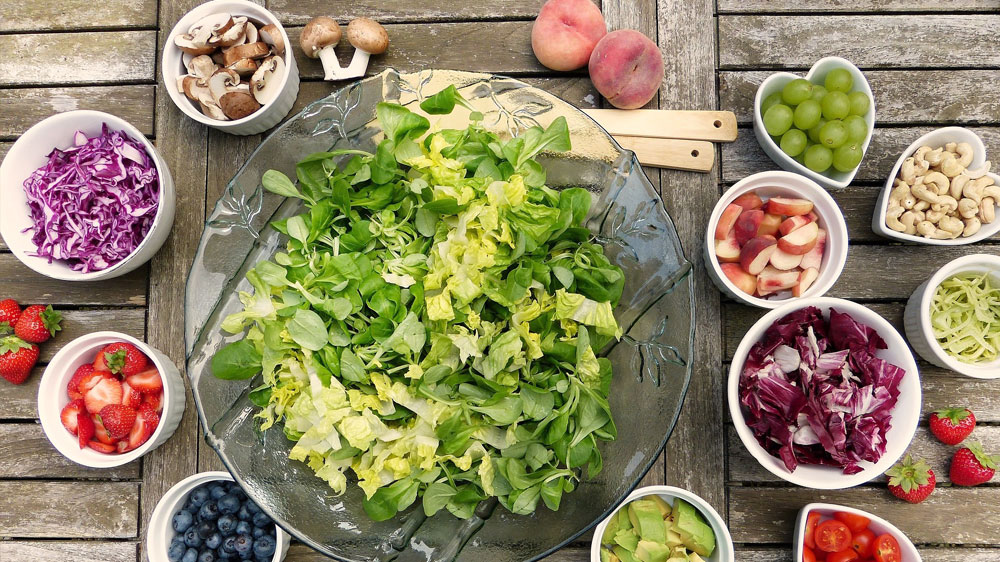
In last one year fast food majors are trying hard to woo their health freak customers. All thanks to the good vibe that’s blowing in the sector. For ages, it was believed that people eat vegetarian or healthy foods only when their body needs it or it was always supposed to be boring. But it remains a myth. Healthy food can also be tasty and presentable. Not only casual dining and fine dining sector but Quick service restaurants like Burger King, McDonald’s, Carl’s Jr to name a few have also included a vegan burgers, nuggets and other loved offerings in their menu.
QSRs Joining the Race
Burger King recently ‘Impossible Whopper’ the meat-free version of its signature Whopper that is known for its beef and mutton patty at over 59 restaurants in St Louis. The meatless burger consists of soy and potato protein, features coconut oil, sunflower oil and heme- an iron-rich protein that simulates the texture, color and taste of actual meat is manufactured by California- based Impossible Foods that makes plant-based substitutes.
“We’ve done sort of a blind taste test with our franchisees, with people in the office, with my partners on the executive team, and virtually nobody can tell the difference,” said Christopher Finazzo, President- North America, Burger King to The Guardian.
Restaurants like Carl’s Jr also sells vegan burgers in selected US locations. And, is loved by millennials for its alternative to meat burgers. The largest fast food chain in the world McDonald’s is also introducing many new changes in its menu with new vegan options at restaurants around the globe. In response to meat-less minded customers in Norway, McDonald’s is now frying up vegan "chicken" nuggets at select restaurants throughout the country.
The new chicken-free McNuggets are made with a mashed potato base, which is mixed with chickpeas, onions, carrots and corn. They’re coated in breadcrumbs, and is fried until crispy. Few years back, McDonald’s started ‘vegan burger’ in Finland that received a mouthwatering response from the customers in the region. Also, its restaurants in Chicago launched a vegan burger in December 2018. The offering is called the “McAloo Tikki," which is one of the chain's best-selling products from its restaurant menu in India.
Packaging Food is Not Behind
Nestle is not behind in meeting the customer’s demand as it has launched meat-free burgers to woo health freak crowd. The FMCG major is coming up with new offerings like no or less sugar, vegan options to match the eating habits of the young crowd. It announced plans to roll out ‘cook from raw’ plant-based burgers in Europe under the Garden Gourmet brand and in the United States under the Sweet Earth label.
“Many consumers recognize that less meat in their diet is good for them and for the planet, but plant-based meat alternatives often do not live up to their expectations,” Nestle said in a statement.
In December, Unilever said it had bought up Dutch brand De Vegetarische Slager (The Vegetarian Butcher) to position itself in the expanding sector.
Also, brands like Good Dot in India are also marketing and selling their products under vegan options. The Udaipur-based company has got an alternate to KFC’s famous zinger burger.

India has the highest percentage of vegetarians in the world but somehow vegetarian food beyond Indian cuisine is considered unappealing for most Indians. It is the opposite in many parts of the developed world. Vegan and vegetarian food has been trending for a long time. Hence, Nitin Dixit wanted to be the agent of this change in the dine-out culture by promoting the associated lifestyle which is considered more sustainable. Therefore, he encouraged building a strong community around the cafe which includes some support for co-working as well. Excerpts from the interview:
You aim at popularizing plant protein. Why there is a sudden trend among customers getting attracted to such concepts?
As mentioned earlier, this trend has been prevailing for a long time in much of the western developed world. In India, there does seem to be a surging interest as of late. Perhaps it has to do with our tendency to be influenced by the West as well as some major celebrities, international and local, promoting vegan food in a major push. There is also a major push from the scientific community for people to adopt a plant-based diet in order to help mitigate climate change.
It is often believed that healthy food is boring. What does your chef do to make it appealing and tasty to address to such finicky customer?
We all work very hard to get our dishes to hit benchmarks related to taste. It is a complicated process but that is part of what creates a unique value proposition for our customers. We aspire to please even ardent non-vegetarians!
How have designed the café?
The design process is headed by our co-founder Mohit Yadav and we work with many architects and designers as we have been active in the design community for over a decade. We are deeply involved in every aspect of the design.
We also see that there is a sudden rise in restaurants adopting sustainable and paper packaging and straws. Why so? How is it helping reach to more mature customers?
These are small measures in a much larger push towards sustainability which we are trying to promote also. Today maturity is not a factor of age necessarily but also exposure. Many of our younger customers are becoming aware and appreciate such initiatives. We need a lot more from the industry in this direction.
Tell us something about your menu. Which is the highest ordered menu?
People have lately fallen for our Ragi Nachos which is a contemporary and indigenous adaptation of the classic nachos. We are inspired by modern vegan/vegetarian California cuisine which itself is influenced by many regions of the world.
What is the average footfall at your café, ticket size?
We generally don't share commercial aspects of our operation but needless to say, we are quite satisfied with our progress.
You recently opened your second café in Gurgaon. What is the expansion plan?
We are opening a third location very shortly in Chattarpur area. Then we would like to strengthen our operations before pursuing further expansion plans.
How do you decide on locations?
We generally tend to look for alternate high street locations which are still mainstream and well located. We also look to access the density of our target demographics in those locations. In the future, we will also be open in some format to corporate parks.

From your favourite KFC Zinger burger to a meaty bowl at your go to restaurant, vegan food players are giving customers a whole lot of choices. 2019 will also see a trend that sees vegan ‘junk food’ replacing traditional meat-based staples. Also, restaurants have also included a menu focusing on the vegan customers.
Waking up to Awareness
Vegan eating is all about awareness. A lot of us eat food because that’s what we have been grown eating and that’s how we develop taste. There are three main reasons for people turning vegan - the first being ethical wherein people don’t want to hurt animal and find an alternate option to it, second is health awareness as more and more people are willing to eat fresh, locally grown foods and ingredients, third is obviously the environmental issues because there are lots of greens being killed and harmed making changes in the environment. Hence, we need to be conscious while eating our food.
“It is just the matter of changing the mindset, trying alternatives,” shares Susmitha of Carrots India which is India’s first vegan restaurant mentioning that they have a very waste menu because the idea is to have something for everyone. It depends on person to person. “Our sloppy joe burger, aubergine mushroom platter and obsessive chocolate disorder are one of the most ordered items on the menu,” she added further.
ALSO READ: How This Blogger Turned Her Passsion For Vegan Food Into A Restaurant
A similar story came up of Udaipur based Abhishek Sinha who loved animals and rescue them whenever there is a need. But being a meat eater himself there was always an imbalance between what his heart would say and what his tastes prefers. It was during his engineering days in Pune, back in 2003 he came along several university researches where he found a research on tissue culture based meat without making animals die and make real meat out of it. And, that’s how he together with his brother started Good Do in India serving food made from mock meat. “There is vast difference between what vegan restaurants are doing and what we are doing. We are doing it to make it comfort food and not a high end organic stuff. Also, we are targeting the meat eaters who are trying to lower the meat intake,” shares Sinha who sells close to 12000- 15000 packets every day on the manufacturing front.
Going with the Trend
Known for serving vegan delight before independence Mumbai based Kailash Parbat is bringing its much talked about vegan restaurant to India. The group was already running a vegan restaurant in Lisbon, Portugal with the name of ‘Veganapati’. “We are also planning to launch a vegan restaurant in India. We are already running ‘Veganapati’ and we want to grow it in India. We are doing modern vegan food with Indian twist to it,” shares Kamlesh Mulchandani, the third gen into the business of food known for serving vegetarian food for ages. “We wanted to bring it to the major cities in India including; Bengaluru, Chennai, Mumbai and Delhi in 2019,” he added.
MUST READ: Vegan Butcher: How This Entrepreneur Is Changing The Way India Eats Food
Also, there are many restaurants in top cities already including a vegan menu into the a-la-carte option. “We also intend to introduce a whole new thoughtfully curated healthy menu which includes Vegan food too,” shared a media statement by Arbour Food and Drink Pune.
Thus, with new happenings at restaurants we surely can see that everything is in place to make 2019 a year of vegan treats.

Vegannection created a rage as soon as it was launched; it's the world's first 100% vegan prepaid cash card. Vegannection is created and run by an international group of humble vegans who set out to do what they can to contribute to making this world a better place.
"We are very grateful to have extremely talented and dedicated professionals on our team committed to making Vegannection as great as possible."
~JP McCormack
JP McCormack, Vegannection Partner, the UK and Ireland, tells Restaurant India about the world’s first 100% vegan debit card and its scope in the Indian market.
Read the News: World's First 100% Vegan Debit Card Launched
The Idea Behind Vegannection
Having experience in running a vegan business, we have felt, first hand, how difficult it is to compete with non-vegan businesses and already established big brands. On the other hand, we had this idea about creating something that would entice people to buy vegan products even more. Joining forces with other vegan professionals and having conducted extensive market research, we have developed this tool that would support 100% vegan economy and give people a better shopping experience while rewarding them for buying 100% vegan.
Response from the Restaurant Partners Worldwide
Given how Vegannection is not limited to just restaurants, we have been getting an amazing response from all types of vegan businesses from around the world. The things that our partners point out is how easy and practical it is to work with Vegannection card and how the consumer benefits Vegannection offers bring them more clients.
Vegannection in Indian Market
With vegan restaurants, catering and home delivery becoming available in almost all the cities, veganism is definitely on the rise in India. What we at Vegannection will be looking to accomplish will be to help vegan restaurants and food establishments grow even more by rewarding the conscious consumers for choosing them, thus, bringing them more clients, and loyal ones.
Vegan Food in India
It is widely known that, when it comes to Vegan food, India has one of the friendliest cuisines around. Flamboyant use of spices and sauces charms new life into the likes of potatoes, cauliflower, peas, and eggplant which makes us all the more excited to partner with Indian vegan food establishments.
Must Read: These Restaurants Are Breaking The Mental Block With Vegan Diet
Promotional Strategy with Vegannection
Our promotional strategy is based on constant research, development and upgrading of our service and the referral aspect of Vegannection where our clients enjoy the benefits of vegannecting with other people.
We believe that the best possible marketing is the excellence of the product, the better it is, and the more people talk about it.
As a result, Vegannection has already been featured on radio shows, major internet vegan media brands and despite being focused only on London, the UK, we now have cardholders in 37 different countries worldwide.
We obviously maintain a very active presence on social media, but for the most part, we just let Vegannection speak for itself.
Also Read: How This Blogger Turned Her Passion For Vegan Food Into A Restaurant
Vegannection Expansion Plans
Our current plan is to focus January on London area, followed by other cities in the UK come February, then other countries in Europe such as, Spain, France and Ireland in March after which we will turn to other continents looking to expand to Asia, US, South America, etc.

Veganism is on a steady rise in India; people are growing conscious towards healthy and plant-based diets. Veganism is a concept that runs against all forms of cruelty and exploitation of animals. With the change in food trends, Indians are welcoming the vegan diet more than ever before.
With the rise of the vegan food trends in India, people are experimenting and exploring the cuisines at the various restaurants. Punekars’ favourite, The Real Green Cafe is Maharashtra and Pune’s first 100 per cent plant-based cafe. The plant-based diet helps in reducing the risk to Type 2 Diabetes, Cardiovascular diseases, Hypertension and Obesity. The Cafe is located in Koregaon Park. The Real Green Cafe offers a range of vegan cuisines like cheesy spinach sandwich, barbeque veggie pizza, Irish hot coffee, crispy corn chips and more.
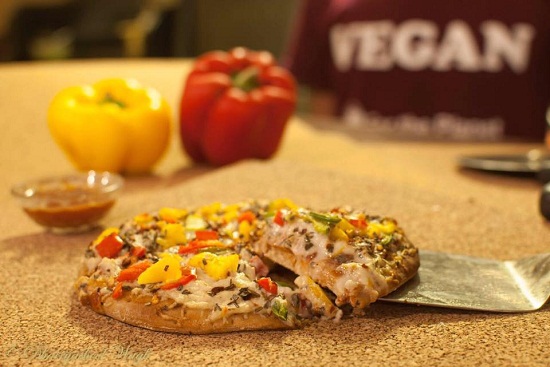
Aishwarya Viswanath started The Real Green Cafe in Pune in June 2015. She had quit her corporate job to start the 100% vegan cafe. "I am vegan myself. And when I looked around I could not find a place that served a vegan menu here in the city. And, thence, I thought of serving the vegan community," told Aishwarya to Restaurant India. She believes in serving her customers with fresh produce and is very particular about it.
"We use in-house cheese in the food items as we don’t get vegan cheese in India easily and if we, somehow get, it is processed. I want to serve my customers with authentic and fresh produce. That’s the reason the cheese is made in-house. The base of the cheese is either cashew or pumpkin or melon seeds," said Aishwarya.
When she started The Real Green Cafe, she wanted to have “everything on the menu that vegans miss” from the regular cuisines. Aishwarya added fast food in the menu from which pizzas are Punekar’s favourite. “People like barbeque, mozzarella and cheddar pizzas. The visitors to our restaurant also like almond milk coffee - both hot and cold. And we serve a variety of slow-pressed juices too which do very well among the visitors. The slow-pressed juices retain the fibre and the nutrients and are high on health quotient,” she added.
Aishwarya told that it is the non-vegan community that visits the restaurant more than the vegans. “The non-vegans walk-in quite often. They are curious to know how the walnut milk chai taste or how does the almond milk coffee taste. They want to explore the cuisines mentioned in the Cafe menu. Curiosity works for us!” she said.
Upon the rising vegan trend in Pune, Aishwarya said The Real Green Cafe was the first one in Pune as well as Maharashtra to serve 100 per cent vegan food. “It’s a growing concept. Many restaurants in the city have started to include vegan food in their menu. So, I can say, people are ready to experiment and explore the vegan food,” said Aishwarya.

Delhiites are not far from experimenting with vegan food. Besides the regular Mediterranean and Italian cuisines, Rose Cafe in Delhi offers quick options for vegans. It has an indoor and an outdoor seating arrangement. The ambience of Rose Cafe is warm and comforting. Though regular cuisines are still popular, the veganism is slowly picking up among Delhites, observed Tarini, who runs the Rose Cafe along with her mother Sarita Ahuja.
Tarini Ahuja told Restaurant India that when she started her restaurant there were people who would ask for vegan cuisines. Therefore, she introduced the vegan items on the menu. From among the variety of vegan cuisines - gelato, dark chocolate cake, falafel wrap, pasta and ice cream - vegan dark chocolate gelato and vegan banana cake are among the people’s favourite. “Even regular people, who are not vegan, would order the ice cream and cakes from the vegan menu,” said Tarini.
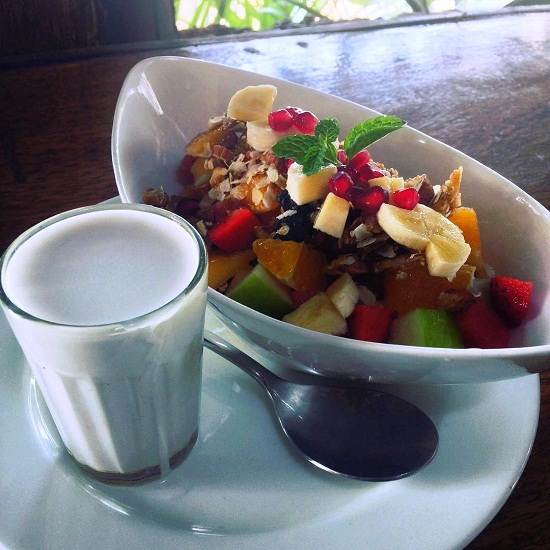
No preservatives added! That’s what you had read on various food items. Isn’t it? The chef at Prana Kitchen makes sure that no preservatives are added to the cuisines served to the people. The 100 per cent vegan cafe was started by two young ladies - Parmit Shroff and Malvika Amin - who had quit their corporate jobs to serve the vegan community. The vegan cafe was launched at Parmita’s mother’s PRISim, a healing centre, at Grant Trunk Road in Mumbai.
Prana believes in raw food concept for detoxification and boosting energy. Therefore, it serves the vegan food made from organic produce. The Zucchini Noodles and Pesto, Gooey Chocolate Brownie, Creamy Mushroom crepes and Banana Almond Butter Smoothie are popular among the visitors at the Prana Kitchen in Mumbai.
The co-founders of Prana Kitchen Parmita Shroff and Malvika Amin turned vegan in 2012. They started with experimenting on the concept. “We felt lighter and good with the vegan diet, and, therefore, we decided to continue,” Parmita Shroff told Restaurant India. Parmita further added, “plant-based diet and food help in healing processes. I volunteered at the Auroville farm in Pondicherry. There I learnt the importance of using local ingredients in the food we eat daily, especially the plant-based food. It motivated me to establish a relationship with nature through food. I believe the right food nurtures body as well as the mind.”
Speaking about the visitors’ reaction on the vegan menu, Parmita said, “The first-time visitors of Prana would admire the coffee or tea and ask what all ingredients we have used. Once we tell them the ingredients include fermented cashews and nuts, they would give astonishing looks. People are not looking for dairy when they come to our cafe. Dairy, I think, is more of the mental block.”
There is a mix of regular and vegan visitors at Prana Kitchen. A lot of people who visit the Cafe experiments with the vegan diet.
“Distractions and people’s bad mood lead them towards unhealthy eating, which we call comfort food as well. At the healing centre, we tell them the importance of the food’s relation with mind and healing. They experiment with vegan diet at Prana, and like the food too,” said Parmita.
Speaking on the rising vegan trends in Mumbai, Malvika Amin Co-founder of Prana Kitchen said people, earlier, would not know about vegan diets. “Five years ago when I walked in a restaurant, I had to tell I don’t eat butter, ghee or dairy, and there was almost nothing on the menu that I could eat back then. Nowadays, when I go to a normal restaurant and when I tell them I am a vegan, they understand what exactly I mean. They have at least two-three options on the menu. The vegan trend is certainly rising.”
 Food businessThe next restaurant idea may not begin with a lease, a signboard and a large kitchen. Sometimes, it may begin with a small menu, a few tables and…
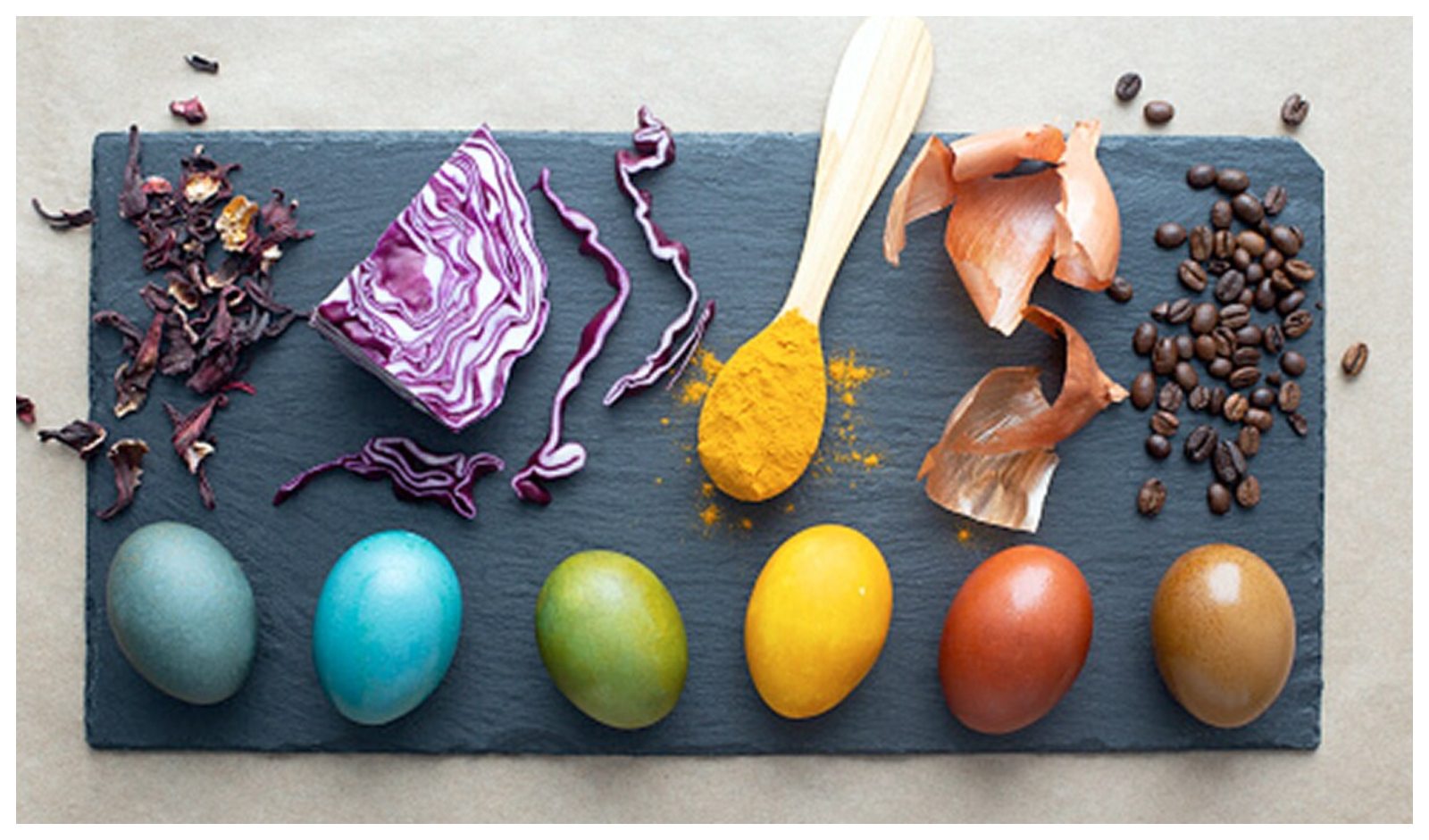 RestaurantsWith the global natural food-colours market valued at US$2.38 billion in 2025 and projected to reach US$4.11 billion by 2033, colour is becoming a…
 Restaurant interiorBut customers may still use what they see in the bathroom as a signal of how carefully the business is managed. For restaurant operators, that makes…
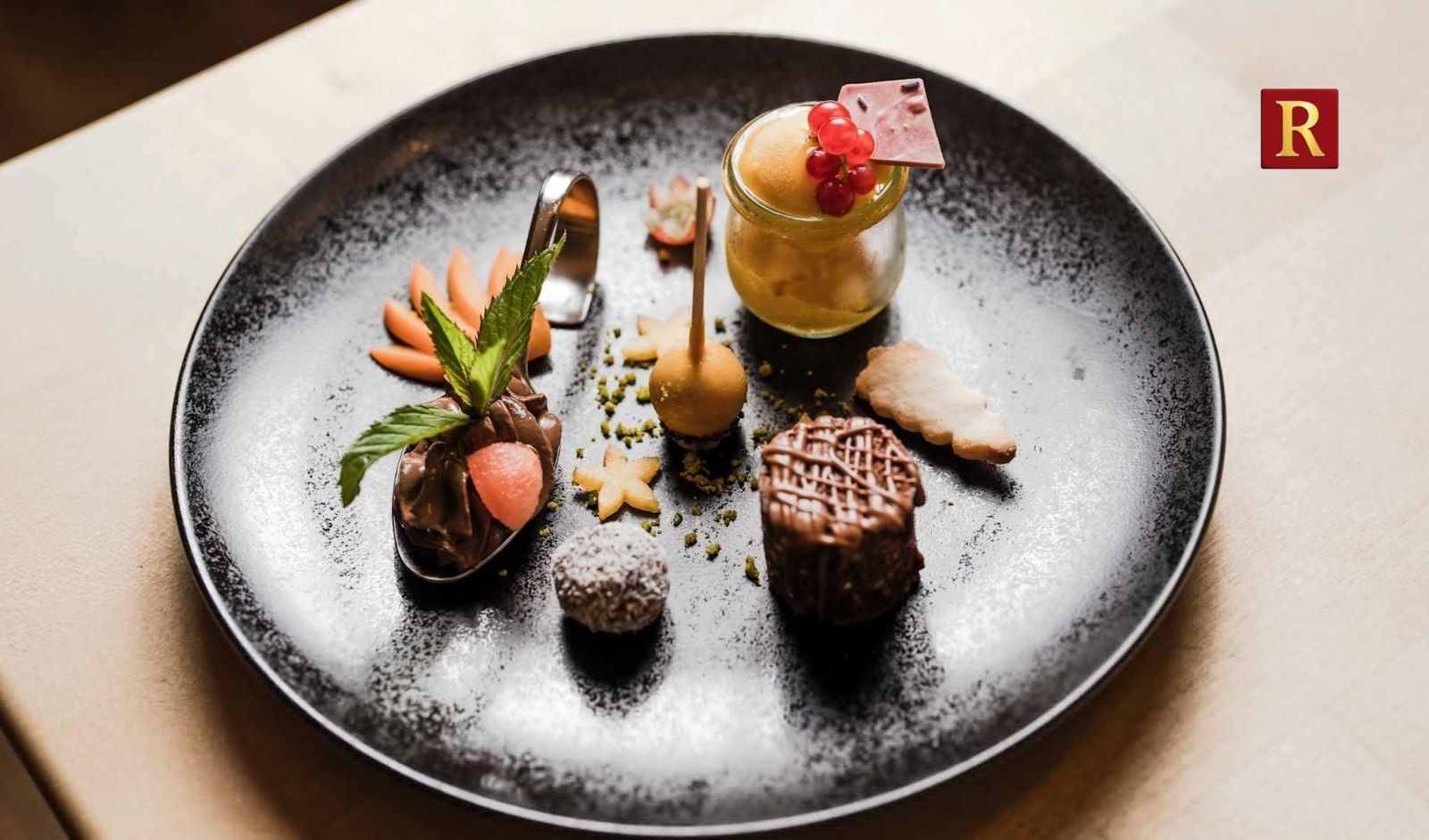 DessertsIn this sense, food is not necessarily getting smaller because consumers want less. In many cases, they simply want more choice in a smaller format.
Copyright © 2009 - 2026 Restaurant India.