





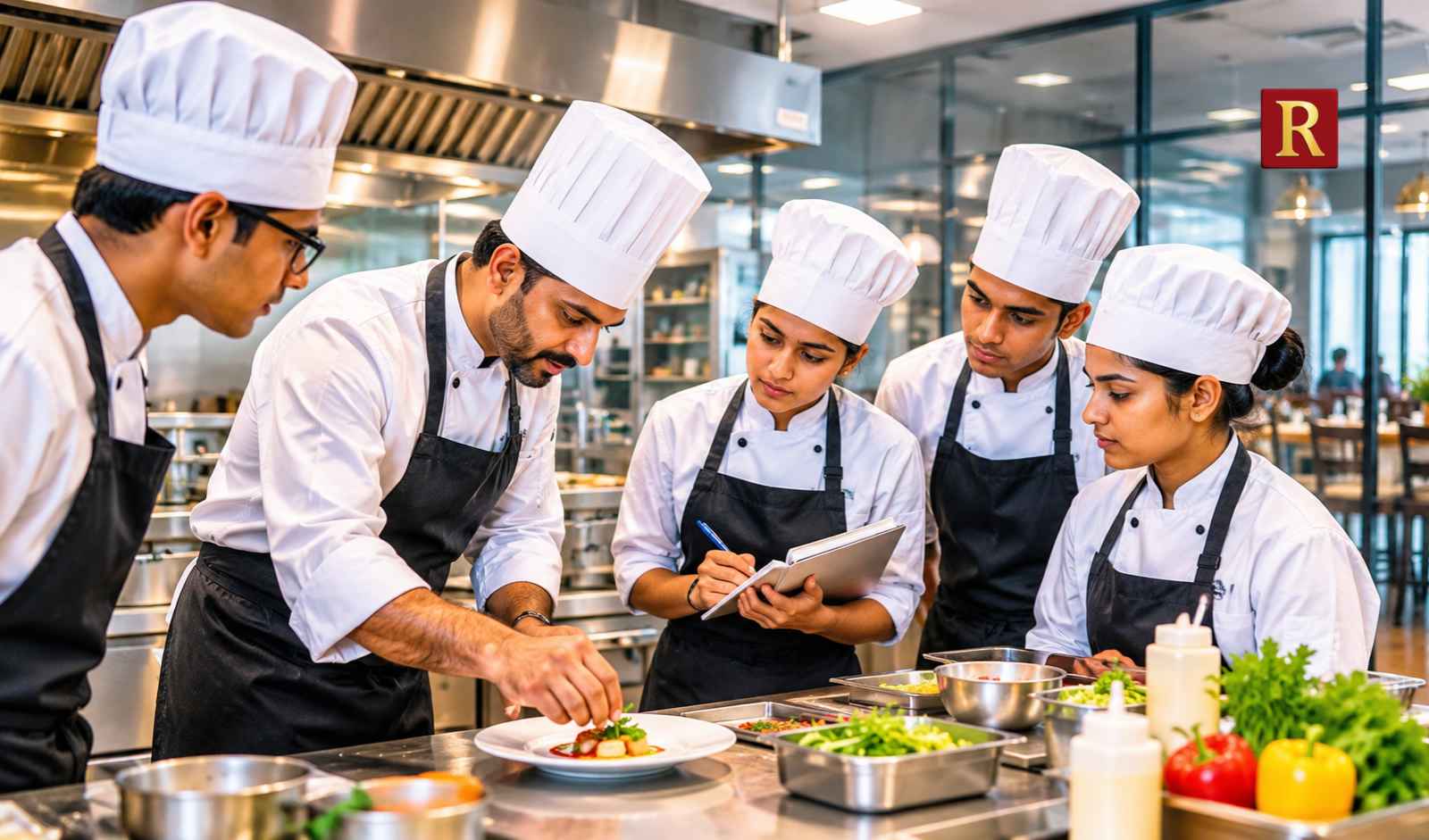
A restaurant's success is often measured by its food, customer experience, location and ability to generate repeat business. But behind every successful outlet is another operation that customers rarely see: employee training. As restaurant groups expand across cities and introduce multiple formats, maintaining consistent food quality and service standards is becoming increasingly challenging. Hiring chefs, kitchen assistants and service professionals is only one part of the problem. Ensuring that every employee understands the brand's recipes, preparation methods, hygiene standards and operating procedures requires a more structured approach.
This is why restaurant groups are investing in dedicated training kitchens. These facilities allow companies to train employees in controlled environments without disrupting daily restaurant operations. They also help businesses prepare teams for upcoming outlets, improve kitchen efficiency and develop future managers from within. For restaurant operators, training kitchens are gradually becoming an important part of expansion infrastructure rather than just an HR initiative.
Why Restaurant Expansion Is Creating a Training Challenge
Opening multiple outlets requires more than securing locations, purchasing equipment and establishing supply chains. Restaurant groups also need employees who can deliver the same experience across every location. This becomes particularly difficult when brands expand into Tier-II and Tier-III cities, where access to experienced hospitality professionals can be limited. According to a Grant Thornton Bharat and National Restaurant Association of India industry report, nearly 94% of surveyed restaurant operators plan to expand into Tier-II and Tier-III cities. However, close to 60% face shortages in kitchen and service staff.
The challenge is not limited to recruitment. Newly hired employees need to understand specific recipes, portion sizes, cooking techniques, equipment handling and service protocols before they can independently manage their responsibilities. Traditionally, restaurants have relied heavily on on-the-job training, where experienced employees teach new recruits during regular operations. However, this approach can put additional pressure on existing teams, particularly during peak service hours. Dedicated training kitchens offer an alternative by separating employee learning from customer-facing operations.
Training Kitchens: The Infrastructure Behind Restaurant Expansion
A dedicated restaurant training kitchen is designed to replicate the working environment of an actual restaurant. It may include commercial cooking equipment, preparation stations, storage facilities, cleaning areas and mock service counters. Employees can practise different cooking techniques, learn standard recipes and understand equipment operations before being assigned to live outlets. For restaurant groups, these facilities also provide greater control over the training process. Instead of depending entirely on individual outlet managers, companies can establish standardised learning programmes that are followed across locations.
The training can cover several operational areas:
- Kitchen operations: Preparation methods, cooking techniques, plating and portion control.
- Food safety: Hygiene practices, temperature monitoring, allergen management and cross-contamination prevention.
- Equipment handling: Operating commercial ovens, fryers, induction equipment and refrigeration systems.
- Inventory management: Stock rotation, FIFO, FEFO and ingredient utilisation.
- Customer service: Order handling, service standards and complaint management.
- Restaurant operations: Opening procedures, closing checklists and coordination between departments.
These facilities can also conduct practical assessments to determine whether employees are ready to handle their responsibilities independently.
How Restaurant Groups Are Building Their Training Infrastructure
Several hospitality companies have already demonstrated how structured training facilities and internal academies can support workforce development.
1. Barbeque Nation: Training Employees Before They Enter Restaurants
Barbeque Nation has invested in dedicated training infrastructure in Delhi and Kolkata to strengthen its hospitality workforce. The company has also participated in the government's Pradhan Mantri Kaushal Vikas Yojana (PMKVY), focusing on developing skills in food production and food and beverage service. In June 2025, the company reported having trained and inducted nearly 3,000 people through the programme. Its training model included 90 days of classroom training, and it sought to increase its trainee allocation from 3,000 to 7,000. The initiative highlights how restaurant groups can develop a structured talent pipeline instead of depending entirely on experienced professionals available in the recruitment market. For an expanding restaurant chain, having trained employees ready for deployment can help reduce the pressure associated with opening multiple outlets.
2. Compass Group India: Creating a Simulated Hospitality Environment
Compass Group India's ConnectED skill centre demonstrates how training infrastructure can extend beyond conventional classrooms. Launched in March 2024, the 1,650-square-foot facility recreates different hospitality work environments. It includes a fully equipped kitchen, café, pantry and kitchen stewarding section. The facility was designed to provide practical training through simulated workplace situations. Employees can understand different operational responsibilities before entering actual work environments. The company planned to train more than 200 employees every month, with programmes lasting between six and 30 days. This approach reflects an important shift in hospitality training. Employees are not only learning theoretical procedures but also practising the tasks they will perform during regular operations.
3. Jubilant FoodWorks: Developing an Internal Talent Pipeline
Jubilant FoodWorks has also focused on workforce development through its JFARM initiative, which stands for Jubilant FoodWorks Academy for Restaurant Operations and Management. The initiative aims to equip young people with industry-relevant skills and prepare them for employment in the food service sector. A January 2026 update reported that more than 5,000 young people had been skilled through the initiative, with over 70% of its alumni employed with QSR organisations. The programme highlights how restaurant companies can connect skill development with employment opportunities while creating a more organised source of trained talent. For large QSR operators, such initiatives can become particularly important as outlet networks grow and the demand for operational employees increases.
Why Training Kitchens Can Improve Restaurant Efficiency
One of the biggest advantages of dedicated training facilities is that they allow employees to learn without affecting live restaurant operations. However, their business value extends beyond reducing pressure on existing teams.
1. Maintaining Food Consistency Across Outlets
For a restaurant chain, consistency is directly connected to customer trust. A dish prepared at one outlet should have the same taste, portion size, presentation and quality at another location. This becomes difficult when employees follow different preparation methods or interpret recipes differently. Training kitchens allow chefs to practise standard recipes, ingredient measurements and plating specifications under supervision. Restaurant groups can also use these facilities to introduce new menu items and train employees before launching them across multiple outlets.
2. Reducing Food Wastage During Training
Incorrect preparation, overcooking and improper portioning can increase ingredient wastage. In a live restaurant, these mistakes can affect both food costs and service efficiency. Training kitchens provide an environment where employees can practise preparation techniques, understand ingredient yields and learn appropriate storage methods. For example, employees can be trained to follow standard portion sizes, maintain temperature records and use FIFO and FEFO inventory practices. Over time, restaurant groups can assess whether structured training improves ingredient utilisation and reduces preparation-related errors.
3. Preparing Teams Before New Outlets Open
Training infrastructure can also support restaurant expansion. When a brand prepares to open a new outlet, employees can be recruited and trained before the location begins serving customers. A central training facility can familiarise employees with recipes, equipment, hygiene procedures and service standards. Experienced trainers can then support teams during the initial operating period. This approach can be particularly useful for restaurant groups opening several outlets within a short period or entering unfamiliar markets.
4. Developing Future Chefs and Restaurant Managers
Restaurant groups often depend on external hiring to fill senior kitchen and management positions. However, employees who understand a brand's operating model can become valuable internal leadership candidates. Structured training programmes can help kitchen assistants develop into commis chefs, commis chefs progress into senior kitchen roles and service employees move into supervisory positions. An international example is Dishoom, which has developed its Kitchen Academy to support chef development and internal progression. A 2026 HR Magazine case study reported that chef turnover at the restaurant group declined from 41% in 2013 to 14% in 2024. Average employee tenure increased from one year and four months to four years and four months. Its nine-month senior chef development programme combines classroom learning, practical kitchen skills and management training. The example demonstrates how structured employee development can contribute to retention and leadership development.
Digital Training and Kitchen Simulations
As restaurant operations become more technology-driven, training kitchens are also creating opportunities for digital learning. Restaurant groups can use digital learning management systems, video demonstrations and standard operating procedure libraries to make training more consistent across locations. For example, employees can access recorded demonstrations of recipes, equipment handling procedures and food safety practices. Managers can also maintain digital records of completed training modules and employee assessments.
Another opportunity is simulation-based learning. A training facility can recreate high-pressure situations such as sudden increases in orders, delayed ingredient deliveries, equipment failures and customer allergy requests. Employees can practise responding to these situations before encountering them during actual service. Artificial intelligence could further support this process through personalised learning modules, skill-gap identification and performance tracking. However, practical kitchen supervision will remain essential because cooking techniques, food handling and service coordination require hands-on experience.
What Restaurant Groups Must Measure Before Investing
Although dedicated training kitchens offer several operational advantages, establishing them requires investment in space, commercial equipment, trainers, maintenance and learning programmes. Their effectiveness should therefore be measured through business outcomes rather than the number of employees attending training sessions.
Restaurant groups can track:
Performance indicator | What it measures |
Training cost per employee | Investment required to prepare each employee |
Time to operational readiness | Time taken before an employee can independently manage a role |
Recipe compliance | Ability to follow standard preparation methods |
Food wastage | Ingredient losses during preparation and operations |
Employee retention | Whether structured development improves workforce stability |
Internal promotion rate | Success in developing employees for senior positions |
New outlet readiness | Whether trained teams are available before opening |
These indicators can help restaurant operators understand whether their training infrastructure is contributing to better operational performance. The business case will also depend on the scale of operations. A restaurant group operating several outlets may have different training requirements from a national QSR chain preparing for rapid expansion.
The Future
As India's restaurant industry expands, the ability to recruit and prepare skilled employees will become increasingly important. Opening more outlets without developing the workforce required to operate them can create inconsistencies in food quality, customer experience and operational efficiency. Dedicated training kitchens offer restaurant groups an opportunity to address this challenge through structured learning, practical assessments and internal talent development. More importantly, they allow companies to prepare employees before new outlets become operational, develop future kitchen leaders and establish consistent standards across locations. The next stage of restaurant expansion may therefore depend not only on how quickly brands can open new restaurants, but also on how effectively they can train the people who will run them.
-
KitchenThe next stage of restaurant expansion may therefore depend not only on how quickly brands can open new restaurants, but also on how effectively they…
 ExpansionThe opening marks the brand's entry into North Bengaluru and its first dine-in location, adding an offline sales channel to its existing…
 FundingThe development makes the quick-service restaurant (QSR) brand one of the few Indian startups to offer an employee liquidity programme at the Series…
 ExpansionAlongside its restaurant format, the company is also expanding Soul Cafe, its all-day café concept, which is now operational in Noida and Dwarka in…